
Report to the Chairman, Committee on Indian Affairs, U.S. Senate
United States Government Accountability Office
A report to the Chairman, Committee on Indian Affairs, U.S. Senate
Contact: Anna Maria Ortiz at OrtizA@gao.gov
What GAO Found
As part of the federal government’s efforts to support Tribes and tribal members’ health and to help prevent disease, an Indian Health Service (IHS) program provides Tribes with technical and financial assistance to build drinking water and wastewater infrastructure in tribal communities. Through this program, IHS staff work closely with Tribes to identify their needs and design and build water projects. Several U.S. Environmental Protection Agency (EPA) and U.S. Department of Agriculture (USDA) programs also provide assistance for tribal water projects, and the three agencies often work together and with Tribes.
IHS has determined that only certain homes are eligible for funding as part of a community tribal water project based on its interpretation of its statutory authority to build water infrastructure for “Indian homes, communities, and lands.” This excludes various homes that tribal members live in, such as those owned by a spouse or grandparent who is not a tribal member—something tribal officials said is common in tribal communities. It also excludes homes owned by Tribes or tribal members that are rented to other tribal members with fewer than 5 years on the lease or to community service providers (e.g., teachers or law enforcement) who are not tribal members.
When an IHS-funded project includes ineligible properties, such as nontribal homes or community buildings, Tribes and the IHS staff helping them must provide or obtain other funding for these properties’ costs. This can lead to high administrative costs, such as to help Tribes navigate other federal agencies’ differing application processes. This can be expensive and inefficient for IHS when such activities cost as much or more than the project costs of these properties. For example, IHS officials reported spending over 80 hours helping one Tribe obtain a $8,000 grant, plus more hours helping the Tribe report on how it spent the grant.
Congress could help IHS more efficiently fund projects and expedite delivering safe water to more tribal members by (1) defining in law “Indian homes, communities, and lands” to clarify which homes and buildings in a tribal community should be eligible for IHS funding, and (2) authorizing IHS to create an exception to allow it to fund ineligible properties when administrative costs would exceed the costs to serve them. These changes would enable IHS to focus more of its limited resources on projects when Tribes do not need to pursue other funding for IHS-ineligible properties.
EPA, USDA, and IHS have opportunities to streamline processes and requirements to reduce administrative burdens for Tribes and IHS staff, help Tribes more easily access funding, and make agency collaboration efforts more cost effective. For example:
· USDA requires additional financial information from Tribes for underwriting to help ensure project sustainability, which can be burdensome for Tribes. IHS and EPA do not require such information or underwriting for their programs.
· Further streamlining the standard interagency agreements that EPA and IHS use in part to facilitate joint funding of water projects, changing how IHS can distribute EPA funding for projects to Tribes, and streamlining EPA’s application process for certain projects in IHS’s project database could minimize the additional time IHS staff spend helping Tribes pursue EPA funding and administering that funding, which can be significant.
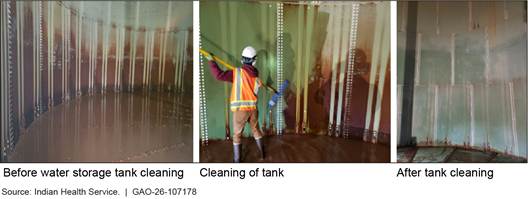
After water infrastructure construction is complete,
Tribes’ limited financial capacity can contribute to challenges with operating
and maintaining their infrastructure, which can lead to it deteriorating and
failing early. For example, Tribes face difficulties with hiring and retaining
certified water operators who keep systems in working order, according to an
agency study. This can create risks to tribal health and increase costs to the
federal government from needing to repair or replace infrastructure.
IHS generally does not provide funding to Tribes for routine operations and maintenance (O&M). While IHS has assessed tribal capacity to fund O&M, it has not assessed whether funding O&M could result in federal cost savings and better tribal health. Since Tribes’ needs can vary, more information on the effects of funding O&M on federal costs could help Congress make decisions on how to cost effectively meet those needs. However, IHS officials have said IHS does not have the authority or funding to pay O&M costs. By establishing an IHS pilot program for routine O&M assistance for tribal water infrastructure, Congress would enable IHS to provide direct, on-the-ground assistance to participating Tribes while collecting data that could inform decision-making on whether it is cost-effective to provide that assistance to Tribes on a broader scale.
Why GAO Did This Study
Safe drinking water and wastewater disposal are critical to public health, but many Tribes have limited resources to build, operate, and maintain water infrastructure. Tribes often do not have access to the same financing options and traditional tax bases as other communities. Tribal water systems have been underdeveloped, and many have fallen into disrepair because of chronic underfunding, according to the U.S. Commission on Civil Rights. IHS estimated that as of November 2025, $6 billion was needed to ensure all tribal communities have access to safe water.
GAO has previously reported that Tribes face systemic barriers to accessing federal assistance, including for tribal water infrastructure. IHS, within the Department of Health and Human Services, EPA, and USDA have taken steps to better collaborate with each other, including through a tribal infrastructure task force, but Tribes may continue to experience barriers. Many Tribes also have limited capacity to operate and maintain their water infrastructure, according to agency studies.
GAO was asked to review federal tribal water infrastructure assistance. This report examines the extent to which (1) IHS can fund water infrastructure for various properties in a tribal community, (2) opportunities exist to address differing agency processes and requirements when IHS collaborates with other agencies, and (3) IHS funds the operations and maintenance of tribal water infrastructure.
GAO reviewed agency data and program documents, including interagency and task force documents; conducted site visits to Alaska and Arizona; and interviewed Tribes, tribal organizations, and headquarters and regional agency officials.
What GAO Recommends
GAO recommends that Congress consider (1) defining “Indian homes, communities, and lands” in the Indian Sanitation Facilities Act to clarify which homes and buildings in tribal communities should be eligible for IHS funding, (2) authorizing and directing IHS to create an exception to fund ineligible properties when their capital costs are less than IHS’s administrative costs, and (3) establishing a pilot program for IHS to provide assistance for Tribes’ routine O&M costs (e.g., operator salaries and energy costs).
GAO is also making 12 recommendations to the agencies, including that USDA streamline or eliminate requirements for obtaining financial information from Tribes; that IHS and EPA work together to address invoicing requirements and funds transfer processes that result in high administrative costs; and that EPA streamline its application process for certain projects.
IHS agreed with the recommendations and described actions it was taking or planned to take to address them. EPA generally agreed with the recommendation to work with IHS to address invoicing requirements and funds transfer processes. It disagreed with the recommendation as originally written regarding its required application process for certain projects, and GAO revised the recommendation to clarify that EPA should streamline the application process for those projects. USDA disagreed with the recommendation to streamline or eliminate its financial information grant application requirements. GAO maintains that the agencies should implement the recommendations.
|
Abbreviations |
|
|
|
|
|
|
|
AIS |
American Iron and Steel |
|
|
BABA |
Build America, Buy America Act |
|
|
EPA |
U.S. Environmental Protection Agency |
|
|
FY |
fiscal year |
|
|
G-invoicing |
government invoicing |
|
|
HUD |
Department of Housing and Urban Development |
|
|
IA |
interagency agreement |
|
|
IHBG |
Indian Housing Block Grant |
|
|
IHS |
Indian Health Service |
|
|
O&M |
operations and maintenance |
|
|
SDS |
Sanitation Deficiency System |
|
|
USDA |
U.S. Department of Agriculture |
|
This is a work of the U.S. government and is not subject to copyright protection in the United States. The published product may be reproduced and distributed in its entirety without further permission from GAO. However, because this work may contain copyrighted images or other material, permission from the copyright holder may be necessary if you wish to reproduce this material separately.
September 22, 2026
The Honorable Lisa Murkowski
Chairman
Committee on Indian Affairs
United States Senate
Dear Madam Chairman:
American Indians and Alaska Natives across the United States are more likely than the general public to live in homes without safe drinking water and wastewater facilities, which are critical to public health, according to the Indian Health Service (IHS), an agency within the Department of Health and Human Services. Lack of access to safe water can result in higher rates of illnesses—including gastrointestinal tract, skin, and respiratory tract diseases—and hospitalizations. For example, the COVID-19 pandemic disproportionately affected tribal members in part because of their limited access to safe water for handwashing and other preventative measures.[1] In addition, many Tribes have limited resources to build water infrastructure or to operate and maintain it so that it functions properly and lasts its full design life.[2]
IHS is responsible for providing federal health services to American Indians and Alaska Natives.[3] IHS’s mission is to raise the physical, mental, social, and spiritual health of American Indians and Alaska Natives to the highest level. To fulfill that mission, IHS provides primary health care and disease prevention services to tribal members and other eligible individuals.[4] IHS administers the Sanitation Facilities Construction Program (water program), an integral component of the agency’s disease prevention activities and the primary federal program that provides Tribes with financial and technical assistance to develop and construct water infrastructure.[5] Other agencies, such as the U.S. Environmental Protection Agency (EPA) and U.S. Department of Agriculture (USDA), also fund tribal water infrastructure projects.
According to a 2018 report by the U.S. Commission on Civil Rights, tribal water systems have been underdeveloped, and many have fallen into disrepair because of chronic underfunding.[6] In that same year, we found that federal assistance for tribal water infrastructure was fragmented across IHS, EPA, USDA, and other agencies and programs, and that agencies could benefit from collaborating more to ensure they deliver support efficiently.[7] Since then, IHS, EPA, and USDA have worked to improve their collaboration through an interagency, headquarters-level tribal Infrastructure Task Force.[8] According to a task force report, the agencies still face challenges that limit their ability to work together.[9] Tribes also continue to face systemic barriers to accessing federal assistance, such as for water infrastructure.[10]
In addition, while additional funding was recently appropriated for tribal water infrastructure, a significant gap remains. In 2021, the Infrastructure Investment and Jobs Act appropriated $3.5 billion to IHS for its water program.[11] This represents a significant investment compared with prior years. According to IHS, this funding helps the agency partially address the large backlog of projects created in part by historically low levels of IHS funding. Additionally, EPA allocated more than $868 million of Infrastructure Investment and Jobs Act appropriations it received to tribal water infrastructure. Even after these investments, IHS estimated that, as of November 2025, at least an additional $6 billion was still needed to ensure all tribal communities have access to safe drinking water and wastewater disposal.
You asked us to review the challenges federal agencies face in administering and coordinating tribal water infrastructure assistance, including for operations and maintenance (O&M). This report examines the extent to which (1) IHS can fund water infrastructure for various properties in a tribal community,[12] (2) opportunities exist to address differing agency processes and requirements when IHS collaborates with other agencies, and (3) IHS provides funding for the O&M of tribal water infrastructure.
To address all three objectives, we selected three agencies—IHS, EPA, and USDA—and five of their programs to review.[13] We selected these programs because they provided a significant amount of funding for tribal water infrastructure in fiscal years 2019 through 2023 compared with other programs, and they have nationwide or largely nationwide coverage, among other factors. We reviewed relevant laws, regulations, and agency policy and guidance documents to identify the programs’ eligible activities and key characteristics, including their administrative processes and requirements. We also reviewed interagency documents, such as those of the tribal Infrastructure Task Force and various memoranda of understanding and interagency agreements. We interviewed agencies’ headquarters officials and agency officials who work in regional offices in five states.[14] We selected these states based on various considerations, including the number of Tribes in the state and the amount of agency program funding for tribal water infrastructure in these states.
We also interviewed a nongeneralizable selection of eight Tribes to obtain their perspectives on the challenges they experience with obtaining federal assistance for water infrastructure and in operating and maintaining their infrastructure. We selected these Tribes based on various factors, including geographic diversity, population size, and capacity to apply for and manage federal assistance for tribal water infrastructure. We conducted site visits in Alaska and Arizona to meet with tribal and agency officials and to observe tribal water infrastructure. We interviewed seven tribal organizations that represent Tribes on water, housing, and health issues, including a tribal health consortium in Alaska that works on behalf of more than 200 Tribes.[15] We interviewed a national tribal water organization that has technical expertise on water quality issues affecting Tribes and representatives of five nontribal organizations that provide technical assistance and training to Tribes and conduct research on their water infrastructure.[16] While the information we obtained from these interviews and site visits are not generalizable, they provided us with insights on efforts to obtain federal assistance for water infrastructure and associated challenges.
To examine the extent to which IHS can fund water infrastructure for various properties in a tribal community, we also reviewed Department of Housing and Urban Development (HUD) and IHS documents, including IHS and HUD tribal consultation letters about a statutory prohibition that restricts IHS from funding water infrastructure for new homes funded with HUD grants, analyzed tribal comments on the consultation, and interviewed HUD officials.
To review the extent to which opportunities exist to address differing agency processes and requirements when IHS collaborates with other agencies, we reviewed agency program regulations, policy, and guidance documents and compared the programs’ application processes and administrative requirements to identify differences. We then interviewed regional officials in our selected states about these differences to obtain their perspectives on which differences posed challenges to interagency collaboration. We also interviewed selected Tribes and tribal organizations to obtain their perspectives on the agencies’ processes and requirements and any impacts on their ability to access the programs.
To assess the extent to which IHS provides funding for the O&M of tribal water infrastructure, we also reviewed tribal organizations’ documents and their statements to Congress and proposals on how to improve federal assistance for the O&M of tribal water infrastructure. We also analyzed information from the State of Alaska and EPA’s Safe Drinking Water Information System and found the data sufficiently reliable for our purposes based on our review of relevant documentation and interviews with knowledgeable officials.
We conducted this performance audit from December 2023 to September 2026 in accordance with generally accepted government auditing standards. Those standards require that we plan and perform the audit to obtain sufficient, appropriate evidence to provide a reasonable basis for our findings and conclusions based on our audit objectives. We believe that the evidence obtained provides a reasonable basis for our findings and conclusions based on our audit objectives.
Background
Federal Trust Responsibility
The federal government has a trust responsibility for Tribes and their members. The trust responsibility comprises both a general trust responsibility and a more specific responsibility for Tribes’ and their members’ trust funds and certain trust assets. The general trust responsibility extends to all agencies included in this review, whether tribal affairs are their primary responsibility or not.
Federally Recognized Tribes and Their Communities
The 575 federally recognized Tribes in the United States vary greatly in terms of their location, population size, land base, composition, and economic status. For example, tribal communities may contain a mix of tribal and nontribal members, with tribal populations ranging from almost 100 percent in remote Alaska Native villages to as low as 50 percent in some areas where tribal land is heavily interspersed with federal, state, and private land, such as in California.[17] Many tribal communities are also dispersed across rural and remote areas. Historically, tribal communities have experienced higher rates of unemployment and poverty than nontribal communities.[18]
Tribes in Alaska are unique in several ways compared with most other Tribes. About 40 percent of all Tribes are in Alaska, and most are in remote Alaska Native villages. A typical village has a population of a few hundred people, most of whom are Alaska Native. Most villages have mixed cash-subsistence economies.
Tribal Water Infrastructure
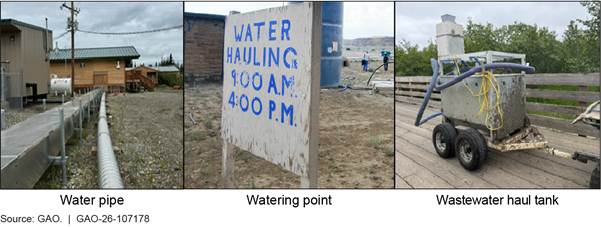
Water infrastructure in tribal communities may be centralized, decentralized, or entirely absent. For example, centralized drinking water systems can include groundwater wells, storage tanks, water treatment plants, and pipelines to deliver water to homes. A centralized wastewater system may include sewer lines, tanks, and wastewater treatment plants or lagoons.
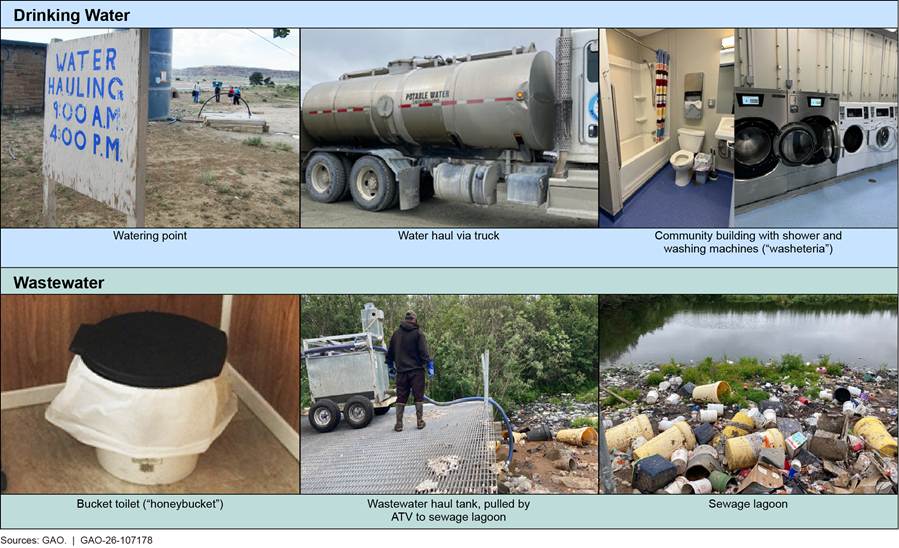
In some communities, tribal homes use decentralized system types, such as private wells and septic systems. This is in part because of the logistical and other challenges associated with serving widely dispersed homes in remote locations. Some tribal homes and communities entirely lack safe drinking water and modern wastewater disposal systems, such as flushing toilets. In these communities, residents may haul drinking water from a central point and may use a bucket (“honeybucket”) to collect waste in the home before disposing of it in a landfill or lagoon (see fig. 1).
Figure 1: Examples of Drinking Water and Wastewater Systems in Tribal Communities Not Served by Regulated and Centralized Water Systems
Tribes face unique challenges accessing safe drinking water and wastewater disposal infrastructure, such as the following:
· Challenging geographic locations. Many Tribes are in remote, rural areas and areas with challenging environmental conditions, such as extreme heat, limited water availability, or thawing permafrost. Such conditions can make it difficult to extend piping to homes to connect them to water infrastructure.
· Limited revenue. Tribes typically do not have access to the same financing options as nontribal communities. In nontribal communities, utilities typically sell municipal bonds to pay for construction of water infrastructure and raise revenues by charging customers for services. In contrast, tribal governments and tribally owned utilities typically do not have access to the same array of financial options or tax bases and do not necessarily charge homeowners for services. Therefore, Tribes often rely on federal funding to build and repair their water infrastructure.
· Limited capacity. Tribal capacity to obtain and manage federal assistance varies considerably. For example, Tribes may not have program staff to navigate the different application processes for multiple federal programs. As we have previously reported, managing administrative burdens such as application and reporting requirements can strain Tribes’ staffing capacity.[19]
|
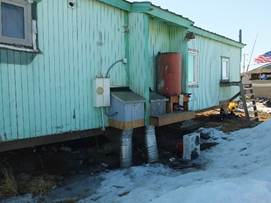
Challenges Unique to Building Water Infrastructure in Alaska Native Villages In Alaska, Tribes face unique challenges with water infrastructure. For example: · Access to villages. Most remote Alaska Native villages are not connected to major road systems and are only accessible by air or water, so all project materials must be flown or shipped. Air delivery can be cost-prohibitive. · Short construction season. The construction season may last only 4 months with extended winter shutdowns. Barges can only deliver materials during summer months when waters are not frozen. · Environmental conditions. Permafrost lies under about 85 percent of Alaska. That permafrost is thawing and making the ground unstable, which can damage water infrastructure.
Home where newly installed pipes are separating from the home because of thawing permafrost. Pipes are inside the aluminum tubes shown under the insulated boxes. Source: GAO analysis of agency and tribal organization documents. Photo: GAO. | GAO‑26‑107178 |
Federal Roles in Tribal Water Infrastructure Projects
IHS
IHS’s water program primarily funds Tribes’ community and individual water facilities. IHS implements the program through 12 area offices, whose staff may provide assistance to Tribes with planning, designing, and managing construction of infrastructure. The program’s activities include the following:
· Identifying needs. IHS collects information about water infrastructure needs related to sanitation deficiencies in existing homes and documents them in its Sanitation Deficiency System (SDS) database. IHS defines a sanitation deficiency as a need arising from existing water infrastructure (or lack thereof) that can negatively affect public health. IHS prioritizes and ranks proposed projects in the SDS database using a scoring system based on eight factors, including the health impact, severity of the existing sanitation deficiency, and cost. IHS selects projects to fund based on their ranking in the SDS database.
· Funding projects. IHS funds two primary types of water infrastructure projects: (1) projects that address sanitation deficiencies in existing homes and communities, based on needs identified in its SDS database; and (2) projects to provide water infrastructure for newly constructed or recently renovated tribal homes, which are captured in a separate database. In addition, IHS allocates a small portion of its sanitation facilities appropriation for special projects (e.g., research studies) and emergency projects (e.g., to help restore water supply after a natural disaster).[20]
· Administering projects. In most cases, IHS administers water projects on behalf of a Tribe (direct service). Under this approach, IHS does not provide funding to Tribes through grants or loans. Instead, IHS engineers may plan and design projects and hire contractors to complete construction. They meet annually with Tribes to identify needs and priorities and may provide technical assistance. Alternatively, IHS may provide funding to a Tribe or tribal organizations through a self-governance compact, by which IHS transfers administration of its water program to the Tribe or tribal organization and provides some flexibility in program administration.[21]
EPA and USDA
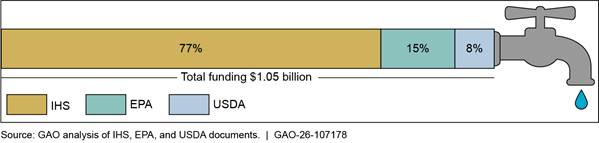
EPA and USDA programs also provide financial assistance for tribal water projects (see fig. 2).
Figure 2: Key Federal Programs That Fund Tribal Water Infrastructure Projects, and Their Relative Funding Levels, FY 2025
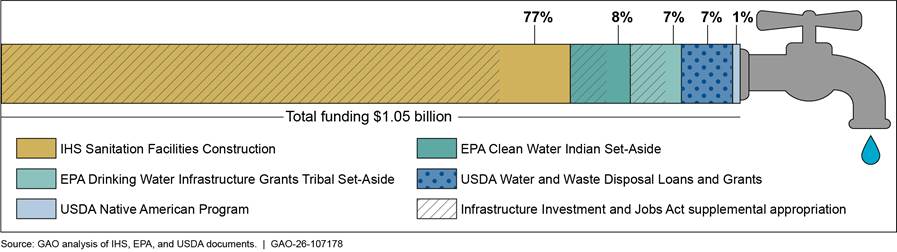
Notes: An estimated $1.05 billion was made available for tribal water infrastructure projects through these federal programs in fiscal year (FY) 2025. This estimate is based on an analysis of FY 2025 annual allocation information for the Indian Health Service’s (IHS) Sanitation Facilities Construction program and U.S. Environmental Protection Agency (EPA) and U.S. Department of Agriculture (USDA) tribal-specific grant programs. For USDA’s Water and Waste Disposal Loans and Grants program, which can fund tribal and nontribal projects, the estimate is based on an analysis of FY 2025 obligations of grant and loan funds to tribal projects. For EPA tribal set-aside programs, we did not include special programs such as those for emerging contaminants or lead service line replacements.
EPA and USDA administer several water infrastructure programs that can help tribal communities obtain and upgrade their water infrastructure systems and comply with federal regulations (see table 1).[22] EPA administers its programs, which are authorized under the Safe Drinking Water Act and Clean Water Act, as part of its mission to protect human health and the environment. USDA administers tribal water infrastructure programs as set forth in statute and as part of its mission to support the development of rural communities.
Table 1: Key U.S. Environmental Protection Agency (EPA) and U.S. Department of Agriculture (USDA) Funding Programs for Tribal Water Infrastructure Projects
|
Agency and program |
Assistance type |
Description |
|
EPA Clean Water Indian Set-Asidea |
Grants for projects serving Tribes |
· Funds planning, design, and construction of wastewater treatment plant facilities that serve federally recognized Tribes, including Alaska Native villages · EPA regions administer the program · Projects are selected from IHS’s priority project list, and nearly all funding is transferred to IHS |
|
EPA Drinking Water Infrastructure Grants Tribal Set-Asideb |
Grants for projects serving Tribes |
· Funds capital improvements to public drinking water systems that serve Tribes to help address the most significant threats to public health posed by inadequate water infrastructure · EPA regions administer the program · Projects may be identified in cooperation with IHS, by using solicitation processes, or other methods |
|
USDA Section 306(c) “Native American program”c |
Grants for projects serving Tribes |
· Funds construction of drinking water and wastewater facilities and services to rural and low-income tribal communities whose residents face significant health risks due to the lack of access to adequate, affordable water or waste disposal services · USDA administers the program at the national level and works with Tribes at the state office and local level to conduct outreach and provide assistance with the application process · Application process used to award funds to eligible projects |
|
USDA Water and Waste Disposal Loan and Grant programd |
Grants and loans for projects serving Tribes or nontribal communities in rural areas |
· Funds acquisition, construction, or improvement of drinking water systems, sanitary sewage disposal, sanitary solid waste disposal, and storm water drainage to households and businesses in eligible rural areas, including systems owned by or serving Tribes · USDA state offices administer the program · Application process used to award funds to eligible projects |
Source: GAO analysis of Indian Health Service (IHS), EPA, and USDA documents. | GAO-26-107178
aThe Clean Water Act, as amended, requires EPA to set aside a percentage of the amount appropriated for, among other things, state water pollution control revolving funds for grants for projects and activities to serve Tribes. See 33 U.S.C. § 1377(c).
bThe Safe Drinking Water Act, as amended, authorizes EPA to set aside a percentage of the amount appropriated to carry out the state drinking water revolving loan funds for grants to Tribes. See 42 U.S.C. § 300j-12(i)(1).
cThe Native American program is authorized by 7 U.S.C. § 1926c, which is also known as section 306C of the Consolidated Farm and Rural Development Act.
dThe Water and Waste Disposal program is authorized by 7 U.S.C. § 1926, otherwise known as section 306 of the Consolidated Farm and Rural Development Act.
Tribes may obtain funding from EPA and USDA programs for projects in IHS’s SDS database or other projects that meet the program’s eligibility requirements. Tribes can choose to receive the funding directly from EPA or USDA, or they may request that the agencies transfer funds to IHS so it can administer the project through direct service. IHS may administer these funds to support a stand-alone project or as part of a larger multi-agency-funded project.
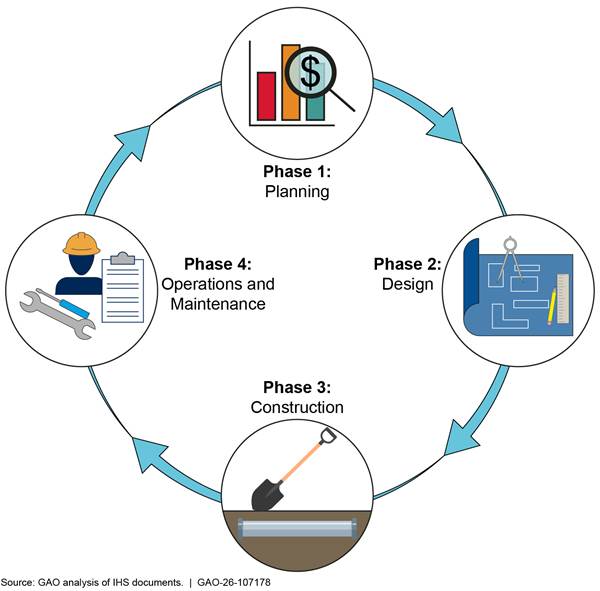
Tribal Water System Life Cycle
Tribal water infrastructure systems generally undergo four phases throughout their life cycle (see fig. 3).[23] Agencies can generally fund the planning, design, and construction phases. After construction is complete, agencies transfer ownership of the infrastructure and responsibility for its routine O&M to Tribes. After transferring ownership, federal agencies may fund new projects to repair, replace, or upgrade infrastructure, restarting the cycle.
Importance of Tribal Consultation in Agency Decision-Making
Consultation with Tribes on policies directly affecting Tribes and their members has been recognized as an important component of the government-to-government relationship. A 2000 executive order directs federal agencies to have an accountable process to ensure meaningful and timely input by tribal officials in the development of regulatory policies that have tribal implications.[24] Furthermore, a 2009 presidential memorandum directed agencies to develop a detailed plan of action to implement the policies and directives of the 2000 executive order.[25] IHS, EPA, USDA, and HUD have established policies for conducting tribal consultations.
Prior GAO Work on Tribal Drinking Water and Wastewater Infrastructure Collaboration
In 2018, we found that federal participation in funding tribal water infrastructure was fragmented across IHS, EPA, USDA, and other agencies and programs, and that agencies needed to collaborate more to ensure they deliver support efficiently.[26] Specifically, we found that while agencies had established the tribal Infrastructure Task Force and taken other actions that reflected leading practices for collaboration, they had not acted on several options they had jointly identified to increase the efficiency of collaboration, which could improve their ability to leverage limited program funds.[27]
We recommended that the agencies review their 2011 task force report and identify and implement additional actions to help increase the agencies’ collaboration at the national level.[28] In 2020, task force member agencies issued a report summarizing their actions, which included publishing a matrix of funding options available to Tribes from each agency to increase Tribes’ awareness of and access to the various federal water infrastructure programs.[29] EPA and IHS headquarters and regional office staff also started meeting to broadly discuss their collaboration and identify ways to continue streamlining their processes.
We also recommended in our 2018 report that the agencies direct their regional or state offices to identify and pursue additional mechanisms to increase their collaboration.[30] In 2020, the agencies signed a memorandum directing their local office staff to increase their collaboration. The memorandum included links to online sources of contact information for regional staff to use when identifying their counterparts to facilitate collaboration. However, in the task force’s 2020 report, the agencies noted that certain characteristics of their programs, such as differing project selection methods and eligibility requirements, made further coordination challenging.
Limits on IHS Water Program Funding Can Exclude Tribal Members and Increase Administrative Costs
Certain Homes Are Eligible for IHS Funding
The Indian Sanitation Facilities Act authorizes IHS to construct essential sanitation facilities for “Indian homes, communities, and lands.”[31] While the act does not define this term, IHS has interpreted the act and related authorities as authorizing it to fund only project costs attributable to eligible American Indian and Alaska Native individuals.[32] IHS is also restricted by statute from using its appropriation to serve new homes built with HUD grants.[33]
IHS has determined that only certain homes located in tribal communities are eligible to benefit from IHS funding. IHS policy states that a tribal community is one in which 50 percent or more of residents are eligible American Indian or Alaska Native individuals. IHS generally defines eligible tribal homes as those owned by Tribes or tribal members and occupied by such members, according to IHS guidance. Other homes and buildings are generally ineligible for IHS funding (see table 2).
|
Eligible |
Ineligible |
|
Tribal homea Home owned by a Tribe or tribal memberb, and · in which a tribal member lives, or · that is rented to a tribal member with at least 5 years remaining on the lease and the lease price does not increase. |
Tribal home Home owned by a Tribe or tribal member and that is · exclusively occupied by nontribal members, or · rented to a tribal member with fewer than 5 years remaining on the lease. Nontribal homec Home owned by nontribal member, regardless of occupants (e.g., tribal members or their children, or community service providers who are not tribal members, such as law enforcement, medical providers, and teachers). |
|
Existing HUD-funded homed Home originally built with HUD grant funding that is connected to water service. |
New HUD-funded homee New home built with HUD grant funding. |
|
|
Existing tribally owned, noncommercial community buildingsf Nonresidential buildings supporting the community and tribal government (e.g., buildings for tribal assembly or meetings and facilities for tribal Head Start and Boys and Girls Club programs). |
|
|
Commercial and other funded propertiesg Nonresidential commercial, industrial, and other properties with separate funding sources (e.g., nursing homes, health clinics, schools, hospitals). |
Source: GAO review of Indian Health Service (IHS) and Department of Housing and Urban Development (HUD) documents and interviews. | GAO‑26‑107178
Note: This table summarizes key eligibility requirements and does not reflect all criteria applicable to the Sanitation Facilities Construction program.
aIHS defines a home as a 24-hour, year-round family dwelling. Tribally owned homes cannot have a primary purpose to produce a profit.
bIn addition to tribal members, IHS also extends eligibility to certain unaffiliated California Indians.
cNontribal homes also include those owned by states.
dIHS considers these homes as eligible for regular funding from its water program if the home was provided with water service when first constructed and (a) ownership has been conveyed to an eligible homeowner or (b) the home is still managed by a Tribe or Tribally Designated Housing Entity but did not directly cause or contribute to the sanitation deficiency IHS is addressing when the home was built.
eSince at least fiscal year 2003, IHS’s annual appropriations acts have prohibited the use of IHS appropriations for sanitation facilities construction for new homes funded with HUD housing programs, including the Indian Housing Block Grant (IHBG). Authorized by the Native American Housing Assistance and Self-Determination Act of 1996, as amended, IHBG provides formula-based funding for multiple activities, including home construction, purchase, and remodeling; rental assistance; and administration of tribal housing programs. In fiscal year 2018, HUD also began awarding competitive IHBG grants to Tribes. IHBG is the single largest source of federal tribal housing assistance, according to a HUD document. In addition, grants made under HUD’s Indian Community Development Block Grant program are also subject to the prohibition, according to HUD officials.
fExisting community buildings are not eligible for IHS regular funds but are eligible for IHS special project funds in limited circumstances. For example, special project funds may be used to connect existing tribal buildings and ceremonial areas to a water system if doing so represents an incidental cost to the project (i.e., $10,000 or less).
gCommercial, industrial, and agricultural properties are not eligible for IHS funding because they generate and collect revenue, according to IHS officials. Other properties, including schools, health clinics, and nursing homes, are not eligible because they have other federal or state funding sources, according to IHS officials.
When working with IHS to develop a community water infrastructure project, Tribes can ask IHS to include all properties in the community in the scope of the project, regardless of their eligibility for IHS funding. To determine which properties are eligible, IHS engineers or tribal staff gather information about each property and enter it into a database, according to IHS program documentation. An estimated cost is calculated for every home and community building, regardless of eligibility.
Ineligible homes and buildings can be included in a project in the SDS database if their costs are funded from a non-IHS source, but IHS will only move the project forward when it is fully funded.[34] Tribes can either provide the funding or work to obtain funding from another source, often with help from IHS engineers. According to an IHS document, another federal agency, such as EPA, often provides a contribution for the ineligible costs.
IHS’s Definition of Eligible Tribal Homes Can Exclude Tribal Members
IHS’s definition of eligible tribal homes can exclude tribal members from IHS assistance when they live in ineligible homes, increase administrative costs, and delay projects while Tribes, with help from IHS staff, seek other funding to cover ineligible costs. However, IHS officials stated that changing the definition to encompass more homes, including all homes in which tribal members live, would require Congress to give the agency additional authority in statute.
Definition Can Exclude Tribal Members, Increase Administrative Costs, and Delay Projects
IHS’s definition of eligible tribal homes can result in the agency determining that homes in which tribal members live are not eligible to benefit from IHS funding. For example:
· Tribal members and their children may live in a home owned by a relative who is not a tribal member, such as a parent or grandparent. Such mixed and multigenerational homes are common in many tribal communities, according to a HUD document and tribal and tribal health consortium officials we interviewed.
· Homes in Alaska Native villages that are owned by a person who is not a tribal member are frequently occupied by at least one Alaska Native individual, according to tribal health consortium staff.
· A tribal member renting a home owned by a Tribe or another tribal member may have fewer than 5 years remaining on the lease at the time IHS engineers are developing a project.
IHS does not currently collect information that would enable it to determine how often tribal members may be living in ineligible homes. However, tribal utility and tribal health consortium officials we interviewed said it happens frequently in their areas. One tribal water utility official told us that every water infrastructure project for which their Tribe sought or received IHS funding included at least one ineligible home in which tribal members lived.
|
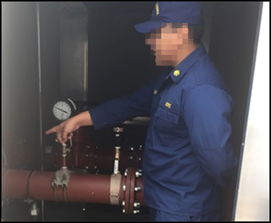
IHS Field Engineers Provide Key Assistance to Tribes Indian Health Service (IHS) field engineers in 12 area offices play an important role as Tribes’ partners while driving the delivery of tribal water infrastructure projects. For Tribes that IHS serves directly, the engineers meet with every Tribe in their area at least annually to identify priority water infrastructure needs. The engineers then plan, design, and manage construction of these critical systems from inception to completion. As part of planning, the engineers can support Tribes in identifying potential funding partners to cover ineligible costs, help write grant applications to apply for funding, and work with other funding agencies to manage grants. The engineers often serve as project managers who oversee construction contractors’ progress, manage complex project costs, and provide regular progress reporting to area office leadership. After construction is complete, they lead the final physical and financial inspections required to successfully close out and complete projects. In addition, field engineers provide technical assistance to Tribes, tribal enterprises, and tribal housing authorities. This includes environmental engineering services, such as reviews of engineering plans and specifications for sanitation facilities; operations and maintenance training; and technical consultation.
Source: GAO analysis of IHS documents; Photo: GAO. | GAO‑26‑107178 |
IHS’s definition can also lead to increased administrative costs. When Tribes and IHS secure funding to cover ineligible homes’ portion of project costs, including from other federal agencies, these efforts require IHS and tribal administrative resources. IHS’s administrative activities can include area office engineers helping Tribes identify, apply for, and manage contributions for ineligible costs. The costs of conducting these activities can be significant, according to IHS area officials. For example, officials from one IHS area office reported spending over 80 hours assisting a Tribe with the application and monitoring process for a $8,000 grant. After the Tribe received the grant, the officials spent additional hours helping the Tribe manage it, including helping it report on how it spent the grant. The officials said that after funds are transferred to IHS, managing and overseeing these funds imposes a significant expense to the agency.
Administrative costs sometimes exceed ineligible homes’ portion of a project’s capital costs, according to officials from an IHS area office, a tribal utility in California, and a tribal health consortium in Alaska. For example, a project in Utah included two ineligible nontribal homes that were rented to tribal members. IHS’s administrative costs to obtain and manage funding from another federal agency to cover these homes would likely exceed the capital costs associated with serving those homes, according to an IHS area office official. This official said that for that project, they had to pursue and obtain contributions from other federal agencies for as little as $800.
IHS’s administrative costs are more likely to exceed the capital costs to serve ineligible nontribal homes for projects in communities where ineligible homes compose a small portion of properties in the community, according to an IHS area office. However, for other water projects, IHS’s administrative cost may be lower than the ineligible homes’ portions, especially in tribal communities where ineligible homes represent a significant proportion of the total project cost.[35] This can also happen when a project’s cost per home is high, such as in remote communities where construction is expensive and the project serves a small number of homes.
Requiring Tribes to provide funding for ineligible homes before a project can proceed can also contribute to delaying completion of water projects and delivery of safe water to tribal members and the entire community. For example, several officials from Tribes, tribal organizations, and IHS and EPA regional offices said it takes time to identify and apply for contributions to cover ineligible costs and fully fund a project before it can start construction.
These project delays can contribute to challenges Tribes experience with recruiting and retaining community service providers who perform critical roles in tribal communities. These providers may not be tribal members and may therefore live in ineligible homes.[36] Community service providers can be difficult to recruit and retain, according to tribal organizations. Inadequate living conditions, such as lack of access to safe water, can exacerbate these challenges. For example, one tribal administrator in Alaska said a police officer who is not a tribal member lives in a home without water because the Tribe has not been able to obtain funding to serve the home. The administrator reported concerns about losing this officer to another community.
IHS Officials Said Changing the Definition of Eligible Homes Would Require Additional Authority from Congress
IHS officials told us that the agency developed its definition of eligible tribal homes to align with the Indian Sanitation Facilities Act, which does not define “Indian homes, communities, and lands.” These officials also said the current definition enables IHS to ensure that its limited resources are highly targeted to tribal members in need of assistance. According to IHS officials, the agency has determined that its funding can be allocated only to costs attributable to tribal members, aligning with how IHS has interpreted its authority under the act. As a result, IHS officials said the agency is not authorized to fund ineligible homes as currently defined in any circumstance, even if the ineligible home is owned by a Tribe or tribal member, is occupied by tribal members, or if funding the home could lead to cost savings or shorten project timelines. They said any substantive change to IHS’s definition of eligible tribal homes would require additional change in statute.
IHS senior officials said the agency would change its definition of eligible homes if directed to do so, but they expressed concern about the potential consequences. For example, they said identifying the residents in every ineligible home to identify which homes have tribal members living in them would require significant staff resources that they do not have, given current staff vacancies.[37] However, IHS would not necessarily need to conduct a house-by-house survey to obtain this information. For instance, IHS could determine eligibility based on home ownership, which is information that it already collects and verifies. IHS could also rely on Tribes to identify homes in their communities that should be eligible. Officials from a tribal water utility said that Tribes should be able to determine which homes in their communities are considered eligible tribal homes.
IHS officials also said they were concerned that using IHS funding to benefit ineligible homes could take resources away from tribal members. However, enabling IHS to make exceptions for cases in which funding these homes could lead to cost savings could ultimately make additional resources available to help Tribes. Retaining some of the program’s eligibility criteria can help ensure IHS’s limited funding supports tribal members, such as by continuing to limit services to communities with a tribal population of 50 percent or more, in line with IHS’s current definition of a tribal community, and ensuring that Tribes submit all requests to serve individual homes.
Federal agency, tribal, and tribal health consortium officials we interviewed expressed frustration with IHS’s policy of requiring contributions for every ineligible home in a community. Some agencies have decided they will not contribute to certain IHS projects. For example, from 2019 to 2025, the Denali Commission provided small-dollar contributions to IHS projects in rural Alaska to help address ineligible costs, but the commission discontinued this practice in 2025. The commission determined that IHS has both the statutory responsibility and authority to provide necessary sanitation facilities for “Indian homes and Indian communities,” according to commission officials and a June 2025 commission letter to IHS.[38] A program official with another agency in Alaska told us that when considering how to distribute funding, he would not propose having the agency contribute to an IHS project if the ineligible amount was less than $100,000, because anything less was not worth the administrative resources required to provide and manage the funding.
IHS helps meet its mission to raise the overall health of American Indians and Alaska Natives by ensuring they have access to safe drinking water and wastewater disposal. Expending IHS’s limited engineering staff resources to help Tribes seek other federal funding for ineligible homes makes it harder for the agency to efficiently meet its mission, since every dollar it spends seeking other funding is one less dollar it could spend on an infrastructure project that provides water to Tribes. Expanding the definition of eligible tribal homes could allow the agency to capture some efficiencies while serving more tribal members.
By providing a statutory definition for “Indian homes, communities, and lands,” Congress could provide additional direction and clarity to IHS on whether all tribal members regardless of homeownership status in tribal communities should be eligible to benefit from IHS financial assistance. In doing so, Congress could ensure that intended beneficiaries in tribal communities benefit from IHS assistance. Updating its policy to reflect a new statutory definition, in consultation with Tribes, could help IHS operationalize and communicate any changes to Tribes, IHS area staff, and agency partners.
In addition, by specifically authorizing and directing IHS to, in consultation with Tribes, create an exception to fund all or a portion of the capital costs associated with ineligible homes in cases where IHS’s administrative costs would likely exceed these capital costs, Congress could allow IHS to achieve cost savings and complete projects to deliver safe water infrastructure for Tribes more quickly, particularly in communities with a high percentage of tribal members, when Tribes do not need to pursue outside funding for those homes.
Funding Limit for Existing Community Buildings Can Discourage Tribes from Seeking Assistance
IHS’s definition of eligible homes also excludes existing community buildings from most IHS funding. These include tribal buildings such as gathering places and Head Start schools, and ceremonial grounds that also need water. Because these buildings are largely ineligible, Tribes and IHS often seek external funding to cover their portions of project costs, which can increase administrative costs and prolong project time frames.
Existing tribally owned community buildings are eligible for IHS’s special project funding if they represent an incidental cost to the regular project, such as adding a service line connection to the building.[39] According to IHS policy, up to $10,000 in special project funds can be used to connect these buildings to a water system under certain conditions. However, we found that IHS has rarely funded connection costs for such buildings in recent years. Of about 800 tribal water projects IHS funded in fiscal years 2023 and 2024, two used special project funds for existing community buildings, according to information provided by IHS.
Officials from a Tribe and tribal health consortium told us that the $10,000 limit discourages them from seeking this funding. Tribal health consortium officials indicated that $10,000 was not enough to cover even basic water infrastructure for an existing community building. They cited the costs of materials and transport as a primary barrier.
Because of the limit, officials from a Tribe, a tribal health consortium, and an IHS area office said they generally seek other funding to cover the costs of these buildings. For example, EPA and USDA regional officials told us they can fund these properties because their programs have a broader mandate to fund water infrastructure on tribal lands. However, as described above, seeking external funding to cover portions of project costs can increase administrative costs and prolong project time frames.
IHS has not updated the dollar limit since 1985 because IHS senior officials said they believed it did not constrain tribal water projects. However, if adjusted for inflation, the limit would be about $30,000 in fiscal year 2025 dollars—triple the current limit. IHS acknowledged that construction costs have increased since the limit was established and that this could warrant reevaluating the limit to ensure it still aligns with current costs and program priorities. By evaluating whether $10,000 is still an appropriate limit, in light of inflation and increases in costs for labor and materials, and adjusting as appropriate, IHS could help Tribes more efficiently secure funding and more quickly deliver safe water and wastewater services to tribal communities.
As discussed above, IHS has determined that its statutory authority allows it to use its regular funding only for eligible homes and excludes existing community buildings, in certain circumstances. IHS has a limited amount of special project funding available each year, intended to be used for a variety of activities, such as special studies and training projects. By including existing community buildings when authorizing and directing IHS to fund all or a portion of the capital costs of ineligible homes where administrative costs exceed the capital costs, Congress could give IHS additional flexibility to more efficiently serve vital buildings in tribal communities.
Potential Effects of Removing Prohibition on IHS Serving New HUD-Funded Homes Are Unclear
For decades, annual appropriations acts have prohibited IHS from using its funding to provide water infrastructure for new homes constructed using HUD housing grant programs, including the Indian Housing Block Grant (IHBG).[40] This statutory prohibition has had adverse effects on Tribes, including causing Tribes to build homes not connected to water, building fewer homes with IHBG funding in order to pay for water infrastructure, and Tribes’ uncertainty around whether they can coordinate with IHS engineers on new HUD housing. However, the effects of removing this prohibition are unclear.
When Tribes build new homes with IHBG funding, the total allowable cost for each home includes the costs for on-site water infrastructure and other utilities needed to support those homes, according to a HUD guidance document and a HUD official.[41] However, in some areas, it is expensive to do so. For example, the cost to connect a home to water in Alaska can make up roughly 30 percent of the total cost to construct the home, according to an HUD official. In addition, funding for IHBG is insufficient to meet many Tribes’ housing needs, according to HUD budget documents. For example, a tribal housing authority in California noted that it would take one Tribe almost 350 years to construct enough homes to meet its housing needs using only its IHBG annual funding allocation. IHBG funding had previously remained relatively flat for decades, eroding purchasing power as tribal housing needs rose and inflation increased the cost of materials and labor.[42]
Because of these funding constraints and urgent need for housing, when using IHBG funding, Tribes may need to choose between building more homes without water or building fewer homes with water:
· More homes, without water. Some Tribes omit water connections when building houses with HUD IHBG funding, to be able to build more homes. According to a senior HUD official, Tribes told HUD that as recently as April 2026, certain HUD-funded homes were being completed without water infrastructure. Further, one tribal housing authority in South Dakota said that it was becoming the norm for HUD-funded homes to be built without running water.
· Fewer homes, with water. When Tribes include water connections while building homes with IHBG funding, some build fewer homes with that funding, according to the National American Indian Housing Council and HUD officials. For example, a HUD official told us that a tribal housing authority in Alaska reduced a project from five homes to four to cover the costs of connecting the new units and replacing a pumphouse required to meet the increased water demand.
Because new HUD-funded homes are ineligible for IHS funding, Tribes must provide or seek other funding to cover their water infrastructure costs if they do not pay for them with IHBG funding.[43] Consequently, in some circumstances families live in homes without water while Tribes navigate this process.
|
IHS Technical Assistance for Tribal Housing Developments Tribal, Indian Health Service (IHS), and Department of Housing and Urban Development (HUD) officials said the statutory prohibition on IHS serving new homes built with HUD grants causes confusion over whether IHS can provide technical assistance for Tribes to plan housing developments, even if it cannot fund the water infrastructure. IHS engineers can assist Tribes with planning how best to incorporate water infrastructure into their housing developments, according to IHS officials. These officials told GAO that IHS can also assess whether existing systems have the capacity for new homes. IHS area officials said they would welcome the opportunity to work with Tribes in this way. IHS reported that it planned to increase this technical assistance to make it clear that IHS is available to Tribes as a resource when planning housing developments.
Source: GAO summary of agency documents and interviews. Photo: GAO. | GAO‑26‑107178 |
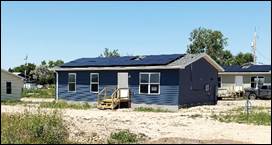
The effects of removing the statutory prohibition are unclear. To collect input into any potential consequences of removing it, from 2024 to 2025, HUD and IHS held joint formal consultation with Tribes that collected feedback, including about what role, if any, IHS should have in connecting new HUD-funded homes to water systems. The agencies asked Tribes how HUD and IHS could best meet their housing and water needs and the challenges they face. They asked the Tribes to provide feedback on, among other things, how the prohibition has affected tribal communities and how the agencies could improve delivery of housing and water infrastructure.
Tribes and tribal organizations offered varying perspectives, according to written comments we reviewed. Several Tribes favored removing it, while others favored keeping it. For example:
· Neither HUD’s IHBG nor IHS’s water programs have sufficient funding to meet tribal housing and water needs. Regardless of whether the funding comes from IHS or HUD, tribal leaders said both programs need additional funding to reduce overcrowding and ensure all homes have safe water.
· One Tribe said it favors removing the prohibition because this restriction forces Tribes to redirect IHBG grants toward infrastructure.
· A tribal health consortium in Alaska expressed concern that removing the prohibition could expand IHS funding eligibility to include many more new HUD-funded homes in the lower 48 states than in Alaska because those Tribes have much larger populations. Such a shift could reduce the total IHS funding allocated to Alaska if IHS’s appropriation is not also increased, since IHS’s area office allocations are partially based on need in each area.
We found that the consultation did not collect all information needed to inform a policy decision about whether to keep or remove the statutory prohibition. For example, based on our analysis of the written comments from Tribes and tribal organizations, very few Tribes provided specific data about the effects of the statutory prohibition. The agencies also did not specifically ask the Tribes for information on the number of new HUD-funded homes that did not have water infrastructure. As a result, it is unclear how many new HUD-funded homes are built without connection to water, and how much funding might be required to connect these and other new HUD-funded homes to water.
HUD and IHS collect some information that could be used to help estimate at a high level the potential cost implications of removing the statutory prohibition and allowing Tribes to ask IHS to fund water infrastructure for new HUD-funded homes:
· HUD collects and reports annually on the number of homes that Tribes build with IHBG funding. For fiscal year 2024, Tribes reported building or acquiring about 600 homes nationwide using IHBG formula-based grant funding.[44] While HUD does not collect information about whether those homes have been connected to water, if the statutory prohibition is removed, all homes built with IHBG funding could be eligible to benefit from IHS funding in the future.[45]
· At a Tribe’s request, IHS can include new HUD-funded homes in a planned water infrastructure project and will calculate the costs associated with those homes for planning and estimating purposes, although those homes are not eligible for IHS water program funding.[46]
Federal standards for internal control state that management should collect complete and quality information and use it to support decision-making.[47] In addition, management should communicate relevant and quality information externally through reporting lines so that appropriate external parties can help the entity achieve its objectives.
HUD and IHS have a history of collaborating and sharing information.[48] By aggregating HUD’s information about the number of new HUD-funded homes that are built and IHS’s information about the potential estimated costs to serve homes, HUD and IHS could estimate how much it would cost to provide water service to these homes and assess the cost implications of removing the statutory prohibition on IHS using water program funding for these homes. By providing this information to Congress, and updating it as requested, IHS and HUD could support congressional decision-making about how best to meet Tribes’ water infrastructure needs in tribal communities that include new HUD-funded homes, including whether to remove the statutory prohibition.
In December 2025, IHS publicly issued a report that summarized tribal feedback obtained through the consultation and outlined IHS’s conclusions, ultimately reaffirming its longstanding position that IHS funds should not be used for new HUD-funded homes. HUD officials told us that they did not collaborate in issuing IHS’s final report, and the conclusion represents solely IHS’s position. These officials also said HUD does not plan to communicate with Tribes about the tribal consultation results, such as by issuing a public report, because the consultation was intended to inform a potential policy decision that HUD has not yet made. In addition, these officials said HUD typically does not issue closeout reports to Tribes as part of consultations. As a result, HUD has not communicated any results to Tribes and has no immediate plans to do so.
We have previously reported on the need for agencies to communicate how tribal input from consultations was used in agency decisions.[49] Tribal trust in agencies may be undermined if officials do not explain how they factored tribal input into final decisions or maintain a two-way communication on tribal consultation.[50] We also reported that tribal organizations told us that by publicly sharing the high-level results of consultations, agencies would improve Tribes’ access to information about prior tribal input on federal programs.[51] Without publicly communicating to Tribes about how HUD considered tribal input, along with any outcomes, the agency risks undermining Tribes’ trust in working with HUD, which could negatively affect the federal-tribal relationship.
Streamlining Processes and Leveraging Interagency Agreements Could Reduce Administrative Burden on Tribes and Agencies
When Tribes seek funding from EPA or USDA to cover costs for projects included in IHS’s SDS database, such as costs for IHS-ineligible properties, they encounter varying application processes and administrative requirements that can cause more work and increase costs for Tribes, IHS, and the funding agency. Streamlining these requirements and processes and further leveraging interagency agreements could help Tribes more easily access funding and enable agencies to collaborate more efficiently on tribal water projects. This is particularly important as IHS works to move a larger volume of prioritized projects forward using Infrastructure Investment and Jobs Act funding, which requires coordination with other agencies.
Streamlining EPA and USDA Processes and Requirements Could Make Funding Easier to Access
Federal tribal water infrastructure programs’ differing processes and requirements can increase burden on Tribes and agencies and deter Tribes from applying for funding. We identified some opportunities for EPA and USDA to streamline some of their processes and requirements and make their funding for projects in IHS’s SDS database, including projects with IHS-ineligible properties, easier for Tribes to access.
Key EPA and USDA programs use different processes than IHS’s to select projects for funding, according to our review of agency program documents. These differences are generally due to each agency’s unique statutory, regulatory, and policy requirements. For example, IHS’s approach is to prioritize the highest-ranked projects in its SDS database for funding. EPA largely bases its project selection process for the clean water and drinking water set-aside programs’ funding on the SDS database, with some exceptions, as discussed below.[52] In comparison, USDA does not directly select projects using the SDS database and requires Tribes to submit applications with additional documentation, such as financial information.
When processes for selecting projects vary, Tribes and IHS engineers spend additional time and resources to determine which programs can meet a Tribe’s needs, and then IHS helps Tribes compile and submit application materials, which can deter Tribes from applying for funding. For example, one Tribe’s water department manager told us that navigating the different federal requirements and programs takes all her time and resources. She said that she has not been able to pursue potential grant opportunities because she cannot manage the application processes.
As members of the tribal Infrastructure Task Force, IHS, EPA, and USDA have committed to improving their collaboration on tribal water projects, such as by finding additional ways to more efficiently leverage funds for these projects, according to their 2022 memorandum of understanding.[53] In addition, our leading collaboration practices state that once agencies have come together to form a collaborative team, it is beneficial for them to develop compatible standards, policies, and procedures so that they can coordinate effectively.[54] As discussed below, we identified opportunities for EPA and USDA to do so, such as eliminating certain application requirements and waiving certain USDA procurement requirements.
Some EPA Regions Require Applications for Drinking Water Projects in IHS’s Database
When Tribes seek funding from EPA’s Drinking Water Infrastructure Grant Tribal Set-Aside program, some EPA regions require them to submit applications for all drinking water projects, including those already listed in IHS’s SDS database and where EPA would transfer the funding to IHS to implement the project. According to program guidance, Tribes may choose to receive drinking water project funds through a grant or have EPA transfer the funding to IHS through an interagency agreement.[55] In cases where a project is listed in IHS’s SDS database and the Tribe requests that EPA transfer funding to IHS, EPA’s application requirements can add administrative steps for the Tribes and the IHS engineers who help them.
According to program guidance, EPA regions are responsible for implementing the drinking water set-aside program within their respective regions. To select projects for funding, regions can choose to use IHS’s SDS database, their own project identification or prioritization methods (e.g., solicitation process), or a combination of approaches. Of EPA’s 10 regions, four use the SDS database, four use a solicitation process, and two use both approaches to identify and select projects for funding.
The six regions that either entirely or partially use the SDS database to select projects do not require a separate tribal application to fund projects from the database. In these regions, EPA staff select all or a portion of projects based on their SDS rankings and collaborate with IHS and Tribes to identify projects most suitable for funding.
In contrast, four regions use a solicitation process that requires Tribes to submit EPA-specific application materials for projects, including projects from the SDS database. Three of these regions require applications regardless of whether EPA would award the grant to the Tribe or transfer funding to IHS.[56] Regional officials cited varying reasons for using this approach, including the following:
· To respond to tribal requests that EPA rank and select projects differently from IHS
· To learn when a Tribe is interested in EPA funding for a project and, where applicable, verify the project is in the SDS database
· To obtain uniform and complete information on potential projects
· To obtain information to determine eligibility for drinking water set-aside program funding, such as whether the system has a certified water operator
· To comply with federal requirements for awarding grants
Some Tribes and IHS area officials we interviewed in these regions said requiring Tribes to submit an application for projects already in the SDS database can be unnecessary and can take significant tribal and IHS staff administrative time. For example, IHS and tribal officials in one region told us that to apply for drinking water set-aside grants, the Tribe submits the official application with IHS staff helping them develop projects, complete the preliminary engineering reports, and put applications together. Tribal officials added that they must take additional steps, such as obtaining tribal leaders’ signatures on application documents.
Officials from one EPA region that requires applications for the drinking water set-aside program added that they require tribal government endorsements to ensure early on that the Tribe’s leadership supports the project and to confirm whether the Tribe prefers to receive a grant or to have EPA transfer the funding to IHS. Tribal endorsements serve an important purpose of gauging tribal interest in EPA funding for projects and tribal funding preferences and can involve a process such as a letter from tribal leaders, according to these officials.
However, separate from the tribal endorsement, requiring submission of formal application packages—whether long or short—for projects already in IHS’s SDS database and for which Tribes are not applying to receive a grant from EPA increases administrative burden for Tribes and both IHS and EPA, especially when IHS has already documented the information EPA seeks. By directing its regions to streamline the application process for such projects already included in IHS’s SDS database and for which EPA will transfer funding to IHS, EPA can help reduce barriers Tribes face with accessing its drinking water set-aside funding, ease administrative burden for Tribes and IHS and EPA staff, and enable them to focus their resources on projects.
Certain USDA Application Requirements May Deter Tribes from Pursuing Grant Funding
|
Funders Groups Facilitate Collaboration on Tribal Water Projects in Some Regions Identified as a leading practice by some agency officials, some regions have funders groups that meet regularly to improve communication and streamline processes for funding tribal water projects. These groups are composed of a mix of state and federal agencies along with non-profit technical assistance providers. For example, in Alaska, a tribally focused funders group composed of the State of Alaska, the Indian Health Service, U.S. Department of Agriculture, the U.S. Environmental Protection Agency, and others meets monthly to identify the best funding sources for tribal water projects and to discuss challenges and resolutions related to funding these projects. Other funders groups in Oklahoma and Arizona solicit information on potential projects from rural and tribal communities and invite them to attend quarterly meetings where participating agencies offer information on available funding options and program requirements for their specific projects. These groups also develop various tools and resources, such as summary documents with relevant program information and contacts, to support rural and tribal communities in their respective regions. Source: GAO analysis of interviews and websites. | GAO‑26‑107178. |
Substantial work is required to successfully apply for and administer grants from USDA’s Native American and Water and Waste Disposal programs, which can deter Tribes from pursuing these grants, according to Tribes, agency officials, and technical assistance providers. Some Tribes and tribal organizations and one technical assistance organization we interviewed described USDA’s programs as having stringent and burdensome application processes and administrative requirements. For example, one Tribe told us they met with USDA officials while seeking grants to cover a $7 million shortfall for services to tribal government buildings that were ineligible for IHS funding. USDA officials offered the Tribe combined grant and loan funding and told them that the application process would require two additional studies to ensure project feasibility.
Representatives of a tribal organization that provides technical assistance told us that, particularly for smaller Tribes, applying for USDA funding is daunting. For instance, according to a tribal organization report, USDA requires that Tribes applying to its Native American program submit technical information that can take over a year of preapplication work. This disadvantages Tribes that cannot hire dedicated grant writers or consultants to prepare the technical information, according to the report.
Tribes and USDA and IHS officials identified certain application and administrative processes and requirements for USDA’s programs as barriers, including the following.
Additional financial information and underwriting for grants. As outlined in agency regulations and policies, USDA requires grant applicants, in addition to loan applicants, to submit additional financial information, including financial statements and audits for the past 3 years.[57] USDA officials told us their financial information requirements and underwriting processes are required to ensure the applicant can manage, operate, and maintain the water system in an efficient and economical manner, ensuring long-term system sustainability.[58]
USDA officials from two state offices said they believe they receive fewer applications for the Native American grant program because Tribes are unable or unwilling to share financial information with USDA. In addition, according to some Tribes and technical assistance and research organizations, having to provide financial information and go through USDA’s underwriting process to apply for grants is a challenge and requires more capacity and resources than some Tribes have.[59] For instance, one Tribe described USDA’s Water and Waste Disposal program as the most burdensome to apply to compared with other federal programs.[60]
USDA’s approach differs from other agencies, including IHS and EPA, that do not require the same level of financial information or conduct underwriting reviews when awarding grants for tribal water projects. IHS and EPA consider information that provides some assurances about system sustainability, but with fewer documentation requirements. For example, when ranking projects for funding, IHS considers operations and maintenance capabilities described in oversight evaluations and other documents (e.g., preliminary engineering reports) and gives additional points to projects for systems with more assurances that the facilities will be operated and maintained properly, such as systems with certified operators or a regular budgeting process.[61] EPA also does not require Tribes to submit additional financial information, but the clean water tribal set-aside program encourages Tribes to have a certified operator and the drinking water tribal set-aside program requires it.[62]
USDA’s tribal consultation policy directs USDA mission areas and offices to consider tribal requests for waivers of discretionary statutory or regulatory requirements in connection with any program administered by the agency in order to provide flexible policy approaches.[63] By developing a process to streamline or eliminate requirements for financial information and underwriting processes for Tribes that submit applications for grants from the Native American program and Water and Waste Disposal program, in consultation with Tribes, USDA could help tribal applicants more easily access its grant funding for their water projects
Federal procurement requirements. Agency funding may be subject to certain domestic procurement requirements that, if not waived, can make tribal water projects more expensive and complicated for Tribes and funding agencies. The Build America, Buy America Act (BABA) and American Iron and Steel (AIS) statutory provisions generally require recipients of federal financial assistance to use certain products, such as iron and steel, that are produced in the United States.[64] The requirements vary across the three agencies:
· USDA. Tribal water projects using USDA Native American and Water and Waste Disposal funds are subject to BABA, AIS, or both.[65]
· EPA. The clean water and drinking water set-aside programs are subject to BABA requirements, but not AIS.[66]
· IHS. IHS has determined that BABA requirements do not apply to the Sanitation Facilities Construction program, and IHS programs are not subject to AIS requirements.[67]
These requirements can increase project costs because costs for products in tribal communities tend to be high due to their remoteness and relatively small project size. They can also increase project costs and create additional administrative burden for Tribes and IHS in administering USDA funding for projects in IHS’s SDS database that are jointly funded with IHS or another federal agency where BABA or AIS requirements are not applicable.
Agencies have authority to waive these requirements in certain circumstances. Specifically, agencies can waive BABA and AIS requirements if they find that (1) applying the requirements would be inconsistent with public interest (“public interest waiver”), (2) the materials in question are not produced in the United States in sufficient and reasonably available quantities or of a satisfactory quality, or (3) applying the requirement would increase total project cost by more than 25 percent.[68] Additionally, waivers for BABA and AIS can be project specific or of general applicability. Project-specific waivers apply to specific projects on a case-by-case basis, while general applicability waivers apply to all projects meeting certain criteria.
For example, USDA and EPA, among other agencies, issued a general applicability, public interest waiver of BABA requirements for awards to Tribes of $2.5 million or less.[69] However, USDA has not developed a general applicability tribal public interest waiver for AIS requirements, although USDA has approved other general applicability AIS waivers not specific to Tribes.[70] Because AIS includes requirements for iron and steel products used in USDA water projects, Tribes are likely to face the same challenges complying with AIS as those experienced complying with BABA requirements for those products.
In supporting the BABA multiagency waiver, Tribes and agencies reported that remote tribal communities’ unique economic and social circumstances justified a special waiver, according to documentation accompanying the waiver. Tribal leaders also emphasized the importance of a waiver to prevent cost increases and project delays. In addition, agencies would need to dedicate significant staff and contractor time to assist Tribes in rural or remote areas who may be implementing the domestic procurement requirements for the first time, in addition to increased staff time to support the increased workload of processing project-specific waivers, according to waiver documentation.
USDA’s tribal consultation policy directs USDA mission areas and offices to consider tribal requests for waivers of discretionary statutory or regulatory requirements in connection with any program administered by the agency in order to provide flexible policy approaches.[71] By developing a general applicability, tribal public interest waiver of AIS requirements for the Native American and Water and Waste Disposal programs, USDA could help address the disproportionately negative impact of complying with AIS that can result from Tribes’ limited administrative capacity and higher costs because of remoteness and project size. Doing so would also help align requirements across multiple federal funding sources for a tribal water infrastructure project.
Leveraging Interagency Agreements Could Increase Collaboration and Further Reduce Administrative Burden
EPA, USDA, and IHS have taken some steps to use interagency agreements (IA). In particular, EPA and IHS developed standard IA terms and conditions that streamline administrative processes and facilitate the transfer of a majority of EPA tribal set-aside funds to IHS for tribal water infrastructure projects from IHS’s SDS database. Further improving IAs could increase collaboration among the agencies and reduce challenges and administrative costs that Tribes and the agencies experience when administrative requirements differ.[72]
Differing administrative requirements, such as funding disbursement, dual reporting requirements, and duplicative oversight, can increase administrative burden and overall project costs to varying degrees. For example, one technical assistance organization told us about how a Tribe they worked with struggled with various aspects of grants management, including paying their contractor, for a project with multiple funding sources. The organization told us that one grant encouraged payment of contractors along the way rather than providing lump-sum funding.
As stated above, according to the tribal Infrastructure Task Force’s 2022 memorandum of understanding, IHS, EPA, and USDA have committed to improving their collaboration and finding additional ways to more efficiently leverage funds for tribal water projects.[73] In addition, our leading practices for interagency collaboration state that to coordinate effectively, it is beneficial for agencies to develop compatible standards, policies, and procedures.[74] As discussed below, we identified several opportunities for EPA, USDA, and IHS to more effectively leverage IAs and improve their collaboration on tribal water projects.
Aspects of EPA and IHS Standardized IAs Increase Administrative Costs and Create Challenges for IHS and Tribes
|
EPA and IHS Collaboration According to agency officials, the U.S. Environmental Protection Agency (EPA) and Indian Health Service (IHS) have taken significant steps in recent years to strengthen communication, improve coordination, and reduce administrative burden in the implementation of tribal water infrastructure projects. For example, the two agencies held joint in-person national meetings with regional staff in 2023 and 2024. These in-person meetings brought together regional staff to discuss a range of topics focused on improving collaboration, including administration of interagency agreements, co-funding with IHS of water infrastructure projects, and providing technical assistance to Tribes. EPA and IHS have continued routine coordination at both headquarters and regional levels. Source: GAO analysis of agency documents and interviews. | GAO‑26‑107178 |
EPA and IHS have taken multiple steps to improve communication and coordination on implementing projects, according to agency officials. Among other things, EPA and IHS use a standardized IA to transfer most of EPA’s clean water and drinking water tribal set-aside programs’ funding to IHS for projects in IHS’s SDS database.[75] This IA has agreed-upon standard terms and conditions that generally streamline administrative processes for managing and overseeing the funds.[76] The IA applies at the program level, and agencies do not need to create or modify it for every project.
However, some EPA processes and requirements related to these IAs can increase administrative costs and pose challenges for agencies and Tribes, according to agency officials. Tribal and agency officials cited specific IA processes and requirements as challenges:
EPA invoicing processes can require significant additional staff time. EPA regions are implementing Treasury Department requirements for government invoicing (G-invoicing) in differing ways.[77] This can result in duplicative and inefficient processes when EPA transfers funds to IHS for tribal water projects, according to IHS headquarters officials. These officials said EPA’s implementation of G-invoicing is the most significant source of IHS administrative costs related to this funding.
According to IHS officials, EPA has not taken uniform steps across its regions to use G-invoicing in a way that maximizes administrative efficiency or minimizes burden on interagency partners. For example, under the G-invoicing process, agencies establish an overarching general terms and conditions agreement, as well as individual G-invoicing orders that contain details such as quantities, prices, and accounting data for each specific project. To address the requirements, some EPA regions use multiple general terms and conditions agreements or include project-level details in documents that could be more general. As a result, for a single project, EPA sometimes creates two separate documents with project-level information: the general terms and conditions agreement and the G-invoicing order. This may require duplicative review, execution, modification, and closeout processes.
According to IHS officials, developing and using a nationwide “umbrella” general terms and conditions agreement per fiscal year and EPA program could substantially reduce administrative burdens by limiting the need to repeatedly develop, negotiate, and execute dozens of project- or region-specific terms and conditions agreements. EPA regions and IHS area offices could then focus on developing project-specific orders that define the scope, schedule, and budget for the project activity.
EPA headquarters officials said they were aware of the challenges related to G-invoicing processes and plan to take steps to address them, including by updating their general terms and conditions agreement at the headquarters level for each program. This would serve as the G-invoicing parent agreement, and EPA regions could then issue G-invoicing orders to any IHS area for specific projects under the parent agreement. IHS and EPA officials said they have been working to update their standard IA’s terms and conditions and would incorporate related G-invoicing updates into it. They expected to complete the update in time for use with fiscal year 2027 allocations.
IA language limits how IHS can transfer EPA funding to Tribes and tribal organizations. In most cases, IHS receives EPA clean water and drinking water set-aside funding as an advance payment through IAs and uses the funding to design and build water projects on behalf of Tribes under IHS’s direct service model.[78] In other cases, Tribes or tribal organizations have assumed the administration of the IHS water program through self-governance compacts with IHS authorized under the Indian Self-Determination and Education Assistance Act. These compacts are accompanied by funding agreements through which IHS provides its funding for projects to the Tribe or organization as an advance payment. This approach provides greater flexibility to design and adjust programs to meet Tribes’ needs, according to officials from the tribal health consortium that administers the IHS water program in Alaska and our own work.[79] For example, under the funding agreements, the tribal health consortium generally receives advance payment for projects within 10 days of executing the agreement, which enables it to quickly and efficiently implement projects, according to these officials.
However, the existing standard IA’s terms and conditions limit how IHS can distribute EPA-contributed funds to Tribes. Specifically, under the terms and conditions of EPA and IHS’s standard IA, IHS can only transfer EPA set-aside funds through agreements authorized by the Indian Sanitation Facilities Act. According to EPA officials, self-governance compacts and self-determination contracts cannot be used as a vehicle for set-aside funding because they do not fall under this authority.[80] For example, IHS cannot distribute EPA set-aside funds through IHS’s compact with the tribal health consortium in Alaska. Consequently, IHS uses cost-reimbursable project funding agreements to deliver EPA funding to those Tribes and tribal organizations. Using reimbursable project funding agreements creates extra work for Tribes and IHS. For example, tribal health consortium officials told us they submit reimbursement requests to IHS on a monthly or quarterly basis for work completed using EPA funding transferred to IHS via their IA.
As part of efforts to update the standard IA’s terms and conditions described above, IHS officials said they were seeking revised terms for transferring EPA funding to Tribes. Specifically, they have been seeking changes that would allow IHS to use funding agreements under accompanying compacts and contracts to distribute EPA funding in advance to Tribes and tribal organizations. This would streamline administrative processes, such as by allowing IHS to transfer funds for these projects as an advance instead of using the reimbursement process. EPA officials told us they are considering potential revisions to the IA terms and conditions to address the issue.
By identifying and addressing areas of ongoing high administrative costs when EPA transfers funds to IHS—including G-invoicing and IA terms and conditions that limit how IHS can distribute EPA-contributed funds to Tribes through advance payments—EPA and IHS could further streamline processes and minimize administrative costs for the agencies and burden for Tribes. Documenting these changes in policy and updated standard terms and conditions for IAs, as needed, would ensure they are applied consistently across the agencies.
USDA Does Not Have Standardized IAs with IHS
USDA does not have standardized, program-specific IAs with IHS for use in all states that would facilitate transferring funding from its Native American and Water and Waste Disposal programs to IHS for tribal water projects. Rather, USDA generally provides the funds directly to Tribes. This method of transferring funds may require Tribes and agencies to navigate additional processes and requirements compared with when an agency uses an IA to transfer funding to IHS.
USDA does not often contribute to projects from IHS’s SDS database, and some USDA state office and IHS area officials told us that there is little to no collaboration between the agencies on tribal water projects. When USDA and IHS have collaborated on projects, USDA or IHS worked directly with the Tribe to complete the USDA application processes and USDA awarded the funding directly to the Tribe, with the Tribe acting as the project owner and retaining responsibility for administering the funds.
However, this approach can increase administrative costs for agencies and Tribes. For example, the tribal health consortium that administers the water program in Alaska estimated that using funding sources that do not have a standard IA with IHS, such as USDA, to pay for the ineligible costs in IHS-funded projects can add nearly $100,000 in additional administrative costs per project, compared with about $15,000 for EPA-funded projects that do have a standard IA. According to the tribal health consortium’s cost estimates, the most significant additional administrative costs stem from application processes, development and review of individual project agreements, spending and billing procedures, and implementation coordination and reporting—many of which can be addressed in IAs with standardized terms and conditions.
Some tribal officials said they would prefer that USDA and other federal agencies directly transfer funds to IHS to alleviate Tribes’ capacity challenges. USDA officials told us that in the past, the agency more regularly transferred funds to IHS using a 2000 memorandum of understanding. However, they mostly stopped doing so about 10 to 12 years ago because tribal applicants have generally preferred to receive the funds directly so they could act as the owner of the project and administrator of project funds.
In response to more recent tribal requests for USDA to transfer its funds to IHS to support tribal water and other projects in Alaska, USDA has been working with IHS to develop project-specific IAs.[81] For example:
· In December 2024, USDA and IHS entered into an IA to transfer funding from USDA’s Rural Alaska Village Grant program to IHS for the installation of remote monitoring systems for water infrastructure in 16 communities in Alaska. The IA incorporated several streamlined processes, including USDA providing an advanced lump-sum payment for the project, IHS serving as the designated lead for environmental reviews, and IHS reporting on the use of the funding in its own reporting systems accessed by USDA staff.
· As of April 2026, USDA was in the process of developing IAs to transfer Water and Waste Disposal grant funds to IHS to contribute to six IHS-funded solid waste projects in Alaska, according to USDA officials.[82] However, USDA headquarters officials said they faced some challenges developing the IAs because of a substantial loss of staff. As of May 2026, USDA and IHS had been working for over 3 years to develop a viable agreement to transfer the funding, resulting in delays and missed funding opportunities, according to tribal health consortium officials in Alaska.
In addition, in response to tribal interest, USDA officials said they plan to work with Tribes in the lower 48 states to develop project-specific IAs to transfer Native American program funding to IHS.
USDA officials said they did not plan to develop a standardized IA for each key funding program to transfer funds to IHS. Rather, they expect to continue developing project-specific IAs at the regional level, considering requirements of the relevant program as needed. Officials said they would involve the appropriate staff from USDA and IHS and draw on previous IAs as models. USDA officials told us they hoped to gain efficiencies over time in using such IAs. However, as described above, the time required to develop a project-specific IA has caused project delays, impacting Tribes. In addition, EPA officials told us that developing standardized, program-level IA terms and conditions has substantially increased opportunities for collaboration, as well as improved their collaboration with IHS on projects nationwide.
By developing a standardized IA for each key funding program with agreed-upon terms and conditions and using them to transfer funds from USDA to IHS for projects in the SDS database, when requested by Tribes, USDA and IHS can better prevent project delays that result from needing to develop project-specific IAs. Such terms could include providing advanced lump-sum payment for projects to IHS, along with removing additional or duplicative USDA administrative requirements, as legally permissible.
IHS Does Not Fund Tribal O&M, and More Information on Effects of Doing So Could Aid Decision-Making
Some Tribes do not have the financial capacity to operate and maintain their water infrastructure, which can result in its deterioration or premature failure. This can create risks to tribal health and increase costs to the federal government over the long run. IHS does not provide funding for Tribes’ routine and long-term operations and maintenance (O&M) costs. Assessing the potential effects of providing such funding, such as improved tribal health and federal cost savings, could help inform any decision-making on federal financial assistance for O&M of tribal water infrastructure.
Limited Tribal Capacity for O&M Can Risk Tribal Health and Infrastructure and Increase Federal Costs
Lack of tribal capacity to fund routine and long-term O&M can result in risks to tribal health and deterioration of infrastructure, which in turn can increase costs to the federal government from repairing or replacing the infrastructure.[83] Unlike nontribal communities, Tribes typically do not have access to traditional tax bases to support their O&M budgets, and some Tribes do not charge homeowners for water.
As a result, some Tribes do not have the capacity to fund certain O&M costs such as the following:
· Personnel. Tribes face difficulties in recruiting, training, and retaining qualified water utility personnel, including certified water operators, according to a 2021 tribal Infrastructure Task Force study.[84] Having a certified water operator on staff is the most important factor in ensuring the proper O&M of tribal water systems, according to the National Tribal Water Council.[85] The task force’s study found that small, rural tribal utilities may not be able to compete with the higher wages offered by larger utilities that have a larger base of ratepayers.[86]
· Energy. Tribes also face challenges with paying for energy to run their water infrastructure, according to a tribal health consortium in Alaska. Alaska Native villages in particular rely heavily on electricity and fuel to provide reliable water service through cold winter months because stored water must be continually heated and circulated by pumps to prevent it from freezing. For some of those communities, water systems account for 33 percent of their total energy costs and can be as high as 38 percent, according to the tribal health consortium. Separately, one Tribe in the lower 48 states reported that it did not aerate its wastewater because of the high cost of energy needed to operate its aeration system.[87]
|
Role of Water Operators in Ensuring Water Systems Work Properly Water operators at drinking water utilities run the equipment, control the processes, and monitor the plants that treat water to make it safe to drink. Water operators at wastewater utilities do similar work to remove pollutants from wastewater before it is reused or released into a receiving body of water. Water operators must know how each component of their water systems works and how to keep systems in working condition to protect public health and to ensure they function effectively and reliably over their system life. These operators need specialized skills and training and must acquire and maintain certifications to properly run systems that provide safe water.
Source: GAO summary of agency documents. Photo: GAO. | GAO‑26‑107178 |
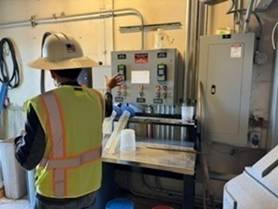
Lack of tribal capacity to fund O&M can create health risks by reducing tribal members’ access to safe drinking water. For example, in 2025, two Tribes experienced E. coli contamination in their water systems because of inadequate capacity for O&M, including not having enough qualified utility personnel to ensure chlorination equipment was functioning, according to EPA. The E. coli contamination put tribal members at risk of gastrointestinal illness and potentially life-threatening conditions. In another example, in 2024, because a Tribe did not have enough wastewater utility operators to conduct routine O&M on its lift station, the lift station’s pump broke, resulting in prolonged sewage overflows (see fig. 4).
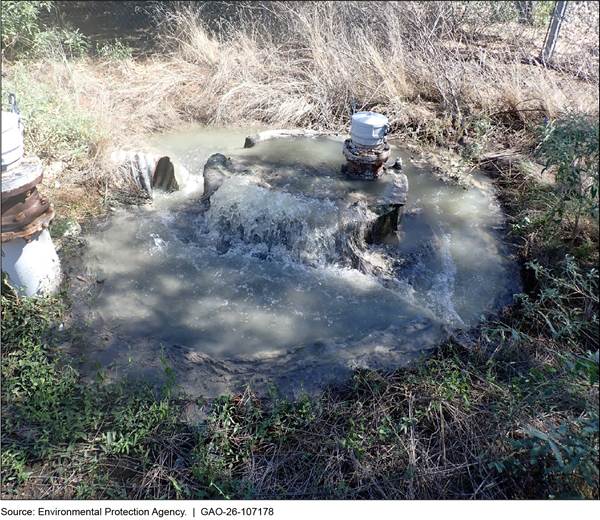
Tribally owned water systems have higher rates of health-based violations of Safe Drinking Water Act regulations than nontribally owned water systems, according to EPA data (see fig. 5).[88] Some of these violations were because of lack of tribal capacity to properly operate and maintain their water infrastructure, according to EPA officials.
Figure 5: Tribally Owned and Nontribally Owned Public Water Systems with Health-Based Violations of Safe Drinking Water Act Regulations, 2021-2025
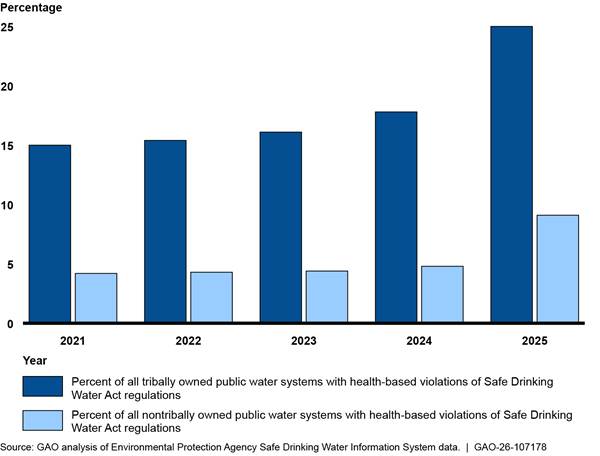
Notes: The data reported for each year captures the number of active public water systems during part or all of the period between July of the previous year and June of the year for which data are being reported as well as any violations open during that period. For example, the violations data reported for 2021 include systems that were active and had health-based violations at any time between July 1, 2020, and June 30, 2021.
Lack of tribal capacity to fund O&M can also result in deferred, or postponed, maintenance of infrastructure, and thus its deterioration. Tribes may defer maintenance when responding to higher-priority needs and emergency situations, according to tribal officials and a tribal organization. Lack of staff is another cause. For example, one Tribe has four steel water storage tanks that are severely corroded and have widespread coating failure because the Tribe did not have enough utility staff who could perform routine maintenance on them (see fig. 6).
Figure 6: A Tribe’s Water Storage Tanks with Severe Corrosion Because of Lack of Routine Maintenance
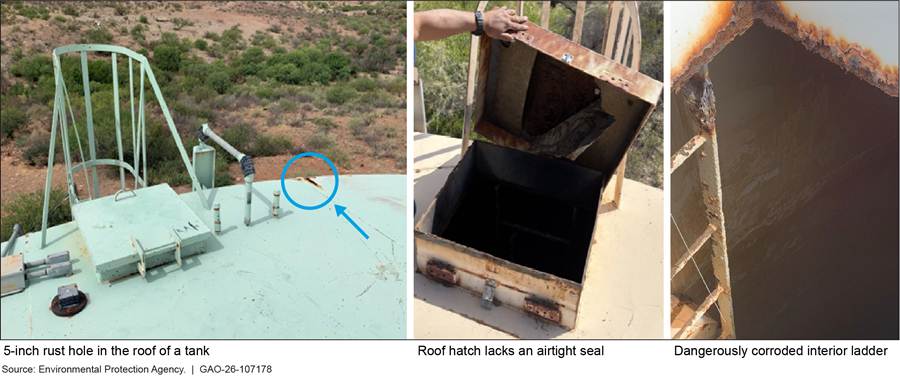
Tribal water infrastructure deteriorating or prematurely failing because of insufficient O&M can increase long-term capital costs to the federal government when it has to fund extensive repairs or replacement.[89] EPA has identified instances in which tribal water infrastructure failed from inadequate O&M and in which EPA and IHS then funded the replacement of the infrastructure. For example, due to lack of maintenance, one Tribe’s sewage lagoon and associated infrastructure, including aeration system, failed and resulted in a discharge to a nearby river, according to EPA officials. In 2025, IHS funded $400,000 for emergency infrastructure improvements to address immediate health risks associated with the failing lagoon. EPA and IHS subsequently jointly funded a $34 million project to design and construct a system to replace the lagoon.
Conducting routine O&M on water infrastructure can enable it to meet its design life and save costs over the long term, according to agency officials. For example, a water storage tank made of steel can last 30 to 60 years when routinely operated and maintained, but 10 to 20 years when not, according to one IHS area office (see fig. 7).
Figure 7: Examples of Lifespan of Drinking Water and Wastewater Infrastructure Components with and Without Routine Operations and Maintenance (O&M)
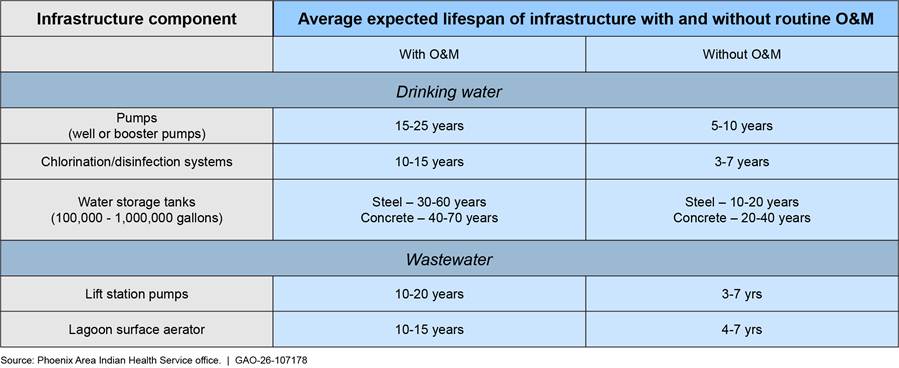
IHS senior officials acknowledged that transferring water infrastructure to Tribes that do not have the capacity to adequately fund and conduct O&M poses health and financial risks, including higher federal expenditures on that infrastructure over the long run. However, IHS officials stated that the agency is required by statute to provide or construct water infrastructure regardless of whether Tribes have the financial capacity to operate and maintain the infrastructure.[90] When tribal water infrastructure fails and needs repair or replacement, IHS officials said that IHS works with Tribes to develop new projects in its SDS database.
IHS has indicated that tribal water infrastructure needs in its SDS database have increased in part because of inadequate O&M. For example, IHS reported in its fiscal year 2026 budget justification that the total eligible costs in the SDS database increased by $1.2 billion, from $4.7 billion in fiscal year 2023 to $5.9 billion in fiscal year 2024, partly due to infrastructure failing because of its age and inadequate O&M.
Assessing Effects of Providing Federal Funding for Routine O&M Could Inform Decision-Making
While IHS generally does not fund O&M for tribal water infrastructure, assessing the effects of doing so on Tribes and the federal government could provide helpful information for decision-making on whether it is cost-effective to provide such support to Tribes. Specifically, IHS generally does not provide financial assistance to Tribes for routine and long-term O&M costs, such as water operator salaries and energy.[91] IHS has not provided Tribes with such assistance because, according to IHS, Congress has not appropriated funds to IHS for such costs. IHS has also noted that its statutory authority does not extend to routine O&M, though in March 2026, a federal court held that IHS is authorized to operate and maintain tribal water infrastructure.[92] As of August 2026, the case was under appeal. IHS has not disputed its authority to provide O&M assistance for, and emergency repairs to, tribal sanitation facilities when necessary to avoid a health hazard or to protect the federal investment in sanitation facilities, as specified in the Indian Health Care Improvement Act, as amended.[93]
|
Agencies Provide Technical Assistance for Operations and Maintenance Indian Health Service (IHS), U.S. Environmental Protection Agency (EPA), and U.S. Department of Agriculture (USDA) provide technical assistance and training to Tribes to support their operations and maintenance (O&M) activities. As of May 2026, IHS had 22 tribal utility consultants who provide consulting and technical services to tribal utility staff. In addition, EPA and USDA provide funding to various entities, such as nonprofit organizations, that provide technical assistance and training to water utility personnel on how to operate and maintain their systems. Tribal and agency officials said the technical assistance agencies provide is helpful but insufficient, considering the magnitude and severity of tribal needs. For example, officials from one IHS area office said their four tribal utility consultants are expected to work with 104 Tribes. Technical assistance providers are also often responding to emergencies, such as system failures, limiting their ability to train and help utility staff conduct routine O&M, according to agency officials. In addition, IHS’s O&M guidance states that developing tribal capacity to conduct O&M does not address Tribes’ inherent need for funding to carry out the tasks associated with a comprehensive O&M program. |
Source: GAO analysis of agency documents and agency and tribal interviews. | GAO‑26‑107178
|
Effects of Lack of Safe Water on Children in Rural Alaska Lack of access to safe water can negatively impact children’s health. Academic research suggests that lack of access to safe water in rural Alaska is associated with adverse health impacts on children and expensive health care costs. Specifically, in rural Alaska, lack of access to safe water has been associated with pediatric respiratory infections and dental disease, according to research studies. Of Alaska Native children in the Yukon-Kuskokwim Delta region, 73 percent have undergone dental surgery, under general anesthesia, by 6 years of age for severe early childhood tooth decay. This rate is at least 50 times that of the general population, according to a 2021 American Academy of Pediatrics article. The dental surgery typically involves multiple extractions of decaying teeth and restorative procedures, such as fillings or crown placement. These procedures also frequently require families to travel by air or boat to regional hospitals where young children are admitted. Treatment costs include use of dental providers, dental surgeons, operating rooms, medications, and travel and accommodations for the child and their parents/guardians. Two academic research studies suggest that increased access to in-home and fluoridated piped water in the region could yield substantial cost savings to the federal government through avoided health care costs, such as to IHS and Medicaid. Source: GAO analysis of academic research. | GAO‑26‑107178 |
IHS evaluated tribal capacity to adequately fund O&M by assessing the difference between the amount of funding Tribes need to adequately operate and maintain their systems and the amount they spent on O&M. Specifically, in 2020, IHS determined that for some Tribes in Alaska and the lower 48 states, there was a gap in the amount of funding that Tribes needed to adequately operate and maintain their systems and the amount they spent on O&M.[94] However, IHS’s evaluations had data limitations, including a low response rate for Tribes in the lower 48 states. Accordingly, the evaluations’ specific funding gap estimates cannot be generalized to all Tribes. IHS’s studies suggested that IHS conduct further research on whether adequate O&M funding results in increased tribal water system compliance with EPA regulations, more reliable water service, and longer infrastructure life.
However, the agency has not assessed the potential effects that could result from providing federal funding for O&M. For example, while IHS has evaluated and found that construction of water infrastructure saves money in avoided health care costs, IHS has not evaluated whether O&M funding could result in cost savings to the federal government.[95]
IHS does not currently collect valid data that could support further research on the potential effects of O&M funding, such as accurate information about Tribes’ specific, routine O&M needs and the instances and extent to which inadequate O&M funding causes or contributes to premature failure of tribal water infrastructure. IHS senior officials said they have not conducted further study on O&M because the agency does not have the resources to do so. Specifically, IHS officials said IHS’s water program appropriations are for the construction of water infrastructure, and that such appropriations are already not enough to meet Tribes’ current construction needs, including for communities that lack access to piped water systems.[96]
According to federal standards for internal control, management should obtain or generate quality information to support informed decision-making. Further, it is important for agencies to assess and mitigate risks to achieving their program objectives, such as, in IHS’s case, assessing whether inadequate O&M funding risks its objective of supporting tribal members’ health.[97]
One way to evaluate the potential effects of federal financial assistance for routine O&M beyond the studies that have been conducted is through a pilot program that could enable IHS to collect real-world information. This information could demonstrate whether and how O&M funding, such as funding for certified water operator salaries or energy costs, could result in federal cost savings and improve tribal health by reducing water system violations and increasing the reliability of water service. According to leading practices for effective design of a pilot program that we have identified (see fig. 8), the purpose of a pilot is generally to inform a decision on whether and how to implement a new approach in a broader context.[98] Through a pilot, agencies can identify lessons learned that can inform decisions about a pilot’s scalability. Real-world information from a pilot is especially valuable in this context because Tribes’ particular O&M needs vary greatly, both in terms of dollar amounts and type of needs (e.g., water operator salaries or energy costs), and a pilot can help identify how to most cost-effectively meet those needs.
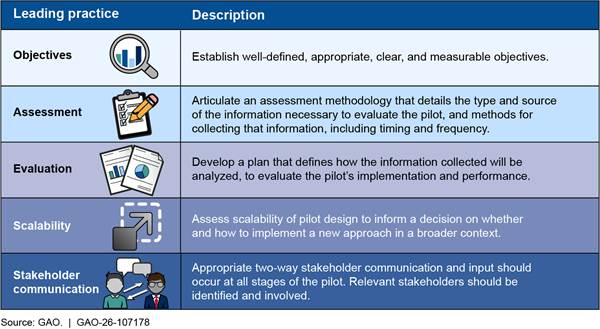
Tribal organizations have proposed pilot programs to provide financial assistance for routine O&M. For example, in June 2024, a tribal health consortium in Alaska proposed a $20 million, 2-year demonstration program that would provide financial assistance to tribal utilities and water users and that could develop evidence to support the development of a larger and long-term financial assistance program for Tribes across the United States.[99] Also, the National Tribal Water Council recommended that Congress appropriate $600 million over a 5-year period for IHS, in collaboration with EPA, to develop and implement a pilot program that directly supports the O&M of tribal water systems.[100]
IHS and EPA have resources that could help with designing and conducting a pilot. For example, one IHS area office provided us with a life cycle costs tool that it indicated could be used to calculate cost savings from routine O&M of water infrastructure assets. Also, IHS could leverage its existing Operation and Maintenance Data System to collect and update data about Tribes’ O&M capabilities. Further, EPA collects information about Tribes’ O&M activities, or lack thereof, through its sanitary surveys.
IHS officials said they cannot proceed with such a pilot because IHS lacks funding to do so, especially in light of the significant demand that remains for tribal water infrastructure construction. By establishing a pilot program for IHS to conduct that provides assistance for Tribes’ routine O&M costs, such as personnel (e.g., water operator salaries) and energy costs, Congress would enable IHS to collect data in a real-world setting that could inform decision-making on whether and how to provide federal assistance to Tribes for routine O&M. A pilot could also be used to help identify the effects of targeted investments in O&M, such as cost savings and health benefits, while providing direct, on-the-ground assistance to participating Tribes. Following leading practices for effective pilot design, and consulting with Tribes and EPA when designing the pilot, could help IHS ensure the pilot achieves these goals.
Conclusions
Safe drinking water and wastewater disposal are critical to public health, but many Tribes have limited resources to build, operate, and maintain their water infrastructure. IHS and other federal agencies have provided important assistance to Tribes in obtaining clean drinking water and wastewater treatment facilities for their communities over many years. While IHS and other federal agencies have taken steps to collaborate when providing assistance to Tribes for water projects, the current array of federal programs and their varying restrictions, requirements, and processes present costly barriers to Tribes seeking critical assistance. Tribes also experience challenges with operating and maintaining the infrastructure built with that assistance.
For example, IHS has determined that it is only authorized to fund water infrastructure for certain tribal homes. As a result, other types of properties in a tribal community, such as nontribal homes in which tribal members may be living and existing community buildings, are ineligible for IHS funding. In addition, IHS’s $10,000 cap for special project funding for existing community buildings has not been updated in over 40 years even as the cost of labor and materials has increased, which discourages Tribes from pursuing this funding. When Tribes, with IHS assistance, must provide or obtain other funding for these properties before projects can proceed, IHS can expend administrative resources that may exceed the cost of serving these properties, and projects are delayed.
If Congress provided a statutory definition of “Indian homes, lands, and communities,” and IHS updates its policy to reflect that definition, in consultation with Tribes, they could better ensure all intended beneficiaries in tribal communities can access IHS’s financial assistance. In addition, if IHS evaluates its special project funding cap for community buildings and Congress authorizes and directs the agency to fund capital costs for ineligible properties when cost savings could be realized by doing so, IHS could more efficiently fund projects, focus more of its limited resources on projects, and ensure more tribal members can more quickly access safe water.
In addition, because federal funding for tribal housing and water infrastructure has not covered infrastructure needs, as well as a statutory prohibition on IHS serving new HUD-funded homes, some Tribes have had to make the difficult choice to use their HUD grant funding to build more homes without water connections, or to build fewer homes in order to include water. By combining their data on tribal homes built using HUD funding and the estimated costs to serve these homes, IHS and HUD could more accurately assess the cost implications of removing the statutory prohibition. Sharing that information with Congress could help policymakers make informed decisions about modifying the statutory prohibition and funding tribal water infrastructure and housing needs. While IHS and HUD have consulted with Tribes on the effects of this prohibition, and IHS has reported a summary of their feedback, HUD has not communicated with Tribes how it considered their input. Unless HUD does so, it risks undermining Tribes’ trust in the agency.
When Tribes, with IHS assistance, seek funding from EPA and USDA for projects included in IHS’s database and other projects, the agencies’ varying and complex processes and requirements deter them from applying. We identified ways the agencies could streamline these requirements and processes, including by reducing or eliminating some agency-specific application and procurement requirements and better leveraging interagency agreements to facilitate transferring funds from EPA and USDA to IHS. Implementing these changes could increase Tribes’ ability to access these programs and make interagency collaboration more cost effective.
When Tribes do not have capacity to conduct routine O&M, their water infrastructure can deteriorate and fail prematurely. Such system failures can create risks to tribal health and increase costs to the federal government over the long run when it must pay to repair or replace the infrastructure. By establishing a pilot program through which IHS, in consultation with Tribes and EPA, provides assistance for Tribes’ routine O&M costs (e.g., water operator salaries and energy costs), Congress would enable IHS to collect information about the effects of targeted investments in O&M, such as whether it generates cost savings to the federal government and improves tribal health, while providing participating Tribes with immediate assistance for their O&M expenses.
Matters for Congressional Consideration
We are making the following three matters for congressional consideration:
Congress should consider amending the Indian Sanitation Facilities Act to define “Indian homes, communities, and lands” to clarify which homes and buildings should be eligible for IHS financial assistance. (Matter for Consideration 1)
Congress should consider authorizing and directing IHS to, in consultation with Tribes, create an exception to fund all or a portion of the capital costs associated with homes and community buildings in its projects that IHS has deemed ineligible and for which its administrative costs would likely exceed these capital costs. (Matter for Consideration 2)
Congress should consider establishing a pilot program through which IHS, in consultation with Tribes and in collaboration with EPA, provides assistance for Tribes’ routine O&M costs, such as personnel (e.g., water operator) salaries and energy costs. In establishing the program, Congress could consider directing IHS and EPA to follow leading practices for effectively designing a pilot program. (Matter for Consideration 3)
Recommendations for Executive Action
We are making a total of 12 recommendations, five to IHS (Recommendations 1, 2, 3, 9, and 11), two to HUD (Recommendations 4 and 5), two to EPA (Recommendations 6 and 10), and three to USDA (Recommendations 7, 8, and 12).
The Director of IHS should ensure that the Director of the Division of Sanitation Facilities Construction updates IHS policy, in consultation with Tribes, to reflect a new statutory definition of “Indian homes, communities, and lands” if such a definition is enacted. (Recommendation 1)
The Director of IHS should ensure that the Director of the Division of Sanitation Facilities Construction, in consultation with Tribes, evaluates whether $10,000 is an appropriate limit for funding existing community buildings, in light of inflation and increases in costs for labor and materials since the amount was set in 1985, and adjust the limit as appropriate. (Recommendation 2)
The Director of IHS should ensure that the Director of the Division of Sanitation Facilities Construction, in coordination with the HUD Deputy Assistant Secretary for Native American Programs, aggregates IHS’s information about the potential estimated costs to serve homes and HUD’s information about the number of new homes built with IHBG funding to estimate the cost of providing water connections for newly built HUD-funded homes, and report this information to Congress, to be updated as requested. (Recommendation 3)
The Secretary of HUD should ensure that the Deputy Assistant Secretary for Native American Programs, in coordination with the IHS Director of the Division of Sanitation Facilities Construction, aggregates HUD’s information about the number of new homes built with IHBG funding and IHS’s information about the potential estimated costs to serve homes to estimate the cost of providing water connections for newly built HUD-funded homes, and report this information to Congress, to be updated as requested. (Recommendation 4)
The Secretary of HUD should ensure that the Deputy Assistant Secretary for Native American Programs publicly communicates information to Tribes about how HUD considered tribal input provided through its tribal consultation about the statutory prohibition on IHS using its appropriations to provide water infrastructure for new homes built with HUD housing grant programs, along with any outcomes from that consultation. (Recommendation 5)
The Administrator of EPA should direct its regions that use a solicitation process to administer the Drinking Water Infrastructure Grant Tribal Set-Aside program to streamline the application process for projects that are already included in IHS’s Sanitation Deficiency System database and where Tribes request that EPA transfer project funding to IHS. (Recommendation 6)
The Under Secretary for Rural Development, in consultation with Tribes, should develop a process to streamline or eliminate requirements for financial information and conducting underwriting for Tribes that submit grant applications to the Native American and Water and Waste Disposal programs. (Recommendation 7)
The Under Secretary for Rural Development should develop a general applicability, tribal public interest waiver of American Iron and Steel requirements for projects funded by its Native American and Water and Waste Disposal programs. (Recommendation 8)
The Director of IHS should ensure that the Director of the Division of Sanitation Facilities Construction, working with the Administrator of EPA, identify and address areas of ongoing high administrative costs when EPA transfers funding to IHS for tribal water projects, including in relation to G-invoicing and interagency agreement terms and conditions that limit how IHS can distribute EPA-contributed funds to Tribes through advance payments. The agencies should document those changes in policy and in their updated interagency agreement standard terms and conditions, as needed. (Recommendation 9)
The Administrator of EPA, working with the IHS Director of the Division of Sanitation Facilities Construction, should identify and address areas of ongoing high administrative costs when EPA transfers funding to IHS for tribal water projects, including in relation to G-invoicing and interagency agreement terms and conditions that limit how IHS can distribute EPA-contributed funds to Tribes through advance payments. The agencies should document those changes in policy and in their updated interagency agreement standard terms and conditions, as needed. (Recommendation 10)
The Director of IHS should ensure that the Director of the Division of Sanitation Facilities Construction, working with USDA’s Under Secretary for Rural Development, develop program-level, standardized interagency agreements with agreed-upon terms and conditions for the Native American and Water and Waste Disposal programs and use them to transfer USDA program funds to IHS for tribal water projects when requested by Tribes. The standard terms and conditions could include, to the extent legally permissible, providing advanced lump-sum payments and removing additional or duplicative USDA administrative requirements. (Recommendation 11)
The Under Secretary for Rural Development, working with the IHS Director of the Division of Sanitation Facilities Construction, should develop program-level, standardized interagency agreements with agreed-upon terms and conditions for the Native American and Water and Waste Disposal programs and use them to transfer USDA program funds to IHS for tribal water projects when requested by Tribes. The standard terms and conditions could include, to the extent legally permissible, providing advanced lump-sum payments and removing additional or duplicative USDA administrative requirements. (Recommendation 12)
Agency Comments and Our Evaluation
We provided a draft of this report for review and comment to the Department of Health and Human Services, EPA, USDA, and HUD. Health and Human Services, EPA, and USDA provided written comments; and HUD provided comments via email, as we discuss in more detail below. Health and Human Services, EPA, and USDA also provided technical comments, which we incorporated as appropriate.
In the Department of Health and Human Services’ written comments (reproduced in appendix I), it agreed with our recommendations and provided information about actions it is taking or plans to take to address them. These actions, if implemented as described, would address the intent of our recommendations. The department also offered a clarification regarding our recommendation that it identify and address areas of ongoing high administrative costs when EPA transfers funding to IHS for tribal water projects. It stated that the current interagency framework with EPA limits the total percentage of funding it provides in advance payments to Tribes, but that the authorizing statute does not include such a limitation. In response, we revised the recommendation to make clearer that the changes we suggest to the IA’s standard terms and conditions are within the agencies’ current statutory authorities.
In EPA’s written comments (reproduced in appendix II), the agency stated that it generally agreed with our findings, conclusions, and recommendations but disagreed with our recommendation, as originally written, that it direct its regions to no longer require an application process for projects in IHS’s SDS database. EPA stated that no longer requiring Tribes to submit applications to its drinking water set-aside program for projects in the SDS database would create substantial administrative challenges and might not reduce administrative burdens for Tribes, as intended. EPA provided several reasons, including that projects in the SDS database do not always include the full set of documentation that EPA needs to determine eligibility for its program. We recognize that there are likely circumstances in which EPA may need additional information beyond what is in the SDS database, particularly if a project is in an earlier stage of development with IHS or if the Tribe would like to receive a grant from EPA instead of having EPA transfer funds to IHS.
In its comments, EPA stated that prohibiting EPA regional offices from soliciting project proposals directly from Tribes for projects already included in IHS's SDS database would constitute a major change in national program policies, with potentially broad consequences for program implementation. However, the intent of our recommendation is not to eliminate the solicitation process altogether. Rather, our recommendation is intended to help EPA reduce barriers Tribes face with accessing drinking water set-aside funding, ease administrative burden for Tribes and agency staff, and enable them to focus their resources on projects.
In response to EPA’s comments, we revised the recommendation to make clear that EPA should streamline the application process for projects in the SDS database for which Tribes are not seeking to receive a grant from EPA. Implementing this recommendation would include streamlining the application process in certain circumstances, not eliminating the solicitation process. EPA proposed a revision to the recommendation and actions it would take in response. These actions include conducting a review to identify opportunities to minimize the collection of duplicate project information that is already in the SDS database and, as applicable, coordinate with the regions on the outcomes of the review. While these are positive steps, to fully address our recommendation, EPA should streamline the application process for projects that are already included in IHS’s database and where Tribes request that EPA transfer project funding to IHS.
EPA also stated that we appeared to base our recommendation primarily on statements from individuals we interviewed. As we describe in our report, we analyzed the differences between the agencies’ application processes. We also conducted interviews with IHS and EPA headquarters and regional officials and tribal officials about any impacts of these differences on interagency collaboration and Tribes’ ability to access assistance. We continue to believe that by implementing our recommendation, EPA can help reduce the administrative burden Tribes and agencies experience when applying for its funding.
In addition, EPA stated that it generally agreed with our recommendation that it identify and address areas of ongoing high administrative costs when EPA transfers funding to IHS for tribal water projects. EPA noted that it plans to identify opportunities for reducing unnecessary administrative burdens associated with processing and managing IAs for tribal water infrastructure projects and revise the standard terms and conditions that apply to IAs funded under EPA's tribal water infrastructure funding programs, among other things.
In USDA’s written comments (reproduced in appendix III), it disagreed with our recommendation that it streamline or eliminate requirements for financial information and underwriting for Tribes when applying to two of its programs. USDA stated that its practices ensure that federally funded water systems are fiscally sustainable and that recipients of USDA funding, including Tribes, can afford to operate and maintain these systems without additional federal subsidy. We recognize the importance of ensuring that federally funded water system projects be fiscally sustainable. However, as we describe in our report, many Tribes do not have the capacity or resources to provide the information requirements USDA has set.
We also recognize that it is important for agencies to consider the extent to which Tribes will be able to sustain their water systems when making funding decisions. However, in our report, we discuss other, less burdensome ways to do so. For example, EPA and IHS also evaluate tribal water systems’ financial capacity when considering funding water infrastructure, but they do so with fewer administrative requirements, as we describe in our report. In light of other agencies’ practices, we continue to believe that USDA can implement less burdensome ways to evaluate tribal financial capacity when considering awarding grants to Tribes, such as by streamlining financial information requirements or eliminating underwriting requirements for tribal grant applications. We continue to believe that implementing our recommendation could increase Tribes’ ability to access programs that provide assistance to Tribes for water systems projects.
USDA also stated that it believed we should direct to Congress our recommendation that it develop a general applicability, tribal public interest waiver of AIS requirements for certain projects. USDA said that waiving AIS requirements for tribal projects would decrease administrative burden and cost, but that AIS requirements continue to be included in annual appropriations for its Water and Waste Disposal program. As noted above, similar to BABA, USDA has the authority to waive AIS requirements based on a finding that applying the requirements would be inconsistent with public interest.[101] Because USDA already has the authority to issue a general applicability, tribal public interest waiver, we continue to believe that this recommendation is appropriately directed to USDA.
USDA neither agreed nor disagreed with our recommendation to develop program-level, standardized IAs with IHS for the Native American and Water and Waste Disposal programs. While USDA said that it was working on state-level IAs and that expanded use of the IAs may be possible, we continue to believe that USDA should develop standardized agreements at the program level rather than state by state. Doing so would ensure USDA has an effective tool that it can promptly leverage nationwide and that streamlines its collaboration with IHS.
In an attachment to an email from HUD’s Office of Public and Indian Housing’s Audit Liaison Officer, HUD said it disagreed with our recommendation that it work with IHS to estimate the cost of providing water to new HUD homes. HUD said it did not have the necessary authority to take the recommended action since it cannot impose reporting requirements on Tribes beyond what is required by statute and regulation. However, implementing our recommendation would not require HUD to collect any additional information from Tribes. HUD already collects and reports annually on the number of homes that Tribes build with IHBG funding, and this information can be aggregated to inform congressional decision-making.
In addition, Health and Human Services said in its written comments that IHS would work with HUD to identify a methodology for combining the information they have to create a planning estimate for Congress. We maintain that implementing our recommendation would help IHS and HUD more accurately assess the cost implications of removing the statutory prohibition on IHS using its appropriations to provide water infrastructure for new homes built with HUD housing grant programs. Sharing that information with Congress could help policymakers make informed decisions about modifying the statutory prohibition and funding tribal water infrastructure and housing needs.
In its emailed comments, HUD stated that it agreed with our recommendation that it report to Tribes about the outcome of its joint consultation with IHS. HUD said it would inform Tribes that it held a joint consultation regarding the statutory prohibition. Communicating this information is a positive step, but we continue to believe that HUD should also communicate with Tribes, including those that participated in the consultation, about how it considered the input provided and any decisions or outcomes from the consultation. If HUD does not plan to make any decisions as a result of the consultation, the agency should share that information with Tribes, as we recommended.
We are sending copies of this report to the appropriate congressional committees, the Secretary of Agriculture, the Secretary of Health and Human Services, the Secretary of HUD, the Administrator of EPA, and other interested parties. In addition, the report is available at no charge on the GAO website at https://www.gao.gov.
If you or your staff have any questions about this report, please contact me at OrtizA@gao.gov. Contact points for our Offices of Congressional Relations and Media Relations may be found on the last page of this report. GAO staff who made key contributions to this report are listed in appendix IV.
Sincerely,
Anna Maria Ortiz
Director, Natural Resources and Environment
GAO Contact
Anna Maria Ortiz, OrtizA@gao.gov
Staff Acknowledgments
In addition to the above, the following staff made key contributions to this report: Leslie Kaas Pollock (Assistant Director), Elizabeth Jiménez (Analyst-in-Charge), Adrian Apodaca, Tara Congdon, Rebecca Conway, Emily Gupta, Anne Kolesnikoff, Serena Lo, Jeanette Soares, and Swati Sheladia Thomas.
The Government Accountability Office, the audit, evaluation, and investigative arm of Congress, exists to support Congress in meeting its constitutional responsibilities and to help improve the performance and accountability of the federal government for the American people. GAO examines the use of public funds; evaluates federal programs and policies; and provides analyses, recommendations, and other assistance to help Congress make informed oversight, policy, and funding decisions. GAO’s commitment to good government is reflected in its core values of accountability, integrity, and reliability.
Obtaining Copies of GAO Reports and Testimony
The fastest and easiest way to obtain copies of GAO documents at no cost is through our website. Each weekday afternoon, GAO posts on its website newly released reports, testimony, and correspondence. You can also subscribe to GAO’s email updates to receive notification of newly posted products.
Order by Phone
The price of each GAO publication reflects GAO’s actual cost of production and distribution and depends on the number of pages in the publication and whether the publication is printed in color or black and white. Pricing and ordering information is posted on GAO’s website, https://www.gao.gov/ordering.htm.
Place orders by calling (202) 512-6000, toll free (866) 801-7077,
or
TDD (202) 512-2537.
Orders may be paid for using American Express, Discover Card, MasterCard, Visa, check, or money order. Call for additional information.
Connect with GAO
Connect with GAO on X,
LinkedIn, Instagram, and YouTube.
Subscribe to our Email Updates. Listen to our Podcasts.
Visit GAO on the web at https://www.gao.gov.
To Report Fraud, Waste, and Abuse in Federal Programs
Contact FraudNet:
Website: https://www.gao.gov/about/what-gao-does/fraudnet
Automated answering system: (800) 424-5454
Media Relations
Sarah Kaczmarek, Managing Director, Media@gao.gov
Congressional Relations
David A. Powner, Acting Managing Director, CongRel@gao.gov
General Inquiries
[1]In this report, we define “tribal members” as individuals who are enrolled in a federally recognized Tribe, also referred to as Tribes. As of August 2026, there were 575 federally recognized Tribes in the lower 48 states of the United States and Alaska. See 91 Fed. Reg. 4102 (Jan. 30, 2026). In general, Tribes determine eligibility for enrollment, based on criteria such as descent from a specified group or individual. Tribal members can be of any race or ethnicity, and the number of tribal members is not the same as the number of persons self-identifying as “American Indian or Alaska Native” as a race/ethnicity classification in the Census and other federal data. In this report, “lower 48 states” refers to the 48 states that are contiguous, or touch each other, and does not include Alaska or Hawaii.
[2]See, for example, GAO, Drinking Water and Wastewater Infrastructure: Opportunities Exist to Enhance Federal Agency Needs Assessment and Coordination on Tribal Projects, GAO‑18‑309 (Washington, D.C.: May 15, 2018); and Indian Health Service, Final Report: Operation and Maintenance Cost Evaluation of American Indian Owned and Operated Drinking Water and Wastewater Utilities (Apr. 7, 2020).
[3]Tribes have a government-to-government relationship with the United States.
[4]While the majority of people receiving IHS services are tribal members, some individuals who are not enrolled in a federally recognized Tribe may also be eligible for IHS services. IHS regulations provide that individuals “regarded as … Indian[s] by the community in which [they] live[,] as evidenced by such factors as tribal membership, enrollment, residence on tax-exempt land, ownership of restricted property, active participation in tribal affairs, or other relevant factors” may be regarded as within the scope of IHS’s health and medical service program. 42 C.F.R. § 136.12(a)(2). Other eligible individuals include the natural or adopted child, stepchild, foster child, legal ward, or orphan of an eligible individual. Indian Health Service, “Part 2, Chapter 1: Eligibility for Services,” Indian Health Manual (Rockville, Md.: June 28, 2017).
[5]IHS’s Sanitation Facilities Construction program also works with Tribes to identify and address solid waste sanitation deficiencies. For readability and because this report focuses on water infrastructure, we refer to the program as IHS’s water program. This report uses “water infrastructure” to refer to both drinking water and wastewater infrastructure unless otherwise specified.
[6]U.S. Commission on Civil Rights, Broken Promises: Continuing Federal Funding Shortfall for Native Americans (Washington, D.C.: Dec. 20, 2018).
[8]IHS, EPA, and USDA, along with the Department of Housing and Urban Development and the Bureau of Reclamation, formed the task force in 2007 to coordinate their assistance for tribal water infrastructure.
[9]Infrastructure Task Force, Responses to 2011 Streamlining Opportunities Report (Washington, D.C.: May 2020).
[10]GAO, Tribal Issues: Barriers to Access to Federal Assistance, GAO‑25‑107674 (Washington, D.C.: Dec. 3, 2024).
[11]Pub. L. No. 117-58, 135 Stat. 429, 1411 (2021). The appropriation is for IHS’s Sanitation Facilities Construction program and is in addition to IHS’s annual appropriation for the program.
[12]In this report, properties include homes and buildings.
[13]The programs we selected are the IHS Sanitation Facilities Construction (water) program; EPA Clean Water Indian Set-Aside; EPA Drinking Water Infrastructure Grants Tribal Set-Aside; USDA Water and Waste Disposal Loans and Grants Program; and USDA Native American Program. For IHS, we excluded the solid waste projects funded through the Sanitation Facilities Construction program from the scope of our review. For EPA tribal set-aside programs, we did not include special programs such as emerging contaminants or lead service line replacements.
[14]The states we selected are Alaska, Arizona, California, New York, and Oklahoma.
[15]These organizations are the Alaska Native Tribal Health Consortium and the Alaska Native Health Board, which represent all federally recognized Tribes in Alaska; the Interior Regional Housing Authority, Association of Village Council Presidents Regional Housing Authority, Tanana Chiefs Conference, and the Yukon-Kuskokwim Health Corporation, which represent a combined total of 95 Tribes in Alaska; and the Inter Tribal Council of Arizona, which represents and provides technical assistance and training to 21 Tribes in Arizona.
[16]These organizations include the National Tribal Water Council, Southwest Environmental Finance Center, Rural Community Assistance Corporation, Rural Communities Assistance Partnership, National Rural Water Association, and Universal Access to Clean Water.
[17]In this report, we use “Alaska Native village” to refer to Alaskan communities that are home to at least one federally recognized Tribe. As of May 2026, there were 227 federally recognized Tribes within the state of Alaska.
[18]U.S. Commission on Civil Rights, Broken Promises.
[20]In fiscal year 2025, IHS allocated $1.5 million for Special and Emergency Projects.
[21]The Indian Self-Determination and Education Assistance Act, as amended, authorizes Tribes and tribal organizations to assume responsibility for administration of certain federal programs from IHS and the Department of the Interior through a self-determination contract or self-governance compact. Pub. L. No. 93-638, 88 Stat. 2203 (Jan. 4, 1975) (codified as amended at 25 U.S.C. §§ 5301-5423). Tribal organizations include legally established organizations of Indians which are controlled, sanctioned, or chartered by the recognized governing body of any Tribe. 25 U.S.C. § 5304(l). When a tribal organization performs services benefiting more than one Tribe through a contract or compact, the approval of each such Tribe is a prerequisite to awarding the contract or compact. Id. As of April 2026, 19 Tribes in the lower 48 states had entered into self-governance compacts with IHS to assume responsibility for administering the Sanitation Facilities Construction (water) program, and the Alaska Native Tribal Health Consortium had compacted with IHS to administer the program for the more than 200 Tribes in Alaska. According to IHS and tribal officials, one Tribe uses self-determination contracts to construct specific infrastructure projects.
[22]In addition, EPA and USDA each administer water infrastructure programs that award grants to the State of Alaska to specifically serve tribal communities in Alaska. EPA administers the Alaska Native Villages and Rural Community Water Grant program that awards grants to, among other things, improve sanitation in rural and Alaska Native villages. USDA administers the Rural Alaska Village Grant program, which provides grants for development and construction of water and wastewater systems that address dire sanitation conditions in rural or Alaska Native villages with 10,000 or fewer people. The programs are authorized by 33 U.S.C. § 1263a and 7 U.S.C. § 1926d, respectively.
[23]Operations enable a facility to perform its intended function, while maintenance is the act of keeping fixed assets in usable condition.
[24]Executive Order No. 13175, Consultation and Coordination with Indian Tribal Governments, § 5(a), 65 Fed. Reg. 67,249 (Nov. 9, 2000). As of August 2026, this executive order remained in force.
[25]Presidential Memorandum, Tribal Consultation, 74 Fed. Reg. 57,881 (Nov. 9, 2009). A 2021 presidential memorandum reaffirmed this policy. Presidential Memorandum, Tribal Consultation and Strengthening Nation-to-Nation Relationships, 86 Fed. Reg. 7491 (Jan. 29, 2021).
[27]For example, the agencies had also documented their agreement to collaborate within the task force with a memorandum of understanding that also stated common goals and purpose. See GAO‑18‑309.
[28]Federal Infrastructure Task Force on Tribal Access to Safe Drinking Water and Basic Sanitation, Streamlining Preconstruction Paperwork Workgroup, Overview of Tribal Water Infrastructure Funding Application Processes and Recommended Streamlining Opportunities (Washington, D.C.: February 2011). Four agencies agreed with our 2018 recommendation, and USDA neither agreed nor disagreed.
[29]Infrastructure Task Force, Responses to 2011 Streamlining Opportunities.
[30]Three agencies agreed with this recommendation, EPA agreed with its intent, and USDA neither agreed nor disagreed.
[31]42 U.S.C. § 2004a(a)(1).
[32]As noted above, individuals “regarded as … Indian[s] by the community in which [they] live[,] as evidenced by such factors as tribal membership, enrollment, residence on tax-exempt land, ownership of restricted property, active participation in tribal affairs, or other relevant factors” may be regarded as within the scope of IHS’s health and medical services. 42 C.F.R. § 136.12(a)(2). According to IHS policy, the agency takes several factors into account when determining eligibility for service, including persons, homes, facilities, and services.
[33]Since at least 2003, annual appropriations act language has provided that “[n]one of the funds appropriated to the Indian Health Service may be used for sanitation facilities construction for new homes funded with grants by the housing programs of the U.S. Department of Housing and Urban Development.” See, e.g., Commerce, Justice, Science; Energy and Water Development; and Interior and Environment Appropriations Act, 2026, Pub. L. No. 119-74, 140 Stat. 5, 149. In the 1980s and 1990s, some committee reports accompanying IHS’s annual appropriations acts directed IHS to not use its appropriations to serve new HUD-funded homes. See H.R. Rep. No. 97-747, at 34 (1982).
[34]IHS officials explained that they identify the units proposed to be served, determine their eligibility for IHS funding, and develop a total project cost that distinguishes between eligible and ineligible portions. In tribal communities, when most of the project serves eligible units, IHS may use limited funds to support project planning and design, while the full ineligible cost share is secured from another contributor before construction funding is provided.
[35]This may happen where there is a relatively low percentage of tribal members living in a tribal community. For example, tribal communities may contain a mix of tribal and nontribal members, with tribal populations ranging from almost 100 percent in remote Alaska Native villages to around 50 percent in some areas where tribal land is heavily interspersed with federal, state, and private land, such as in California.
[36]As described above, in addition to considering all nontribal homes ineligible for IHS funding, IHS also considers a tribal home that is exclusively occupied by nontribal members to be ineligible.
[37]For example, the Department of Health and Human Services Office of Inspector General has reported that, as of September 2023, IHS had a 39 percent staff vacancy rate for its IHS engineers. The report found that IHS’s chronic staffing shortages and high vacancy rates significantly hindered its ability to effectively manage and deploy funding intended for critical tribal sanitation projects. See Office of Inspector General, Department of Health and Human Services, Staffing Shortages Limited IHS’s Capacity to Effectively Administer Much-Needed Sanitation Projects Funded by the Infrastructure Investment and Jobs Act, OEI-06-24-00010 (Washington, D.C.: December 2024). In January 2026, IHS sent a letter to Tribes indicating that it was launching its largest hiring initiative in the agency’s history, which would include hiring staff within the office in which the Sanitation Facilities Construction program resides.
[38]The Denali Commission is an independent federal agency established by Congress in 1998 that provides critical infrastructure and economic support throughout Alaska. According to commission officials, IHS should address the ineligible costs within its own program framework rather than require external agencies to cover them. These officials said they also concluded that continuing to provide supplemental contributions would reinforce a self-imposed barrier that IHS has the authority to resolve. According to IHS officials, the Denali Commission’s policy shift may increase delays in project implementation and may affect the overall pace at which sanitation deficiencies are addressed in Alaska Native communities. While the commission’s contributions have largely been for solid waste projects, the withdrawal of all contributions can affect other tribal water projects.
[39]IHS maintains special project funding at headquarters and allocates it outside of the process for approving projects in the SDS database, which is generally done by area offices. Special projects funding can be used for improving tribal water systems, preparing for future building projects, or determining the feasibility of providing water facilities.
[40]In addition to HUD housing programs, Tribes leverage multiple funding sources across federal programs to build tribal housing, according to National American Indian Housing Council.
[41]Under the IHBG program regulations, Tribes and Tribally Designated Housing Entities generally cannot exceed the total development cost limit for each new home without HUD approval. 24 C.F.R. § 1000.158(b), (c). These limits are published periodically by HUD for each tribe and establish the maximum amount of funds (from all sources) that an IHBG recipient may use to develop, acquire, or rehabilitate affordable housing. This maximum budget covers, among other things, all onsite infrastructure, including water and utility connections. Any water infrastructure located within the boundaries of the home site—such as the service lines connecting a house to the water main—must fit within this limit.
[42]Historically, IHBG formula grant appropriations remained relatively flat in nominal terms, although in real terms funding declined until recent increases began in fiscal year 2022. Congressional Research Service, The Native American Housing Assistance and Self-Determination Act, IF12905 Version 2 (Washington, D.C.: Feb. 11, 2025).
[43]For a HUD-funded home to qualify for IHS assistance, the home must have been provided with water service when first constructed and (1) ownership has been conveyed to an eligible homeowner; or (2) the home is still managed by a Tribe or Tribally Designated Housing Entity but did not directly create or contribute to the sanitation deficiency IHS is addressing.
[44]Department of Housing and Urban Development, Report to Congress on Native American Housing Assistance and Self-Determination Act Fiscal Year 2024 (April 2025). Also for fiscal year 2024, HUD IHBG-Competitive funding supported the development of 540 homeowner and rental units.
[45]While HUD collects certain data from its grantees, Tribes are not required to specify whether homes are built with or without water infrastructure. According to HUD, the agency cannot impose reporting requirements on Tribes beyond what is statutorily and regulatorily required, due to the Native American Housing Assistance and Self Determination Act of 1996 and negotiated rulemaking requirements
[46]For example, we calculated that about 4 percent of IHS’s planned projects in its SDS database that were ready to fund in fiscal year 2025 contained at least one ineligible new HUD-funded home.
[47]GAO, Standards for Internal Control in the Federal Government, GAO‑25‑107721 (Washington, D.C.: May 15, 2025).
[48]The agencies have collaborated in various ways over the years. For example, HUD, IHS, and Interior signed an interdepartmental agreement in 1996 that established information-sharing procedures between the agencies. See 61 Fed. Reg. 47,788 (Sept. 10, 1996). HUD and IHS have also participated in the tribal Infrastructure Task Force since it was established in 2007.
[49]GAO, Tribal Consultation: Additional Federal Actions Needed for Infrastructure Projects, GAO‑19‑22 (Washington, D.C.: May 20, 2019).
[51]GAO, Justice40: Additional Efforts Needed to Improve Tribal Applicants’ Access to Federal Programs under Environmental Justice Initiative, GAO‑24‑106511 (Washington, D.C.: Apr. 10, 2024).
[52]EPA regions coordinate with IHS engineers to help identify and fund projects through these two programs. For EPA’s clean water set-aside program, EPA regions must select projects from IHS’s SDS database and do not use an application process, as outlined in EPA’s program guidance.
[53]U.S. Department of Agriculture, et. al., Memorandum of Understanding to Better Coordinate the Federal Government Efforts in Providing Infrastructure and Promoting Sustainable Practices to Support the Provision of Safe Drinking Wate rand Basic Sanitation in American Indian and Alaska Native Communities (February 2022).
[54]GAO, Government Performance Management: Leading Practices to Enhance Interagency Collaboration and Address Crosscutting Challenges, GAO‑23‑105520 (Washington, D.C.: May 24, 2023). In our work examining tribal access issues to federal programs, we have reported that some agencies addressed barriers by minimizing administrative burden such as by streamlining applications or adopting compatible templates, policies, and procedures across agencies; see GAO‑25‑107674.
[55]U.S. Environmental Protection Agency, Drinking Water Infrastructure Grants Tribal Set-Aside Program Revised Guidelines (June 2025).
[56]The fourth region allows Tribes to submit a letter stating that it wants IHS to manage the project and receive the funding or submit an application if the Tribe wants to receive the grant directly.
[57]7 C.F.R. §§ 1777.11, 1780.33(e). U.S. Department of Agriculture Rural Utilities Service, Staff Instruction 1780-2: Administrative Procedure for Water and Waste Loans and Grants (May 13, 2026). Typically, agencies conduct underwriting and obtain detailed financial information to evaluate whether potential loan recipients have sufficient resources to meet the loan’s repayment conditions.
[58]Applicants must demonstrate that they possess the financial, technical, and managerial capability necessary to consistently comply with pertinent federal and state laws and requirements. 7 C.F.R. § 1780.1(i).
[59]A 2021 report found that a small number of tribal entities received most of USDA’s funding for tribal water projects over the past 10 years. Specifically, from 2010 to 2020, the top 20 tribal entities accounted for more than 50 percent of all awards and 68 percent of the funding provided through USDA programs. The report stated that these data strongly suggest that insufficient tribal capacity prevents most Tribes from applying for and receiving USDA awards. Water & Tribes Initiative, Universal Access to Clean Water for Tribes: Recommendations for Operational, Administrative, Policy, and Regulatory Reform (November 2021).
[60]USDA officials noted the agency can help Tribes address resource constraints they may face in meeting financial and other application requirements. For example, USDA provides assistance through its Circuit Rider program and grants to technical assistance providers. Circuit rider programs are programs that provide technical assistance to rural water systems that are experiencing day-to-day operational, financial, or managerial issues.
[61]Indian Health Service, Sanitation Deficiency System: A Guide for Reporting Sanitation Deficiencies for American Indian and Alaska Native Homes and Communities (Rockville, Md.: September 2019).
[62]U.S. Environmental Protection Agency, Clean Water Indian Set-Aside Program Guidance (September 2015, amended May 2025). For EPA’s drinking water set-aside program, EPA requires Tribes to meet minimum technical, managerial, and financial capacity requirements outlined in the Safe Drinking Water Act. 42 U.S.C. § 300j-12(a)(3)(A)(i). To meet these requirements, Tribes must demonstrate that they have a certified operator, an annual operating budget, and accounting system to track revenues and expenses. U.S. Environmental Protection Agency, Drinking Water Infrastructure Grants Tribal Set-Aside Program Revised Guidelines (June 2025).
[63]U.S. Department of Agriculture, Tribal Consultation, Departmental Regulation DR1350-002 (Washington, D.C.: April 30, 2024). Departmental regulations are internal guidance documents. In contrast to federal regulations, departmental regulations have not gone through the public notice and comment rulemaking process and, as such, are not binding.
[64]BABA requires federal agencies to ensure that recipients of federal financial assistance for infrastructure use iron, steel, manufactured products, and construction materials produced in the United States for the infrastructure project. Pub. L. No. 117-58, § 70914, 135 Stat. 429, 1298 (2021). However, the act allows federal agencies to waive this requirement in certain circumstances after providing a written justification and a public comment period. The act only applies if another domestic content procurement preference, such as the AIS requirement, does not already apply. AIS provisions require recipients of federal financial assistance from certain USDA programs, such as the Native American program, to use iron and steel products that are produced in the United States for the construction, alteration, maintenance, or repair of a public water system or wastewater system. Pub. L. No. 115-31, tit. VII, div. A, § 746, 131 Stat. 135, 175 (2017). Similar to BABA, AIS provisions can be waived in certain circumstances.
[65]In instances where a USDA project is subject to BABA and AIS requirements, AIS compliance can generally be demonstrated through BABA processes. However, a project that qualifies for a BABA waiver would still be responsible for demonstrating compliance with AIS requirements unless a waiver of those requirements is issued.
[66]AIS requirements apply to funds made available from a state clean water or drinking water revolving fund. 33 U.S.C. § 1388; 42 U.S.C. 300j–12(a)(4). Accordingly, AIS requirements do not apply to Tribes that receive grants or funding from a set-aside, such as EPA’s clean water or drinking water tribal set-aside programs. However, according to EPA documents, a Tribe receiving funding from a state revolving fund would be subject to AIS requirements.
[67]87 Fed. Reg. 8852 (Feb. 16, 2022).
[68]Pub. L. No. 117-58, § 70914(b), 135 Stat. 429, 1299 (2021); Pub. L. No. 115-31, tit. VII, div. A, § 746(b), 131 Stat. 135, 175 (2017).
[69]This waiver covers multiple agencies, including USDA and EPA, and expires on January 9, 2030. Department of the Interior et. al., General Applicability Public Interest Waiver to Indian Tribes (Jan. 10, 2025). In addition, this waiver permits Tribes to purchase non-compliant manufactured products until the end of fiscal year 2026 regardless of the amount of the federal financial assistance.
[70]USDA approved several general applicability AIS waivers, including a de minimis and minor components waiver that was issued in 2017. U.S. Department of Agriculture, Water and Environmental Program, De Minimis Waiver and Minor Components Waiver under Section 746 Division A Title III of the 2017 Appropriations Act for American Iron and Steel (AIS) for the United States Department of Agriculture Water and Waste Disposal Program administered by the Rural Utilities Service (2017).
[71]U.S. Department of Agriculture, Tribal Consultation, Departmental Regulations DR1350-002 (Washington, D.C.: Apr. 30, 2024). Departmental regulations are internal guidance documents. In contrast to federal regulations, departmental regulations have not gone through the public notice and comment rulemaking process and, as such, are not binding.
[72]These requirements can vary based on whether the funding agency transfers funds to IHS or awards a grant directly to a Tribe. EPA and USDA can use several different authorities to transfer funds to IHS. For example, the Indian Health Care Improvement Act, as amended, authorizes federal agencies to transfer funds, equipment, or supplies to IHS to carry out the planning, design, construction, or operation of a sanitation facility for Indians. 25 U.S.C. § 1638e(a)(1). The act also authorizes IHS to enter into interagency agreements with federal agencies to accept funds, equipment, and other supplies from those agencies. 25 U.S.C. § 1638e(b).
[73]Efficiency can be defined as maintaining services or outcomes using fewer resources (such as time, money, and staff) while maintaining (or reducing) resources expended. Increasing efficiency can help the federal government make better use of scarce resources. GAO, Fragmentation, Overlap, and Duplication: An Evaluation and Management Guide, GAO‑15‑49SP (Washington, D.C.: Apr. 14, 2015).
[75]According to EPA officials, from 2023 to 2025, nearly all the clean water set-aside funding and approximately 85 percent of the drinking water set-aside funding were implemented using interagency agreements with IHS. In 2025, IHS administered more than $112.6 million in EPA clean water and drinking water set-aside funding for 126 tribal water projects.
[76]According to the interagency agreements and EPA officials, EPA transfers these funds to IHS pursuant to authority in the Safe Drinking Water Act, 42 U.S.C. § 300j-9(b), and Clean Water Act, 33 U.S.C. §§ 1377(e), 1361(b).
[77]IHS and EPA phased in the G-invoicing processes over several years to meet the October 1, 2025, implementation deadline for intra-governmental buy/sell transactions. U.S. Department of the Treasury, Bureau of the Fiscal Service, Treasury Financial Manual, Chapter 4700, Appendix 8: Intra-Governmental transaction Buy/Sell (Washington, D.C.: November 2024).
[78]In a 2017 memorandum, EPA outlined its standard operating procedure for advanced funding of IAs with IHS for the clean water and drinking water set-aside programs. U.S. Environmental Protection Agency, Office of Water Memorandum: Documentation of Standard Operating Procedure, Advanced Funding of Interagency Agreements with the Indian Health Service for the EPA Drinking Water Infrastructure Grants Tribal Set-Aside and Clean Water Indian Set-Aside Programs (Mar. 23, 2017).
[79]GAO, COVID-19 Relief Funds: Lessons Learned Could Improve Future Distribution of Federal Emergency Relief to Tribal Recipients, GAO‑23‑105473 (Washington, D.C.: Dec. 15, 2022).
[80]The EPA-IHS IA states, “Funds transferred by EPA to the IHS under this IA may only be used in agreements authorized by [the] Indian Sanitation Facilities Act, 42 U.S.C. [§] 2004a.” EPA officials stated that, as a result, agreements authorized by the Indian Self-Determination and Education Assistance Act, including the annual funding agreements that accompany self-governance compacts and self-determination contracts, cannot be used as vehicles for providing EPA funding transferred through the IA to Tribes or tribal organizations.
[81]USDA officials said they were recently advised not to use the 2000 memorandum of understanding due to a June 2024 U.S. Supreme Court decision, Loper Bright Enters. v. Raimondo, 603 U.S. 369 (2024). Instead, USDA advised using interagency agreements pursuant to the statutory authority to transfer funds to IHS for the planning, design, construction, or operation of a sanitation facility. 25 U.S.C. § 1638e(a)(1).
[82]USDA officials told us they expect the IAs to resemble the one used for the remote monitoring systems projects in Alaska, with modifications to meet the Water and Waste Disposal program’s requirements.
[83]Routine O&M costs can include employee pay, energy (i.e., electricity and fuel), chemicals, laboratory expenses, and the planned repair and replacement of assets such as pump parts and filtration materials. Costs for replacing and rehabilitating major infrastructure assets are considered capital investments and not routine O&M costs. We define “long-term” O&M costs as costs incurred after the first-year, start-up period of infrastructure operation.
[84]U.S. Environmental Protection Agency, Building the Tribal Water Workforce of the Future: Key Findings from the 2019 Tribal Workforce Workgroup, EPA 810-R-21-002 (November 2021).
[85]The National Tribal Water Council is composed of members with technical and scientific expertise in water quality issues. It was created to assist the EPA with research and information for decision-making on water quality concerns that affect Tribes.
[86]The State of Alaska also reported that the high turnover of water operators of rural utilities posed a significant challenge. IHS senior officials attributed this high turnover rate to lack of tribal funding for water operator salaries. About 46 percent (73 of 157) of Alaska Native village drinking water systems did not have primary water operators, certified to the level of the systems, on staff in fiscal year 2025, according to State of Alaska data. These figures only apply to systems that were required to have a primary certified water operator on staff.
[87]Wastewater is aerated to introduce oxygen into it, which facilitates the biodegradation of contaminants.
[88]EPA maintains a Safe Drinking Water Information System database of public drinking water systems. EPA uses the database to track violations of Safe Drinking Water Act regulations. We analyzed system data to determine the percentage of tribally owned water systems that had health-based violations of the Safe Drinking Water Act, as compared with nontribally owned water systems, for 2021 through 2025. Health-based violations include exceedances of the maximum contaminant levels, which specify the highest allowable contaminant concentrations in drinking water.
[89]We have previously reported that deferred maintenance of physical infrastructure can ultimately result in higher capital costs for repair or replacement in the long term. GAO, Federal Real Property: Agencies Should Provide More Information About Increases in Deferred Maintenance and Repair, GAO‑24‑105485 (Washington, D.C.: Nov. 16, 2023).
[90]Specifically, the Indian Health Care Improvement Act, as amended, states that a Tribe’s financial and technical capability to safely operate and maintain a sanitation facility shall not be a prerequisite to the Secretary’s provision or construction of sanitation facilities. 25 U.S.C. § 1632(d). However, IHS considers Tribes’ O&M capacity when prioritizing projects in the SDS database. For example, when ranking projects for funding, IHS gives more points to projects for systems that have budgeting abilities and that have implemented user fee structures.
[91]One routine O&M cost that IHS funds is some tribal utilities’ laboratory expenses, including the cost to analyze and monitor water samples. However, IHS indicated that such funding is severely limited. Also, IHS, EPA, and USDA can fund certain initial, first-year O&M costs through their Sanitation Facilities Construction, Clean Water Indian Set-Aside, and Water and Waste Disposal programs, respectively. EPA and USDA are not authorized to fund routine and long-term O&M costs, according to our review of programs’ statutes and regulations.
[92]St. Regis Mohawk Tribe v. United States, No. 8:24-cv-01479 (N.D.N.Y. Mar. 31, 2026). In this court case, the St. Regis Mohawk Tribe challenged IHS’s rejection of the Tribe’s proposal to include a routine O&M program for water infrastructure in its self-governance compact funding agreement. IHS argued that Congress authorized IHS only to construct water infrastructure before turning it over to Tribes for ongoing O&M, and that appropriations for its water program had only been for construction of water infrastructure, and not its O&M. The Tribe argued that IHS's interpretation was impermissibly narrow. In March 2026, the court held that relevant statutes authorize IHS to operate and maintain tribal water infrastructure and provide it with discretion to determine whether it will retain responsibility for O&M for a particular facility. This decision is currently on appeal as of August 2026.
[93]25 U.S.C. § 1632(b)(2)(C). IHS annually reserves a small amount of its project funds for emergency and special projects, which could have an O&M component such as replacing damaged or inoperable pumps, motors, valves, or piping and providing operator training courses. IHS reserved $1 million for such projects in fiscal year 2026.
[94]Indian Health Service, Final Report: Operation and Maintenance Cost Evaluation of Tribally Owned and Operated Alaska Native Villages Drinking Water and Wastewater Utilities (Apr. 6, 2020); and Final Report: Operation and Maintenance Cost Evaluation of American Indian Owned and Operated Drinking Water and Wastewater Utilities (Apr. 7, 2020). Both studies estimated the total O&M funding gap by comparing total O&M expenses reported by a sample of tribal utilities to a set of selected benchmark tribal utilities that were deemed to be adequately funded. The O&M expenses used to quantify the O&M funding gap varied by utility but generally included employee pay, energy, chemicals, and laboratory expenses.
[95]IHS estimated that during 2024, $573 million in IHS and contributed funds for the construction of tribal water infrastructure would yield over $215 million in cost savings from avoided health care costs. Indian Health Service, Justification of Estimates for Appropriations Committees, FY 2026.
[96]Even after the $3.5 billion appropriated to IHS’s water program through the Infrastructure Investment and Jobs Act, IHS estimated that as of November 2025, an additional $5.3 billion in eligible costs and $1.2 billion in ineligible costs was still needed to ensure all tribal communities have access to safe drinking water and wastewater disposal.
[98]GAO, DATA Act: Section 5 Pilot Design Issues Need to Be Addressed to Meet Goal of Reducing Recipient Reporting Burden, GAO‑16‑438 (Washington, D.C.: Apr. 19, 2016).
[99]Alaska Native Tribal Health Consortium, Sustainable Tribal Utility Operations and Maintenance Demonstration Program Proposal (June 2024).
[100]In 2023, the Senate Committee on Environment and Public Works held a hearing on tribal water infrastructure where witnesses discussed potential options for supporting tribal O&M, including the Chair of the National Tribal Water Council. See Ken Norton, Chair, National Tribal Water Council, Drinking Water Infrastructure and Tribal Communities, testimony before the Senate Committee on Environment and Public Works, Subcommittee on Fisheries, Water, and Wildlife, 118th Cong., 1st sess., September 20, 2023. In addition, legislation was introduced in 2025 that would authorize $100 million in appropriations for IHS, for each of fiscal years 2026 through 2030, for the O&M of drinking water and sanitation facilities serving Tribes. H.R. 4377, 119th Cong., § 5(d)(2) (2025).
[101]Pub. L. No. 117-58, § 70914(b), 135 Stat. 429, 1299 (2021); Pub. L. No. 115-31, tit. VII, div. A, § 746(b), 131 Stat. 135, 175 (2017).