
Report to Congressional Addressees
United States Government Accountability Office
A report to congressional addressees
Contact: Cardell Johnson at JohnsonCD1@gao.gov
What GAO Found
As GAO reported in December 2024, the Forest Service did not meet its annual targets for amount of timber sold in fiscal years 2014 through 2023, averaging about 90 percent of its targets during this time frame. During interviews with GAO for this review, agency officials identified factors that limited their ability to attain these targets, including staffing and legal challenges. For example, officials said staff capacity limited their ability to complete work needed to manage timber sales. Officials said staff reductions in 2025 further strained their capacity. The agency’s workforce decreased by about 20 percent in response to a February 2025 executive order for large-scale workforce reductions. Given these reductions, officials said increasing timber sales in response to a March 2025 executive order on expanding timber production would be challenging.
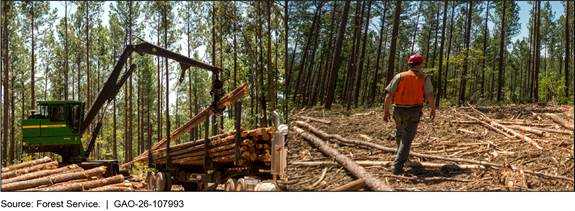
Agency officials and stakeholders identified opportunities to improve the Forest Service’s management of timber sales, such as the following:
· Expanding practices to more effectively use staff and conduct strategic workforce planning. Officials and several stakeholders said that increasing the use of partners and contractors and newer tools and technologies could help the agency address its staffing challenges. Officials and industry, conservation, and nonfederal government stakeholders also said the Forest Service needs more staff and staff with the right expertise to manage timber sales. The agency has not assessed how recent and ongoing changes to its workforce and organizational structure will affect its capacity. By conducting strategic workforce planning, the Forest Service could better understand how to recruit and retain the critical staff it needs to effectively manage timber sales.
· Improving communication. Officials and several stakeholders said that improving the frequency and consistency of communication with stakeholders and the public could improve the Forest Service’s management of planned timber sales. For example, an industry stakeholder said the agency could provide more current, comprehensive information on timber sales on its website. By more frequently and consistently communicating information about planned timber sales to stakeholders and the public, the Forest Service could better manage its timber sales.
Why GAO Did This Study
The U.S. Forest Service sells billions of board feet of timber each year as part of its mission to manage the National Forest System for multiple uses and to provide sustained yields of various resources, including timber. Some congressional members, industry and conservation groups, and others have raised concerns, including about the amount of timber sold or negative effects of timber sales on wildlife habitat and recreation.
A congressional committee report includes a provision for GAO to review Forest Service timber harvest levels. GAO was also asked by multiple congressional requesters to review this topic. This report, the second in a two-part series, (1) describes factors Forest Service officials identify as limiting the agency’s ability to meet its targets for annual timber sales and (2) examines agency officials’ and stakeholders’ views on how to improve management of Forest Service timber sales.
GAO reviewed relevant agency documents and data; conducted in-person site visits to seven national forests in three regions, selected based on variation in volume of timber sold and geography; and interviewed officials from Forest Service headquarters, officials from all nine regions, and nonfederal stakeholders, such as industry and conservation groups.
What GAO Recommends
GAO is making four recommendations, including that the Forest Service conduct strategic workforce planning and take steps to improve communication with stakeholders and the public. The Forest Service’s audit liaison stated in an email that the agency agreed with GAO’s findings and recommendations.
|
Abbreviations |
|
|
|
|
|
ESA |
Endangered Species Act of 1973 |
|
EXPLORE Act |
Expanding Public Lands Outdoor Recreation Experiences Act |
|
FSH |
Forest Service Handbook |
|
FSM |
Forest Service Manual |
|
FY |
Fiscal year |
|
NEPA |
National Environmental Policy Act of 1969 |
|
NHPA |
National Historic Preservation Act of 1966 |
|
USDA |
U.S. Department of Agriculture |
This is a work of the U.S. government and is not subject to copyright protection in the United States. The published product may be reproduced and distributed in its entirety without further permission from GAO. However, because this work may contain copyrighted images or other material, permission from the copyright holder may be necessary if you wish to reproduce this material separately.
June 4, 2026
Congressional Addressees
The U.S. Department of Agriculture’s (USDA) Forest Service sells billions of board feet of timber each year as part of its mission to manage the National Forest System for multiple uses and to provide sustained yields of various resources.[1] The agency sells timber for several reasons, including to provide a supply of timber to the American people and to help achieve land management objectives such as reducing the risk of wildfire or improving wildlife habitat.
The Forest Service typically sets an annual target for the amount of timber the agency aims to sell. We reported in December 2024 that the Forest Service did not sell as much timber as it aimed to sell in fiscal years (FY) 2014 through 2023, averaging about 90 percent of its targets during this time frame.[2]
On March 1, 2025, the President issued an executive order entitled Immediate Expansion of American Timber Production.[3] The order included several directives aimed at facilitating increased timber production from the National Forest System, among other things.
Some congressional members, industry groups, and others have raised concerns about the volume of timber the Forest Service sells, stating that the agency should harvest more in light of declining forest health and increasing wildfire risk. In contrast, other congressional members, conservation groups, and others have cited concerns about timber sales negatively affecting wildlife habitat, watershed health, or recreation, among other issues.
A congressional committee report accompanying a bill for the Forest Service’s appropriations for FY 2024 includes a provision for us to study timber harvest levels.[4] We also received multiple congressional requests asking us to review this topic. This report, the second in a two-part series, (1) describes factors Forest Service officials identified as limiting the agency’s ability to meet its targets for timber sales, and (2) examines agency officials’ and stakeholders’ views on how to improve management of Forest Service timber sales.[5]
To determine factors Forest Service officials identified as limiting the agency’s ability to meet its timber targets, we interviewed officials who oversee timber sales or who are involved in the timber sales process from headquarters and all nine Forest Service regions.[6] We also analyzed Forest Service data and documentation on planning, preparing, and implementing timber sales.
We conducted site visits to seven national forests in three regions and met with officials involved in timber sales at the forest level.[7] During our site visits, we interviewed officials about timber sales and factors limiting the agency’s ability to meet timber targets. We selected Regions 6, 8, and 9 because these regions had the highest sales on average in FYs 2014 through 2023.[8] Within each of those regions, we selected the following forests to visit based on variation in volume of timber sold and geography:[9]
· Region 6: Gifford Pinchot National Forest in southwest Washington State, Willamette National Forest in western Oregon, Deschutes National Forest in central Oregon, and Olympic National Forest in northwest Washington State.
· Region 8: Ouachita National Forest in western Arkansas and eastern Oklahoma and Ozark–St. Francis National Forest in western Arkansas.
· Region 9: Superior National Forest in northeast Minnesota.
To examine views on improving management of Forest Service timber sales, we interviewed agency officials and a nongeneralizable sample of 17 nonfederal stakeholders.[10] We identified stakeholders through a review of documents and websites related to Forest Service timber sales and interviews with agency officials. Of the 17 stakeholders we interviewed, five were industry groups, six were conservation groups, three were nonfederal government groups,[11] and three were nonfederal entities that have a master stewardship agreement with the Forest Service.[12] We also reviewed agency and stakeholder documents from FYs 2013 through 2026 on Forest Service timber sales and areas for improvement, including Forest Service reports, strategies, and guidance for managing timber sales.
We analyzed information obtained through our interviews with agency officials and stakeholders and grouped it into categories pertaining to factors that limit timber sales and opportunities for improving Forest Service management of timber sales.[13] We refined the categorizations and related descriptions based on our document reviews and analysis of agency data on timber sale planning, preparation, and implementation. Specifically, we analyzed data on the Forest Service’s compliance with the National Environmental Policy Act of 1969 (NEPA), as amended, from the agency’s Planning, Appeals, and Litigation System.[14] This system includes project-level data on the type of NEPA review the Forest Service used and project decisions. We found the data to be sufficiently reliable for understanding the Forest Service’s NEPA compliance trends.[15]
We assessed the Forest Service’s timber sale process and potential improvements identified by agency officials and stakeholders against applicable criteria identified in our prior work, including strategic workforce planning principles and selected key practices for evidence-based policymaking and performance management.[16] We also compared the Forest Service’s communication efforts against federal standards for internal control.[17]
We conducted this performance audit from January 2025 to June 2026 in accordance with generally accepted government auditing standards.[18] Those standards require that we plan and perform the audit to obtain sufficient, appropriate evidence to provide a reasonable basis for our findings and conclusions based on our audit objectives. We believe that the evidence obtained provides a reasonable basis for our findings and conclusions based on our audit objectives.
Background
Forest Service Structure
The Forest Service manages the 193-million-acre National Forest System through its headquarters in Washington, D.C., nine regional offices, and 154 national forests and 20 national grasslands (see fig. 1).[19] The Chief of the Forest Service heads the agency, a regional forester heads each regional office, and a forest supervisor heads each forest. Timber sales are primarily planned, prepared, and implemented at the forest level. Regional officials facilitate communication between forests, across regions, and with headquarters. These officials also provide training and guidance to regional and forest-level staff about timber sale planning, preparation, and implementation. Forest Service headquarters is responsible for developing policies and procedures for planning and implementing timber sales—primarily through its Natural Resources Office—and provides agencywide training and guidance.[20]
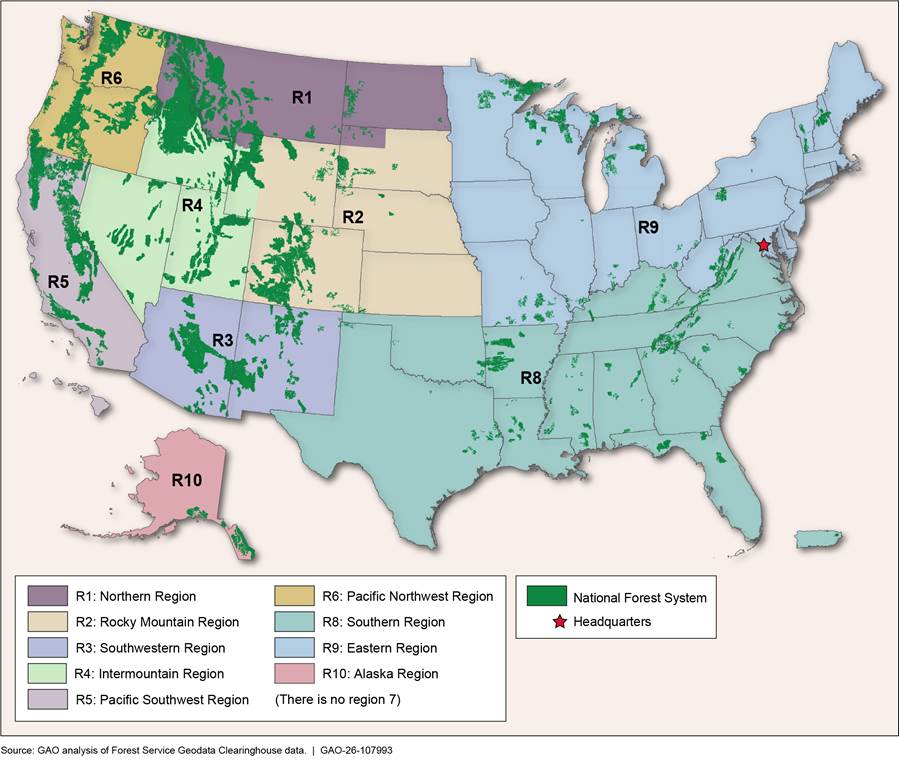
Note: On March 31, 2026, the Forest Service announced that it would move its headquarters from Washington, D.C., to Salt Lake City, Utah. It also announced that it would eliminate its nine regional offices and create 15 state offices located throughout the United States.
Purpose of Timber Sales
Providing a supply of timber to the American people was one of the original purposes for which federal law authorized the establishment of national forests in 1897.[21] The Forest Service conducts timber sales as part of its mission to manage the National Forest System for multiple uses and to provide a sustained yield of renewable resources.[22]
· The multiple uses are defined in law to include outdoor recreation, range (i.e., livestock grazing), timber, watershed, and fish and wildlife purposes.[23] The statute does not specify that the Forest Service should prioritize one use over any other use. Rather, it defines multiple use as, among other things, the combination of uses that will best meet the needs of the American people, and not necessarily the combination that will give the greatest dollar return or output.[24]
· Sustained yield is defined in law as the achievement and maintenance in perpetuity of a high-level annual or regular periodic output of the national forests’ renewable resources—such as timber—without impairment of the productivity of the land.[25]
The Forest Service thus may conduct a timber sale to provide a supply of timber, achieve land management objectives, and promote other forest uses. For example, a timber sale may be used to reduce the number of trees in an area to create openings to improve habitat for some types of wildlife or to reduce the risk of insects, diseases, or wildfires. The agency may also use a timber sale to reduce hazards from or to capture some of the economic value of trees damaged by wildfires or other events; these are often referred to as salvage harvests.
Mechanisms for Forest Service Timber Sales
The Forest Service offers timber for sale to prospective purchasers, such as timber companies or lumber mills, through four mechanisms:[26]
· Timber sale contracts. The agency sells the right to harvest timber to a purchaser.[27]
· Stewardship contracts and agreements. The agency exchanges timber for restoration services, such as habitat restoration work.[28]
· Good Neighbor Authority agreements. The agency enters into agreements with states, counties, or Tribes to implement timber sales.[29]
· Permits. The agency permits the removal of timber for a nominal fee or free of charge when removal is expected to have limited resource impacts.[30]
According to agency guidance, the Forest Service’s policy is to use a mix of these mechanisms at the national forest level, considering factors such as staff capacity, cost effectiveness, and the needs of the local forest industry.[31] Agency officials base decisions about which mechanism to use on the site-specific objectives and requirements of each individual timber sale.[32] Our December 2024 report provides more detail on these mechanisms.[33]
Forest Service Process for Timber Sales
The Forest Service follows a multistep process for planning, preparing, and implementing timber sales.
Planning. The planning process begins by consulting the national forest’s land and resource management plan, often referred to as a forest plan, which establishes the forest’s long-term land management objectives and desired forest conditions. Forest plans also specify where activities such as timber harvests may or may not occur.[34] Based on the objectives outlined in these plans, as well as budgetary and other factors, agency officials identify individual projects (such as timber sales) needed to meet the desired forest conditions, such as reducing overall density to create openings for wildlife habitat or to mitigate wildfire risk.
Once a need for a timber harvest has been identified, agency officials engage in project-level planning to further inform the decision-making process. This includes analyzing the proposed project’s likely environmental effects pursuant to NEPA. The level of environmental analysis required by NEPA and the time the analysis takes to complete vary depending on the size, complexity, potential effects, and the authority under which the Forest Service is proposing to conduct the project.[35] There are three levels of NEPA review:
· A categorical exclusion is used if the project is within a category of actions that the agency has already determined to have no significant environmental effect normally.[36]
· An environmental assessment is used when the proposed project does not have a reasonably foreseeable significant effect on the quality of the environment or the significance of the effects is unknown.
· An environmental impact statement is used if the project has a reasonably foreseeable significant effect on the quality of the environment.[37]
As part of this process, the Forest Service must also comply with other laws, including by analyzing the project’s impacts on certain species and historic properties. For example, the Endangered Species Act of 1973 (ESA), as amended, requires the Forest Service to ensure, in consultation with the U.S. Fish and Wildlife Service or the National Marine Fisheries Service, that any action it authorizes, funds, or carries out is not likely to jeopardize the continued existence of a threatened or endangered species, or result in the destruction or adverse modification of critical habitat for those species.[38] Moreover, under section 106 of the National Historic Preservation Act (NHPA) of 1966 and its implementing regulations, the Forest Service must assess the effects of its undertakings on historic properties.[39] In addition, the Forest Service must seek ways to avoid, minimize, or mitigate any adverse effects to historic properties in consultation with state agencies, Tribes, and interested parties.[40] The Forest Service often undertakes these additional analyses and required consultation during its NEPA review and incorporates the analyses into its NEPA review documents.
Preparation. Once the NEPA review for the proposed project is complete and has been approved, the Forest Service may begin preparing individual timber sales.[41] At this stage, the agency surveys and appraises the value of the timber being offered in the sale.[42] The Forest Service generally must obtain appraised fair market value for timber it sells.[43] Agency officials also estimate the sale’s operational needs and costs, such as the equipment needed to conduct the harvest and the transportation costs to haul the timber to the closest lumber mill.
Agency officials then incorporate any operational restrictions identified during the NEPA review, including seasonal restrictions to protect wildlife habitat or mitigate wildfire risk. They also estimate the costs of any other work required as part of the sale (e.g., road or bridge construction, any restoration work required by a stewardship contract or agreement).[44]
Implementation. To implement a sale, agency officials determine which sale mechanism to use and develop a written contract or agreement. For some of the sale mechanisms, the Forest Service advertises the contract and the timber is offered through an open, competitive bidding process with a starting bid based on the timber’s appraised value.[45] If the Forest Service receives a successful bid, the contract is signed and executed.[46] The purchaser then conducts harvest operations, and forest-level staff monitor the operations.
When a contract is signed, the Forest Service reports the volume sold and applies the amount toward the agency’s public performance reporting for that year’s timber target. However, most timber sale mechanisms provide timber purchasers with several years to complete the harvest.[47]
Legal Challenges
The public can challenge the Forest Service’s decision-making at certain points in the timber sale process. The first step for challenging most projects is through a predecisional administrative review referred to as an objection process.[48] A specified Forest Service official must respond to objections in writing before the project’s NEPA review can be approved.[49] The objection process for eligible proposed projects must be exhausted before a decision can be challenged in federal court.[50] Litigation may be filed in federal court before the timber sale occurs or after the contract has been executed.
Officials Identified Factors That Limited the Forest Service’s Ability to Meet Its Timber Targets
Agency officials we interviewed identified a variety of factors that they said limited the Forest Service’s ability to meet its annual timber targets in FYs 2014 through 2024, including (1) staffing challenges, (2) timber sale planning and preparation, (3) legal challenges, (4) timber not purchased when offered for sale, and (5) wildfires and other disturbances. Although the Forest Service as a whole did not meet its timber targets in any of the years from FY 2014 through FY 2024 (attaining an average of about 90 percent of its targets in those years), some regions and national forests met or exceeded their targets over this time frame.[51]
Staffing Challenges
Officials in headquarters, all nine regions, and the seven national forests we visited said that staffing challenges limited their ability to complete work needed to plan, prepare, and implement timber sales, which contributed to the agency not meeting its timber targets. For example:
· Officials from one region said that they had struggled to complete survey work needed for timber sales. According to agency documents and officials, surveys are generally necessary any time the agency needs to analyze on-the-ground conditions, such as identifying potential environmental effects as part of a NEPA review, identifying the presence of wildlife or historic properties for ESA and section 106 of the NHPA analysis, or determining land ownership and rights-of-way boundaries.
· Officials from three regions said that the low number of forestry specialists and technicians had limited their ability to design, mark, or monitor timber sales.
· Officials from two other regions said that they had struggled to hire and retain enough staff to conduct engineering work required for timber sales.
Officials identified several factors that contributed to staffing challenges.
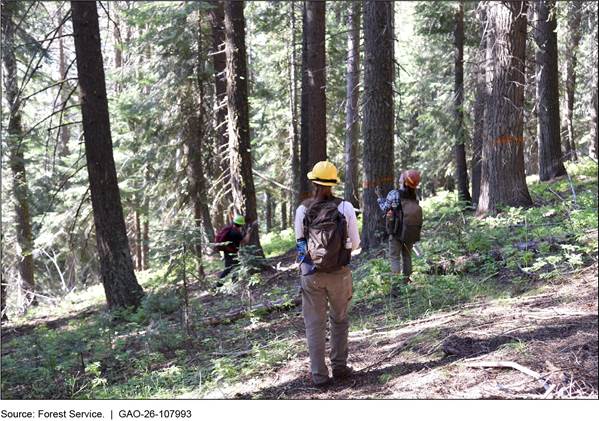
Recruitment and retention. Regional and forest officials said that they had not been able to recruit and retain enough staff to complete work needed to manage timber sales. Officials also identified staff turnover (e.g., staff leaving the agency or moving from one national forest to another) as a factor limiting the Forest Service’s ability to meet timber targets. Examples of positions they have struggled to recruit and retain include those responsible for preparing and administering timber sales, such as timber markers, as well as silviculturists, contracting officers, engineers, and staff that help conduct NEPA and other required reviews (e.g., biologists, archaeologists).[52] Figure 2 shows a Forest Service timber-marking crew determining which trees to leave for a timber sale.
Some forests have had vacancy rates of 40 percent or higher in timber-related positions, according to agency officials. For example, one forest we visited had a 50 percent vacancy rate in part of its timber program as of June 2024, according to officials. Officials in another forest reported a vacancy rate of 41 percent at the time of our visit in May 2025.[53] This forest’s officials anticipated selling 20 percent less timber volume than the previous year because of vacancies.
Officials from both forests said that high housing costs in their respective areas had contributed to vacancies, and officials from one forest said that they had also struggled to recruit staff because some found the area undesirable to live in. Officials from other forests and regions identified expensive, remote, or otherwise undesirable duty locations as a barrier to recruiting and retaining staff; they also cited low pay, career advancement challenges, and hiring process challenges.[54]
Staffing challenges related to the amount and timing of agency appropriations. Officials noted that the amount of the Forest Service’s appropriation affected staffing levels, including the number of employees and contractors the agency could hire to plan, prepare, and implement timber sales. In addition, officials from three regions said that continuing resolutions had restricted the Forest Service’s spending and thus affected timber sales.[55] For example, officials said the agency has had to hold off on issuing new timber sale contracts when it was not able to cover costs to prepare sales because the agency was operating under a continuing resolution. They said that when an appropriations bill was enacted, the Forest Service staff responsible for developing contracts and agreements were then flooded with work, which created a bottleneck and limited the number of timber contracts the agency could issue.
Reductions in staff. In May 2025, headquarters officials said that achieving the higher timber targets directed by the March 2025 executive order on expanding timber production would be challenging, given that the agency reduced its workforce by about 20 percent in FY 2025.[56] The Forest Service implemented the workforce reductions in response to a February 2025 executive order that directed agency heads to prepare to initiate large-scale reductions in staff.[57] Between January 12, 2025, and June 14, 2025, 5,860 of the Forest Service’s approximately 35,500 staff departed the agency, according to USDA’s Office of Inspector General.[58] Agency officials said that nearly 1,000 additional staff departed between June and September 2025. Officials said that these staff reductions further strained workforce capacity. Headquarters officials told us in September 2025 that the Forest Service was transferring staff from other parts of the agency to cover priority positions. In addition, the Forest Service was hiring seasonal forestry technicians and other staff as of March 2026.
Timber Sale Planning and Preparation
Forest Service officials from headquarters, seven of the nine regions, and six of the seven national forests we visited identified points in the timber sale planning and preparation process—including NEPA, ESA, and NHPA section 106 requirements—that delayed or otherwise affected sale implementation and target attainment. Officials from one region said they usually have about 50 percent of the region’s planned timber sale volume ready to implement at the beginning of the fiscal year. However, any delay in completing the required steps for the remaining sales could affect their ability to meet the region’s timber targets.[59] For example:
· Surveys. Officials from all levels said that completing surveys prevented them from offering a timber sale in the planned fiscal year. As noted, surveys are generally necessary any time the agency needs to analyze on-the-ground conditions, including appraising and marking timber. Officials said this work can be expensive and time intensive.[60] For example, one regional official noted that they are sometimes required to survey over a 2-year period when working near habitat protected for certain threatened or endangered species. Officials said that staffing constraints, such as those described above, contributed to their challenges with completing surveys.
· Consultations. Officials also said that challenges with scheduling and coordinating consultations with other federal and state agencies and Tribes affected the Forest Service’s ability to meet its timber targets in FYs 2014 through 2024.[61] Because consultations are often required, the Forest Service relies on the timelines of these entities to continue planning and preparing sales. Officials also said that scheduling issues were at times exacerbated by staffing challenges at the Forest Service as well as at the agencies with which it consults.
Legal Challenges
Officials in some of the regions and national forests we interviewed said that legal challenges—administrative objections from the public and litigation in federal court by those interested in preventing timber sales on national forest land—or the fear of potential legal challenges limited the Forest Service’s ability to meet timber targets in FYs 2014 through 2024. However, officials from other regions and forests either said that they did not think there were any effects or that they were mixed on the extent to which such challenges affected timber sales. Potential effects include the following:
· Time spent to plan and prepare sales. Concern that a timber sale might result in an objection or lawsuit can influence planning decisions and timelines. For example, staff may invest more time preparing a project’s NEPA review in an attempt to reduce the chances of the project being challenged and improve the agency’s success in court if it is litigated.[62]
· Court-ordered work stoppages. Litigation can lead to court-imposed injunctions that can stop work and delay timber sale implementation.[63] The extent to which such stoppages occur varies by region and forest, according to regional officials. For example, officials in one region said an injunction delayed timber sales on six forests for about 11 months and affected the region’s target attainment in FY 2020. In contrast, officials from a different region indicated that injunctions or temporary restraining orders were relatively rare.
· Redirection of staff and resources. Legal challenges can divert staff and resources away from managing timber sales. For example, regional officials said that when a project was challenged in court, forest officials shifted staff away from planning and implementing other timber sales to activities related to the litigation, such as preparing documents and briefing attorneys. Agency officials also said that if the agency was unsuccessful in court, staff might then have to address requirements in the court decision, such as redoing certain analyses.
While litigation may delay or otherwise affect some timber sales, it does not affect many Forest Service timber sales overall. Specifically, around 4 percent of the agency’s timber sale-related projects were litigated on average from FY 2015 through FY 2024, according to our analysis of Forest Service data.[64] However, certain regions accounted for higher proportions of the court cases.[65] Region 1 had the highest proportion, which regional officials attributed primarily to forests in the region containing habitat for many high-profile endangered and threatened species (e.g., grizzly bears and lynx), which increased the level of interest in and scrutiny of the agency’s activities.[66] Officials from headquarters and the region also acknowledged that they consider litigation delays when setting timber targets.
Timber Not Purchased When Offered for Sale
Some Forest Service officials said that timber sales that were not purchased in the same fiscal year in which the agency first offered them contributed to the agency’s inability to meet annual timber targets. These sales, referred to as “no-bid sales,” occur when the Forest Service does not receive any bids on an advertised timber sale. However, other officials said that because the agency usually offers the sale again and the timber eventually gets purchased, no-bid sales did not significantly affect their ability to meet the agency’s timber target, overall timber sales, or land management objectives.
Purchasers may choose to not bid on an offered timber sale for a variety of reasons, generally related to their assessment of the economic viability of the sale, according to agency officials and industry stakeholders.[67] For example:
· Sale price too high. Purchasers may believe that the Forest Service’s advertised price of the timber is too high, or they may not like the mix of product types included in the sale.
· Operational costs too high. Purchasers may estimate that the sale’s operational costs (e.g., equipment or construction costs) will be too high. For example, costs can increase if timber has to be hauled to mills that are located farther away from national forests or equipment has to be moved to multiple sites because of how the sale was designed.[68]
· Lack of competition for sales. In areas with less competition, purchasers may strategically choose not to bid on a sale and wait for more favorable terms (e.g., a lower price) when the Forest Service reoffers the sale.
According to agency officials, no-bid sales do not occur regularly because of the investment timber staff put into designing sales that are desirable to industry. Further, no-bid sales have minimal long-term effects because the agency usually offers the sale again, with or without changes to the contract terms, and the timber sale eventually gets purchased.[69] For example, officials from multiple regions said that their no-bid sales are generally reoffered for sale and eventually purchased. Further, a research paper found that from 2007 through 2020, about 12 percent of Forest Service timber sales received no bids when they were first offered, but less than 3 percent of offered sales were never purchased.[70] However, even when no-bid sales do not affect target attainment, they may have other effects. For example, forest officials noted that the time it took to redesign and reoffer the sales created additional work and diverted staff and other resources from planning future timber sales.[71]
Wildfires and Other Disturbances
Officials in headquarters and five of nine regions said that wildfires and other disturbances, such as extreme weather or infestations, affected the Forest Service’s ability to meet timber targets by damaging areas planned for timber sales or shifting the agency’s focus to responding to the disturbance rather than managing timber sales. For example:
|
Effects of Wildfire on Timber Sales in the Willamette National Forest In 2020, three wildfires—the Beachie Creek, Holiday Farm, and Lionshead Fires—burned more than 176,000 acres in the Willamette National Forest in western Oregon. These wildfires damaged a large volume of Forest Service timber that was sold and under contract at the time, affecting at least 20 of the forest’s timber sales, according to officials. As a result, the Willamette National Forest had to modify and, in some cases, cancel timber sale contracts. Officials also had to redo some of the environmental planning and resurvey some of the sale areas. The wildfires and additional workload limited the Willamette National Forest’s timber sales in 2020 and subsequent years. For example, the volume for one timber sale had to be reduced by 5 million board feet as a result of the wildfires, according to officials. The figure below shows the site of a timber sale that was modified after these wildfires.
Source: GAO analysis of information provided by the Forest Service. Image: GAO. | GAO‑26‑107993 |
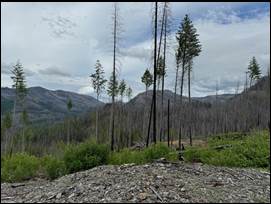
· Contracts modified or canceled. Some national forests modified or canceled contracts for timber sales because the contracts included areas burned by wildfires or damaged by hurricanes or other disturbances, according to officials. For example, one forest we visited had to modify or cancel more than 20 timber sale contracts after three wildfires in 2020 (see sidebar).
· Staff and resources redirected. Some forests redirected staff from timber-related work to respond to or address the effects of wildfires and other disturbances, according to headquarters and regional officials. For example, during and after wildfires, staff at forests had to shift their focus to wildfire response and post-fire recovery activities, such as reopening roads that were closed because of a wildfire or conducting reforestation activities. Officials said the agency also had to redo NEPA analyses or surveys to account for the effects of wildfires.
· Sales changed to salvage harvests. Disturbances have also affected planned timber sales, according to officials. For example, officials from one region said that insect and disease infestations that began around 2014 had decreased the value of timber and changed sales in which live trees are harvested to salvage harvests. They said that the infestations had run their course and the region was beginning to shift back to harvesting live timber.
Opportunities Exist to Improve Forest Service Management of Timber Sales
Agency officials and stakeholders we interviewed identified various opportunities to improve the agency’s management of timber sales. These include (1) expanding practices to more effectively use staff and conducting workforce planning, (2) improving processes for timber sale planning and preparation, (3) improving communication with stakeholders, (4) designing timber sales to improve economic viability, (5) improving management of sales in areas affected by wildfires and other disturbances, (6) developing additional performance goals to measure the effect of timber sales on agency goals, and (7) institutionalizing opportunities to improve timber sale management.
Expand Practices to More Effectively Use Staff and Conduct Strategic Workforce Planning
Officials at all levels of the agency and many stakeholders identified opportunities related to the Forest Service’s workforce, including expanding practices to effectively use staff and conducting strategic workforce planning. However, some officials raised concerns that recent developments, including workforce reductions, limited their ability to implement identified opportunities.
Leverage Forest Service Staff
The Forest Service could better leverage its staff to help address staffing-related challenges, which some regions and forests were taking steps to do, according to officials. Specifically, four regions reported using “strike teams”—teams of Forest Service staff that move throughout and sometimes across regions to temporarily increase capacity at a particular forest—to help plan and manage timber sales. Officials in one region credited strike teams for increasing their timber output and making their region one of the top timber producers in the agency. They said that the teams added capacity and expertise to national forests to help with timber sales. In addition to using strike teams, officials said they further leveraged agency staff by using nontimber staff to help with timber sales when available (e.g., using recreation staff in off-peak seasons) and sharing timber crews with nearby forests.
Officials at one forest, however, cautioned against being too dependent on strike teams, saying that forests still need local staff and that strike teams should add overall capacity rather than replace forest staff. Moreover, many of the Forest Service’s strike teams lost staff through workforce reductions in 2025 and were not functional as of May 2025, according to headquarters officials.
Expand Use of Partners and Contractors
All nine regions have worked with state agencies, Tribes, or other partners or contractors to augment the Forest Service’s capacity to offer timber sales. Officials and several stakeholders said that expanding the use of partners and contractors could help the agency address its staffing challenges. For example, officials said that some forests had used contractors to help prepare timber sales, such as marking timber.
However, some officials identified limitations to expanding the agency’s use of partners and contractors.[72] For example, partners and contractors may have gaps in key skills or local knowledge, which officials said has resulted in Forest Service staff having to do additional work (e.g., re-marking trees). In addition, partners may not have the capacity to take on additional work without consistent, multiyear funding commitments from the Forest Service, according to officials.
The Forest Service has been working to expand its use of partners and contractors for over a decade and has continued to take steps to do so.[73] For example:
· In May 2025, the Forest Service identified partnerships and contracting as an area of focus in its National Active Forest Management Strategy.[74] According to the strategy and officials, the agency is creating a national team focused on strengthening partnerships with states, Tribes, and other partners and is increasing the use of long-term (i.e., 10 years or more) contracts and agreements to help facilitate a consistent supply of timber.
· In July 2025, Forest Service headquarters directed regional foresters to further coordinate and collaborate with state and stewardship partners to identify opportunities to add capacity for administering timber sales.[75]
· In January 2026, the Forest Service and the state of Utah signed an agreement to expand opportunities for timber harvest, among other purposes. The agency signed a similar agreement in June 2025 with the state of Montana to help implement large-scale forest management projects across the state and leverage tools such as Good Neighbor Authority.[76]
Increase Use of Tools and Technologies
Officials and many stakeholders said that the Forest Service could increase its use of available tools and technologies to help staff manage timber sales more efficiently. For example, staff could do the following:
· identify timber for sale using a detailed prescription or description of the desired outcome rather than Forest Service staff individually marking each tree to be cut;
· designate the boundaries of a timber sale using geospatial data rather than signs or paint (known as virtual boundaries or geofences);
· survey timber through a digital application that can be used on tablets in the field; or
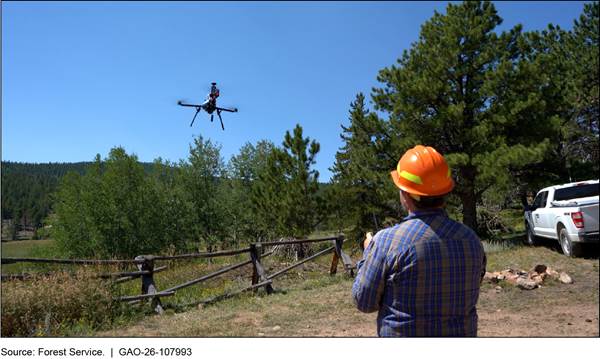
· use remote-sensing technology, such as Light Detection and Ranging, or unmanned aircraft (i.e., drones) to collect timber data or monitor timber sales (see fig. 3).[77]
Figure 3: Forest Service Official Using a Drone to Assess Lands in the Arapaho National Forest, Colorado
Several industry stakeholders we interviewed encouraged the Forest Service’s use and expansion of newer tools and technologies. For example, some stakeholders said that it was easier for purchasers to apply digital tools such as virtual boundaries when implementing timber sales. Some purchasers, however, especially smaller businesses, have been reluctant to adopt these tools, according to officials. These officials said directing the use of certain tools, such as virtual boundaries, could lead to an increase in no-bid sales if timber sale contracts require their use.
Some officials and stakeholders said that some Forest Service staff have been slow to adopt these and other newer tools and technologies. The Forest Service’s 2025 National Active Forest Management Strategy lists steps the agency is taking to foster wider adoption of new tools and technologies, such as providing guidance to agency staff on employing them.[78] In addition, in FY 2026, the agency established a working group to explore innovative technologies for managing forests, such as the use of unmanned aircraft and digital tools for timber sale preparation and implementation.
Conduct Strategic Workforce Planning
Officials and several industry, conservation, and nonfederal government stakeholders said the Forest Service needed more staff and staff with the right expertise to manage timber sales. For example, officials in six regions said they needed more staff to plan and prepare timber sales. In addition, headquarters officials said in July 2025 that it was unclear how USDA’s proposed reorganization of the Forest Service to change or eliminate regional offices would affect staffing and support to forests, since headquarters officials said they primarily support staff in forests through the regional offices.[79]
Officials also identified opportunities to improve how the Forest Service hires staff. For example, officials from two regions and two forests said that hiring more staff locally could help address staffing shortages, especially in locations where recruitment and retention are difficult (e.g., areas with high housing costs).[80] Over the past decade, the Forest Service has hired many timber staff through national mass recruitment events.[81] Officials also said that hiring more temporary staff could help develop a pipeline of experienced staff that could help meet future needs.
As noted above, the Forest Service lost approximately 20 percent of its staff between January 2025 and September 2025. The agency has not conducted strategic workforce planning to assess how these and potential future changes to the agency’s workforce and structure could affect its capacity to manage timber sales. Strategic workforce planning addresses two critical needs: (1) aligning an organization’s human capital program with its current and emerging mission and programmatic goals, and (2) developing long-term strategies for acquiring, developing, and retaining staff to achieve programmatic goals.[82] We have previously identified key principles that can enhance the effectiveness of an agency’s strategic workforce planning, including developing strategies that are tailored to address any gaps in critical skills, knowledge, and competencies.[83] By conducting strategic workforce planning and developing tailored strategies to address any skills and knowledge gaps, the Forest Service could better understand how to recruit and retain the critical staff it needs to effectively manage timber sales and achieve program goals.
Improve Processes for Timber Sale Planning and Preparation
Officials at all levels of the agency and many stakeholders identified opportunities to improve the Forest Service’s timber sale planning and preparation processes—namely, making changes intended to streamline the NEPA review process. This would enable the agency to build and maintain a supply of implementation-ready timber sales with signed NEPA decisions, which could allow the agency to offer more timber for sale, according to officials.
Officials in some regions and forests said that having a supply of implementation-ready timber sales with signed NEPA decisions, referred to as “shelf-stock” or “shovel-ready projects,” helped them be more flexible and consistent in offering timber sales in a timely fashion. In April 2025, headquarters officials directed all regions to establish, within 24 months, at least 2 years’ shelf-stock of signed timber project NEPA decisions.[84] Some regions had previously taken steps to increase shelf-stock. An official from a forest in one of those regions said that having a shelf-stock of signed project decisions helped them continue to offer timber sales despite having to redo several planned sales because of wildfires.
The Forest Service has been working to improve its timber sale planning and preparation process for over a decade.[85] More recently, in April 2025, the Secretary of Agriculture issued an emergency situation determination covering more than 100 million acres of National Forest System land to address threats from wildfires, insect and disease outbreaks, and other forest health concerns.[86] This determination authorizes and directs the Forest Service to
· carry out certain emergency actions, such as salvage harvesting dead or dying trees or removing hazardous trees near roads or trails;
· only analyze the proposed action and an alternative of taking no action in conducting NEPA reviews for the authorized emergency actions;[87]
· exempt those NEPA review decisions from the public objections process;[88] and
· use emergency consultation procedures to comply with ESA and emergency and programmatic consultation to comply with NHPA.[89]
According to agency officials, in 2025, the Forest Service directed staff to increase the use of categorical exclusions when preparing NEPA reviews for timber projects.[90] While increasing the use of categorical exclusions could reduce the time needed to complete NEPA reviews, according to officials, the effect may be limited because the Forest Service had already used categorical exclusions for most of its timber-related NEPA project decisions in FYs 2014 through 2024.[91]
In addition, some agency officials said that the decision about which level of NEPA review to use is best made by the officials working on the ground. Agency officials, as well as industry and conservation stakeholders, also cautioned that using categorical exclusions more frequently could decrease the public’s trust in the agency and result in more legal challenges. For example, several conservation stakeholders were concerned because the agency is not required to inform the public about timber sales done under categorical exclusions.
Improve Communication with Stakeholders
Officials and several stakeholders said that improving the frequency and consistency of communication with stakeholders and the public about when and where it plans to offer timber for sale could improve the Forest Service’s management of timber sales. For example:
· One industry stakeholder said that it would be helpful for the Forest Service to provide current, comprehensive information on timber sales on its website. Forest Service guidance directs the agency to issue information on its schedule of timber sales and stewardship contracts to interested parties every 6 months.[92] However, the stakeholder said that the Forest Service often makes changes to the sale plans and that it would be helpful for the agency to update the information on a timelier basis.
· Several industry, conservation, and nonfederal government stakeholders said the Forest Service should increase the transparency, frequency, and consistency of its communication with the public and stakeholders. For example, conservation stakeholders said that the agency should solicit feedback on planned timber sales and that the agency should be more transparent about the volume it expects to harvest. One industry stakeholder said that the Forest Service should increase the frequency and consistency of its communication, noting that in some regions and forests, the agency has regular communication (e.g., weekly) to keep industry informed about upcoming sales, making it easier for purchasers to do business with the agency. Officials from one region said that establishing expectations for communication at a regional level would increase consistency for purchasers that buy timber from multiple forests.
Agency officials said that communicating with stakeholders had improved aspects of timber sale management within certain regions and forests. For example, officials from one region said that officials who regularly meet with industry are able to solicit constructive feedback and work collaboratively to address issues, such as concerns about costs included in sale contracts or the appraisal process. In addition, some forests we visited had worked with collaborative groups representing a range of interests (e.g., industry, conservation, and recreation) to help plan timber sales and other land management activities. Officials credited these collaborations with improving relationships with industry and conservation groups and the public, increasing timber volume sold, and decreasing litigation of timber sales.
The Forest Service has some guidance directing communication with stakeholders on planned timber sales, according to agency documents and officials. Specifically, Forest Service guidance directs the agency to issue information on timber sales every 6 months, as noted. However, the agency does not have other guidance directing a certain level or frequency of communication with industry and other stakeholders about planned timber sales. Thus, the extent of communication with stakeholders is generally based on preferences and capacity of officials in each region and forest.
Federal standards for internal control state that federal organizations should externally communicate relevant and quality information with appropriate external parties, and that open two-way external reporting lines allow for this communication.[93] By more frequently and consistently communicating information about planned timber sales to industry, other stakeholders, and the public, the Forest Service could be more transparent and accountable to others about its planned sales and help develop timber sales that better reflect the needs of industry partners and the agency’s land management objectives.
Design Timber Sales to Improve Economic Viability
Forest Service officials and industry stakeholders said that designing timber sales to better reflect industry preferences and improve their economic viability could result in fewer initial no-bid timber sales and improve the agency’s overall timber sale management. The economic viability of a sale depends on the value of the timber being sold, the cost of harvesting and transporting the timber, and the costs of any other requirements in the contract, such as road or bridge construction.
When designing timber sales, industry stakeholders said the agency could do the following:
Include higher-value trees. Including large trees or trees of a species with higher value could improve the economic viability of a timber sale for purchasers. Forest Service officials said that they design their sales based on land management objectives and try to balance those objectives with purchaser preferences. However, officials also noted that achieving objectives such as reducing wildfire risk and improving wildlife habitat often entails harvesting smaller, lower-value trees.
Officials said that if the value of the trees is less than the operational costs of a sale, they can sometimes offer the sale using a stewardship contract that also includes payment for conducting restoration services—provided the agency has funding available to do so—to make the sale more attractive to purchasers. They said they can also include both higher- and lower-value trees to improve the feasibility of a sale. A few conservation stakeholders we interviewed, however, said this provides an incentive for the Forest Service to include more larger, higher-value trees in a sale to help pay for removing the lower-value trees, and that those larger trees are often the most fire-resilient and important for wildlife habitat.
Agency officials noted that some purchasers have adapted their facilities to use smaller trees. For example, Forest Service officials in two regions said that some local mills had retooled and were using smaller trees and biomass to manufacture animal bedding and similar products, which had led to more timber sales in nearby national forests.
Reduce operational costs to purchasers. Industry stakeholders said that the Forest Service should offer timber sales with lower operational costs to purchasers. For example, the Forest Service may include requirements in timber sale contracts that the purchaser must construct or repair roads or bridges to access the timber, according to agency officials and industry stakeholders. While the cost of doing this work is considered in the sale contract, industry stakeholders said that the Forest Service often includes too much of this work or does not appropriately estimate those costs. The Forest Service also may include seasonal restrictions on when a purchaser can operate (e.g., to mitigate wildfire risk or protect sensitive wildlife species), which can increase the cost or time to harvest a sale.
Improve appraisal process. Forest Service officials and industry stakeholders said the agency’s appraisal methods can lead to inaccurate appraisals and take too long to reflect fast-changing fluctuations in timber value.[94] For example, representatives from one industry group said that the market price for timber decreased so much between the time of the agency’s appraisal and the sale being offered that the sale was no longer economically viable and did not receive any bids.
As noted, Forest Service officials said they already invest resources in designing sales that are desirable to industry, and the agency is taking steps to further improve the economic viability of timber sales. For example, the agency directed its regions to establish appraisal adjustments for sales as part of implementing the 2025 National Active Forest Management Strategy.[95] Agency officials noted, however, that their ability to continue to design desirable timber sales, including by contributing more agency funds to offset purchasers’ operational costs, may be affected by reduced staffing and funding levels.
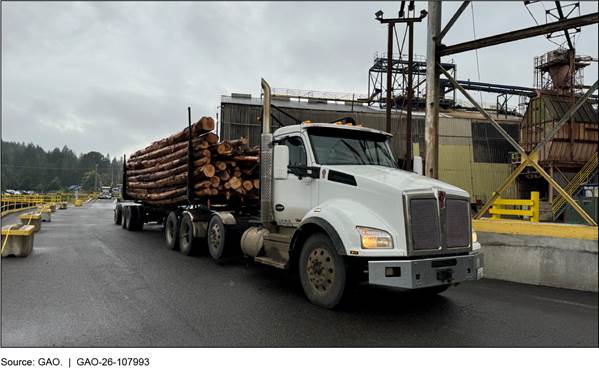
In addition, the agency provides financial grants to support development of new markets and infrastructure to increase demand for lower-value timber that the Forest Service wants removed to reduce wildfire risk and improve wildlife habitat.[96] Officials also said the Forest Service provides financial grants to support mill capital improvements or offset transportation costs to address concerns about the decreased number of timber purchasers, lumber mills, and other industry partners.[97] In addition, in 2025, the Forest Service assessed the needs and capacity of lumber mills located near national forests as part of its National Active Forest Management Strategy.[98] Figure 4 shows a logging truck bringing timber to a mill.
Improve Management of Sales in Areas Affected by Wildfires and Other Disturbances
Agency officials and several industry and nonfederal government stakeholders identified opportunities for the Forest Service to improve its management of timber sales in areas affected by wildfires, hurricanes, and other disturbances. For example, officials said that increasing salvage harvests after natural disturbances could help the agency meet its timber targets. Timber loses economic value after a disturbance, which increases the importance of the Forest Service acting quickly to offer salvage timber for sale, according to officials and a few stakeholders. Several industry and nonfederal government stakeholders said that making better use of available authorities, such as those related to salvage harvesting and hazard-tree removal, could increase the speed with which the Forest Service responds to wildfires and other disturbances.
The Forest Service is taking some steps in this area, as outlined in its National Active Forest Management Strategy and described by officials. These steps include developing a nationwide environmental assessment to facilitate consistent and efficient site-specific decisions after wildfires, such as removal of hazardous trees and timber salvage;[99] deploying teams to help forests plan for harvesting timber salvage after a wildfire or other disturbance; and creating geospatial tools to quickly identify areas available for salvage and hazard-tree removal.[100] The agency plans to complete these actions by September 2026, according to the strategy.
Develop Additional Performance Goals to Measure the Effect of Timber Sales on Agency Goals
Officials and many stakeholders said that the Forest Service should develop new performance goals to measure the effect of timber sales on land management outcomes.[101] Officials and industry stakeholders said that volume sold—currently the agency’s only performance goal related to timber sales—is easy to measure and helps industry partners with their internal planning. However, officials and other stakeholders said that the Forest Service does not measure how timber sales contribute to other parts of its multiuse mission, such as changes to wildlife habitat or watershed condition.[102]
Headquarters officials said that the agency had had “a lot of conversations” about potential additional goals related to timber sales in the past, but that they had not implemented any for various reasons. For example, headquarters and regional officials said that measuring the effects of timber sales on ecosystems is difficult.[103] However, officials and stakeholders noted that while developing new goals may present challenges, there are examples the agency could consider. For example, the Forest Service has at times had performance goals related to on-the-ground outcomes of other management activities, such as how a vegetation management project affected wildfire risk.[104] In addition, the Forest Service reports the percentage of National Forest System landscape ecosystems improved, maintained, or recovering because of management actions as a performance goal, according to agency documents. The Forest Service also reports management acreage across several goals, including acreage treated to reduce or maintain fuel conditions (i.e., hazardous fuels reduction) and acreage treated that effectively mitigated wildfire risk; these do not specifically include or report timber sale acreage.
As noted, the Forest Service’s mission is to manage the National Forest System for multiple uses and to provide a sustained yield of renewable resources. Our prior work has shown that establishing performance goals helps an organization define what it is trying to achieve, determine how well it is performing, and identify what it could do to improve results.[105] Our prior work further states that agencies should develop performance goals that cover important dimensions of a program’s performance and balance competing priorities.
The Forest Service’s performance goal for volume of timber sold measures one aspect of program performance, but the agency does not have performance goals related to other aspects, such as how timber sales affect long-term land management outcomes. By developing additional performance goals tied to long-term outcomes and measuring progress towards those goals, the Forest Service would better understand the effects of timber sales on the agency’s overall mission and could better inform Congress and other stakeholders about the effects of timber sales on land management outcomes. Officials and stakeholders also noted that doing so could lead to an increase in overall support for timber harvests.
Institutionalize Identified Opportunities to Improve Forest Service Management of Timber Sales
For over a decade, the Forest Service has taken steps to improve its management of timber sales, as described above, but implementation of these steps has been inconsistent. The Forest Service has not comprehensively institutionalized, or implemented and sustained, identified opportunities to improve timber sale management across the agency. We found that implementation may depend on informal or ad hoc efforts, initiative of individual staff, regional interpretation or direction, or temporary leadership emphasis because of challenges such as the following:
· Limited guidance. Officials cited limited guidance and training as hindering the use of newer tools and authorities, such as stewardship and Good Neighbor Authority. For example, officials from a forest we visited said that while they have a lot of tools and flexibilities available to them, not all timber staff know how to apply them. USDA and the Forest Service have issued guidance aimed at improving timber sales management through several memoranda and other documents but have not consolidated this guidance into one place. For example, the National Active Forest Management Strategy does not include the detail needed for forests to implement the opportunities described in the strategy, such as adopting new technologies or strengthening partnerships.
· Resistance to new ways of managing sales. Officials and several stakeholders said that some Forest Service staff resist trying new approaches, such as stewardship and other newer contracting mechanisms, or adopting newer technologies, such as virtual boundaries. Instead, staff may prefer traditional ways of managing timber sales in an effort to avoid risk. Using newer technologies or relying on partners or contractors to help manage sales has made some staff feel disconnected from the on-the-ground work they are used to performing. Moreover, some staff act as “gatekeepers” that limit flexibility in managing timber sales, according to officials. They said some agency staff add steps and restrictions beyond what is required by law, which may hinder the use of newer tools or authorities.
· Lack of forestry backgrounds. Forest supervisors and other managers may not have forestry backgrounds and therefore may lack specific knowledge of how timber harvest can be a tool for achieving the agency’s land management goals, according to some officials. Since forest supervisors and other managers play an important role in overseeing management across the agency, this lack of knowledge can make it difficult to implement new approaches, according to these officials.
Our past work has found that successful organizations continually and systematically monitor their internal and external environment.[106] Defining strategies to mitigate challenges to program implementation is consistent with actions policymakers should take to assess the environment, including identifying internal and external factors that could affect goal achievement and addressing or mitigating these factors.
By assessing the current environment the Forest Service is working in, including taking steps to institutionalize identified opportunities—that is, embedding them into agency policies, guidance, training, and routine practices so they are consistently implemented and sustained over time, such as by creating a guidebook for agency staff—the agency could use its resources more efficiently, reduce inconsistency across forests and regions, and foster strong central leadership. If implementation of identified opportunities is not sustained or consistently applied across forests and regions, the agency may face recurring challenges in meeting timber targets. Workforce reductions and restructuring can further exacerbate inconsistency, as knowledge of newer approaches may reside with individual staff rather than within agency policy, guidance, and training. Institutionalizing opportunities can also provide a clear strategic direction for agency officials during times of staffing, organizational, and budget uncertainties.
Conclusions
The Forest Service sells billions of board feet of timber each year as part of its mission to manage the National Forest System for the long-term benefit of the American people. However, the agency fell an average of 10 percent short of meeting its timber targets in FYs 2014 through 2024, and it faces challenges in meeting executive direction to sell more timber over the next 4 years.
For more than a decade, the Forest Service has taken various steps to identify and implement opportunities to improve timber sale management. For example, in response to recent executive direction to expand timber production, the agency increased its use of emergency actions related to hiring, preparing NEPA reviews, and other timber sale-related activities. The Forest Service also issued the National Active Forest Management Strategy in 2025 to identify agencywide goals such as building capacity, streamlining processes, and strengthening partnerships.
However, taking additional steps to implement and sustain identified opportunities could help the Forest Service further improve its management of timber sales. For example:
· Conducting strategic workforce planning and developing tailored strategies to address any skills and knowledge gaps would better position the Forest Service to recruit and retain the critical staff it needs to effectively manage timber sales and achieve program goals.
· Communicating information about planned timber sales more frequently and consistently to industry, other stakeholders, and the public could help the Forest Service be more transparent and accountable about its planned sales and help the agency develop sales that better reflect the needs of industry partners and its land management objectives.
· Developing additional performance goals tied to long-term outcomes and measuring progress towards those goals would help the Forest Service, Congress, and other stakeholders better understand the effects of timber sales on the agency’s overall mission.
· Assessing the current environment the Forest Service is working in, including recent and ongoing changes to its workforce and organizational structure, and taking steps to institutionalize identified opportunities to improve management of timber sales would better position the Forest Service to use its resources more efficiently.
Recommendations for Executive Action
We are making the following four recommendations to the Forest Service:
The Chief of the Forest Service should conduct strategic workforce planning related to managing timber sales and develop tailored strategies to address any skills and knowledge gaps. (Recommendation 1)
The Chief of the Forest Service should take steps to more frequently and consistently communicate information related to timber sales to industry, other stakeholders, and the public. (Recommendation 2)
The Chief of the Forest Service should develop additional performance goals to better measure the effects of timber sales on the agency’s multiple-use mission. (Recommendation 3)
The Chief of the Forest Service should assess the agency’s current operating environment and opportunities to improve timber sales management and take steps to comprehensively implement and institutionalize the opportunities as appropriate, such as by creating a guidebook for agency staff. (Recommendation 4)
Agency Comments
We provided a draft of this report to USDA for review and comment. The Forest Service’s liaison to GAO stated in an email that the agency agreed with our findings and recommendations. The Forest Service also provided a technical comment, which we incorporated as appropriate.
We are sending copies of this report to the appropriate congressional committees, the Secretary of Agriculture, and other interested parties. In addition, the report will be available at no charge on the GAO website at https://www.gao.gov.
If you or your staff have any questions about this report, please contact me at JohnsonCD1@gao.gov. Contact points for our Offices of Congressional Relations and Media Relations may be found on the last page of this report. GAO staff who made key contributions to this report are listed in appendix I.

Cardell Johnson
Director, Natural Resources and Environment
List of Addressees
The Honorable Martin Heinrich
Ranking Member
Committee on Energy and Natural Resources
United States Senate
The Honorable Lisa Murkowski
Chair
The Honorable Jeff Merkley
Ranking Member
Subcommittee on Interior, Environment, and Related Agencies
Committee on Appropriations
United States Senate
The Honorable John Barrasso, M.D.
United States Senate
The Honorable Glenn “GT” Thompson
Chairman
Committee on Agriculture
House of Representatives
The Honorable Mike Simpson
Chairman
The Honorable Chellie Pingree
Ranking Member
Subcommittee on Interior, Environment, and Related Agencies
Committee on Appropriations
House of Representatives
The Honorable Jack Bergman
House of Representatives
GAO Contact
Cardell Johnson at JohnsonCD1@gao.gov.
Staff Acknowledgments
In addition to the contact named above, Jonathan Dent (Assistant Director), Lesley Rinner (Analyst in Charge), Adrian Apodaca, Madeline Barch, Lilia Chaidez, Elizabeth Fan, Elizabeth Gooch, Katie Hoover, Nicholas Loew, Ying Long, Angie Nichols-Friedman, Barbara Lancaster, Susan Murphy, Leslie Pollock, Caitlin Scoville, Katherine Shlepr, and Jeanette Soares made contributions to this report.
The Government Accountability Office, the audit, evaluation, and investigative arm of Congress, exists to support Congress in meeting its constitutional responsibilities and to help improve the performance and accountability of the federal government for the American people. GAO examines the use of public funds; evaluates federal programs and policies; and provides analyses, recommendations, and other assistance to help Congress make informed oversight, policy, and funding decisions. GAO’s commitment to good government is reflected in its core values of accountability, integrity, and reliability.
Obtaining Copies of GAO Reports and Testimony
The fastest and easiest way to obtain copies of GAO documents at no cost is through our website. Each weekday afternoon, GAO posts on its website newly released reports, testimony, and correspondence. You can also subscribe to GAO’s email updates to receive notification of newly posted products.
Order by Phone
The price of each GAO publication reflects GAO’s actual cost of production and distribution and depends on the number of pages in the publication and whether the publication is printed in color or black and white. Pricing and ordering information is posted on GAO’s website, https://www.gao.gov/ordering.htm.
Place orders by calling (202) 512-6000, toll free (866) 801-7077,
or
TDD (202) 512-2537.
Orders may be paid for using American Express, Discover Card, MasterCard, Visa, check, or money order. Call for additional information.
Connect with GAO
Connect with GAO on X,
LinkedIn, Instagram, and YouTube.
Subscribe to our Email Updates. Listen to our Podcasts.
Visit GAO on the web at https://www.gao.gov.
To Report Fraud, Waste, and Abuse in Federal Programs
Contact FraudNet:
Website: https://www.gao.gov/about/what-gao-does/fraudnet
Automated answering system: (800) 424-5454
Media Relations
Sarah Kaczmarek, Managing Director, Media@gao.gov
Congressional Relations
David A. Powner, Acting Managing Director, CongRel@gao.gov
General Inquiries
[1]For the purposes of this report, timber includes trees, portions of trees, and other forest products that can be measured by volume, including sawtimber, pulpwood, and firewood. The term “sell” includes the sale, disposal, or removal of timber from National Forest System lands.
[2]GAO, Forest Service: Timber Sales in Fiscal Years 2014–2023, GAO‑25‑107496 (Washington, D.C.: Dec. 19, 2024).
[3]Executive Order 14225, Immediate Expansion of American Timber Production, 90 Fed. Reg. 11365 (Mar. 6, 2025).
[4]H.R. Rep. No. 118-155, at 83 (2023); 170 Cong. Rec. S1095, S1675 (Mar. 5, 2024).
[5]We issued a report for the first part of the series, regarding timber sale levels, in December 2024: GAO‑25‑107496.
[6]Our review focused on FYs 2014 through 2024. Some of the interviews were conducted as part of a previous, related performance audit that was conducted from April 2024 to December 2024 in accordance with generally accepted government auditing standards. See GAO‑25‑107496.
[7]Information obtained during our interviews with national forest officials is not generalizable to the national forest officials we did not interview.
[8]For more information on regional timber sales, see GAO‑25‑107496.
[9]During some of the site visits, we also met with local stakeholders, including representatives from industry, nongovernmental organizations, and nonfederal agencies.
[10]Some stakeholders chose to provide written responses rather than be interviewed. For the purposes of this report, we defined “a few” as two or three stakeholders, “several” as four to six, and “many” as seven or more. Information obtained during interviews with stakeholders is not generalizable to those stakeholders we did not interview.
[11]The nonfederal government groups we interviewed included groups that represent states, counties, and Tribes. As of April 2026, there were 575 federally recognized Tribes in the U.S., which we refer to as Tribes in this report. 91 Fed. Reg. 4102 (Jan. 30, 2026). The federal government recognizes these Tribes as distinct, independent political entities that maintain government-to-government relationships with the United States.
[12]Master stewardship agreements establish a partnership framework between the Forest Service and a cooperator to complete separate but related projects across a specified area.
[13]While not generalizable, our analysis provided insights on the most commonly cited factors and areas for improvement identified by officials and stakeholders we interviewed.
[14]Pub. L. No. 91-190, 83 Stat. 852 (1970) (codified as amended at 42 U.S.C. §§ 4321-47).
[15]We assessed the reliability of the data by reviewing related documentation, interviewing officials, and checking for missing or duplicate data.
[16]Our prior work identified key principles that can enhance the effectiveness of an agency’s strategic workforce planning. GAO, Human Capital: Key Principles for Effective Strategic Workforce Planning, GAO‑04‑39 (Washington, D.C.: Dec. 11, 2003). Our prior work also identified key practices for agencies to follow to effectively implement evidence-based policies and performance management activities, such as planning for results. GAO, Evidence-Based Policymaking: Practices to Help Manage and Assess the Results of Federal Efforts, GAO‑23‑105460 (Washington, D.C.: July 12, 2023).
[17]GAO, Standards for Internal Control in the Federal Government, GAO‑25‑107721 (Washington, D.C.: May 2025).
[18]As noted above, some evidence informing this performance audit was collected during a previous, related performance audit that was conducted in accordance with generally accepted government auditing standards from April 2024 to December 2024. See GAO‑25‑107496.
[19]In July 2025, the Secretary of Agriculture proposed reorganizing USDA, and the department subsequently opened a public comment period to solicit input. On March 31, 2026, the Forest Service announced that it would move its headquarters from Washington, D.C., to Salt Lake City, Utah. It also announced that it would eliminate its nine regional offices and create 15 state offices located throughout the United States.
[20]The Forest Service outlines its policies and guidance for planning, preparing, and implementing timber sales in directives. Directives include Forest Service Manual chapters, which outline legal authorities and responsibilities, and Forest Service Handbook chapters, which provide specialized guidance and instruction. The agency also provides supplemental guidance and direction on timber sales through various letters and memoranda. Forest Service, Forest Service Manual (FSM) 1110 – Directive System Structure and Standards (Washington, D.C.: 2007).
[21]Specifically, one of the purposes for which national forests were to be established was to furnish a continuous supply of timber for the use and necessities of citizens of the United States. 30 Stat. 11, 35 (1897) (codified at 16 U.S.C. § 475).
[22]Pub. L. No. 86-517, §§ 1-2, 74 Stat. 215 (1960) (codified at 16 U.S.C. §§ 528-529).
[23]Id. § 1.
[24]Id. § 4, codified at 16 U.S.C. § 531(a).
[25]Id., codified at 16 U.S.C. § 531(b).
[26]These mechanisms specify the terms for harvesting timber, the value or price of the timber harvested, and other conditions, such as the time frame for harvesting timber. Throughout this report, we use the term “timber sale” to refer to all sales generally and specify a mechanism for the sales when relevant.
[27]16 U.S.C. § 472a(a).
[28]16 U.S.C. § 6591c.
[29]16 U.S.C. § 2113a. In January 2025, the Expanding Public Lands Outdoor Recreation Experiences (EXPLORE) Act authorized Tribes and counties to retain revenues from timber sales under Good Neighbor Authority agreements until October 1, 2028. Pub. L. No. 118-234, tit. III, § 351(b)(3)(B), 138 Stat. 2836, 2916 (2025) (codified at 16 U.S.C. § 2113a(b)(2)(C)). Both federally recognized Tribes and corporations established pursuant to the Alaska Native Claims Settlement Act are eligible to enter into Good Neighbor Authority agreements. 16 U.S.C. § 2113a(a)(7). Prior to this amendment, Tribes and counties could enter into Good Neighbor Authority agreements but were not authorized to generate or collect revenue from sales of federal timber, so the Forest Service was responsible for conducting the sales. The Fix Our Forests Act, if enacted, would make changes to Good Neighbor Authority agreements. For example, the act would authorize the Forest Service to enter into Good Neighbor Authority agreements with special districts that are political subdivisions of the state with significant budgetary autonomy and with a limited and specific governmental or proprietary function. H.R. 471, 119th Cong. (2025). As of April 2026, the Fix Our Forests Act had passed the House but had not been considered by the full Senate.
[30]16 U.S.C. § 477.
[31]FSM 2400 – Timber Management, Chapter Zero Code (2021).
[32]FSM 2430 – Commercial Timber Sales (2021).
[34]The Forest and Rangeland Renewable Resources Planning Act of 1974, as amended, requires the Forest Service to develop land and resource management plans, known as forest plans, for each National Forest System unit. Pub. L. No. 93-378, § 5, 88 Stat. 476, 477 (codified as amended at 16 U.S.C. § 1604). The Forest Service’s regulations governing forest plans are at 36 C.F.R. Part 219. In developing these plans, the Forest Service must identify lands as suitable or not suitable for timber production. 16 U.S.C. § 1604(k); 36 C.F.R. § 219.11. For example, forest plans must identify lands within the plan area as not suitable for timber production if law, executive order, or regulation prohibits timber production on the land, such as in designated wilderness areas. 36 C.F.R. § 219.11(a)(1)(i). Timber harvest for purposes other than timber production, such as improving wildlife habitat, may occur in some areas designated as not suitable for timber production to protect other multiple-use values. 36 C.F.R. § 219.11(c).
[35]Under one NEPA review, the Forest Service may analyze a proposed project that includes one timber sale, several timber sales, or several timber sales and other land management activities.
[36]The Forest Service’s categorical exclusions are at 7 C.F.R. § 1b.4(c)(19)-(29), (d)(26)-(47) (2026) (previously at 36 C.F.R. § 220.6 (2024)). For example, one categorical exclusion is for timber harvesting with the primary purpose of meeting restoration objectives that does not exceed 2,800 acres and meets other criteria. 7 C.F.R. § 1b.4(d)(47)(i)(H), (ii). In addition to the categorical exclusions established by the Forest Service, the Forest Service has adopted categorical exclusions established by other agencies. These categorical exclusions are identified at https://www.fs.usda.gov/about‑agency/regulations‑policies/nepa. In addition, some categorical exclusions have been established in law, such as the categorical exclusion for hazardous fuels reduction projects. Pub. L. No. 115-141, div. O, title II, § 202, 132 Stat. 348, 1062 (codified at 16 U.S.C. § 6591d(a)(2)).
[37]USDA’s NEPA regulations, which govern the Forest Service’s NEPA analysis, require environmental assessments to analyze the proposed action and no action alternative; they may also include alternative actions to the extent required by NEPA section 102(2)(H) (42 U.S.C. § 4332(2)(H)). 7 C.F.R. § 1b.5(c)(2)). These regulations require environmental impact statements to evaluate a reasonable range of alternatives in addition to the proposed action and no action alternative. 7 C.F.R. § 1b.7(h)(3)(i). In addition, alternatives analyzed in detail must be technically and economically feasible and meet the purpose and need of the proposal. For hazardous fuels reduction projects—which include thinning, or removing, select trees, to produce commercial products—the Healthy Forests Restoration Act of 2003 requires the Forest Service to develop an environmental assessment or environmental impact statement with a no action alternative, proposed action, and one additional action alternative if one (1) is proposed during scoping or a collaborative process with state, local, and tribal governments and interested persons and (2) meets the purpose and need of the project, in accordance with Council on Environmental Quality regulations. 16 U.S.C. § 6514(c)(1)(C). The Council on Environmental Quality regulations were rescinded in February 2025. 90 Fed. Reg. 10610 (Feb. 25, 2025).
[38]16 U.S.C. § 1536(a)(2).
[39]54 U.S.C. § 306108.
[40]36 C.F.R. § 800.1(a). In addition, the Forest Service has committed to consulting formally with Tribes before undertaking certain actions. Specifically, the Forest Service Manual states that it is the agency’s policy to provide Tribes the opportunity for timely and meaningful government-to-government consultation regarding agency actions that may have tribal implications, and that Forest Service offices and staff shall consult with Tribes and Alaska Native Corporations on matters that may affect their rights and interests. FSM 1500 – State, Tribal, County, and Local Agencies; Public and Private Organizations (2016). Interested parties include local governments with jurisdiction over the area in which the effects of an undertaking may occur; the applicant for federal assistance, permit, license, or approval; and others with a demonstrated interest in the undertaking due to the nature of their legal or economic relation to the undertaking or affected properties, or their concern with the undertaking’s effects on historic properties.
[41]Forest Service, Forest Service Handbook (FSH) 2409.18 Ch. 10 – Basic Overview and Financial and Economic Analysis (Washington, D.C.: 2024). Project approval occurs when the appropriate Forest Service official (e.g., a forest supervisor or regional forester) has issued any required documentation for use of a categorical exclusion, a finding of no significant impact, or a record of decision. We refer to these documents as a decision document.
[42]As part of the survey, the Forest Service generally marks the sale boundary and may designate trees to be cut or left. FSH 2409.18 Ch. 10 (2024), FSM 2440 – Designating Cruising Scaling Accountability (2021).
[43]16 U.S.C. § 472a(a); 36 C.F.R. §§ 223.60-223.65, 223.303(c)(11). The Forest Service may permit the use of timber for domestic purposes free of charge under specified conditions. 16 U.S.C. § 477.
[44]The Forest Service may require timber purchasers to perform or pay for construction of roads for the timber harvest. 16 U.S.C. § 535(2); 36 C.F.R. § 223.41. Timber contracts may also specify other requirements, such as deposits to cover the cost of post-harvest brush disposal. 16 U.S.C. § 490.
[45]The Forest Service is generally required to advertise all timber sales by contract with an appraised value over $10,000 for at least 30 days. 16 U.S.C. § 472a(d), 36 C.F.R. §§ 223.63, 223.80-223.83, 223.85. The Fix Our Forests Act, if enacted, would raise the threshold from $10,000 to $55,000 and would require the threshold to be adjusted annually starting on January 1, 2027, based on the consumer price index. H.R. 471, 119th Cong. (2025). As of April 2026, the Fix Our Forests Act had passed the House but had not been considered by the full Senate. Timber sales administered by states, counties, and Tribes through Good Neighbor Authority agreements are not subject to the requirement to generally advertise all timber sales with an appraised value over $10,000. 16 U.S.C. § 2113a(b)(2)(A).
[46]Timber sale contracts are generally awarded to the purchaser with the highest bid, whereas stewardship contracts and agreements are awarded based on which offer presents the best value, as determined by factors such as past performance, experience, and technical approach. 36 C.F.R. § 223.100; 16 U.S.C. § 6591c(d)(1). Prior to awarding a timber sale contract or stewardship contract, the Forest Service must determine the purchaser’s responsibility, including finding that the purchaser is able to perform the contract within the contract term and has adequate financial resources to perform the contract. 36 C.F.R. §§ 223.101, 223.304(a).
[47]Timber sale contracts are generally for 10 years, but the Secretary of Agriculture may extend a timber sale contract beyond 10 years in certain circumstances. 16 U.S.C. § 472a(c), 36 C.F.R. § 223.31. In addition, Pub. L. No. 119-21 requires the Forest Service to enter into at least 40 long-term timber sale contracts between FY 2025 through 2034 with a term of not less than 20 years, with options for extensions or renewals, as determined by the Secretary of Agriculture. Pub. L. No. 119-21, tit. V, § 50301(a)(3), 139 Stat. 72, 147 (2025) (classified to 16 U.S.C. § 472a Note). The maximum term of stewardship contracts and agreements is generally 10 years, but some can have terms of not more than 20 years. 16 U.S.C. § 6591c(d)(3)(B); Pub. L. No. 115-141, div. O, tit. II, § 207, 132 Stat. 348, 1065. The Fix Our Forests Act, if enacted, would increase the maximum duration of stewardship contracts to 20 years. H.R. 471, 119th Cong. (2025). As of April 2026, the Fix Our Forests Act had passed the House but had not been considered by the full Senate. Good Neighbor Authority agreements are for 10 years, but a bill has been introduced that, if enacted, would increase the duration to 20 years. H.R. 7951, 119th Cong. (2026).
[48]The ability to file an objection is limited to individuals and entities who have submitted timely, specific written comments regarding certain proposed projects during an opportunity for public comment, such as a public comment period on a draft environmental impact statement. 36 C.F.R. § 218.5(a). On February 6, 2026, the Forest Service proposed revisions to the predecisional administrative review regulations. 91 Fed. Reg. 5387 (Feb. 6, 2026).
[49]36 C.F.R. §§ 218.11(b)(1), 218.12(a).
[50]36 C.F.R. § 218.14(b).
[51]From FY 2014 through FY 2023, the Forest Service’s average timber target was about 6,281,000 hundred cubic feet (CCF) per year—or about 3,314,000 thousand board feet (MBF)—and its average amount of timber sold was about 5,590,000 CCF per year—or about 2,979,000 MBF per year. GAO‑25‑107496. According to the Forest Service’s Periodic Timber Sale Accomplishment Reports, the agency met 92 percent of its target in FY 2024. That fiscal year, the agency’s timber target was 5,895,555 CCF—or about 3,146,738 MBF—and it sold 5,427,505 CCF—or 2,895,695 MBF. In FY 2025, the Forest Service sold 5,527,103 CCF—or 2,950,640 MBF—of timber. In FY 2025, the Forest Service sold about the same amount of timber as previous years and exceeded its target, which was set lower than the average target from FY 2014 through FY 2023. The agency did not publicly report a timber target in FY 2025, but officials told us that its target for that year was 2,800,000 MBF. Officials attributed the agency’s ability to sell the same amount of timber in FY 2025 to expanded use of contracts and agreements supported with supplemental funding and a supply of timber sales ready for implementation, both of which they said would not be available for FY 2026 and could limit the volume of timber sold moving forward.
[52]Silviculturists are foresters that specialize in the study and management of trees.
[53]Forest officials said that 18 of 44 total positions were vacant, including 14 of the forest’s 22 forestry technician positions.
[54]Several of the identified barriers were the same as ones we reported in 2022 as being barriers to the recruitment and retention of federal wildland firefighters at the Forest Service and Department of the Interior. GAO, Wildland Fire: Barriers to Recruitment and Retention of Federal Wildland Firefighters, GAO‑23‑105517 (Washington, D.C.: Nov. 17, 2022).
[55]Continuing resolutions, or continuing appropriations acts, are appropriations acts that provide budget authority for federal agencies, specific activities, or both to continue in operation when Congress and the President have not completed action on the regular appropriations acts by the beginning of the fiscal year. Since FY 2014, the Forest Service has operated under a continuing resolution for at least part of each fiscal year.
[56]Executive Order 14225, Immediate Expansion of American Timber Production, 90 Fed. Reg. 11365 (Mar. 6, 2025). The Forest Service issued a memorandum in response to Executive Order 14225 that directed all regional foresters to develop 5-year strategies to increase their timber volume offered, leading to an agencywide increase of 25 percent over the next 4 to 5 years. Forest Service, Implementation of Secretarial Memo 1078-006, Memorandum to Regional Foresters and Deputy Chiefs (Washington, D.C.: Apr. 3, 2025).
[57]Executive Order 14210, Implementing The President’s “Department of Government Efficiency” Workforce Optimization Initiative, 90 Fed. Reg. 9669 (Feb. 14, 2025). These staff reductions were implemented in part by offering deferred resignations and early retirements.
[58]U.S. Department of Agriculture Office of Inspector General, U.S. Department of Agriculture Staffing Levels, OAI Report 25-064-01 (Washington, D.C.: Dec. 17, 2025).
[59]The time it takes to plan and prepare a timber sale varies depending in part on the size of the sale, with one forest official estimating it takes about 3 years on average.
[60]Surveys may occur at different points in the planning process. For example, wildlife surveys may occur during the NEPA review but may also occur after the NEPA decision is signed for some large-scale projects. Due to their size, large-scale NEPA projects may stipulate that site-specific surveys be done before project implementation to help ensure that on-the-ground conditions are conducive to specified management objectives.
[61]For example, the Forest Service must consult with Tribes if a proposed timber sale has the potential to cause effects on historic properties, including those that have religious or cultural significance. See 36 C.F.R. § 800.3(f)(2). In addition, Forest Service policy is to provide Tribes with the opportunity for timely and meaningful government-to-government consultation regarding agency actions that may have tribal implications. Forest Service offices and staff are required to consult with Tribes and Alaska Native Corporations on matters that may affect their rights and interests. FSM 1500 – State, Tribal, County, and Local Agencies; Public and Private Organizations, Sect. 1563.03 (2016).
[62]For example, officials from one region described how the objection process enabled them to catch errors in their NEPA review and prevent litigation. Some officials said their decisions may still be challenged despite the amount of time they invest in the NEPA review.
[63]Injunctions are formal commands of a court directing identified persons from refraining from doing certain specified acts. Temporary restraining orders are court orders preserving the status quo until a further hearing is held on a request for an injunction.
[64]Forest Service, Litigation Data and Trends – Fiscal Year 2024 (Washington, D.C.: April 2025). In addition, the Forest Service was generally successful when challenged in court, winning 69 percent of lawsuits filed against the agency for timber-sale related projects in FYs 2015 through 2024, according to the report. Timber sale-related projects refer to vegetation management projects, which also include prescribed fire activities and other hazardous fuels reduction projects.
[65]Forest Service, Litigation Data and Trends – Fiscal Year 2024.
[66]When a timber sale could jeopardize the continued existence of a species listed under ESA, as amended, or result in destruction or adverse modification of critical habitat for those species, the Forest Service must comply with the act and its implementing regulations. Interested persons can challenge the agency’s actions to comply with the act in court.
[67]Purchasers may choose to not bid on a sale for other reasons, such as staffing challenges within their workforce or conflicts with the timing of an offered sale, according to Forest Service officials and industry stakeholders. For example, an industry stakeholder said purchasers might not have the capacity to develop a bid proposal when the Forest Service offers multiple sales around the same time or at the end of the fiscal year.
[68]The number of purchasers and lumber mills located throughout the nation has decreased considerably over the past decade or more, according to agency officials and many stakeholders.
[69]According to officials, the Forest Service offering no-bid sales early in the fiscal year allows time for timber staff to reoffer the sale within the same fiscal year and contribute to the agency’s annual timber target. Contract changes can include adjusting the price or volume of the timber or other contract provisions, according to officials. When there is a no-bid sale for a timber sale contract, the agency may sell the timber without further advertisement for not less than the appraised value. 36 C.F.R. § 223.85(a).
[70]Gregory E. Frey, Philadelphia Wilkens, and Sonia R. Bruk, “Development of a Framework for Understanding Unsold Timber Offerings from the U.S. National Forest System,” Journal of Environmental Planning and Management (2024).
[71]Some Forest Service officials noted that the requirement to offer a specific number of timber sales to small businesses, referred to as the Small Business Timber Set-Aside Program, sometimes resulted in no-bid sales and created additional work to reoffer the sale. 15 U.S.C. § 644, 13 C.F.R. §§ 121.506-121.508. According to these officials, part of the challenge was there are not enough small businesses to bid on sales. According to headquarters officials, in February 2026, the agency was in the process of recomputing its small business requirements, which could alleviate this issue in some areas. Other Forest Service officials noted that the requirement to offer some sales to small businesses was not a significant challenge in their region.
[72]One industry stakeholder we interviewed also said that the Forest Service’s use of stewardship contracts had limited the number of timber sales the agency sets aside for small businesses under the Small Business Timber Set-Aside Program. In 2023, the Small Business Administration revised its Small Business Timber Set-Aside Program regulations to include timber sales from Integrated Resource Timber Contracts, a type of stewardship contract, in the calculation of the set aside. 88 Fed. Reg. 26164, 26169 (Apr. 27, 2023) (codified at 13 C.F.R. § 121.507(e)). In 2025, the Forest Service updated its procedures to reflect these revised regulations for calculating the set asides to include these stewardship contracts in which the value of the timber sold exceeds the value of the services the Forest Service receives, according to agency officials and a document. In 2026, timber volume from these stewardship contracts was being included in the agency’s 5-year recomputation for its small business set asides, according to officials.
[73]For example, in 2018, the Forest Service issued a strategy aimed at increasing its work with partners and stakeholders in managing national forests and grasslands. Forest Service, Toward Shared Stewardship Across Landscapes: An Outcome-Based Investment Strategy, FS-1118 (Washington, D.C.: August 2018).
[74]Forest Service, National Active Forest Management Strategy, FS-1268a (Washington, D.C.: May 2025). The National Active Forest Management Strategy was released as part of the agency’s response to the direction in Executive Order 14225 to increase timber production.
[75]Forest Service, Active Forest Management Support, Memorandum to Regional Foresters (Washington, D.C.: July 8, 2025). This memorandum provides direction related to the National Active Forest Management Strategy and is part of the agency’s response to Executive Order 14225.
[76]As noted, under Good Neighbor Authority, the Forest Service may enter into agreements with states, counties, or Tribes to implement timber sales.
[77]Some officials also raised concerns about the need to modernize the Forest Service’s information technology systems, including databases such as Timber Information Manager that some said are slow and cumbersome to navigate (e.g., sometimes requiring staff to input data multiple times). Timber Information Manager is a Forest Service application of record used to create official forest product and timber sale contract documents. It includes data inputs for reporting timber sale information, including estimated volume.
[78]Forest Service, National Active Forest Management Strategy.
[79]As noted, in July 2025, the Secretary of Agriculture proposed reorganizing USDA. On March 31, 2026, the Forest Service announced that it would move its headquarters from Washington, D.C., to Salt Lake City, Utah. It also announced that it would eliminate its nine regional offices and create 15 state offices located throughout the United States.
[80]Officials from one region said that they had success hiring local staff through a provision in the Alaska National Interest Lands Conservation Act, as amended, which allows the Forest Service to hire candidates who, by reason of having lived or worked in or near public lands, have special knowledge or expertise concerning the natural or cultural resources of public lands and the management thereof. Pub. L. No. 96-487, § 1308, 94 Stat. 2371, 2480 (1980) (codified as amended at 16 U.S.C. § 3198).
[81]The use of emergency and direct hire authorities (including hiring tribal crews) is listed as one tool to achieve expedited compliance around emergencies in an April 2025 USDA secretarial memorandum. U.S. Department of Agriculture, Increasing Timber Production and Designating an Emergency Situation on National Forest System Lands, Secretary’s Memorandum 1078-006 (Washington, D.C.: Apr. 3, 2025). This memorandum was issued in response to Executive Order 14225.
[82]When developing strategies, we have reported that it is important for agencies to consider available human capital flexibilities, such as recruitment and retention incentives, alternative work schedules, and special hiring authorities to recruit employees with critical skills. For example, the Forest Service has direct hiring authority for those who complete the agency’s Public Land Corps program and meet qualification standards.16 U.S.C. § 1725b.
[83]GAO‑04‑39. In addition, we have reported that before implementing workforce reduction strategies, it is critical that agencies carefully consider how to strategically downsize the workforce and maintain staff resources to carry out its mission. This includes determining the extent to which the agency has conducted strategic workforce planning to determine whether it will have the needed resources and capacity, including the skills and competencies, in place for the proposed reforms or reorganization. See GAO, Government Reorganization: Key Questions to Assess Agency Reform Efforts, GAO‑18‑427 (Washington, D.C.: June 13, 2018).
[84]Forest Service, Implementation of Secretarial Memo 1078-006. This memorandum was issued in response to Executive Order 14225.
[85]For example, in 2012, the Forest Service outlined actions intended to reduce NEPA review and timber sale preparation timelines as part of its overall goal to improve the pace and scale of forest restoration across the national forests and create rural jobs. Forest Service, Increasing the Pace of Restoration and Job Creation on Our National Forests (Washington, D.C.: February 2012). In 2025, USDA and the Forest Service issued directives intended to expedite timber sale processes in response to Executive Order 14225 on expanding timber production. Among other provisions, Executive Order 14225 directed the Forest Service to eliminate, to the maximum extent permissible by law, all undue delays within its permitting processes related to timber production.
[86]Section 40807 of the Infrastructure Investment and Jobs Act authorizes the Secretary of Agriculture to determine that an emergency situation exists with respect to National Forest System land and carry out emergency actions in order to achieve relief from hazards threatening human health and safety or mitigation of threats to natural resources on or adjacent to those lands. Pub. L. No. 117-58, div. D, tit. VIII, § 40807, 135 Stat. 429, 1112 (2021) (codified at 16 U.S.C. § 6592c). In addition to issuing the determination, the Secretary provided that federally recognized Tribes, Alaska Native Corporations, and states may request additional areas be included in the determination. The Secretary’s memorandum, Increasing Timber Production and Designating an Emergency Situation on National Forest System Lands, details actions the Secretary was directing the Forest Service to take in response to Executive Order 14225 on expanding timber production. An emergency situation determination was issued pursuant to section 40807 of the Infrastructure Investment and Jobs Act in 2022 for 250 high-risk firesheds in the western United States and certain lands in Arizona, California, and New Mexico recovering from high-intensity wildfires in 2022. Staff were encouraged, but not required, to use the emergency actions under the 2022 determination.
[87]16 U.S.C. § 6592c(c)(1). In contrast, USDA’s revised regulations require environmental impact statements to evaluate a reasonable range of alternatives in addition to the proposed action and no action alternative. 7 C.F.R. § 1b.7(h)(3)(i). Forest Service regulations require environmental assessments to only analyze two alternatives: the proposed action and no action alternative. Other alternatives may be included to the extent required by NEPA section 102(2)(H) (42 U.S.C. § 4332(2)(H)). 7 C.F.R. § 1b.5(c)(2).
[88]16 U.S.C. § 6592c(d). Section 40807 also prohibits courts from enjoining an emergency action in certain circumstances.16 U.S.C. § 6592c(e). Forest Service guidance specifies that all actions eligible within the lands covered by the Emergency Situation Determination would use section 40807 as the default approach, including ongoing actions. However, the guidance recognizes that for ongoing NEPA actions, section 40807 may not be a good fit if the actions are within the objections process or the objections process has been announced. Forest Service, Additional Guidance for Increasing Timber Production and Designating an Emergency Situation on National Forest System Lands (Washington, D.C.: Apr. 22, 2025).
[89]The memorandum specified the use, or continued use, of other existing emergency authorities, such as those for expediting contracts, grants, and emergency or direct hire authorities. U.S. Department of Agriculture, Increasing Timber Production and Designating an Emergency Situation on National Forest System Lands. According to officials, the agency also issued guidance and training on using the expedited ESA consultation processes and clarifying roles and available tools for fulfilling NHPA section 106 responsibilities.
[90]In addition, the Forest Service adopted over 40 categorical exclusions established and used by other agencies pursuant to section 109 of the Fiscal Responsibility Act of 2023. Pub. L. No. 118-5, div. C, tit. III, § 321(b), 137 Stat. 10, 43 (codified at 42 U.S.C. § 4336c). This included adopting categorical exclusions for actions to manipulate species composition and age class, such as harvesting or thinning live trees, on up to 125 acres requiring construction of no more than 1 mile of road and actions to salvage dead or dying trees.
[91]According to our analysis of data from the Forest Service’s Planning, Appeals, and Litigation System, the Forest Service used categorical exclusions for about 55 percent of its timber-related NEPA project decisions during this time frame, followed by environmental assessments (about 41 percent). The agency rarely used environmental impact statements, which accounted for around 4 percent of its timber-related NEPA project decisions in FYs 2014 through 2024. As of February 2026, the agency used environmental assessments for 73 percent of the project decisions approved pursuant to the 2025 emergency situation determination and used categorical exclusions for 25 percent of the project decisions, according to agency officials.
[92]FSM 2430 – Commercial Timber Sales (2021).
[94]For example, industry stakeholders said the Forest Service sometimes overvalues the timber it offers for sale. In contrast, a conservation stakeholder said the agency sometimes undervalues timber, according to this stakeholder’s assessment.
[95]According to agency documents and officials, the Forest Service is also taking other steps intended to streamline appraisals, such as clarifying conditions under which sales may be offered without a detailed appraisal. In addition, the Forest Service began developing a nationwide appraisal application in 2024, according to officials.
[96]For example, in FY 2025, the Forest Service said it was awarding $80 million in Wood Innovations Grants to spur wood products manufacturing, expand active forest management, and accelerate energy innovation, according to an agency press release. This includes developing new facilities and uses for wood products derived from small-diameter trees.
[97]For example, in FY 2025, the Forest Service said it was awarding $23 million in hazardous fuels transportation assistance grants to offset fuel management project costs, according to an agency official and documents.
[98]Forest Service, National Active Forest Management Strategy.
[99]91 Fed. Reg. 954 (Jan. 9, 2026).
[100]Forest Service, National Active Forest Management Strategy.
[101]Several industry stakeholders we interviewed also raised concerns about how the Forest Service calculates volume sold. Throughout the time period we reviewed for GAO‑25‑107496 (FYs 2014–2023), the Forest Service included an estimate of the volume provided under firewood permits provided for a fee—known as commercial permits—in calculating volume sold. Beginning in FY 2023, the Forest Service began also counting an estimate of the volume provided free of charge via firewood permits (also known as personal-use permits). According to Forest Service officials, counting personal-use firewood towards the agency’s timber target is appropriate because the removal of timber for personal-use firewood provides benefits, such as reducing tree density, removing downed trees, and serving as a residential heating source. In FY 2023, personal-use firewood accounted for around 6 percent of the agency’s reported sold volume, according to our analysis of Forest Service data.
[102]In FY 2024, USDA reported that the Forest Service’s timber volume sold contributed to USDA’s goal to combat climate change to support America’s working lands, natural resources, and communities and strategic objective to lead efforts to adapt to the consequences of climate change in agriculture and forestry. U.S. Department of Agriculture, USDA FY 2024 Annual Performance Report (Washington, D.C.: Oct. 1, 2024). USDA’s FY 2026–2030 Strategic Plan is in development, according to USDA’s website, https://www.usda.gov/about‑usda/general‑information/our‑performance.
[103]Measuring the on-the-ground effects of timber sales is difficult in part because harvest operations can take place over several years and because once harvest operations are complete, it may take several years or decades for changes to ecosystem conditions to be understood, according to agency officials.
[104]The agency previously reported wildfire risk reduction as a performance goal, measured by the number of areas where they conducted management activities to reduce wildfire risk to communities, but discontinued its use after FY 2024. Forest Service, FY 2025 Budget Justification (Washington, D.C.: March 2024).
[105]GAO‑23‑105460. We have previously defined performance management as a three-step process by which organizations (1) set goals to identify the results they seek to achieve, (2) collect performance information to measure progress, and (3) use that information to assess results and inform decisions to ensure further progress towards achieving those goals.