
Report to Congressional Committees
United States Government Accountability Office
A report to congressional committees
Contact: Elizabeth Curda at Curdae@gao.gov
What GAO Found
The Federal Emergency Management Agency (FEMA) has made guidance, grants, and specialized staff available to state and local governments and other organizations that support disaster survivors, including people with disabilities. FEMA has some guidance for state and local partners on incorporating the needs of people with disabilities into disaster planning and response. FEMA has also offered training for its partners on including people with disabilities in disaster operations but removed this training from its curriculum in 2025 to ensure compliance with various Executive Orders, according to officials. It has now been over a year since the training was offered. Without this training, FEMA’s state and local partners risk not being able to effectively assist people with disabilities. FEMA also has regional staff who can coordinate with state and local partners to support people with disabilities, which state and local officials said was beneficial. However, this coordination has been inconsistent across regions, and this role is not standardized. Clearly documenting a responsibility for disability specialists to coordinate with state and local partners would help ensure equitable access to assistance for people with disabilities when a disaster happens.
FEMA also makes information, grants, and staff support directly available to survivors with disabilities. For example:
FEMA publishes disaster planning and recovery guidance for people with disabilities and caregivers on its website.
FEMA’s individual assistance grants can provide financial assistance to replace assistive devices and medically required equipment, among other things.
FEMA provides specialized services to help people with disabilities apply for grants, such as providing sign language interpretation via video. It also has staff who investigate complaints of discrimination based on disability.
However, some people with disabilities may face obstacles when applying for grant assistance, according to stakeholders GAO interviewed. These obstacles include unclear application questions and eligibility letters written at a grade 12 reading level. FEMA has not solicited feedback from people with disabilities on its overall grant application process, limiting its ability to ensure accessibility. Being able to more easily navigate the application process could help ensure people with disabilities receive assistance after a disaster.
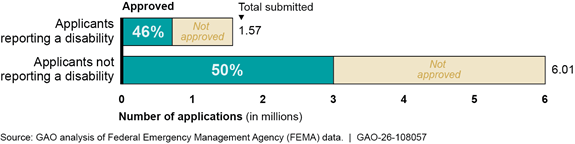
GAO’s analysis shows that 4 percentage points fewer applicants with disabilities were approved than those without disabilities from 2022 through 2025.
Why GAO Did This Study
People with disabilities are far more likely than people without disabilities to face hardship due to a major disaster, according to the National Council on Disability. FEMA plays a role in helping state and local governments, nonprofits, and others support survivors after a disaster. It also provides grants to states to help rebuild infrastructure and financial assistance to disaster survivors. The Think Differently About Emergencies Act included a provision for GAO to review the assistance FEMA provides to help people with disabilities.
This report examines the extent to which FEMA (1) works with state and local governments and others to support people with disabilities in disasters and (2) directly helps people with disabilities and their families.
GAO analyzed data from 2022 through 2025 on FEMA’s grants to disaster survivors and reviewed relevant federal laws and agency policy. GAO also interviewed FEMA officials; officials at organizations that support people with disabilities; and state and local officials and organizations in Hawaii, Louisiana, and Kentucky, which experienced different types of disasters in separate FEMA regions from 2023 through 2025.
What GAO Recommends
GAO is making three recommendations that FEMA address the needs of people with disabilities in disasters by re-instituting disability training for state and local partners, standardizing the role of regional disability staff to coordinate with state and local partners before disasters, and soliciting feedback on the accessibility of the financial assistance application process. FEMA concurred with our recommendations.
|
Abbreviations |
|
|
|
|
|
|
|
CIL |
Center for Independent Living |
|
|
FEMA |
Federal Emergency Management Agency |
|
|
IA |
FEMA’s Individual Assistance program |
|
|
I/DD |
Intellectual or developmental disabilities |
|
|
Post-Katrina Act |
Post-Katrina Emergency Management Reform Act of 2006 |
|
|
Stafford Act |
Robert T. Stafford Disaster Relief and Emergency Assistance Act, as amended |
|
This is a work of the U.S. government and is not subject to copyright protection in the United States. The published product may be reproduced and distributed in its entirety without further permission from GAO. However, because this work may contain copyrighted images or other material, permission from the copyright holder may be necessary if you wish to reproduce this material separately.
September 30, 2026
The Honorable Rand Paul, M.D.
Chairman
The Honorable Gary C. Peters
Ranking Member
Committee on Homeland Security and Governmental Affairs
United States Senate
The Honorable Sam Graves
Chairman
The Honorable Rick Larsen
Ranking Member
Committee on Transportation and Infrastructure
House of Representatives
People with disabilities are far more likely than people without disabilities to face serious hardship due to a major disaster.[1] People with disabilities may need specific types of support when it comes to preparing for, responding to, and recovering from disasters, and this support may differ by type of disability. For example, after a disaster, people who use a wheelchair may need ramps or accessible bathrooms in a shelter, while people with certain intellectual or developmental disabilities (I/DD) may need a quiet environment or noise-canceling headphones. In recovering from a disaster, people with physical disabilities may need replacement medical equipment, such as canes or oxygen.
The Federal Emergency Management Agency (FEMA), part of the Department of Homeland Security, leads and coordinates federal disaster response. FEMA plays a role in helping state and local governments, nonprofits, and other service providers support survivors after a disaster.[2] It also provides grants to states to help rebuild infrastructure after a disaster and financial assistance to disaster survivors to help cover certain expenses.
The Think Differently About Emergencies Act included a provision for GAO to review the assistance FEMA provides to state and local governments, nonprofit organizations, and individuals to assist people with disabilities.[3] This report examines the extent to which FEMA (1) works with state and local governments and other organizations to support people with disabilities in disasters and (2) directly helps people with disabilities and their families.
To address both of our objectives, we reviewed relevant federal laws and regulations regarding FEMA’s responsibilities for making assistance accessible to people with disabilities. We also reviewed FEMA internal and external guidance and GAO’s Standards for Internal Control in the Federal Government.[4] We interviewed stakeholders, including representatives from six national organizations, that we selected for their focus on providing assistance to or advocating for disaster survivors with disabilities. We also interviewed FEMA headquarters and regional officials (including regional disability integration specialists, which we refer to as disability specialists) who were knowledgeable about FEMA’s support for people with disabilities.
In addition, to address our first objective and to examine how FEMA provided assistance in specific cases, we selected three disasters that were declared from 2023 through 2025 to achieve diversity across year, type of disaster, and FEMA region. These disasters were the wildfires in Maui, Hawaii in 2023; Hurricane Francine in Louisiana in 2024; and severe storms in Kentucky in 2025. For each of these disasters, we interviewed state and county officials, regional FEMA staff, and representatives of nonprofit organizations that advocate for the interests of people with disabilities, including during disasters.[5]
Furthermore, to address our second objective, we analyzed national data from FEMA on financial assistance the agency provided to people with disabilities from January 2022 through December 2025. This time period enabled us to include new questions that FEMA added to its financial assistance application to identify applicants with disabilities in 2021. These data include summary data for people with and without disabilities on how they applied for financial assistance, application approval rates, and amounts received. We determined that these data were reliable for the purposes of evaluating the extent to which FEMA provides assistance to people with disabilities after disasters. For more information on our scope and methodology, see appendix I.
We conducted this performance audit from January 2025 to September 2026 in accordance with generally accepted government auditing standards. Those standards require that we plan and perform the audit to obtain sufficient, appropriate evidence to provide a reasonable basis for our findings and conclusions based on our audit objectives. We believe that the evidence obtained provides a reasonable basis for our findings and conclusions based on our audit objectives.
Background
FEMA’s Role in Disasters
FEMA has roles in supporting communities and individuals with disaster preparation, response, and recovery. FEMA helps to coordinate national preparedness by supporting people and communities, including state and local emergency managers, through community engagement, training, education, and planning. Although disaster response generally begins at the state and local level, when a disaster exceeds or is anticipated to exceed state and local capabilities, the federal government may provide assistance. This is done through a major disaster or emergency declaration under the Robert T. Stafford Disaster Relief and Emergency Assistance Act (Stafford Act).[6] FEMA is the lead federal agency for coordinating response efforts, and it works with state and local governments to address gaps in their response capabilities. FEMA can award Public Assistance grants to states and Individual Assistance (IA), including financial assistance, to disaster survivors to help with recovery after a disaster.
Agency Structure
FEMA’s Integration and Coordination Division—formerly known as the Office of Civil Rights—promotes equitable access to FEMA programs and activities. As part of this work, the Adjudication and Coordination Section investigates discrimination complaints under its jurisdiction, including those related to disability. The Integration and Coordination Division provides a variety of resources to help state and local partners meet the needs of people with disabilities in disasters, such as guidance and tools to ensure that people with disabilities have access to disaster-related resources and support.[7] This access includes physical access to facilities, access to FEMA programs, and access to information. According to agency documentation, the division:
· works with new FEMA programs to incorporate the needs of people with disabilities in program planning and implementation and to identify potential barriers to access;
· works with internal and external stakeholders to increase knowledge of disabilities and capacity to serve people with disabilities; and
· provides data-driven tools, such as data on the number of people in an impacted community that may be deaf or hard of hearing and require sign language interpreters, to FEMA leadership.
Prior to 2025, the disability functions of the Integration and Coordination Division were housed under the Office of Disability Integration and Coordination. That office, which reported to the FEMA Administrator, has been moved underneath the Integration and Coordination Division. Most of the office’s staff, including the director, separated from FEMA in 2025.[8]
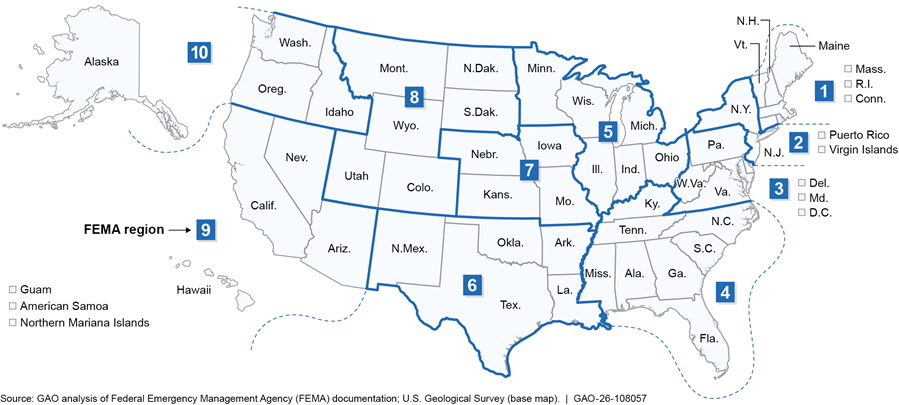
FEMA’s regional offices lead the federal response to disasters, and regional FEMA staff play central roles before, during, and after disasters occur. These staff include disability specialists, who can serve as a resource for state and local partners and other FEMA staff in their region. FEMA is divided into 10 regions, which coordinate with state governments in the region to manage disasters. Figure 1 shows FEMA’s regions and the states and territories for which they are responsible.
FEMA Reforms
Congress and the President have signaled an interest in enacting reforms to FEMA. For example, legislation was introduced in 2025 to make FEMA an independent, cabinet-level agency and to make changes to FEMA’s disaster assistance programs. In January 2025, the President established a FEMA Review Council to assess FEMA’s disaster response efforts, recommend changes to the agency, and review existing reform proposals.[9] In addition, as we have previously reported, the President has signaled support for transitioning more disaster response functions to state and local governments.[10] FEMA’s workforce has also decreased under the current administration. We previously reported that between January 1 and June 1, 2025, the number of active FEMA employees decreased from about 25,800 to 23,350, according to agency data.[11]
Legal Protections for People with Disabilities in Disasters
People with disabilities who are affected by disasters have a number of legal protections. The Stafford Act establishes how the federal government provides disaster assistance to states and individuals. It also prohibits discrimination on the basis of disability by personnel carrying out federal disaster relief.[12] The Post-Katrina Emergency Management Reform Act of 2006 (Post-Katrina Act) established the FEMA Disability Coordinator position.[13] Two other laws provide protections for people with disabilities more broadly. Section 504 of the Rehabilitation Act of 1973 (Section 504) prohibits discrimination on the basis of disability by the federal government and by recipients of federal funding.[14] The Americans with Disabilities Act of 1990 (ADA) establishes nondiscrimination requirements for state and local governments.[15]
Needs of People with Disabilities in Disasters
As we previously reported, people with disabilities may have specific needs during disaster preparation, response, and recovery.[16] Table 1 outlines some of these need areas, along with specific examples.
|
Disaster phase |
Area |
Examples |
|
Preparation |
Personal preparedness plan |
People with disabilities may need help from a family member or service provider to make a plan for what they might need to shelter in place or evacuate. |
|
Response |
Alerts |
Some people with intellectual disabilities may need alerts in plain language. People with hearing disabilities may need alerts in American Sign Language. |
|
Personal assistance |
People with disabilities may need personal care services, such as assistance with bathing or medication. |
|
|
Transportation |
People who use a wheelchair may need accessible transportation to a shelter, which can be more difficult in rural areas. |
|
|
Shelter |
People with autism may need a quieter environment to avoid becoming overstimulated. |
|
|
Recovery |
Applying for financial aid |
People who are blind may need information in braille or read aloud to them. |
|
Housing |
People with physical disabilities may need housing with accessible routes such as ramps. |
Source: GAO analysis of Federal Emergency Management Agency and National Council on Disability documents. | GAO‑26‑108057
FEMA Collaborates in Several Ways with Partners but Has Gaps in Training and Coordination
FEMA Provides Guidance but Has Discontinued Disability Training
Guidance
FEMA has some general guidance for state and local partners that contains language about incorporating the needs of people with disabilities into disaster planning and response. Table 2 shows examples of these types of guidance for state and local partners.
|
Name |
Purpose |
Examples of disability-related content |
|
Developing and Maintaining Emergency Operations Plans Comprehensive Preparedness Guide (May 2025) |
Provides guidance on the fundamentals of planning and developing emergency operations plans |
Plans should account for the physical, programmatic, and communications needs of individuals with disabilities. People with disabilities must have equal access to emergency programs and services, which may require modifications to rules, policies, practices, and procedures. |
|
Shelter Field Guide (undated) |
Provides organizations without prior disaster experience with a basic overview of shelter operations |
For people with visual disabilities: · Sleeping space may need to be located along a wall or in a corner to make it easier to find. For people with cognitive, intellectual, and mental health disabilities: · Establish a buddy system with volunteers providing reassurance, calm explanation, and attention to personal needs. |
|
Commonly Used Sheltering Items Catalog |
Lists items for which FEMA maintains agreements so that these items can be provided during a disaster |
· Walkers · Wheelchairs · Assistive listening devices · Magnifying glasses · Communication cards (picture boards) · Tracheotomy care trays |
Source: Federal Emergency Management Agency (FEMA) documents. | GAO‑26‑108057
FEMA has also issued specific guidance on disaster assistance for people with disabilities, including people with I/DD, to help state and local emergency managers and shelter planners meet their needs.[17] This guidance recommends, among other things:
· stocking communication devices, such as hearing aids and screen readers, to help people with disabilities in shelters; and
· ensuring that some people with disabilities, such as wheelchair users, have additional space allocated to them in shelters.
The guidance also discusses issues such as:
· considerations for service animals, including the possible need for emergency veterinary services;
· the importance of making a quiet area available to those who need it due to their disability; and
· communication tips for working with people with different types of disabilities.
State and local partners in one of our selected states were unaware of some FEMA guidance and policy changes. For example, officials from one state emergency management agency said they were not familiar with the guidance on accessible shelters. FEMA officials said that FEMA’s regional and deployed staff communicate with states and partners about updated guidance such as changes to the IA application process, as discussed later in this report.
Training
According to the Post-Katrina Act, FEMA’s Disability Coordinator is responsible for ensuring the development of training materials and a curriculum for training emergency response providers, state and local government officials, and others on the needs of people with disabilities. FEMA developed on-demand training, entitled “Including People with Disabilities in Disaster Operations.” This training was freely available to partners such as state and local emergency managers through FEMA’s Emergency Management Institute. The training provided information and strategies on how to support people with disabilities during preparedness, response, and recovery efforts. For example, it provided information on FEMA’s actions in supporting people with disabilities in disaster operations. One disability specialist told us there was a lot of demand for the course.
In 2025, FEMA removed this training from its curriculum and website, and it is no longer available to state and local partners. FEMA officials told us in May 2026 that this training was temporarily discontinued in March 2025 for an internal review to ensure it complied with various Executive Orders.
Providing training on meeting the needs of people with disabilities is an important piece of how FEMA ensures that state and local partners have the knowledge they need to identify barriers before a disaster and effectively communicate with people with disabilities during each phase of a disaster. Such training is especially critical in light of potential reforms that would shift more responsibilities from FEMA to state and local emergency managers. As of August 2026, it had been over a year since the training was discontinued. Re-instituting the training would help position state and local emergency responders to effectively assist people with disabilities and help avoid gaps in meeting their needs.
FEMA’s Public Assistance Grants May Cover Some Costs for Local Disability Organizations
FEMA’s Public Assistance program awards federal grants to states after a major disaster is declared. Public Assistance includes assistance for emergency work (e.g., emergency protective measures to safeguard people and property) and permanent work (e.g., restoration of disaster-damaged facilities) performed before or after a major disaster. The state is the primary grant recipient and reimburses eligible entities for approved costs of completed work.[18] Under certain circumstances, Public Assistance funding may be used to reimburse private nonprofits for disaster-related services that they provided, including services provided to people with disabilities. FEMA officials explained that private nonprofits submit their requests for funding to the state, the state reviews their application and makes a recommendation to FEMA on whether they should be awarded the funds, and FEMA makes the final determination.
Centers for Independent Living (CIL) are private nonprofits that provide services to people with disabilities, which may include services before, during, and after a disaster.[19] For example, representatives from three CILs said that they have provided personal assistance services, sign language interpretation, and the sourcing and delivery of medical equipment to people with disabilities who were affected by a disaster. One of the CIL representatives we interviewed told us that while CILs are generally well-positioned to provide services to people with disabilities in a disaster, sometimes the level of need exceeds their staff’s capacity. Two CIL representatives also told us that their grant funding from the Department of Health and Human Services cannot be used to cover certain costs, such as hotel stays or other displacement assistance.[20] According to that department’s FAQ, a CIL may need to seek other funding to cover expenses for services provided during a disaster that are not permissible under the terms of their grant, such as home repair or disaster cleanup.
Among the six CILs we interviewed, one had received grant funding for emergency work through the program. Representatives from the six CILs described challenges with the application process and other issues, including:
· difficulties establishing relationships with their state or local emergency management agencies, including setting up memorandums of understanding before a disaster to provide disaster-related work;[21]
· not receiving clear information on the Public Assistance application process from their state or local emergency management agencies once work was performed; and
· not being informed about the Public Assistance program by their state or local emergency management agencies and, therefore, not pursuing reimbursement for additional costs associated with disaster-related work.
Two FEMA disability specialists acknowledged that the program is complex, and some CILs do not understand it. For example, according to one disability specialist, there has been confusion in their region about whether CILs meet the eligibility criteria under the Public Assistance program for private nonprofits. The disability specialist also stated that in one instance delays in reimbursement were due to a CIL submitting its documentation to the wrong entity. To address these challenges, the disability specialist said that FEMA staff in their regions have provided technical assistance and targeted outreach on the program to states and organizations that serve people with disabilities.
FEMA officials said that states lead the delivery of the Public Assistance program and are responsible for providing applicants with technical assistance. FEMA officials said states vary in their experience with the program and their capacity to provide applicants with funding for technical assistance. FEMA issued a Public Assistance program and policy guide for states, which was most recently updated it January 2025. This guide details the required actions to request and receive FEMA disaster assistance grants. The guide indicates that FEMA will provide states with technical assistance in administering the program.
Additionally, FEMA has made efforts to inform states and other partners on private nonprofit eligibility for Public Assistance funding. In October 2022, FEMA issued a fact sheet on Public Assistance eligibility for private nonprofits that outlines the eligibility criteria and application process.[22] In November 2020, FEMA also issued an addendum to its mass care guidance, which recognizes a role for private nonprofits, including CILs, in either delivering or advising on personal assistance services in shelters.[23] According to this guidance, private nonprofits that deliver personal assistance services in shelters may be eligible to receive funding for some of their costs through the program. FEMA officials said that they presented this information on delivering personal assistance services in shelters, including the process to request funding, to partners in all regions and in 15 states. FEMA officials said that some CILs were interested in these presentations and were already providing personal assistance services in shelters.
FEMA’s Coordination with State and Local Partners Has Been Inconsistent
FEMA’s disability specialists promote accessible practices through outreach to state and local emergency managers in their regions. Disability specialists we spoke with discussed working with state and local partners to develop the relationships and knowledge they need to help connect to people with disabilities and ensure they can access assistance when a disaster happens. For example, they consulted with a state’s disability coordinator and brought together disability organizations with other volunteer organizations. Officials from the American Red Cross also told us that the disability specialist in one region held presentations on accessibility for certain populations of people with disabilities. The presentations included information about assistive technologies, such as communication boards that could be used to communicate with people with I/DD while they were in shelters.
In some FEMA regions, disability specialists coordinate proactively with state and local partners to ensure that the needs of people with disabilities are considered before a disaster occurs. We heard from both national and local disability groups that it was helpful to have the disability specialists involved before disasters so that they could plan for evacuation of a group home for people with disabilities, for example.
However, local partners in two of our three selected states were not aware of the disability specialist for their region and said they had not coordinated with the disability specialist before a disaster occurred. One reason for this may be the loss of regional expertise due to agency downsizing and turnover among disability specialists. As of May 2026, three of the 10 regions did not have a disability specialist, as shown in figure 2.
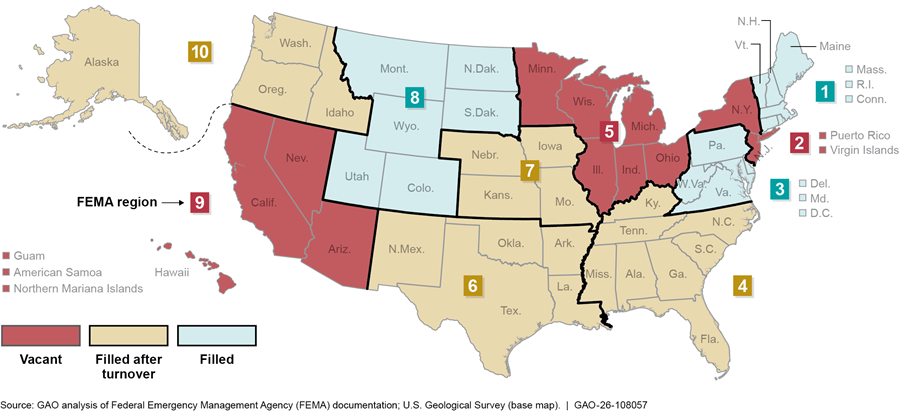
Note: Information provided by FEMA is from January 2023 to May 2026.
Some disability specialists told us they did not always have the capacity to coordinate with state and local partners before disasters happened. For example, one disability specialist said they had less time to focus on building relationships with state and local partners in their region before a disaster because they were routinely deployed to assist other regions during disasters.
FEMA did not provide us with a standard job description specifically for the disability specialists. It is not clear whether such a description exists or, if so, if it includes coordination with state and local partners before disasters as part of the position’s role.[24] State and local officials we spoke with said that disability specialist engagement with state and local partners varies by region and depends on the person in the role. In addition, some disability specialists told us that beginning in 2025, they were restricted from doing any external coordination and that their roles now focused primarily on working with other FEMA staff. FEMA officials said that the agency evaluated its messaging and external communications to ensure they were consistent and aligned with Presidential priorities, applicable Executive Orders, departmental guidance, and federal law. They said that external engagements continued across FEMA as appropriate.
FEMA’s Guide to Community Engagement says that engaging community partners before a disaster can be useful in developing plans to meet specific community needs, including securing medical access for patients receiving dialysis or having accessible transportation for people who use wheelchairs.[25] Furthermore, federal standards for internal control state that management should communicate with, and obtain relevant and quality information from, appropriate external parties to address risks.[26] Without FEMA clearly documenting a responsibility for disability specialists to coordinate with state and local partners before disasters, this relationship building may not happen, and the needs of people with disabilities may not be met during a disaster. The potential increased reliance on state and local governments to respond to disasters means that this coordination is even more important.
FEMA Provides Information and Grants, but Some Survivors Face Obstacles When Applying
FEMA Makes Information Available to People with Disabilities and Caregivers Including Guidance and Alerts
FEMA publishes disaster planning and recovery guidance on its website for people with disabilities and caregivers.[27] FEMA guidance recommends the following:
· Awareness. FEMA advises people to be aware of the types of disasters that could affect their immediate area and recommends having access to a device to stay updated (e.g., a TV or radio).
· Planning. FEMA recommends developing a plan before disasters to determine what people need to shelter in place or evacuate. FEMA’s website includes a fillable form that highlights what someone should consider when preparing for a disaster. Examples include phone numbers for caregivers, medical information, and the serial number of an assistive device.
· Preparation. FEMA suggests that people pack an emergency kit before disasters. FEMA’s website lists items to consider packing for people with different types of disabilities. For example, a person who is deaf or hard of hearing may need extra hearing aid batteries. A person with I/DD, such as someone with autism, may need noise-canceling headphones.
In addition, FEMA operates, maintains, and administers the Integrated Public Alert and Warning System (IPAWS), which state and local governments can, but are not required to, use to send emergency messages to the public.[28] FEMA is required by federal law to include in IPAWS the capability to alert, warn, and provide equivalent information to individuals with a disability to the extent technically feasible.[29] In addition, FEMA is responsible for conducting public education efforts so that partners and the general public understand the function of IPAWS and how to access, use, and respond to information from it.
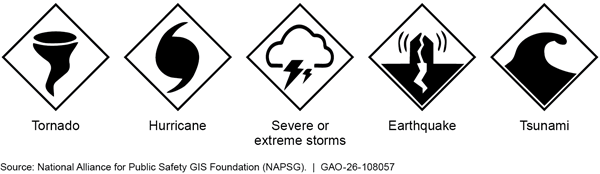
IPAWS allows people to receive communication through one or more pathways (e.g., mobile phone and TV) and can serve the needs of people who are deaf, hard of hearing, blind, or low vision. Images can be added to IPAWS alerts, and the platform has text-to-speech capability. Symbols can be used to make public alerts and warnings more accessible for people with visual or hearing disabilities, as shown in figure 3. According to FEMA’s website, the IPAWS office has identified emerging technologies and assistive technology products that support or provide direct alert and warning capabilities for people with disabilities, such as braille readers, wall beacons, sign language interpretation, and video remote interpreting.
FEMA has also made some outreach efforts to the public and partners about the accessibility features of IPAWS. According to FEMA’s website,
· during national conferences and meetings, staff from FEMA’s IPAWS office showcase technologies and products for people with disabilities and
· previously, the IPAWS office and the former Office of Disability Integration and Coordination partnered to conduct annual roundtables for federal partners and industry experts on disability-related concerns.
In 2023, FEMA and the Federal Communications Commission conducted a nationwide test of IPAWS to ensure the system is operable, which is required at least every 3 years. Following this test, the Partnership for Inclusive Disaster Strategies conducted a survey to learn about the experiences of people with disabilities and found some challenges. For example, some people with disabilities reported that alerts were not provided in sign language or that the colors of the text made them difficult to read.[30]
FEMA officials noted that while FEMA provides the platform, the agency does not control the content of emergency alerts, which are generated by state or local governments. Therefore, alerts may vary in their use of plain language, audio translation, or text to sign language. According to a state official in Kentucky, some alerts have a lower character limit, so the state will include links to state or local emergency agency websites. However, the state official and a representative from a disability organization stated that this approach may not be adequate for a person who is blind. FEMA officials also told us that the accessibility of alerts can depend on the capabilities of the mobile device used by the individual receiving the alerts. For example, some mobile phones may not be video capable.
FEMA’s Grant Application Process May Present Obstacles for Some People with Disabilities
FEMA’s IA program provides assistance grants to help disaster survivors cover necessary expenses and serious needs that cannot be met through their insurance (e.g., homeowner insurance) or other assistance (e.g., from a state or local agency). As part of IA, FEMA provides financial and direct (nonfinancial) housing assistance to individuals and households who are displaced or whose residences are uninhabitable as a result of damage caused by a major disaster.[31] Financial housing assistance may include expense reimbursement for time spent at hotels or other temporary lodging, rental assistance, and home repair or replacement assistance.[32] In addition, FEMA may provide Direct Housing Assistance when there is a significant lack of available housing resources by directly leasing rental units or bringing in manufactured housing units, for example.
IA program assistance grants may be used to provide direct temporary housing, to repair or replace disaster-damaged property required for accessibility such as walkers or wheelchairs, and to restore old or add new features to a home (e.g., ramps or access paths) to improve accessibility. IA may provide financial assistance for home repair, personal property, medical/dental expenses (including loss or injury of a service animal), childcare, transportation, group flood insurance, and other serious needs. In 2024, FEMA amended the IA program to cover funding for accessibility improvements to homes damaged by a declared disaster, such as adding an exterior ramp to make homes more accessible, even if these features were not in place prior to the disaster.[33] FEMA also simplified documentation requirements for applicants seeking continued temporary housing assistance and its appeals process.
From January 2022 through December 2025, about 7.5 million people applied for IA. Twenty-one percent of these applicants, or over 1.5 million people, indicated that they or someone in their household had a disability. Applicants with disabilities most commonly requested assistance to interact with FEMA staff due to mobility issues (about 620,000); followed by other (about 308,000); and then cognitive or developmental disabilities or mental health (about 241,000).[34] A smaller percentage of applicants who reported that they or someone in their household had a disability were approved for and received IA (46 percent) than applicants who reported no disability (50 percent) (see fig. 4).
Figure 4: FEMA Disaster Assistance Applications Received and Approved, January 2022–December 2025, for People With and Without a Reported Disability
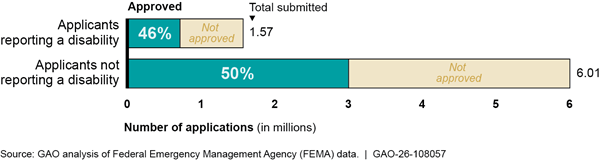
In total, FEMA approved about $14.4 billion for IA from calendar years 2022 through 2025, and just over $8 billion of that amount was approved for people with disabilities. FEMA spent almost $8 million from 2022 through 2025 on IA grants for accessibility-related items such as ramps (about $4.3 million), beds (about $708,000), and wheelchairs (about $767,000).
Application Intake Questions
Disaster survivors apply for IA by answering a series of intake questions, including questions related to their disability-related needs. In 2019, we recommended that FEMA implement new application questions to identify and address these needs, including accommodations, and develop a system to notify FEMA staff of these requests.[35] According to FEMA officials, in June 2021, FEMA began using revised questions in the IA application to help identify people with disabilities, including:
· whether someone in an applicant’s household has a disability and if so, what type;
· whether any assistive devices such as wheelchairs were damaged during the disaster; and
· whether an applicant needs accommodations such as sign language interpretation or braille to access FEMA services.
In response to one of our recommendations, in September 2021 FEMA began adding alerts to applicants’ files that notify staff if an applicant has requested an accommodation.
Ways to Apply
At the time of our selected disasters (2023 through early 2025), FEMA offered several ways for people to apply for IA, which included additional services for applicants with disabilities who might need assistance:
· FEMA’s helpline. The FEMA Helpline offers services for people who may need an accommodation, such as video relay services.[36]
· Online at DisasterAssistance.gov or through FEMA’s mobile app. According to FEMA officials, in 2024 the agency updated its online application to enable a more visual and user-friendly online application.
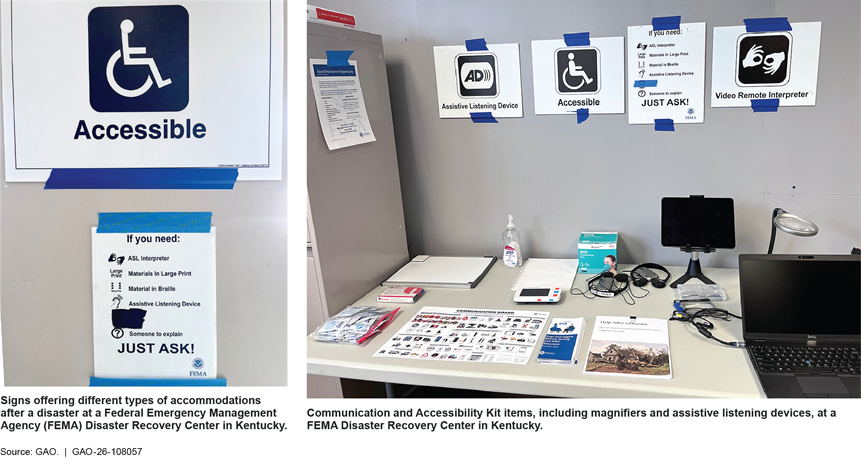
· Disaster recovery center. Prior to May 2025, FEMA set up these centers after disasters to assist with recovery. FEMA officials said these centers were to be accessible for people with disabilities like other federal buildings. FEMA officials told us that each site was also to provide a Communication and Accessibility Kit, which included a tablet for sign language interpretation and information in braille, as shown in figure 5. In May 2025, FEMA issued a memorandum stating that FEMA would focus on supporting state- or locally operated recovery centers, thereby reducing the need to establish FEMA disaster recovery centers and optimizing support for state and locally led recovery efforts. FEMA officials said they continue to provide Communication and Accessibility Kits to conduct FEMA activities in state and locally led recovery efforts if state and local governments are not able to provide their own.
Figure 5: FEMA Signs Offering Accommodations and a Communication and Accessibility Kit at a FEMA Disaster Recovery Center, September 2025
· Disaster survivor assistance teams. These door-to-door FEMA teams reached people who were unable to leave their homes, did not have access to accessible transportation, or lacked phone or internet access, according to FEMA regional and deployed staff. The teams, which provided information or helped people apply for assistance, may have been helpful for people with disabilities in a variety of circumstances. For example, stakeholders in Kentucky and Hawaii and one disability specialist told us that in some communities people did not have access to public transportation, or if they did, it may not have been immediately operational after a disaster. Furthermore, a representative from a nonprofit organization and a local official told us that during the severe storms in Kentucky, many people went weeks without internet or phone service, leaving them unable to call or apply online for any services. Additionally, other state and local partners and a representative from a nonprofit organization in Kentucky told us that some people with disabilities, such as those with I/DD, may feel more comfortable completing the applications in their homes as opposed to at a disaster recovery center, which may be loud and crowded. People who are unable to leave their homes because they are immunocompromised can also benefit from these door-to-door teams, according to an official we spoke with from a nonprofit organization. In June 2025, FEMA stopped sending these teams to homes, stating that less than 2 percent of all IA applicants applied through these teams from January 2024 to June 2025. Rather, officials said that FEMA teams can be deployed to a central location in a community (e.g., a local park) to assist multiple survivors in one setting.
Between 2022 and 2025, the way applicants with and without disabilities applied for IA varied (see fig. 6). While all applicants were most likely to apply using the internet or a mobile phone, a larger percentage of people with a disability used the call center or a disaster recovery center than those without a disability.
Figure 6: FEMA’s Individual Assistance Application Methods by People With and Without a Reported Disability, January 2022–December 2025
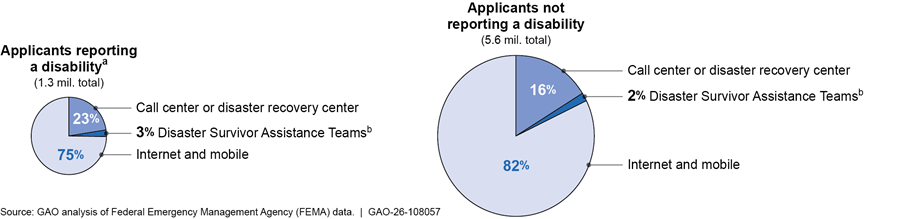
aNumbers may not add to 100 percent due to rounding.
bIn June 2025, FEMA discontinued the Disaster Survivor Assistance Teams’ door-to-door assistance; therefore, data are for a partial year.
Obstacles for People with Disabilities
Even with FEMA’s recent application updates, some stakeholders said that some people with disabilities continue to encounter obstacles with the IA application.
· Application questions. A disability specialist told us that while the updated disability questions on the IA application were an improvement, they may not be clear to all people with disabilities. Based on our review of the application, one of the questions does not define or provide examples for the key terms “assistive devices” and ”medically required equipment” unless the applicant selects “Yes” (see fig. 7). People with certain disabilities may not understand what these terms mean and as a result, FEMA may not know they need assistance with these items.
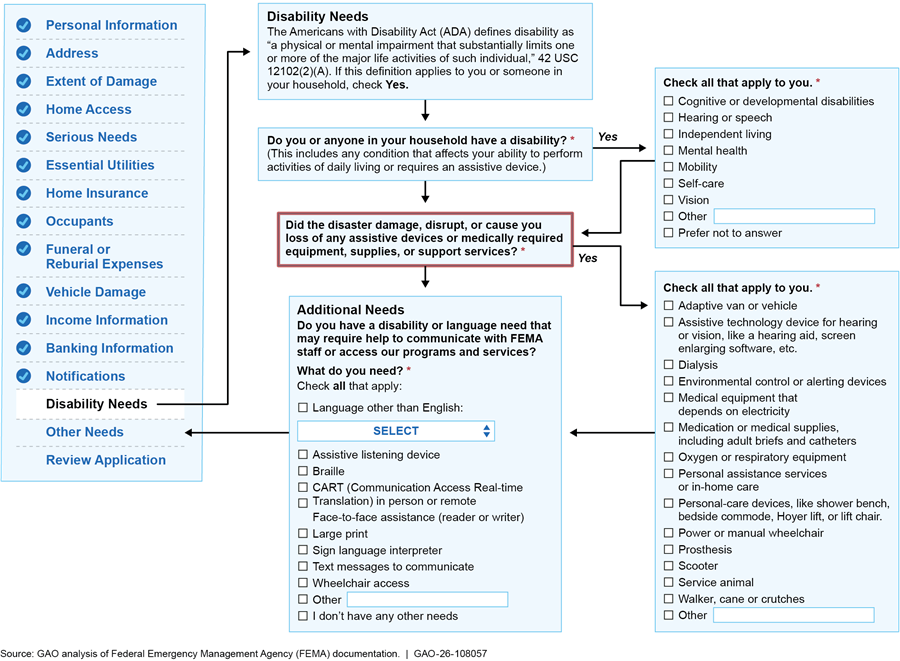
Additionally, federal plain language principles include using short sentences, clear and common wording, and lists to improve clarity.[37] We used the Flesch-Kincaid Grade Level test to assess the grade level of the IA application.[38] The results indicated that the application was written at a grade 10 reading level. However, the recommended reading level for most documents is grade 7–8, according to the Flesch-Kincaid Grade Level test.[39] FEMA officials told us they have taken steps to improve the online application, and when doing so, considered multiple plain language techniques rather than only grade level. Officials said they simplified the language and made it easier for applicants to understand where they are in the process.
· Video relay service. A disability specialist told us that some people who are deaf have a different phone number for video relay service than their personal phone number. Applicants such as these are not prompted to enter the video relay service number on the IA application, although there is space for an alternative phone number. As a result, FEMA staff may be unable to contact the person through their personal phone number only. FEMA officials told us that applicants are given information at the end of the application on how to update FEMA, but it is unclear whether this prompt specifically mentions video relay service. The letters FEMA sends to applicants do specifically ask that applicants provide the number for their video relay service. In addition, FEMA procedures provide step-by-step instructions on how to refer applicants who are deaf or hard of hearing to a specific helpline if they request video relay services.
· Determination letters. A disability specialist and a representative from a nonprofit organization in Kentucky that serves people with disabilities told us that the IA determination letters that communicate to the applicant their eligibility for financial assistance can be confusing. FEMA officials told us they held focus groups in March 2025 to evaluate the usability of the IA determination letters.[40] However, FEMA officials said they did not specifically include people with disabilities. FEMA has subsequently updated the IA determination letter to include additional spacing to break up text to make the information easier to read and to clearly indicate information needed from the applicant, according to FEMA officials. We assessed the readability of the updated determination letters from July 2025. The results indicate that the letters were written at a grade 12 level, according to the Flesch-Kincaid Grade Level test.
· Documentation for third-party support. If someone needs assistance with the IA application process, such as from a family member, they must submit an Authorization for the Release of Information Under the Privacy Act form for that person to be allowed to communicate with FEMA about the application.[41] The completed form needs to be uploaded to DisasterAssistance.gov, mailed or faxed to FEMA, or returned to a FEMA point of contact, such as a disaster recovery center. A disability specialist told us that this can be a lot of steps for some people with disabilities, especially for someone with I/DD. FEMA’s website states that an applicant may provide verbal permission when both the applicant or other person are present at a disaster recovery center or while calling the FEMA Helpline.
· Other supporting documentation. If an IA applicant requests funds to replace medications, a wheelchair, or hearing aids, they may have to provide supporting documentation, such as a receipt.[42] A stakeholder in Hawaii told us that for some people with disabilities, it can be difficult to provide supporting documentation to FEMA for donated items, such as a wheelchair. In addition, a disability specialist and a representative from a disability organization in Hawaii told us that it may be difficult for certain people with disabilities, such as those with an intellectual disability or those without transportation, to navigate working with multiple agencies to replace documents, such as replacing an ID.[43] For example, stakeholders in Kentucky and Hawaii told us that some people with disabilities needed help to obtain or replace documents after a disaster. In addition, a disability specialist said some people with autism who live on their own may have challenges filling out the IA application without assistance. A FEMA staff person, a representative from a national disability organization, and representatives of a nonprofit disability organization in Kentucky said that people with disabilities who had relied on support from caregivers before a disaster found that this help was unavailable to them after a disaster because those people were also affected.
· Disaster survivor assistance teams. FEMA officials, state and local government officials, and a representative from a nonprofit organization in Kentucky told us that discontinuing these door-to-door assistance teams may have a larger impact on people with disabilities than on other IA applicants. As mentioned previously, people with disabilities may not have access to public transportation to get to a disaster recovery center or may not be able to apply by phone or online. State officials from two of our three selected states told us that it will be hard for them to replace FEMA’s door-to-door teams, and one official said they would need to hire and train staff before a disaster.
FEMA’s plan for implementing Section 504 states that the agency must offer disaster survivors with disabilities the opportunity to receive accommodations for their access needs from the beginning of the application process through the delivery of disaster assistance and recovery programs. Similarly, IA program guidance states that FEMA is required to ensure equal access to IA for qualified applicants with disabilities and lists steps that FEMA can take to ensure that it is accessible. In addition, federal standards for internal control state that management should communicate with, and obtain relevant and quality information from, appropriate external parties to address risks.
From January to July 2024, FEMA held an open comment period on its proposed 2024 changes to the IA program which allowed partners, such as disability stakeholders, to provide feedback. FEMA officials said that they have incorporated some feedback received during the comment period into the updated Individual Assistance Program and Policy Guide that is expected to be released in 2027. For example, they said they may expand the list of approved accessibility items to include interior ramps, which were not part of the 2024 changes. Additionally, in June 2026, FEMA published an evaluation of its 2024 IA reforms, which includes the results of a customer satisfaction survey. The report did not indicate whether people with disabilities were included in the sample of survivors for the customer satisfaction survey, and it does not include any findings on the effects of the reforms specific to survivors with disabilities.
Nonetheless, FEMA has not proactively solicited feedback from people with disabilities on the overall IA application process, nor has it assessed other aspects of the IA application process that were not part of the 2024 changes to determine whether they are accessible to people with disabilities. According to FEMA, these reforms were intended to simplify processes, remove applicant barriers, and increase eligibility for certain types of assistance under the program. However, more can be done to improve accessibility of the program for people with disabilities. Without proactively soliciting feedback on the IA application process from people with different types of disabilities and incorporating that feedback into any needed improvements, FEMA cannot be sure that the IA application process is accessible and meets the needs of people with disabilities.
FEMA Staff Investigate Discrimination Complaints and Deploy to Disasters to Help with Recovery
Investigations of Discrimination Complaints
FEMA’s Integration and Coordination Division helps ensure that FEMA’s programs and activities and those provided by FEMA’s grant recipients comply with federal civil rights requirements, including nondiscrimination on the basis of disability. People who believe they have been subject to discrimination in programs or activities conducted by FEMA can file a formal complaint with FEMA or, according to FEMA officials, can report it to any FEMA staff. FEMA staff can work with the person to find a solution before a formal complaint is filed, according to FEMA officials. For example, if a person who is in temporary housing funded by FEMA needs a grab bar, FEMA staff can have one installed without the individual filing a formal complaint. However, if the issue remains unresolved, the person may file a formal complaint with FEMA’s Adjudication and Coordination Section. Adjudication and Coordination staff review complaints and can open an investigation.
Representatives from a national disability organization and disability organizations in Hawaii and Louisiana told us that some people with mobility disabilities did not have access to accessible showers or ramps in emergency shelters. According to a representative from a national disability organization, some people with I/DD have unmet needs for a quiet space in shelters when they are overstimulated.
If someone complains to FEMA about discrimination in a shelter but that shelter did not receive funding from FEMA or sign an agreement with FEMA under the Stafford Act, the complaint may be referred to the Department of Justice for further review, according to FEMA officials.[44] In addition, representatives from a national disability organization told us that some people with disabilities do not file complaints with FEMA. For example, representatives from a nonprofit disability organization in Louisiana said that some people with disabilities may not have access to a computer or may have more immediate concerns about getting to safety during a disaster.
Deployed Staff
Before 2025, FEMA had a Disability Integration cadre made up of staff with disability expertise from across the agency who deployed to disasters and served as high-level advisors to FEMA leadership on the needs of people with disabilities.[45] Cadre staff coordinated with local disability partners and provided technical assistance on access to FEMA programs. For example, a representative from a nonprofit disability organization in Louisiana told us they had worked with Disability Integration cadre staff to obtain needed medical equipment or medications for people with disabilities in the community after a disaster.
In 2025, FEMA merged the deployable Disability Integration cadre with the deployable Civil Rights cadre within the Integration and Coordination Division, according to FEMA officials. The combined cadre (now called the Civil Rights cadre) will implement the duties of the former cadres, such as investigating allegations of discrimination related to FEMA programs, according to FEMA documentation and officials. For example, based on FEMA documents we reviewed, the Civil Rights cadre may go to disaster recovery centers to determine if they are accessible or to identify barriers to people accessing FEMA programs throughout a disaster. However, the Civil Rights cadre is not focused exclusively on people with disabilities. Staff also investigate allegations of discrimination against other protected classes, such as race and sex.[46]
FEMA officials said that a positive outcome of this merger is that there are more staff to serve people with disabilities. One Civil Rights cadre member who was formerly in the Disability Integration cadre told us, however, that due to this change their role has become more administrative than hands-on. They said this change has affected their ability to communicate effectively with disability partners. FEMA officials told us that they planned to provide an updated course for this new role in 2026 to ensure that staff were trained in both civil rights and disability issues. As of September 2026, FEMA officials told us this course was still under development and that the first course was scheduled to be delivered in November 2026.
Conclusions
People with disabilities can be especially vulnerable after a major disaster. Clear guidance for FEMA’s state and local partners on addressing the needs of people with disabilities after a disaster is critical, especially if FEMA transfers more disaster preparedness, response, and recovery functions to state and local governments. While FEMA provides guidance to help state and local partners address the needs of people with disabilities, it discontinued related training for state and local emergency managers in March 2025, over a year ago. By re-instituting this training, FEMA could help ensure that state and local government employees involved in disasters can more effectively identify and assist people with disabilities to ensure they have access to disaster assistance.
In addition, FEMA’s disability specialists do not consistently coordinate with state and local partners before disasters to help ensure that people with disabilities have the resources they need in a disaster. By clearly documenting that the disability specialist role includes responsibility for such coordination, FEMA can help ensure that the needs of people with disabilities have been taken into account and state and local governments are prepared to assist them before disasters strike.
Finally, while IA can assist people who have been affected by disasters, the application process can present several obstacles for people with disabilities. While FEMA has revised its determination letter to use more plain language and simplified its appeals process, its application process may still be difficult for some people with disabilities. By soliciting feedback from people with different types of disabilities on its IA application process and making related adjustments, FEMA could more effectively ensure that those who are particularly vulnerable in the aftermath of a disaster receive the help they may be eligible for.
Recommendations
We are making the following three recommendations to the FEMA Administrator:
The FEMA Administrator should re-institute training to state and local partners on addressing the needs of people with disabilities in disasters. (Recommendation 1)
The FEMA Administrator should document and standardize that the disability specialist role in all regions includes coordinating with relevant state and local partners before disasters happen to ensure that the needs of people with disabilities are taken into account during disasters. (Recommendation 2)
The FEMA Administrator should solicit and incorporate feedback on its IA application process from people with different types of disabilities to address issues we identified in this report, such as use of plain language and the discontinuation of door-to-door assistance teams, and make it easier for people with disabilities to apply for assistance. (Recommendation 3)
Agency Comments
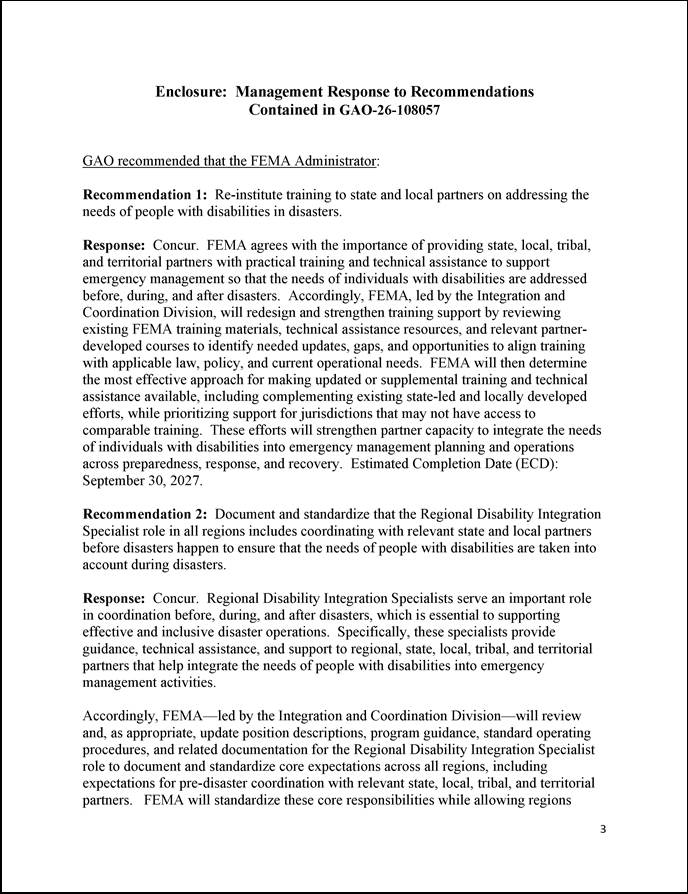
We provided a draft of this report to the Department of Homeland Security for review and comment. In written comments provided by the Department (reproduced in appendix II), the agency concurred with our recommendations and described steps it would take to implement them. For example, the agency said it would revise and strengthen training related to integrating the needs of people with disabilities.
We are sending copies of this report to the appropriate congressional committees and the Secretary of Homeland Security. In addition, the report is available at no charge on the GAO website at https://www.gao.gov.
If you or your staff have any questions about this report, please contact me at Curdae@gao.gov. Contact points for our Offices of Congressional Relations and Media Relations may be found on the last page of this report. GAO staff who made key contributions to this report are listed in appendix III.
Sincerely,

Elizabeth Curda, Director
Education, Workforce, and Income Security Issues
This appendix discusses in detail our methodology for examining the extent to which the Federal Emergency Management Agency (FEMA) (1) works with state and local governments and other organizations to support people with disabilities in disasters; and (2) directly helps people with disabilities and their families. We used the methodologies described below to address both objectives, unless otherwise noted.
Analysis of FEMA Documents and Review of Relevant Federal Laws and Regulations
We reviewed relevant agency documents (both current and prior versions), including FEMA policies, procedures, and guidance related to people with disabilities. We reviewed relevant federal laws and regulations, FEMA internal guidance, and GAO’s standards for internal control in the federal government.[47] To address our second objective, we estimated the school grade level required to understand FEMA guidance materials, its Individual Assistance application, and letters it sent to applicants using the Flesch-Kincaid Grade Level automated readability tool.[48]
Interviews with National and Local Organizations and FEMA
We interviewed representatives of six national organizations to learn about the needs of disaster survivors with disabilities and how FEMA coordinates with state and local organizations to address the needs of people with disabilities. We selected these organizations for their focus on providing assistance to or advocating for disaster survivors with disabilities. We interviewed representatives from the National Council on Disability, the World Institute on Disability, the Partnership for Inclusive Disaster Strategies, the National Council on Independent Living, and the National Disability Rights Network to learn about the needs of disaster survivors with disabilities and the benefits and challenges working with FEMA. We also interviewed representatives from the Red Cross.
We interviewed staff from FEMA headquarters, including officials from the former Office of Disability Integration and Coordination, the Office of Civil Rights, and officials who administered the Individual Assistance program. We also interviewed FEMA regional staff, including all current and one former disability specialists. In addition, to address our first objective, we interviewed officials from FEMA’s Public Assistance program and representatives from six Centers for Independent Living.[49]
Analysis of Individual Assistance Data
To address our second objective, we obtained and analyzed summary data from FEMA’s National Emergency Management Information System—a database used to track Individual Assistance data on disasters—on applications FEMA received and approved, application methods, and amounts received for disaster assistance and disability-related items for all disasters from January 2022 to December 2025. FEMA began using revised questions in its Individual Assistance application to identify applicants with disabilities in 2021. These selected years reflect the first full calendar year of FEMA using the updated questions through the most recent calendar year at the time of our analysis. These data were broken out for applications submitted by households with residents who reported having disabilities and households who did not report a member who had a disability. Applicants were included in the disability category if the applicant answered “yes” to “do you or anyone in your household have a disability?”. These data reflect the status of FEMA applications as of May 2026. We determined that the data were sufficiently reliable for the purpose of providing information on the number and characteristics of applications and approvals for assistance that FEMA tracks.
In-Depth Reviews of Selected Disasters
We selected a nongeneralizable sample of three disasters to provide illustrative examples of how FEMA coordinates with states and local partners to address the needs of people with disabilities.[50] We focused on FEMA’s role in emergency support functions for emergency assistance and public health and medical services in the selected states since these functions were relevant for people with disabilities.[51] We selected disasters based on the following criteria:
· They were declared in calendar years 2023, 2024, or 2025. We considered disasters that occurred before and after changes to the Individual Assistance program in 2024 and the reduction in FEMA’s staff that began in January 2025.
· They varied in disaster type.
· They happened in different FEMA regions.
For each disaster, we selected a locality (county or parish) that had been approved for both Individual Assistance and Public Assistance.
We selected the following disasters and locations between 2023 to 2025, as shown in figure 8:
· Wildfires in Maui County in Hawaii (2023);
· Hurricane Francine in Terrebonne Parish in Louisiana (2024); and
· Severe Storm in Perry County in Kentucky (2025).
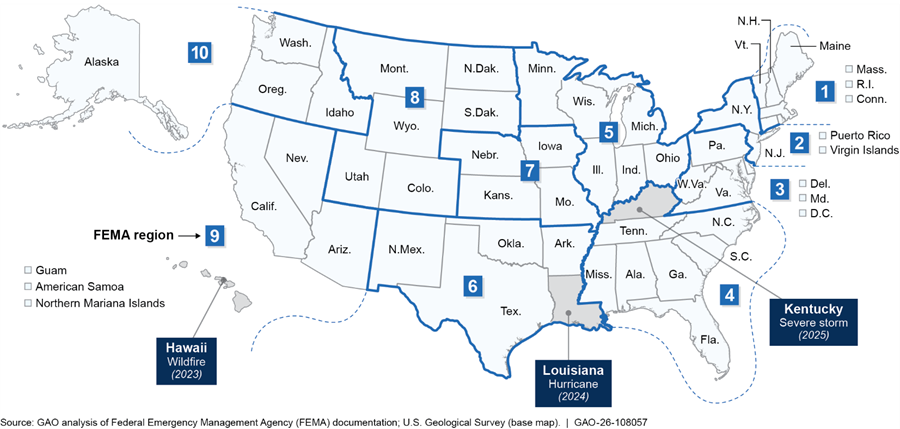
For each selected state, we interviewed state or local emergency management officials and officials from organizations representing people with disabilities, such as Centers for Independent Living and state protection and advocacy organizations, to gather their views on how FEMA coordinated with state and local partners to meet the needs of people with disabilities.[52] We visited Louisiana and Kentucky in August and September 2025. In Louisiana, we also conducted a site visit to a parish- and state-run shelter and met with officials to learn about their considerations when preparing to support people with disabilities. We also spoke with FEMA staff deployed staff to Kentucky, including staff from the FEMA joint field office and two disaster recovery centers. Interviews with officials in Hawaii were conducted virtually. We interviewed 21 state and local partners for this report, including state and local officials, organizations representing people with disabilities, and Red Cross officials.
Limitations
We conducted all interviews using semistructured interview protocols that included open-ended questions. Because information was volunteered in response to these questions, not every topic was discussed in each interview. We did not independently assess whether any programs or activities conducted by FEMA or its partners during the period covered by our review complied with applicable nondiscrimination or civil rights laws.
We conducted our work from January 2025 to September 2026 in accordance with generally accepted government auditing standards. Those standards require that we plan and perform the audit to obtain sufficient, appropriate evidence to provide a reasonable basis for our findings and conclusions based on our audit objectives. We believe that the evidence obtained provides a reasonable basis for our findings and conclusions based on our audit objectives.
GAO Contact
Elizabeth Curda, Curdae@gao.gov
Staff Acknowledgments
In addition to the contact named above, Lorin Obler (Assistant Director), Amy Sweet (Analyst-in-Charge), James Bennett, Alison Cashin, Christina Cuthbertson, Tyler Daniels, Alex Galuten, Robin Marion, Anne Ordway, Amanda Panko, and Haley Wall made key contributions to this report.
The Government Accountability Office, the audit, evaluation, and investigative arm of Congress, exists to support Congress in meeting its constitutional responsibilities and to help improve the performance and accountability of the federal government for the American people. GAO examines the use of public funds; evaluates federal programs and policies; and provides analyses, recommendations, and other assistance to help Congress make informed oversight, policy, and funding decisions. GAO’s commitment to good government is reflected in its core values of accountability, integrity, and reliability.
Obtaining Copies of GAO Reports and Testimony
The fastest and easiest way to obtain copies of GAO documents at no cost is through our website. Each weekday afternoon, GAO posts on its website newly released reports, testimony, and correspondence. You can also subscribe to GAO’s email updates to receive notification of newly posted products.
Order by Phone
The price of each GAO publication reflects GAO’s actual cost of production and distribution and depends on the number of pages in the publication and whether the publication is printed in color or black and white. Pricing and ordering information is posted on GAO’s website, https://www.gao.gov/ordering.htm.
Place orders by calling (202) 512-6000, toll free (866) 801-7077,
or
TDD (202) 512-2537.
Orders may be paid for using American Express, Discover Card, MasterCard, Visa, check, or money order. Call for additional information.
Connect with GAO
Connect with GAO on X,
LinkedIn, Instagram, and YouTube.
Subscribe to our Email Updates. Listen to our Podcasts.
Visit GAO on the web at https://www.gao.gov.
To Report Fraud, Waste, and Abuse in Federal Programs
Contact FraudNet:
Website: https://www.gao.gov/about/what-gao-does/fraudnet
Automated answering system: (800) 424-5454
Media Relations
Sarah Kaczmarek, Managing Director, Media@gao.gov
Congressional Relations
David A. Powner, Acting Managing Director, CongRel@gao.gov
General Inquiries
[1]National Council on Disability, The Impacts of Extreme Weather Events on People with Disabilities (Washington, D.C.: May 4, 2023).
[2]In this report, references to states include Tribes and territories.
[3]Pub. L. No. 118-123, § 3, 138 Stat. 1629, 1630-31 (2024).
[4]GAO, Standards for Internal Control in the Federal Government, GAO‑25‑107721 (Washington, D.C.: May 2025). See Principle 15 – Communicate Externally.
[5]We selected nonprofits based on research into leading organizations and suggestions from other stakeholders. We interviewed 21 state and local partners for this report, including state and local officials, organizations representing people with disabilities, and Red Cross officials.
[6]42 U.S.C. § 5170(a). For more information, see GAO, Disaster Assistance High-Risk Series: FEMA Assistance for Disaster Survivors, GAO‑26‑108154 (Washington, D.C.: Apr. 22, 2026).
[7]In this report, discussions of state and local partners refer to governments and other organizations including nonprofits.
[8]As we have previously reported, since January 2025, the Executive Branch has taken several steps to reduce the size of its workforce. Both the Office of Personnel Management and the Department of Homeland Security have offered participation in voluntary workforce reduction programs to eligible FEMA employees. For more information, see GAO, Disaster Assistance High-Risk Series: Federal Response Workforce Readiness, GAO‑25‑108598 (Washington, D.C.: Sept. 2025).
[9]Exec. Order No. 14,180, Council to Assess the Federal Emergency Management Agency, 90 Fed. Reg. 8743 (Jan. 31, 2025). The Council issued its final report on May 7, 2026, which recommended, among other things, making changes to the Individual Assistance and Public Assistance programs. For example, it recommended consolidating existing programs into one direct payment to survivors whose homes are uninhabitable after a disaster.
[12]42 U.S.C. § 5151. Other laws also establish protections for individuals with disabilities that may apply to federal, state, local, and/or private organizations involved in disaster response, such as the Fair Housing Act, as amended.
[13]6 U.S.C. § 321b. The FEMA Disability Coordinator position is currently held by the Associate Administrator for Mission Support.
[14]29 U.S.C. § 794.
[15]42 U.S.C. §§ 12101-12213.
[16]GAO, Disaster Assistance: FEMA Action Needed to Better Support Individuals Who Are Older or Have Disabilities, GAO‑19‑318 (Washington, D.C.: May 2019) and GAO, Federal Disaster Assistance: FEMA’s Progress in Aiding Individuals with Disabilities Could Be Further Enhanced, GAO‑17‑200 (Washington, D.C.: Feb. 2017).
[17]Federal Emergency Management Agency, Guidance on Planning for Integration of Functional Needs Support Services in General Population Shelters (2010), https://www.fema.gov/pdf/about/odic/fnss_guidance.pdf.
[18]Congressional Research Service, A Brief Overview of FEMA’s Public Assistance Program (Washington, D.C.; June 11, 2025) and GAO, Disaster Assistance: FEMA Should Take Additional Actions to Strengthen Fraud Risk Management for Public Assistance Emergency Work Grants, GAO‑20‑604 (Washington, D.C.: Sept. 29, 2020).
[19]CILs are operated within a local community in every state and U.S. territory. For this report, we spoke with representatives from six CILs in five states, including our three selected states.
[20]CILs are funded by grants administered by the Administration for Community Living, a division of the Department of Health and Human Services.
[21]FEMA officials clarified that FEMA does not require a private nonprofit to have a memorandum of understanding for disaster-related work with a state or local government to be eligible for Public Assistance. For CILs that choose to provide disaster-related work, the Department of Health and Human Services’ FAQ recommends that CILs develop memorandums of understanding or similar agreements with state and local partners to clarify a CIL’s role and responsibilities.
[22]Federal Emergency Management Agency, FEMA Public Assistance: Private Nonprofit Organizations, FEMA Fact Sheet (Washington, D.C.: Oct. 2022), accessed June 12, 2026, https://www.fema.gov/sites/default/files/documents/fema_private‑non‑profit‑houses‑worship‑eligibility‑fact‑sheet.pdf.
[23]Mass care includes congregate sheltering, feeding, distribution of emergency supplies, and reunification of children with their parent(s)/legal guardians and adults with their families.
[24] FEMA provided an example of an outdated job description from one region.
[25]Federal Emergency Management Agency, A Guide to Community Engagement (January 2023). Note: This is an internal FEMA document not available to the public.
[27]U.S. Department of Homeland Security, “People with Disabilities,” last updated Mar. 2026, https://www.ready.gov/people‑disabilities.
[28]For more information on IPAWS and emergency alerts, including those in sign language, see GAO, Weather Safety: Agencies Face Challenges Related to Multilingual Weather Alerts, and AI Project Needs Better Planning, GAO‑26‑107680 (Washington, D.C.: Jan. 26, 2026).
[29]6 U.S.C. § 321o(b)(3).
[30]The Partnership for Inclusive Disaster Strategies is a coalition focused on inclusive disaster planning and emergency preparedness for people with disabilities. The survey this organization conducted provided information on the experiences of people with disabilities with the mandatory nationwide test conducted by FEMA and the Federal Communications Commission. One of the goals of the survey was to educate FEMA about potential accessibility barriers with IPAWS. See The Partnership for Inclusive Disaster Strategies, Access Survey Report: IPAWS National Test 2023 (last updated Apr. 16, 2026), https://disasterstrategies.org/report‑ipaws‑national‑test‑2023/. FEMA officials said that the Federal Communication Commission regulates the requirements for some alerts, although it does not mandate specific colors.
[31]42 U.S.C. § 5174. For more information on IA, see GAO‑26‑108154.
[32]44 C.F.R. § 206.117(b).
[33]According to FEMA, the 2024 changes were intended to simplify processes, remove barriers to entry, and increase eligibility for certain types of assistance under the program. For more information on these changes, see GAO‑26‑108154.
[34]“Other” allows survivors to enter a description for needs falling outside the existing categories.
[35]GAO‑19‑318. We closed all our recommendations from this report as implemented.
[36]Video relay service is an internet-based form of telecommunications relay service that allows a person whose primary language is American Sign Language to communicate with the communications assistant in American Sign Language using video conferencing equipment.
[37]U.S. General Services Administration, “Principles of Plain Language,” accessed Mar. 31, 2026, https://digital.gov/guides/plain‑language/principles.
[38]Flesch-Kincaid Grade Level tests are widely used to determine the readability of a text based on the number of words in each sentence and the number of syllables in each word. The Flesch-Kincaid Grade Level formula states the readability of text in terms of the grade level of education needed to understand a text.
[39]Research studies have reported a recommended Flesch-Kincaid Grade Level of 8 or below for communication to the general public. See, e.g., Challener, D. W. et al., “Flesch-Kincaid Grade Level Readability Scores to Evaluate Readability of Clinical Documentation During an Electronic Health Record Transition,” Advances in Health Information Science and Practice 1, no. 1 (2025). However, according to the Center on Disability, individuals with I/DD may need information broken down further, and it recommends a grade level 5 or below reading level for documents from state and local governments. See Center on Disability, Inclusive Communication for State and Local Government (March 19, 2025), https://centerondisability.org/wp‑content/uploads/2025/03/Inclusive‑Communication‑for‑State‑and‑Local‑Government‑Making‑Written‑Communication‑Easy‑to‑Understand.V1.pdf.
[40]According to FEMA officials, FEMA conducted a useability study that included focus groups with 12 members of the public to evaluate the clarity, engagement, and comprehension of the letters. Participants reviewed six draft letters, which included two templates of three letter types. The sample included letters for “Not Approved,” “Decision Combo,” and “Non-Referred.”
[41]FEMA requests this information pursuant to the Privacy Act of 1974. Under the Privacy Act of 1974, federal agencies are generally prohibited from disclosing certain information about individuals to third parties unless the agency gets the written consent of the person to whom the information pertains, or there is a statutory exception. 5 U.S.C. § 552a.
[42]FEMA’s Individual Assistance Program and Policy Guide (2025) outlines the requirement to document losses. FEMA staff may need documentation from applicants such as receipts, bills, or estimates to verify losses. See Federal Emergency Management Agency, Individual Assistance Program and Policy Guide, version 1.1 Amended, FP 104-009-03 (July 2025).
[43]FEMA’s Individual Assistance Program and Policy Guide (2025) outlines the information required of applicants. FEMA staff verify an applicant’s identity and occupancy or ownership status through a public records search and other methods. If they are unable to verify an applicant’s identity and occupancy or ownership status through this search, they may require the applicant to submit other documentation.
[44]According to FEMA officials, FEMA does not have jurisdiction to investigate complaints under the ADA but has authority to investigate complaints under Section 504 and Section 308 of the Stafford Act.
[45]FEMA’s website defines “cadres” as groups of employees organized by type of work. These groups are based on skills and experience and play a key role in keeping FEMA ready to deploy the right people to the right jobs quickly in disaster response and recovery operations. U.S. Department of Homeland Security, “Cadres,” accessed Apr. 6, 2026, https://www.fema.gov/careers/paths/cadres.
[46]Various federal laws prohibit discrimination in certain circumstances on the basis of race, color, national origin, sex, religion, age, disability, English proficiency, or economic status.
[47]GAO, Standards for Internal Control in the Federal Government, GAO‑25‑107721 (Washington, D.C.: May 2025). See Principle 15 – Communicate Externally.
[48]Flesch-Kincaid tests are readability tests widely used to determine the readability of a text based on the number of words in each sentence and the number of syllables in each word. The Flesch-Kincaid Grade Level formula, states the readability of text in terms of the grade level of education needed to understand a text.
[49]We spoke with representatives from centers in our three selected states as well as representatives recommended by the National Council on Independent Living.
[50]We used FEMA’s public resource data, OpenFEMA, which provides disaster information such as the Disaster Declaration Summary and Mission Assignment.
[51]The National Response Framework provides a coordinating structure for federal interagency support, and certain federal agencies have primary responsibilities for core response areas, known as emergency support functions. The National Response Framework includes 15 such functions. One of these focuses on mass care, emergency assistance, temporary housing, and human services, and another focuses on public health and medical services. FEMA officials and stakeholders told us that one of these two emergency support functions likely captures support for people with disabilities.
[52]Centers for Independent Living are private nonprofit agencies that provide independent living services for people with disabilities. Protection and Advocacy agencies in each state provide legal advocacy to help individuals with disabilities enforce their legal rights.