
Report to Congressional Committees
United States Government Accountability Office
A report to congressional committees
For more information, contact: David Marroni at MarroniD@gao.gov
What GAO Found
The Public Buildings Service’s reorganization to become more centralized, consistent, and streamlined has not fully aligned with four selected leading practices for agency reform.
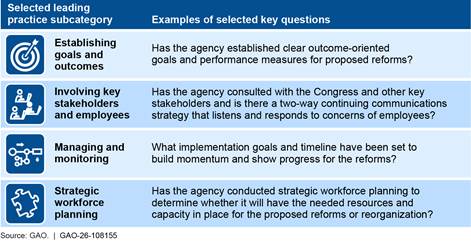
Specifically, as of December 2025:
· Establishing Goals and Outcomes. Public Buildings Service officials told GAO that goals for the reorganization included becoming more consistent and streamlined, but the bureau has not yet established performance measures to assess its progress toward meeting these goals.
· Involving Key Stakeholders. The Public Buildings Service informed employees and tenant agencies starting of the reorganization. But communication has been primarily one-way, and the bureau does not have a plan to solicit feedback from tenants and staff that could help improve and engender confidence in the new organization.
· Managing and Monitoring Reform Implementation. Officials from selected tenant agencies told GAO that, since the start of 2025, they have felt the effects of the large staffing reductions at the Public Buildings Service, with one tenant agency noting delays in service. Public Buildings Service officials told GAO that it restarted surveying tenant agencies about service delivery in December 2025 but did not add questions to monitor the reorganization’s progress toward its goals.
· Strategic Workforce Planning. Public Buildings Service officials said the agency did not conduct workforce planning before reducing its workforce by 45 percent as of November 2025. Officials said that they have since tried to align existing employees to address skill gaps but are unsure how many more personnel were needed to fill existing gaps. Officials from selected tenant agencies voiced ongoing concern about the Public Buildings Service’s capacity.
By more fully aligning with leading practices moving forward, the Public Buildings Service could ensure that its reorganization achieves its goals of improving consistency and customer service and streamlining decision-making.
Why GAO Did This Study
The Public Buildings Service, within the General Services Administration (GSA), provides workspace for hundreds of thousands of federal employees. In March 2025 the Public Buildings Service started a large-scale reorganization, including workforce reductions, which were guided by the administration, according to agency officials. Public Buildings Service officials said they formally implemented the reorganization in October 2025, but employees and tenants were still adjusting to it in December 2025.
The Thomas R. Carper Water Resources Development Act of 2024 includes a provision for GAO to review the Public Buildings Service’s management of real property programs. This report examines the extent to which the Public Buildings Service’s reorganization efforts aligned with selected leading practices for agency reforms, among other objectives.
GAO compared the reorganization actions taken by the Public Buildings Service from March 2025 to December 2025 to four selected leading practices for agency reforms identified in prior GAO work. These practices were selected based on their relevance, the status of the Public Buildings Service’s reorganization, and relevant administration guidance.
What GAO Recommends
GAO recommends that the Public Buildings Service Commissioner: (1) establish performance measures for the reorganization goals; (2) develop a strategy to solicit and incorporate feedback on the reorganization from employees and tenant agencies; (3) monitor reorganization progress toward the goals; and (4) conduct strategic workforce planning that includes analyzing skills gaps. GSA agreed with the recommendations.
|
Abbreviations |
|
|
|
|
|
ARRP |
Agency Reduction in Force and Reorganization Plans |
|
DRP |
Deferred Resignation Program |
|
GSA |
General Services Administration |
|
OMB |
Office of Management and Budget |
|
RIF |
Reduction in Force |
This is a work of the U.S. government and is not subject to copyright protection in the United States. The published product may be reproduced and distributed in its entirety without further permission from GAO. However, because this work may contain copyrighted images or other material, permission from the copyright holder may be necessary if you wish to reproduce this material separately.
April 14, 2026
The Honorable Shelley Moore Capito
Chairman
The Honorable Sheldon Whitehouse
Ranking Member
Committee on Environment and Public Works
United States Senate
The Honorable Sam Graves
Chairman
The Honorable Rick Larsen
Ranking Member
Committee on Transportation and Infrastructure
House of Representatives
The mission of the Public Buildings Service, within the General Services Administration (GSA), is to design, deliver and maintain safe, modern, and efficient workspaces that enable agencies to best serve the American people. As of December 2025, the Public Buildings Service portfolio included about 8,500 owned and leased properties covering 359 million square feet housing more than 100 tenant agencies and hundreds of thousands of federal employees. The Public Buildings Service collects more than $10 billion annually in rent from its tenants for a broad range of real estate services, including maintaining owned buildings, negotiating leases, disposing of unneeded properties, and helping agencies plan their portfolios.
Federal real property management has been on GAO’s High-Risk List since 2003.[1] We have previously reported that better management—including by the Public Buildings Service—is needed to effectively dispose of underused buildings, collect reliable real property data, and improve the condition of federal buildings. Following workforce reductions throughout 2025, in October 2025 the Public Buildings Service implemented a large-scale reorganization to become more centralized.
The Thomas R. Carper Water Resources Development Act of 2024 includes a provision for us to conduct a review of the Public Buildings Service’s management of real estate programs.[2] This report examines: (1) the extent to which the Public Buildings Service’s reorganization aligned with selected leading practices for agency reforms and administration guidance; (2) selected tenant agency views on the strengths and limitations of the prior organization of the Public Buildings Service; and (3) former Public Buildings Service Commissioners’ views on the strengths and limitations of the prior organization of the Public Buildings Service, and priorities for reform.[3] In addition, appendix I contains data related to the Public Buildings Service’s staffing and budget data.
To address our first objective, we compared the reorganization actions taken by the Public Buildings Service from March 2025 to December 2025 to selected leading practices for agency reforms identified in our prior work and guidance from the Office of Management and Budget (OMB) related to agencies’ reorganizations.[4] For the leading reform practices, we selected nine of the 58 key questions, which are categorized within 4 of the 12 the leading practices: establishing goals and outcomes, involving employees and key stakeholders, managing and monitoring, and strategic workforce planning. These key questions were selected based on their relevance to changes in organizational structure and management, the status of the Public Buildings Service’s reorganization, and OMB’s guidance on Agency Reduction in Force and Reorganization Plans (ARRP). To determine the overall extent of alignment for each leading practice, we reviewed the evidence for each key question and assessed whether the Public Buildings Service’s reform actions fully, partially, or did not align with the key question. We then determined the overall alignment for the leading practice based on the collective key questions’ alignment, deferring to partial alignment in the case of different levels.
To address our second objective, we obtained the views of a non-generalizable sample of five federal tenant agencies on working with the Public Buildings Service based on its pre-2025 organizational structure.[5] Those agencies were the Departments of Agriculture, Health and Human Services, Homeland Security, and Justice, as well as the Social Security Administration. We selected these tenant agencies to obtain a variety of perspectives from a selection of GSA’s ten largest tenants based on the amount of rentable square feet as of fiscal year 2020.[6] We selected federal tenant agencies to represent a mixture of facility types, geographic diversity in their facilities, and a range of real estate footprint sizes. We interviewed officials from each selected tenant agency using semi-structured questions and did a content analysis to determine common themes from the interviews.[7]
To address our third objective, we held an expert panel with six former Public Buildings Service Commissioners on July 22, 2025, to gather their perspectives and reach consensus on key strengths and limitations of the Public Buildings Service’s prior organizational structure. This included six of the seven former Commissioners who served within the last 20 years in different administrations.[8] At the end of each discussion topic, we polled the participants on the key strengths, limitations of, and priority reforms for the Public Buildings Service’s previous structure.
We conducted this performance audit from February 2025 to April 2026 in accordance with generally accepted government auditing standards. Those standards require that we plan and perform the audit to obtain sufficient, appropriate evidence to provide a reasonable basis for our findings and conclusions based on our audit objectives. We believe that the evidence obtained provides a reasonable basis for our findings and conclusions based on our audit objectives.
Background
As one of GSA’s two main bureaus, the Public Buildings Service is led by the Public Buildings Service Commissioner. The bureau provides real estate and workspace services for federal tenant agencies, including acquiring, designing, constructing, leasing and, when necessary, disposing of surplus federal real property. Tenant agencies pay monthly rent to GSA to occupy space, which includes a fee for the Public Buildings Service’s services outlined in an occupancy agreement.
Prior to 2025, the Public Buildings Service was organized around various business lines within its central office, such as leasing, project delivery, and real property disposal. It was also organized by region, with 11 regions, each headed by a regional commissioner (see Figure 1). Regional offices were responsible for leasing transactions, facilities management, asset management and planning, capital projects, and project management functions within a geographic area in partnership with tenant agencies. Regions were organized similar to the central office with functional business lines that generally aligned with programs and project management. As of December 31, 2024, the Public Buildings Service employed over 5,600 people in 11 regional offices and within its functional business lines.
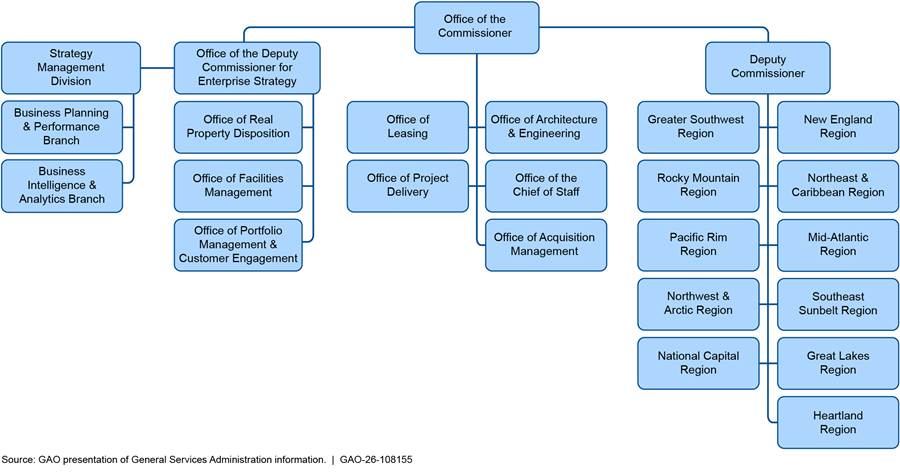
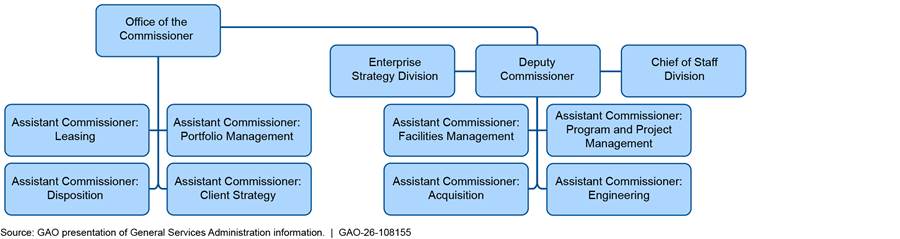
According to agency officials, in March 2025, the Public Buildings Service started a large-scale reorganization guided by OMB’s ARRP guidance, which was released on February 26, 2025.[9] The reorganization included reducing personnel and eliminating the regional structure and replacing it with a more centralized, business line structure (see Figure 2). Specifically, Public Buildings Service officials told us that under the new reporting structure, employees report to Assistant Commissioners within the business lines, instead of reporting to the Regional Commissioners under the previous structure.
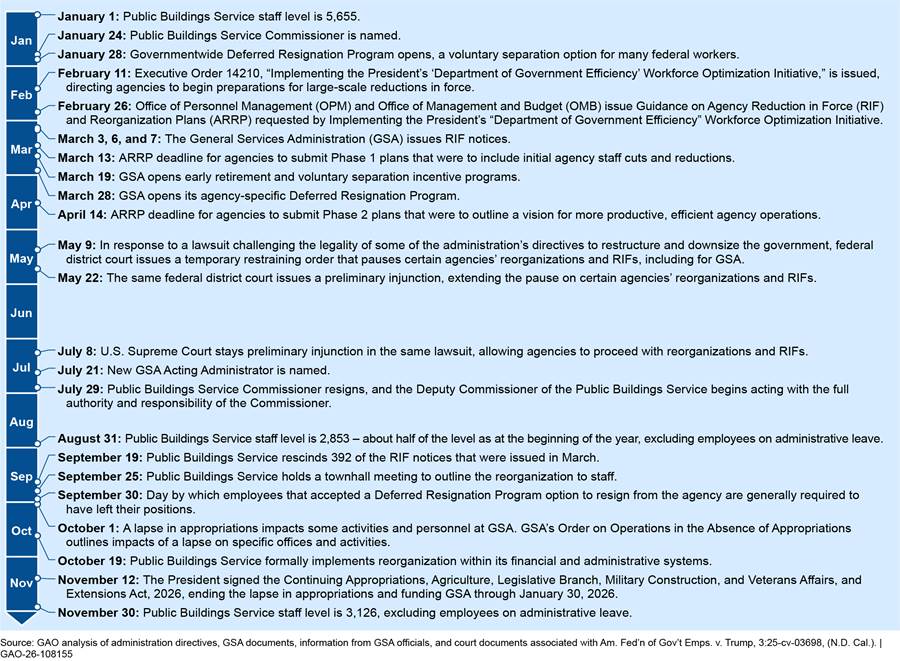
The Public Buildings Service implemented the reorganization in its administrative and financial systems in October 2025.[10] See Figure 3 for a timeline of key reorganization events from January to November 2025.
Figure 3: Timeline of Events Related to the Public Buildings Service’s Reorganization, January 2025-November 2025
Public Buildings Service’s Reorganization Has Not Fully Aligned with Leading Reform Practices
The Public Buildings Service formally implemented its reorganization in its financial and administrative systems in October 2025, but staff and tenants were continuing to adjust to it as of December 2025. As of December 2025, the Public Buildings Service’s reorganization actions had partially aligned with selected leading practices for agency reform that we identified in prior work.[11] Figure 4 summarizes these selected practices. Moving forward, taking steps to fully align with these leading practices could better position the Public Buildings Service to fully meet the intent of its reorganization, and to help identify any unintended consequences and allow it to course correct.
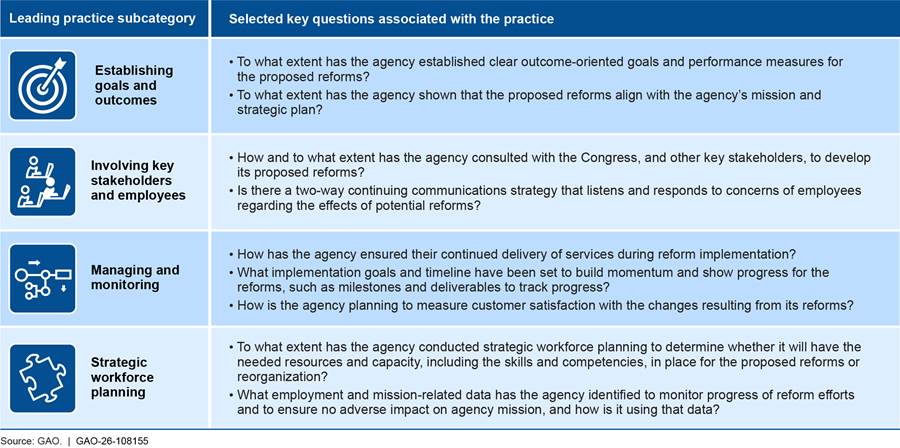
Note: We selected these leading practices and key questions based on their relevance to the mandate, the early stage of the Public Buildings Service’s reorganization, and the administration’s guidance on Agency Reduction in Force and Reorganization Plans.
Establishing Goals and Outcomes
(Partially Aligned)
Key questions related to this leading practice include (1) whether the agency has developed clear outcome-oriented goals and performance measures for the proposed reforms and (2) whether it has shown that the proposed reforms align with the agency’s mission and strategic plan. OMB guidance states that agencies should use a framework and criteria to define and determine efficient use of existing personnel and funds to improve services.[12]
Public Buildings Service officials told us that the goals of the reorganization were to improve consistency in service delivery, reduce duplication, streamline operations, improve workforce flexibility to respond to evolving demands, and develop national standards for processes. However, as of December 2025, the Public Buildings Service had not developed performance measures to determine whether the reorganization achieved its intended goals.
In December 2025, Public Buildings Service officials told us they were in the process of designing performance measures in alignment with its mission and GSA’s Strategic Plan, including increasing utilization, reducing deferred maintenance liabilities, and delivering cost-effective space for customers, improving customer satisfaction, and maximizing efficiency of processes. However, it is not clear how these performance measures are related to the reorganization goals articulated by the agency. Without performance measures for the reorganization, the Public Buildings Service cannot track the effectiveness of its reorganization at improving consistency in service delivery, reducing duplication, streamlining operations, improving workforce flexibility, and developing standard processes.
Involving Key Stakeholders and Employees
(Partially Aligned)
Key questions related to this leading practice are (1) whether the agency has consulted with the Congress and other key stakeholders, such as tenant agencies, to develop the proposed reforms and (2) whether it has established an ongoing, two-way communications strategy that listens and responds to employee concerns regarding the effects of the reforms.
Public Buildings Service officials told us in July 2025 that they briefed the appropriate Congressional subcommittees on the planned reorganization before litigation paused agencies’ RIFs and reorganizations in May 2025.[13] The Public Buildings Service shared a communications plan for employees and tenants, which it finalized in September 2025. The plan laid out a series of communications with employees and tenants that did not include soliciting or incorporating feedback.
Public Buildings Service officials first communicated with tenant agencies about the reorganization in September 2025 but did not formally solicit feedback about the reorganization. Also in September 2025, Public Buildings Service leadership communicated with employees, sending an email to employees and holding a town hall meeting to describe the changes. In December 2025, Public Buildings Service officials said that they requested employees share feedback by email or through the agency intranet site. However, officials did not share what, if any, feedback they received or plans for considering or incorporating employee feedback into the ongoing reorganization effort. Also, inconsistent with leading practices, these communications happened after significant voluntary and involuntary workforce reductions had already occurred.
Employees adjusting to the new organization may have valuable input for improving reorganization outcomes. By soliciting and incorporating feedback from tenant agencies and employees going forward, the Public Buildings Service could help improve the new organization and engender confidence that the reorganization is understood and accepted by those who are implementing it.
Managing and Monitoring (Partially Aligned)
Key questions related to this leading practice include (1) whether the agency has ensured the continued delivery of services during reform implementation, (2) how it is monitoring progress on implementation goals, and (3) how it is planning to measure customer satisfaction with the changes. Similarly, the OMB guidance instructed agencies to develop a timetable and a monitoring and accountability plan for implementing their reorganization.[14]
The Public Buildings Service has continued to provide services since the beginning of the reorganization process. However, selected tenant agencies told us that there was a delay in services. For example, one tenant agency told us that the high attrition at GSA in 2025 has led to fewer personnel who were adequately trained to carry out their responsibilities.
In addition, in July 2025, Public Buildings Service officials told us that they paused the primary tool for measuring tenant satisfaction, the Project Pulse survey. They informed customers of plans to restart the survey in December 2025 but did not add questions related to the reorganization.
While the Public Buildings Service formally adopted its new structure in October 2025, tenant agencies may still be adjusting to the new organization. However, the Public Buildings Service currently does not have a systematic plan for monitoring its implementation that includes key milestones and deliverables. Such monitoring could help monitor tenant satisfaction, such as the extent to which tenants know who to contact for different issues or how responsive employees were to any tenant concerns. Without actively monitoring its performance against reorganization goals of improving consistency and streamlining operations, among others, it would be challenging to know if the reorganization had the intended effects or whether to make any needed improvements.
Strategic Workforce Planning
(Partially Aligned)
Key questions related to this leading practice include (1) the extent to which the agency has conducted strategic workforce planning and (2) whether the agency is using data to monitor reform progress. The OMB guidance states that agencies should determine the efficient use of existing personnel to improve service delivery, as part of their reorganization efforts, and to include the framework and criteria the agency uses to define and determine efficient use of personnel and funds to improve services and delivery.
The Public Buildings Service reduced staff and began conducting a skills gap analysis afterwards. Officials told us that starting in March 2025, GSA offered its agency-specific Deferred Resignation Program (DRP), which provided employees with the opportunity to voluntarily resign. Public Buildings Service officials told us it was open to all employees and positions within the agency. GSA also offered early retirement and voluntary separation incentive programs in March 2025, according to officials. In addition, GSA involuntarily separated other staff through reduction in force (RIF) measures.[15] In September 2025, the Public Buildings Service rescinded the RIF notices of 392 staff. As of November 2025, the number of Public Buildings Service staff had declined by about 45 percent—from almost 5,700 to just over 3,100 personnel—since September 2024 (see Figure 5).
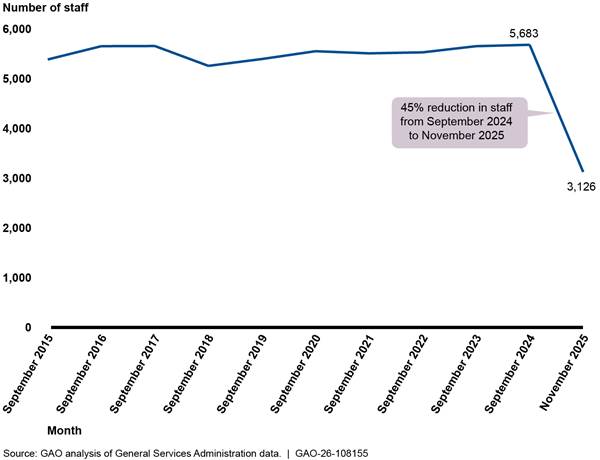
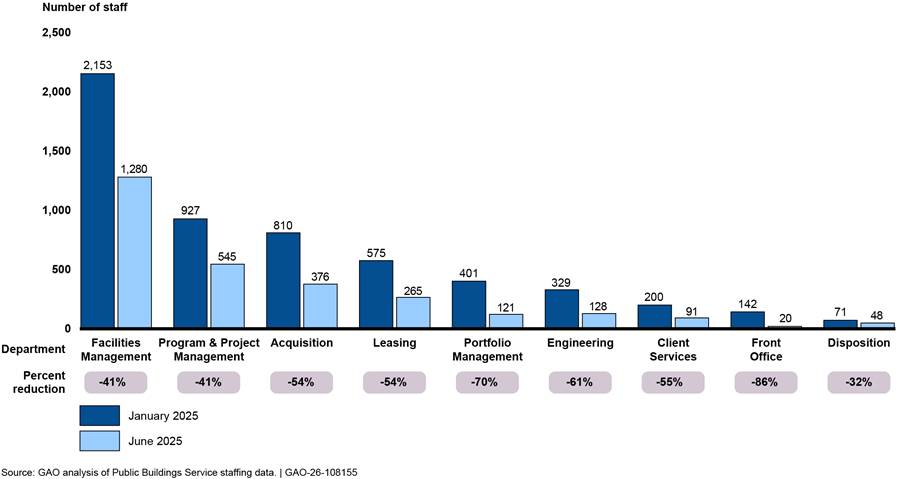
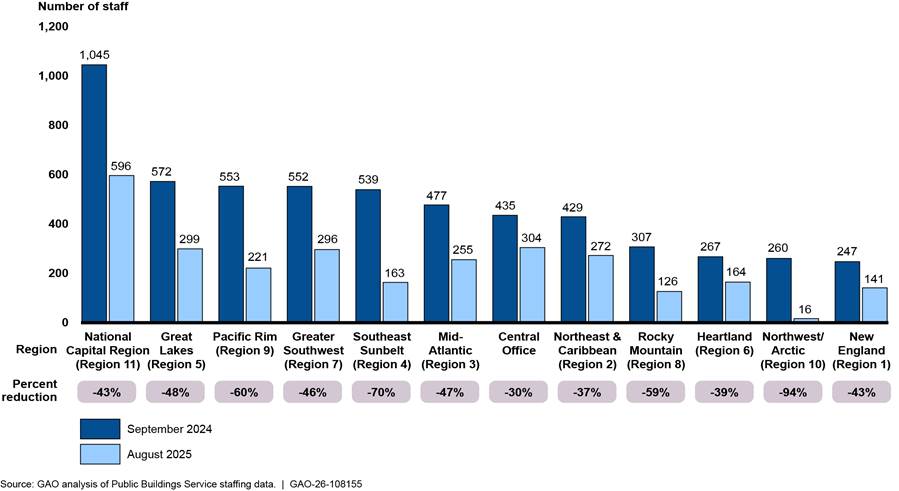
Public Buildings Service officials told us that these significant workforce reductions affected all departments. Figure 6 shows the staff reductions by department from January to June 2025.
Figure 6: Public Buildings Service Staffing, Including Reduction in Force Efforts by Department from January 2025 vs. June 2025
In September 2025, Public Buildings Service officials told us that they were in the process of conducting workforce planning for the reorganization. Officials said that they were mapping existing employees into roles within the new organizational structure to fill known skills gaps. However, this effort began after significant workforce reductions had already occurred and after decisions on the new structure had already been made. The Public Buildings Service retroactively moved staff into vacant positions and rescinded some RIF notices, rather than strategically planning for workforce needs. In December 2025, officials said that they had started analyzing the positions needed to address skills gaps but were unsure how many more personnel were needed to fill the gaps.
Strategic human capital management in federal government has been on our High-Risk List since 2001.[16] Strategic workforce planning ensures that an agency’s human capital program aligns with its current and emerging mission and goals. Skills gaps pose a high risk to the nation because they impede the government in cost effectively serving the public and achieving desired results.
Leading practices call for agencies to conduct strategic workforce planning before staff realignment. However, the Public Buildings Service reduced staff first and then assessed workforce gaps retroactively. Without strategic workforce planning that carefully considers long-term staffing plan and associated personnel costs, a skills gap between the agency’s workforce capacity and its mission-related activities may result in reduced or disrupted service delivery.
Selected Tenant Agencies Valued the Public Buildings Service’s Real Estate Expertise Under its Prior Structure but said Service Was Inconsistent Across Regions
Officials from five selected tenant agencies that we interviewed identified several strengths of the Public Buildings Service’s pre-2025 organizational structure, based on their experiences working with the Public Buildings Service. These strengths included the agency’s regional approach that included staff with local real estate market knowledge, the leasing and project management expertise among its staff, and the portfolio-wide analysis it provided to tenants. Those same officials identified several limitations to the Public Buildings Service’s prior organizational structure, including variation in how the Public Buildings Service delivered services region-to-region and insufficient transparency on project timeliness and data reliability. In addition, selected tenants expressed concerns about Public Buildings Service staffing in 2025.[17]
Under the Public Buildings Service’s Prior Structure, Selected Tenant Agencies Benefitted from the Agency’s Local Market Knowledge, Real Estate Expertise, and Portfolio Analysis
The five selected tenant agencies generally found the local market knowledge and expertise of the Public Buildings Service workforce under its pre-2025 organizational structure to be a strength and found the Public Buildings Service to be a helpful partner in negotiating leases, managing projects, and planning portfolios.
· Regional staff knowledge of local markets. Officials from most of the selected tenant agencies emphasized that, prior to the 2025 reorganization and staffing cuts, the Public Buildings Service regional staff provided essential expertise and “boots on the ground” to understand local real estate markets and address tenant needs.[18]
Officials from two tenant agencies told us that Public Buildings Service regional staff were important because they could build relationships in the local commercial real estate community that allowed them to better understand local markets and identify opportunities for tenants. For example, one tenant agency told us that Public Buildings Service regional staff monitored new space opportunities in local real estate markets and were helpful in identifying potential spaces when it was considering acquiring new space.
In addition, officials from two tenant agencies emphasized that in-person regional staff were essential to address repairs and maintenance in their facilities. One tenant agency said the Public Buildings Service’s building managers, who were also regional staff under the pre-2025 structure, were critically important for addressing day-to-day matters, such as coordinating repairs and representing the tenant agency to the lessor.
In December 2025, Public Buildings Service officials told us that under the new organizational structure, Public Buildings Service employees will still be locally affiliated with their projects. Public Buildings Service officials emphasized that the new organizational structure centralized the reporting structure along business lines but maintained geographic distinctions among its employees. They noted that the Public Buildings Service now has “zone managers” for designated geographic areas who have local real estate market knowledge and will be assigned to handle escalations and support their decision making.
· Leasing and project management expertise. Most tenant agencies told us that a strength of the Public Buildings Service’s previous structure was the workforce’s experience and knowledge about navigating the leasing process. For example, one tenant agency said that Public Buildings Service staff added substantial value in negotiations with private sector lessors. In addition, two tenant agencies said the Public Buildings Service’s project management expertise was important to carrying out their work. For example, one tenant agency told us that, before 2025, the Public Buildings Service had a very competent group of staff in roles that support project management, including engineers, architects, fire safety experts, and historic preservation experts.
· Portfolio-wide analysis to identify efficiency gains. Most selected tenant agencies told us that the Public Buildings Service under the previous structure helped them complete portfolio-wide analyses that offered a higher-level overview of their real property portfolio. Specifically, three tenant agencies told us that they regularly met or communicated with Public Buildings Service officials to discuss portfolio-wide issues and identify opportunities to improve space efficiency. For example, two selected tenant agencies told us that Public Buildings Service officials worked with them to look across their entire portfolio and determined where there were opportunities for consolidation to reduce their footprint and save money.
Under the Public Buildings Service’s Prior Structure, Selected Tenant Agencies Experienced Inconsistency across Regions and Insufficient Transparency
The selected tenant agencies told us that, under the Public Buildings Service’s prior structure, they had inconsistent experiences across the regions, and there was insufficient transparency from the Public Buildings Service on project timelines and data reliability.
· Region-to-region inconsistencies. Most selected tenant agencies described inconsistencies in customer service, expertise, and policy implementation across Public Buildings Service regions under its prior structure, including standards for escalating issues to the central office.
For example, officials from one tenant agency told us that at times it seemed as if they were working with 11 different GSAs and described differences region-to-region on how Public Buildings Service officials met lease requirements and addressed repairs. In a separate example, another tenant agency told us that it experienced variation in the institutional knowledge, leasing expertise, and motivation to meet its needs across the regions. Specifically, officials from this agency told us that some Public Buildings Service regional officials told them that certain decisions needed to be escalated to the national portfolio office, while other regional officials could resolve similar issues internally without involving the national office. However, most selected tenant agencies found the National Account Leads to be a helpful resource and emphasized that they were responsive at addressing issues across the regions.[19]
One tenant agency told us that the Public Buildings Service needed to strike the right balance between regional autonomy and centralized oversight. In addition, officials from another tenant agency described a lack of transparency. Specifically, officials told us that the Public Buildings Service made unilateral changes to lease pricing, rent billing, and lease terms without consulting the tenant agency.
Public Buildings Service officials told us that the new organizational structure is designed to improve consistency and customer service. Specifically, they told us that the nationalization of the business lines is intended to eliminate variances in service delivery processes across the geographic areas and increase overall accountability.
· Insufficient communication on timeline delays. Most selected tenant agencies told us that when there were delays in completing projects under the Public Buildings Service’s pre-2025 organizational structure, the agency would not routinely communicate the reasons for the delays. Most tenant agencies told us that they struggled to get updates on their projects, and that it had been their responsibility to track down updates due to insufficient responsiveness from the Public Buildings Service. Specifically, two tenant agencies told us that they had struggled to get timely responses on repair and maintenance orders. Another tenant agency told us that, under the prior structure, the Public Buildings Service had not held itself to timeframes when assisting them in different phases of the leasing process, such as acquiring new space, building out a space, and procuring a lease. Public Buildings Service officials said they are aware of service issues during the transition but hope that those will improve now that the new organization is in place.
· Data reliability. Most tenant agencies told us they had difficulty under the pre-2025 organizational structure accessing key occupancy information in a Public Buildings Service system and told us that the data in the system were often missing or incorrect. Most selected tenant agencies told us that they needed to spend extra time to track down information that should have been easily accessible, such as lease conditions. For example, one tenant agency told us that since the Public Buildings Service transitioned to a new system for storing lease information that was previously in their occupancy agreement, that information is no longer accessible. The tenant agency told us that occupancy agreements used to include details that were specific to the building and lease (such as the terms around releasing space), but the new system does not include important details.
Selected Tenant Agencies Expressed Concerns About Public Buildings Service Staffing in 2025
Most selected tenant agencies said that they have felt the effects from the staffing reductions at the Public Buildings Service in 2025. For example, one tenant agency told us that, since reorganization efforts began in early 2025, the Public Buildings Service had staffing capacity issues that prolonged their project timeframes. Officials from this agency told us that when they no longer need a space and wish to release it, the Public Buildings Service cost estimators must calculate the expected cost of renovating a space to bring it up to “marketable condition” so the agency can release it. They told us that since the number of cost estimators at the Public Buildings Service had declined, their project timelines had been extended since they cannot provide cost estimates to their project manager in a timely manner.
Another tenant agency told us it was no longer clear who to contact at the Public Buildings Service with questions about their portfolio due to personnel changes in 2025. Specifically, officials at that agency said they particularly felt the staff cuts at the regional level and that it was unclear to them who their points of contact were in certain Public Buildings Service regions. This tenant agency added that, prior to 2025, they knew who their points of contact in the Public Buildings Service regions were and would meet frequently to discuss project updates.
Public Buildings Service officials told us that they hosted a National Customer Forum on December 17, 2025, to discuss the reorganization with tenant agencies and address questions or concerns. In addition, officials told us they informed tenant agencies of the Public Buildings Service’s new leadership in October 2025 and posted revised points of contact on their website in December 2025.
Former Commissioners Valued Having Both Regions and Business Lines Under the Public Buildings Service’s Prior Structure but Suggested Reforms
Former Commissioners Identified Balanced Regional and Business Line Organization and Customer Service Focus as Strengths of Prior Structure
The former Public Buildings Service Commissioners who participated in our July 2025 expert panel identified the Public Buildings Service’s regional and business line structure and its tenant customer service as key strengths of its pre-2025 organizational structure.
Regional and business line structures. Commissioners discussed the alignment of the Public Buildings Service’s pre-2025 organization with achieving its goals, agreeing that the structure of having both geographic regions and functional business lines was an institutional strength when in balance.[20]
Similar to the selected tenant agencies we interviewed, the Commissioners said that they valued the local market knowledge in the agency’s regions. Commissioners, however, also ranked the business lines of the prior structure as a top strength because they said those business lines helped ensure agency-wide consistency and authority. Several Commissioners said that they viewed the functional business line as the policy setting body within the agency and the regions as the executors of policy.
The Commissioners also discussed the need for a balance of regional and centralized structures. One Commissioner said that before the business lines were established, information and best practices were rarely shared consistently across regions.[21] Another Commissioner said that business lines brought important scale and oversight for an agency-wide approach. However, the Commissioner said, when the regions and business lines did not collaborate, silos developed. Another Commissioner noted that finding the balance between a purely geographic-based structure and a purely business line structure is challenging but necessary.
Customer service and tenant support. The Commissioners also identified the Public Buildings Service’s commitment to customer service as a key strength under the previous organizational structure. The Commissioners indicated that they viewed the taxpayer as the Public Buildings Service’s customers and the tenants as partners, meaning that it should provide tenants with the space they need, but also ensure that federal agencies are using their real estate resources effectively. They noted that this can create a tension between the Public Buildings Service’s role in helping agencies and its role in helping oversee their real property actions, and that balance between those two roles is the key to success. For example, one Commissioner stated that, in the past, the Public Buildings Service did not have this balance and often defaulted to tenant agency interests, which allowed tenant agencies to obtain more or better space than they needed to achieve their missions. However, one Commissioner noted that if the Public Buildings Service focuses too much on oversight it could lead to trust issues and cause tenant agencies to stop using the Public Buildings Service for their real estate needs. This in turn could lead to inefficiencies in how the federal government manages its real property resources.
Former Commissioners Identified Unclear Accountability and Resource Imbalances as Limitations of Prior Structure
The former Commissioners identified unclear accountability and decision-making authority, and resource imbalances as the limitations of the Public Buildings Service’s pre-2025 organizational structure.
Accountability and decision-making authority. The Commissioners indicated that a key limitation to the Public Buildings Service’s structure prior to 2025 was there was unclear accountability and decision-making authority. For example, several Commissioners mentioned that it was not clear if the regions or business lines had the final say on issues, and this could lead to delays and a lack of accountability for results.
Resource allocation. Commissioners identified the Public Buildings Service’s resource allocation as another key limitation of the Public Buildings Services’ structure prior to 2025. Commissioners discussed the imbalance of resources between how many staff were assigned to the owned versus leased portfolios. Commissioners also cited a resource imbalance between regions related to work demands and lack of GSA authority to make efficient decisions. One Commissioner said these imbalances could lead to the Public Buildings Service having too few or too many specialists in a region and insufficient staffing flexibility. Another Commissioner said that in the past, GSA’s goals and priorities for the Public Buildings Service were not clear, so resources were not allocated efficiently to achieve goals.
Former Commissioners Suggested Priority Reforms for the Reorganization, Including Identifying Clear Goals and Strengthening Accountability
The Commissioners provided their perspectives on organizational reforms the Public Buildings Service could make on its own, without legislative changes or additional funding.[22] Overall, Commissioners prioritized five areas for reform. For each suggested area of reform, at least five of the six Commissioners generally agreed the area should be a priority (See Table 2).
|
Suggested areas for reforms |
Summary of Commissioner statements related to the reform |
|
Strengthen accountability |
Without clarity on who can make real estate decisions within the Public Buildings Service organization, it will be unable to make the necessary decisions to realign the portfolio and meet its goals. Insufficient clarity can also lead to delays or inconsistencies in decision-making. |
|
Identify and pursue clear organizational goals that align with strategic objectives |
Pursuing clear organizational goals can help the Public Buildings Service make more efficient decisions when responding to tenant agency requests that do not align with utilization goals, for example. Public Buildings Service staff need clearer links between the strategic plan goals and their daily work. |
|
Identify core assets and consolidate the owned portfolio |
The Public Buildings Service must make difficult decisions on which assets are truly core—like courthouses and land ports of entry—and dispose of the rest. Funding issues have made it impossible for the Public Buildings Service to adequately maintain its owned portfolio. |
|
Improve collaboration with stakeholders |
Improved stakeholder collaboration could include an enhanced committee made up of the General Services Administration, Office of Management and Budget, and the Federal Real Property Council and involving the assistant secretaries of executive branch departments, who have decision-making authority on real property matters within their departments. Such a committee could ensure that the key real estate stakeholders are aligned. Ideally, this committee would meet regularly to make key portfolio and consolidation decisions. |
|
Improve data on space utilization and performance measurement |
The Public Buildings Service should identify what outcome measures are the most important and track them. The Public Buildings Service utilization and occupancy data are critical to understanding resource allocation. As of the end of 2025, the Public Buildings Service did not have this data. |
Source: GAO analysis of July 2025 expert panel discussion with six of seven former Public Buildings Service Commissioners. | GAO‑26‑108155
Note: The Federal Real Property Council is an interagency council whose purpose includes ensuring implementation of an efficient and effective real property management strategy and reducing the costs of managing property of the federal government. 40 U.S.C. § 623(b).
The Utilizing Space Efficiently and Improving Technologies (USE IT) Act, enacted in January 2025, now requires certain federal agencies to measure building occupancy and utilization. Pub. L. No. 118-272 § 2302, 138 Stat. 2992, 3218–19 (2025). Public Buildings Service officials told us that data from the USE IT Act is being funneled into a new dashboard for analysis and utilization in future space planning efforts. Both of those activities will be tracked with a performance measure beginning in fiscal year 2026.
Conclusions
The Public Buildings Service plays a critical role in helping to oversee and improve the efficiency of the federal government’s vast real property holdings—a longstanding governmentwide high-risk issue. If implemented effectively, the agency’s reorganization could help it achieve substantial real property reforms.
Leading practices for agency reform provide a path for the Public Buildings Service to best position itself to fulfill its mission after reorganization. The agency has taken some actions in line with these leading practices, such as identifying goals for the reorganization including increasing consistency of service. However, the Public Buildings Service’s efforts have not fully aligned with leading reform practices—establishing performance measures, soliciting and incorporating ongoing feedback, monitoring progress toward reform goals, and conducting strategic workforce planning—and tenant agencies have experienced delays since the reorganization started. By more fully adhering to these leading practices going forward, the Public Buildings Service is more likely to have a successful reorganization that will better position it to fulfill its mission.
Recommendations for Executive Action
We are making the following four recommendations to the Public Buildings Service.
The Public Buildings Service Commissioner should establish performance measures for the reorganization goals of improving consistency in service delivery, reducing duplication, streamlining operations, improving workforce flexibility to respond to evolving demands, and developing national standards for processes. (Recommendation 1)
The Public Buildings Service Commissioner should develop a strategy for continuously soliciting and incorporating feedback on the reorganization from employees and tenant agencies. (Recommendation 2)
The Public Buildings Service Commissioner should develop a plan for monitoring the implementation of the reorganization that includes key milestones and deliverables to measure progress towards meeting goals and tenant satisfaction. (Recommendation 3)
The Public Buildings Service Commissioner should conduct strategic workforce planning to identify and address skills gaps and align any gaps with the agency’s mission and goals. (Recommendation 4)
Agency Comments
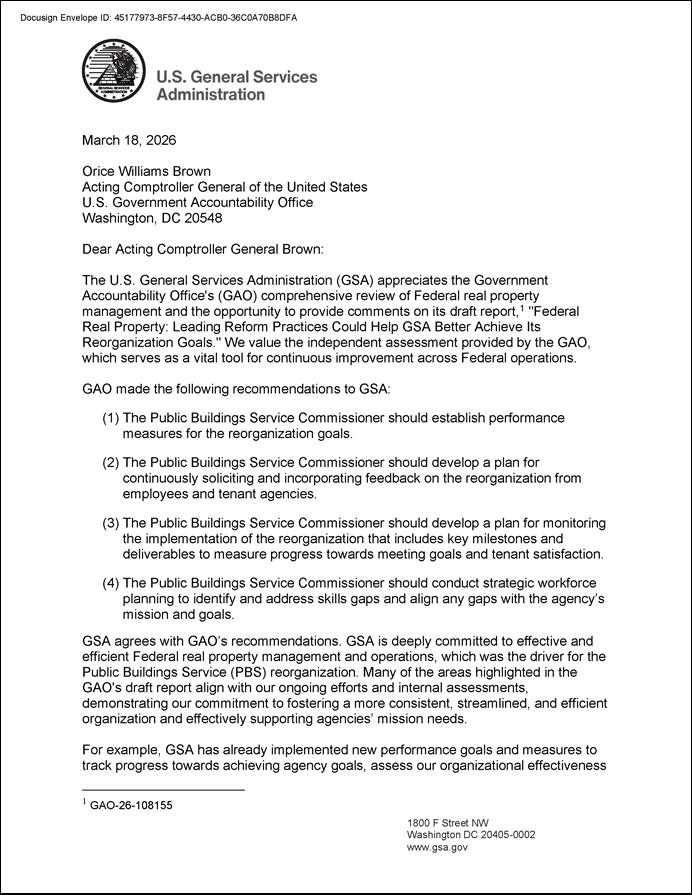
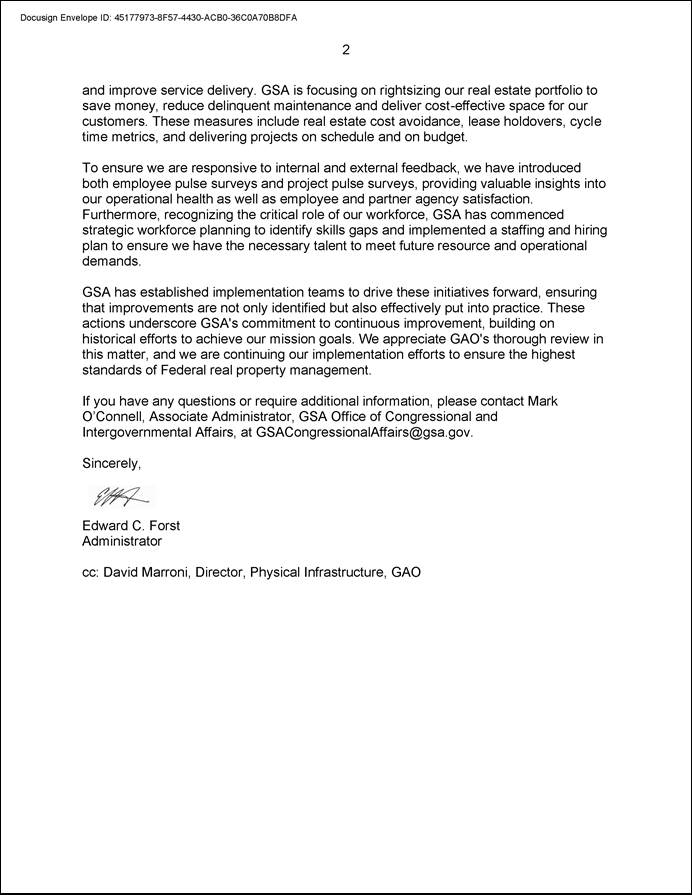
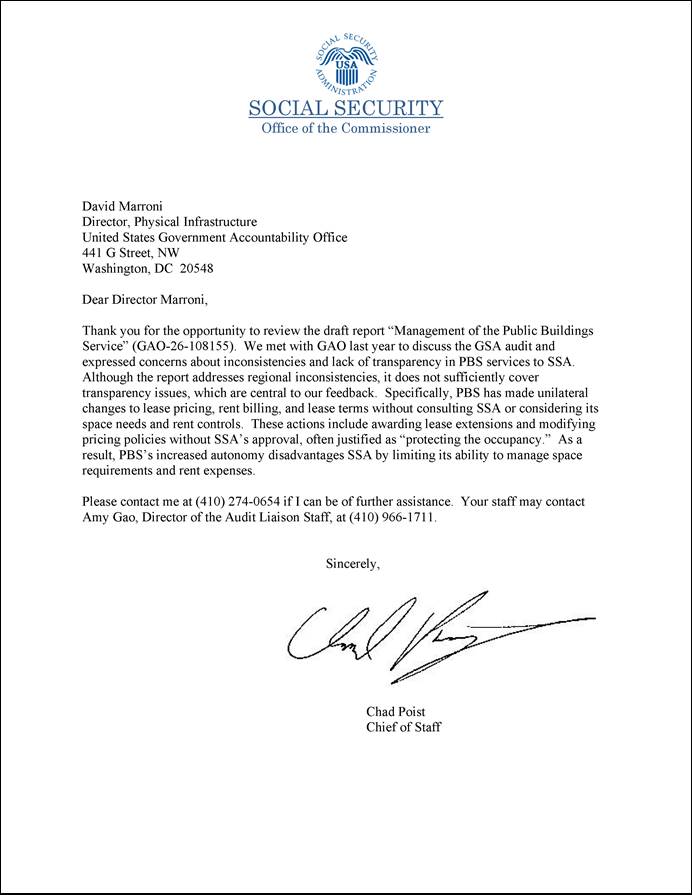
We provided a draft of this report to GSA, the Department of Agriculture, the Department of Health and Human Services, the Department of Homeland Security, the Department of Justice, and the Social Security Administration for review and comment. GSA agreed with our recommendations and provided technical comments, which we incorporated as appropriate. GSA's letter is reprinted in appendix II. The Social Security Administration wrote that we did not adequately describe issues it had with GSA's recent lack of transparency in its actions. We edited the draft to reflect their comment. The Social Security Administration’s letter is reprinted in appendix III. The Social Security Administration and the Department of Health and Human Services provided technical comments that we incorporated as appropriate. The Department of Agriculture, the Department of Homeland Security, and the Department of Justice did not comment on the draft report.
We are sending copies of this report to the appropriate congressional committees, the Administrator of GSA, and other interested parties. In addition, the report is available at no charge on the GAO website at https://www.gao.gov. If you or your staff have any questions about this report, please contact me at MarroniD@gao.gov. Contact points for our Offices of Congressional Relations and Media Relations may be found on the last page of this report. GAO staff who made key contributions to this report are listed in appendix IV.
David Marroni
Director, Physical Infrastructure
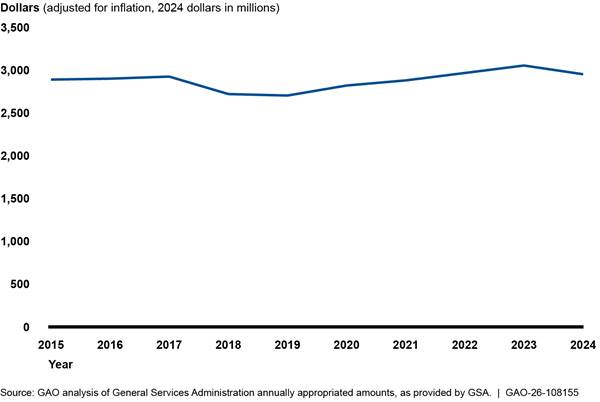
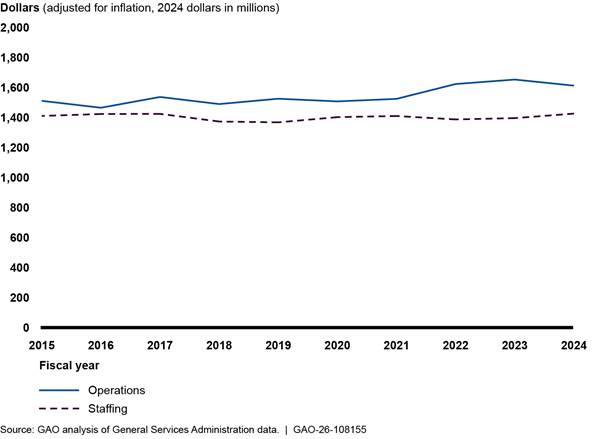
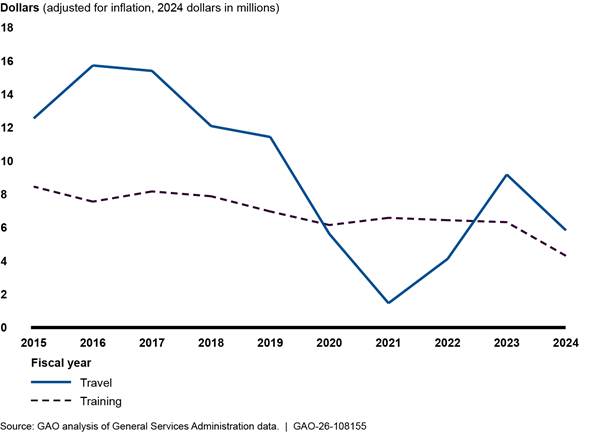
The Thomas R. Carper Water Resources Development Act of 2024 includes a provision for us to review various staffing and budget data from the Public Buildings Service from September 2015 to September 2025. [23] To the extent that data was available, this appendix includes our analyses.
As of December 2025, GSA’s in-person attendance statistics were unavailable. The GSA policy directing in-person attendance, “GSA Order: Telework Policy,” is based on the provisions of the Presidential Memorandum, Return to In-Person Work, dated January 20, 2025, and the subsequent return to office memorandum from the Office of Personnel Management. These memorandums direct executive branch agencies and departments to generally terminate remote work arrangements and require employees to return to work in-person on a full-time basis.
The Utilizing Space Efficiently and Improving Technologies (USE IT) Act, enacted in January 2025, requires certain federal agencies, including GSA, to measure building occupancy and utilization. Federal agencies began reporting in accordance with the USE IT Act on March 31, 2026.
 .
.
GAO Contact
David Marroni at MarroniD@gao.gov
Staff Acknowledgments
In addition to the contact named above, GAO staff who made key contributions to this report are Keith Cunningham (Assistant Director), Krishana Perry (Analyst-in-Charge), Shea Bader, Madeline Barch, Audrey Blumenfeld, Melissa Bodeau, Emily Crofford, Josh Ormond, Grace Pettey, Michelle Sager, Rebecca Sero, Patrick Tierney, Sarah Veale, Alejandra Villegas Lopez, and Alicia Wilson.
The Government Accountability Office, the audit, evaluation, and investigative arm of Congress, exists to support Congress in meeting its constitutional responsibilities and to help improve the performance and accountability of the federal government for the American people. GAO examines the use of public funds; evaluates federal programs and policies; and provides analyses, recommendations, and other assistance to help Congress make informed oversight, policy, and funding decisions. GAO’s commitment to good government is reflected in its core values of accountability, integrity, and reliability.
Obtaining Copies of GAO Reports and Testimony
The fastest and easiest way to obtain copies of GAO documents at no cost is through our website. Each weekday afternoon, GAO posts on its website newly released reports, testimony, and correspondence. You can also subscribe to GAO’s email updates to receive notification of newly posted products.
Order by Phone
The price of each GAO publication reflects GAO’s actual cost of production and distribution and depends on the number of pages in the publication and whether the publication is printed in color or black and white. Pricing and ordering information is posted on GAO’s website, https://www.gao.gov/ordering.htm.
Place orders by calling (202) 512-6000, toll free (866) 801-7077,
or
TDD (202) 512-2537.
Orders may be paid for using American Express, Discover Card, MasterCard, Visa, check, or money order. Call for additional information.
Connect with GAO
Connect with GAO on X,
LinkedIn, Instagram, and YouTube.
Subscribe to our Email Updates. Listen to our Podcasts.
Visit GAO on the web at https://www.gao.gov.
To Report Fraud, Waste, and Abuse in Federal Programs
Contact FraudNet:
Website: https://www.gao.gov/about/what-gao-does/fraudnet
Automated answering system: (800) 424-5454
Media Relations
Sarah Kaczmarek, Managing Director, Media@gao.gov
Congressional Relations
David A. Powner, Acting Managing Director, CongRel@gao.gov
General Inquiries
[1]Since the early 1990s, our high-risk program has focused attention on government operations with significant vulnerabilities to fraud, waste, abuse, and mismanagement or that need transformation to address economy, efficiency, or effectiveness challenges. GAO, High-Risk Series: Heightened Attention Could Save Billions More and Improve Government Efficiency and Effectiveness, GAO‑25‑107743 (Feb. 25, 2025).
[2]Pub. L. No. 118-272, div. B, tit. III, §2305, 138 Stat. 2992, 3225 (2025).
[3]For this report, we defined “pre-2025” to mean as of December 31, 2024.
[4]For the leading reform practices, see: GAO, Government Reorganization Key Questions to Assess Agency Reform Efforts, GAO‑18‑427 (Washington, D.C.: June 13, 2018). For the OMB’s guidance to agencies, see, OMB, Guidance on Agency RIF and Reorganization Plans (Washington, D.C., Feb. 26, 2025). We use the term “reforms” to broadly include any organizational changes—such as major transformations, mergers, consolidations, and other reorganizations—and efforts to streamline and improve the efficiency and effectiveness of government operations.
[5]We did not solicit input on the current Public Buildings Service reorganization from the selected tenant agencies since it was under development at the time of our interviews.
[6]We selected these tenants according to GSA’s State of the Portfolio report from fiscal year 2020. GSA no longer publishes annual State of the Portfolio reports, so fiscal year 2020 is the most recent readily available information at the start of this review.
[7]For selected tenant themes “all” is all five tenants; “most” is three to four tenants; “some” is two tenants; “one” is one tenant, and “none” is zero tenants.
[8]We invited all seven former commissioners to participate in our panel; one was unavailable to attend.
[9]On February 26, 2025, the Office of Management and Budget and Office of Personnel Management issued the memo: Guidance on Agency RIF and Reorganization Plans (ARRP) Requested by Implementing the President’s “Department of Government Efficiency” Workforce Optimization Initiative, in response to the Executive Order 14210, Implementing the President’s “Department of Government Efficiency” Workforce Optimization Initiative. 90 Fed. Reg. 9669. (Feb. 11, 2025). This executive order and memo outlined a reduction in force and reorganization directive for most executive branch departments and agencies.
[10]Public Buildings Service officials said that the agency initially planned to complete its reorganization in July 2025 but postponed implementation due to litigation and leadership changes.
[11]GAO-18-27.
[12]OMB, Guidance on Agency RIF and Reorganization Plans Requested by Implementing The President’s “Department of Government Efficiency” Workforce Optimization Initiative (Washington, D.C., Feb. 26, 2025).
[13]GSA was required to consult with the Committees on Appropriations of the House and Representatives and the Senate prior to “any significant reorganization, restructuring, relocation, or closing offices, programs, or activities” during Fiscal Year 2025. See Further Consolidated Appropriations Act, 2024, tit. VI § 608, Pub. L. No. 118-47, 138 Stat. 460, 566-67 and Full-Year Continuing Appropriations and Extensions Act, 2025, Pub. L. No. 119-4 §§ 1101, 1105–06, 139 Stat. 9, 11-12 (extending funding and the requirement to consult through September 30, 2025).
[14] OMB, Guidance on Agency RIF and Reorganization Plans Requested by Implementing The President’s “Department of Government Efficiency” Workforce Optimization Initiative (Washington, D.C., Feb. 26, 2025).
[15]Federal law and OPM regulations provide procedures for Executive Branch agencies conducting reductions in force, which apply whenever an agency “releases a competing employee from his or her competitive level by furlough for more than 30 days, separation, demotion, or reassignment requiring displacement, when the release is required because of lack of work; shortage of funds; insufficient personnel ceiling; reorganization; the exercise of reemployment rights or restoration rights; or reclassification of an employee’s position die to erosion of duties when such action will take effect after an agency has formally announced a reduction in force in the employee’s competitive area and when the reduction in force will take effect within 180 days.” 5 C.F.R. § 351.201(a)(2). See also generally 5 U.S.C. § 3501, et seq. and 5 C.F.R. part 351.
[17] We did not solicit input on the Public Buildings Service reorganization from the selected tenant agencies since it was under development at the time of our interviews.
[18]For selected tenant views “all” is all five tenants; “most” is three to four tenants; “some” is two tenants; “one” is one tenant, and “none” is zero tenants.
[19]According to GSA documents, under the pre-2025 organizational structure, National Account Leads were the primary points of contact for federal customer agency real estate, space, and workplace representatives at the national or headquarters level. Under the new organizational structure, the Public Buildings Service posted a list of the appropriate points of contact from the Office of Client Strategy to answer questions for each federal tenant agency.
[20]We generally use the term Commissioners throughout this report to describe six former Commissioners who attended our July 2025 expert panel.
[21]A 2014 reorganization of the Public Buildings Service changed some regional reporting lines and created the business line structure for an enterprise wise strategy.
[22]We asked Commissioners to omit reforms that, based on their understanding of the Buildings Service’s legal authorities, would require new legislation or require new areas of spending from the Federal Buildings Fund.
[23]Pub. L. No. 118-272, div. B, tit. III, §2305, 138 Stat. 2992, 3225 (2025).