
Report to Congressional Committees
United States Government Accountability Office
A report to congressional committees
For more information, contact: Dawn G. Locke at LockeD@gao.gov.
What GAO Found
The Periodically Listing Updates to Management (PLUM) Reporting website, maintained by the Office of Personnel Management (OPM), publishes data on politically appointed and career senior positions for all executive branch agencies and certain legislative branch agencies. As of July 2025, the website reported information on 10,540 positions across 171 federal entities (including agencies, boards, commissions, and other organizations).
GAO found that although OPM had procedures in place to help ensure the quality of data published on the website, the data did not include all elements required by the act. For example, GAO found at least seven federal entities were missing from the data, as well as at least 130 presidentially appointed, Senate-confirmed positions. Additionally, unique identifier numbers used for tracking appointees’ movement within the federal workforce were not applied consistently in the data. GAO also found instances of errors and inconsistencies in the data, such as duplicative positions. Complete and accurate data would help Congress and the public identify and track individuals holding senior positions.
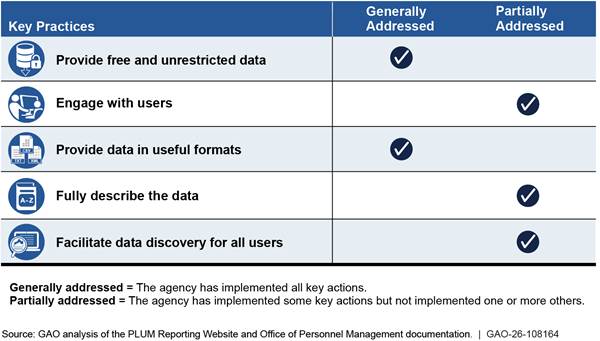
GAO found that the PLUM Reporting website, and OPM’s efforts to implement the website, only partially addressed three key practices for transparently reporting government data and certain relevant statutory requirements. GAO found:
· OPM did not proactively engage members of the public to solicit information on how they used and valued the website.
· OPM has not yet made the PLUM Reporting data available through its agency data inventory, though it has plans in place to do so.
· OPM did not fully describe the data and their known limitations.
Non-governmental stakeholders cited concerns with the website including data timeliness, missing positions or errors, and a lack of potentially useful information. Stakeholders also suggested ways to make the website more valuable to users. By better engaging users and publicizing data quality limitations, OPM can improve the usefulness of the PLUM Reporting website and the data’s value as a transparency tool.
Why GAO Did This Study
Information about the federal government’s senior leaders is a critical tool for the public and Congress to understand who is serving in roles with significant decision-making authority and improve oversight. The PLUM Act of 2022 required OPM to establish a website, referred to as the PLUM Reporting website, to report data on senior positions. The act includes provisions for GAO to review implementation of the act.
This report reviews (1) actions OPM took to ensure federal entities reported data on senior positions that met relevant quality requirements, and (2) the extent to which the PLUM Reporting website addressed key practices for transparently reporting government data and relevant statutes.
GAO analyzed PLUM Reporting data for potential errors and compared data against other information on senior political appointees. GAO reviewed OPM documents and interviewed OPM officials about their efforts to ensure data quality. GAO also interviewed eight stakeholders from academia and civil society organizations about their experience using the website and data. Finally, GAO assessed the website against GAO criteria for data transparency.
What GAO Recommends
GAO is making seven recommendations for OPM to improve the usefulness of the website by implementing a process to identify missing reportable positions, making technical changes to ensure unique identifier numbers are applied consistently, and developing a process for engaging the public, among other recommendations. OPM concurred with the recommendations and described ongoing and planned actions to address them.
Abbreviations
CRS Congressional Research Service
ESCS Executive and Schedule C System
OMB Office of Management and Budget
OPEN Government Data Act Open,
Public, Electronic, and Necessary
Government Data Act
OPM Office of Personnel Management
PAS Presidential
Appointment with Senate
Confirmation
PLUM Periodically Listing Updates to Management
SES Senior Executive Service
This is a work of the U.S. government and is not subject to copyright protection in the United States. The published product may be reproduced and distributed in its entirety without further permission from GAO. However, because this work may contain copyrighted images or other material, permission from the copyright holder may be necessary if you wish to reproduce this material separately.
February 26, 2026
The Honorable Rand Paul, M.D.
Chairman
The Honorable Gary C. Peters
Ranking Member
Committee on Homeland Security and Governmental Affairs
United States Senate
The Honorable James Comer
Chairman
The Honorable Robert Garcia
Ranking Member
Committee on Oversight and Government Reform
House of Representatives
The federal government’s senior leaders, such as agency heads and other individuals who work closely with these officials, hold significant decision-making authority. Information about these prominent senior leaders is a critical transparency tool for members of the public.[1] The United States Government Policy and Supporting Positions—known as the Plum Book—is a comprehensive source of data on both political appointees and senior executives in the federal government.[2] However, the usefulness of Plum Book data can be limited if they do not reflect changes that occur in senior positions over time.
We have reported that more comprehensive and timely data are needed on individuals serving in senior positions.[3] We noted that members of the public, including independent researchers, the media, and non-governmental organizations, need access to information on individuals serving in these positions to conduct independent analyses that would help promote government transparency. For example, they could identify conflicts of interest as well as gaps and challenges for filling political appointee positions. Without accurate information on who holds these senior positions, the public and Congress may not fully understand who is accountable for key decisions, hindering oversight and weakening trust in government.
In December 2022, Congress passed and the President signed the Periodically Listing Updates to Management (PLUM) Act of 2022 in response to our recommendation that Congress consider legislation requiring information on political appointees to be collected and made publicly accessible.[4] The PLUM Act directed the Office of Personnel Management (OPM) to replace the Plum Book with a public website, referred to here as the PLUM Reporting website. This website launched in December 2023 and as of July 2025 contained data on over 10,000 politically appointed and career senior positions across 171 federal entities.
The PLUM Act included a provision for us to review the implementation of that law, including the quality of the data required to be collected, implementation challenges, and suggestions or modifications to enhance compliance.[5] This report reviews
· actions OPM took to ensure federal entities reported data on senior positions and whether the data met relevant quality requirements; and
· the extent to which the PLUM Reporting website addressed key practices for transparently reporting government data and relevant statutes.
To address our first objective, we reviewed the quality of the 2024 and 2025 PLUM Reporting data and assessed it against relevant federal laws, guidance, and best practices for data quality. Specifically, we assessed the data’s timeliness, completeness, and accuracy according to timeliness requirements in OPM guidance, compared data to other public sources of information on federal senior positions, and reviewed data to identify errors. We also interviewed OPM officials to understand the steps they took to review entities’ data. We did not assess whether federal entities correctly reported information on specific officials.
To address our second objective, we interviewed OPM officials and reviewed documentation on how OPM engaged with PLUM Reporting website users. We also interviewed interested and knowledgeable non-governmental stakeholders about their experience using the PLUM Reporting website and potential opportunities to improve its usefulness. These stakeholders’ views, while not representative of all stakeholders, reflected a range of viewpoints and perspectives. Finally, we assessed OPM’s activities against relevant federal laws and guidance for communicating federal data, including the Open, Public, Electronic, and Necessary Government Data Act (OPEN Government Data Act) and key practices for transparently reporting government information that we previously identified.[6]
See appendix I for more details on how we carried out this review.
We conducted this performance audit from February 2025 to February 2026 in accordance with generally accepted government auditing standards. Those standards require that we plan and perform the audit to obtain sufficient, appropriate evidence to provide a reasonable basis for our findings and conclusions based on our audit objectives. We believe that the evidence obtained provides a reasonable basis for our findings and conclusions based on our audit objectives.
Background
Prior GAO Work on Senior Position Reporting
In March 2019, we reported that there was no single source of data on executive branch political appointees.[7] While some data on appointees did exist across various sources, these data were either not public, not timely, or incomplete. For example, we found that OPM maintained some data on political appointees, but its data were not comprehensive or publicly accessible for identifying individuals serving in political appointee positions.
We recommended Congress consider legislation requiring comprehensive and timely information on political appointees serving in the executive branch to be collected and made publicly accessible. We stated that this information would facilitate congressional oversight and enable members of the public to more effectively analyze whether appointees were performing their duties free of conflict. The PLUM Act was subsequently enacted in December 2022.
More recently, we found that data provided through the PLUM Reporting website could help agencies identify current or former political appointees subject to OPM review prior to being hired for a career appointment.[8] In April 2023, we reported that there was no government-wide mechanism for identifying political appointees, and that data required under the PLUM Act could help ensure that agency hires of current or former political appointees were appropriately reviewed and made based on merit. We recommended OPM examine how information on political appointees published on the PLUM Reporting website could be used by federal entities to better identify appointees subject to OPM review.[9]
PLUM Act Reporting Requirements
The PLUM Act gives OPM responsibility for establishing and maintaining the PLUM Reporting website and for publishing data to the website on senior positions. The act codifies the data elements and appointment types currently reported in the Plum Book and requires OPM to report certain additional categories of data. Additionally, the act requires OPM to publish the data in a searchable, sortable, downloadable, and machine-readable format.[10] The website is intended to eventually replace the version of the Plum Book historically assembled, printed, and published every 4 years by OPM in coordination with the U.S. Government Publishing Office and on behalf of Congress. The act also terminates further publication of the printed Plum Book after January 1, 2026.
The act requires OPM to publish data on senior positions for all executive agencies and components and certain legislative branch agencies not less than once per year.[11] These data are to include positions that are filled by a political appointee or career official, as well as vacant positions or positions filled by an acting official or official performing the duties of a vacant position. OPM is also required to maintain historical data compiled under previous presidential administrations. The 2025 PLUM Reporting data, published on July 9, 2025, included 10,540 positions across 171 federal entities. For each position, the PLUM Act requires that the data include 11 specific data elements (see table 1).
|
Agency and component |
Term or duration of the appointment (if any) |
|
Position title |
Expiration date of the appointment (if applicable) |
|
Name of the individual occupying the position |
Unique identifier for each appointee |
|
Geographic location of the position |
Vacancy status of the position |
|
Pay system under which the position is paid |
Name of acting official or official performing duties of the position (if vacant) |
|
Level, grade, or rate of pay |
|
Source: GAO analysis of 5 U.S.C. 3330f(c) and OPM documentation. | GAO‑26‑108164
The PLUM Reporting website also reports data across 11 types of political and career appointments.[12] Political appointments reported on the website include, for example, Presidential Appointments with Senate confirmation (PAS)—senior positions that include the heads of federal agencies. Career appointments include appointments to the Senior Executive Service (SES) and other positions made using competitive merit staffing processes and without time limitations. OPM may also opt to include other types of positions in the PLUM data.[13]
PLUM Reporting Process
Data on senior positions are managed primarily through the Executive and Schedule C System (ESCS), which is administered by OPM. ESCS is a web-based application used to collect and maintain agency information regularly as individuals join or leave the federal workforce. The system maintains data on all Presidential appointees, career and noncareer SES, Schedule C appointees, and officials in other executive personnel systems. OPM uses data stored in ESCS to update the PLUM Reporting website. Figure 1 describes the process by which OPM and agencies collect, verify, and report data.
Figure 1: Data Flow for Updates to the Periodically Listing Updates to Management (PLUM) Reporting Website
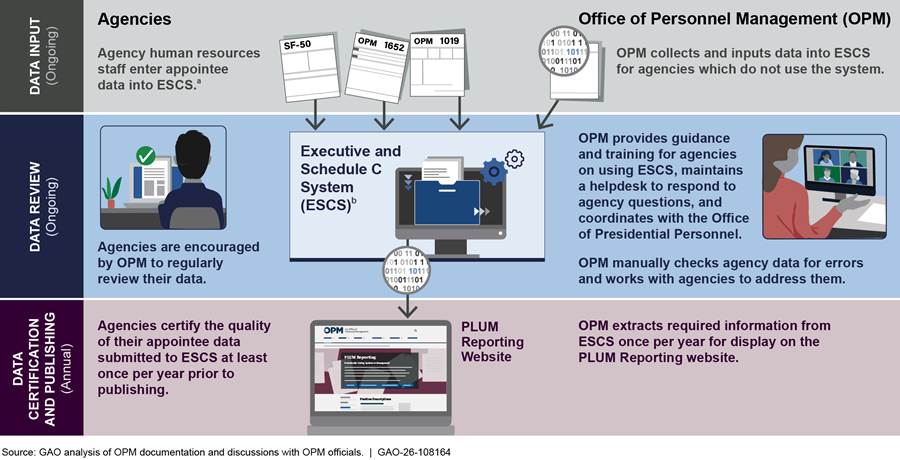
aAgency human resources staff primarily use information from a number of forms to populate senior leaders’ records in ESCS. These forms include: (1) Standard Form 50 (Notification of Personnel Action); (2) OPM Form 1652 (Request for an SES Appointment Authority); and (3) OPM Form 1019 (Request for Schedule C Appointing Authority).
bESCS collects and stores information on executive-level and Schedule C positions. Specifically, the system maintains information on career and non-career Senior Executive Service personnel and other executive personnel, such as political appointees. ESCS also includes information on non-career non-executive employees in Schedule C appointments to positions that are of a confidential or policy-determining character.
OPM, in coordination with the White House Office of Presidential Personnel, was required to confirm that information on the PLUM Reporting website was complete, accurate, reliable, and up to date 90 days after the website was established. The act also requires OPM to publish instructions for agencies on data collection standards, quality assurance methods, and time frames for reporting. Finally, OPM is required to identify on the website any agency that has failed to provide the information required by the Director: complete, accurate, and reliable data, or information within the specified time frame.
Agencies are responsible for certifying the quality of their senior position data in ESCS. Additionally, agencies are to explain how they ensure their data are complete, accurate, and reliable. They are supposed to sign a data verification memorandum asserting that the agency data contain information about all agency senior positions and that the agency took certain quality assurance steps.
OPM Took Steps to Ensure Data Quality but PLUM Data Still Had Gaps and Errors
OPM has some procedures in place to ensure the quality of data published on the PLUM Reporting website. However, our analysis found that the PLUM data do not include all statutorily required information. Additionally, data contain numerous errors and are not reported consistently between the website and downloadable data file.
OPM Took Actions to Ensure the Quality of PLUM Reporting Data and Assist Federal Entities
OPM has some procedures in place to ensure the quality of PLUM data. For example, OPM provides written guidance and offers monthly trainings for users of ESCS—the OPM-administered application used to collect information on appointees and senior executives in the federal government. ESCS users include federal agencies, boards, commissions, and other federal bodies, and the trainings address topics such as how to correctly report individuals serving in an acting capacity in ESCS. OPM also encourages ESCS users to regularly review their data for completeness and accuracy. OPM maintains a helpdesk to help ESCS users update and manage their data.
According to OPM officials, automated checks have been built into ESCS to ensure federal entities enter the correct number of digits in certain fields, such as the salary field, which is required to be reported for some employees on the PLUM Reporting website. Officials noted if an incorrect number of digits for an employee’s salary is submitted, the system will automatically flag the error for the user and prevent them from saving the record.
OPM officials told us that they manually review data for spelling mistakes, typographical errors, and acronym use prior to publishing the data on the PLUM Reporting website and after it has been certified by the submitting federal entity. While these manual reviews can be resource intensive, they help ensure the quality of PLUM data, OPM officials said.
PLUM Reporting Website Does Not Include All Required Data
We found the 2025 PLUM data contain numerous instances of missing federal entities and covered positions.[14] For example, the 2025 PLUM data did not include at least seven federal entities (agencies, boards, commissions, or other entities) which OPM guidance states are required to report under the PLUM Act, and which were reported in other sources of information on senior positions, such as the 2024 PLUM data, the 2024 Plum Book, and the Congressional Research Service (CRS).[15] The missing federal entities included, for example, the Privacy and Civil Liberties Oversight Board and the Civil Rights Cold Case Records Review Board. Both these entities appear in prior Plum Books.
Similarly, we estimated that the 2025 PLUM data did not include at least 130 positions designated as PAS from at least 13 federal entities when compared to information published by CRS. Missing PAS positions included the Under Secretary for Rural Development of the Department of Agriculture, the Chief Financial Officer of the Department of Labor, and the Director of the Peace Corps.
In certain cases, federal entities whose data OPM collects outside of ESCS were also missing from the 2025 PLUM data. According to OPM officials 20 entities, including the Architect of the Capital and Tennessee Valley Authority, do not have access to ESCS. Instead, OPM officials stated that they coordinate with these entities by email to collect data on their behalf and upload it to ESCS. However, data for three of these entities, the Smithsonian Institution, Delaware River Basin Commission, and the Office of Navajo and Hopi Indian Relocation, did not appear in the 2025 PLUM data.
Not all officials serving in an acting capacity or performing the duties of a vacant position were reported in the 2025 PLUM data. For example, as of July 2025, the PLUM website did not identify the Acting Administrator of the General Services Administration or the Acting Director of the U.S. Mint, though that information was reported on the agencies’ websites as well as in our vacancies database.[16] The PLUM Act assigns OPM responsibility for collecting, confirming, and reporting complete and accurate data for all covered positions.[17] These positions include officials serving in acting roles and any positions that would have otherwise been reported in the printed Plum Book, such as PAS appointees.
OPM officials explained to us their views on the cause of the missing data. First, they said they seek assistance from and coordinate with White House Office of Presidential Personnel to identify federal entities with covered positions, but the entities themselves are primarily responsible for determining which positions to report. These OPM officials stated that individual federal entities control their own human resources data and use many different systems to manage these data. Since OPM officials do not have visibility into agency systems, they are not able to automatically update ESCS, and subsequently the PLUM data, to reflect real-time changes. Additionally, the officials said that due to resource constraints OPM was only able to adapt ESCS to link to the PLUM Reporting website rather than build an entirely new system for collecting the data, which contributed to some gaps.
OPM officials further said they are not aware of every entity or position required to be reported under the PLUM Act. They said they do not have a process to identify the positions, and they also lack the resources to identify and contact all federal entities with covered positions. In some cases, OPM officials told us they had identified certain federal entities for inclusion and contacted the agency to request data but did not receive a response, which officials attributed potentially to personnel turnover at those entities. OPM officials noted that they were unaware of all publicly available data sources to conduct reviews which would have helped identify federal entities with reportable positions.
PLUM Reporting Website Applies Unique Identifiers Inconsistently
OPM published unique identifier numbers for individuals in senior positions as part of the PLUM data, as required under the act. However, we found that the unique identifiers are applied inconsistently and appear to differ depending on how users view the information on the PLUM Reporting website. In some instances, individuals and positions in the data which appear to be duplicative are nonetheless published with different unique identifiers.
In other instances, the unique identifier appears to change depending on where on the website users view a record. For example, an individual’s unique identifier may differ depending on whether a user views their record on the “PLUM Data” page or views their “historical record,” which shows positions they have held within the current administration. Additionally, individuals holding multiple positions simultaneously appear with different unique identifiers for each position.[18] See figure 2 for an example of an individual who was assigned two different unique identifiers for the same position.
Figure 2: Inconsistent Unique Identifiers in the 2025 Periodically Listing Updates to Management (PLUM) Data
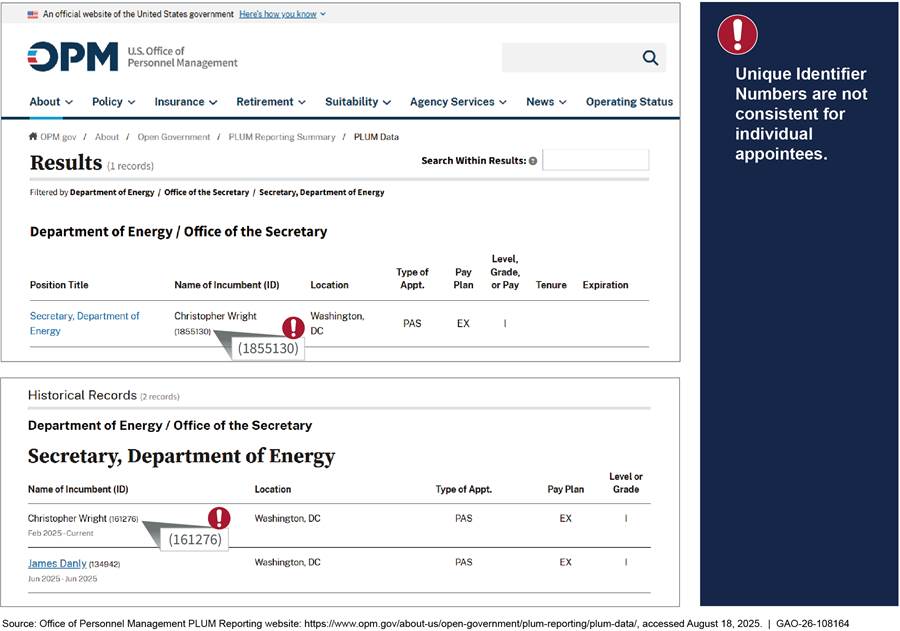
The PLUM Act of 2022 requires OPM to include a unique identifier for each appointee.[19] OPM officials explained that the unique identifier number is meant to be tied to individual appointees and follow them if they move to a new position. OPM officials said the unique identifiers are applied inconsistently because of an ESCS error. The error causes new unique identifier numbers to be generated when an existing record is updated and saved. Without a consistent and reliable unique identifier number, public users of the PLUM data may not be able to easily identify appointed officials, particularly as appointees take different positions or hold multiple simultaneous positions.
PLUM Reporting Data Include Errors and Inconsistencies
Our analysis of the 10,540 records in the 2025 PLUM data identified more than 600 records that displayed inconsistent or inaccurate information. OPM officials generally attributed these issues to data entry errors by ESCS users or system errors resulting from changes OPM implemented to ESCS in response to PLUM Act requirements. These data quality issues could make it challenging for the public to search for information and correctly interpret it.[20] These issues include:
· Spelling errors. We found records with misspelled names of federal entities, component organizations, and position titles. OPM attributed misspellings to users in federal entities incorrectly entering data into ESCS.
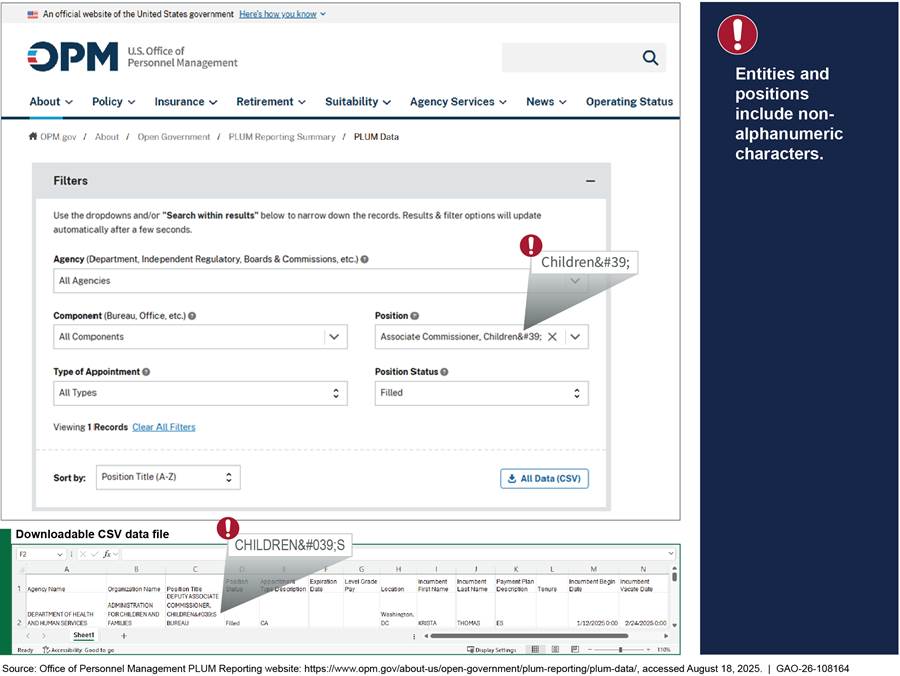
· Use of non-alphanumeric symbols. The entity names, position titles, and appointee names for some records included non-alphanumeric symbols such as hash marks and ampersands. OPM generally attributed this issue to users in federal entities incorrectly entering data into ESCS. However, OPM also identified an error in ESCS which replaces apostrophes with non-alphanumeric symbols. Figure 3 shows examples of a position and appointee that include non-alphanumeric symbols.
Figure 3: Non-Alphanumeric Symbol in the 2025 Periodically Listing Updates to Management (PLUM) Data
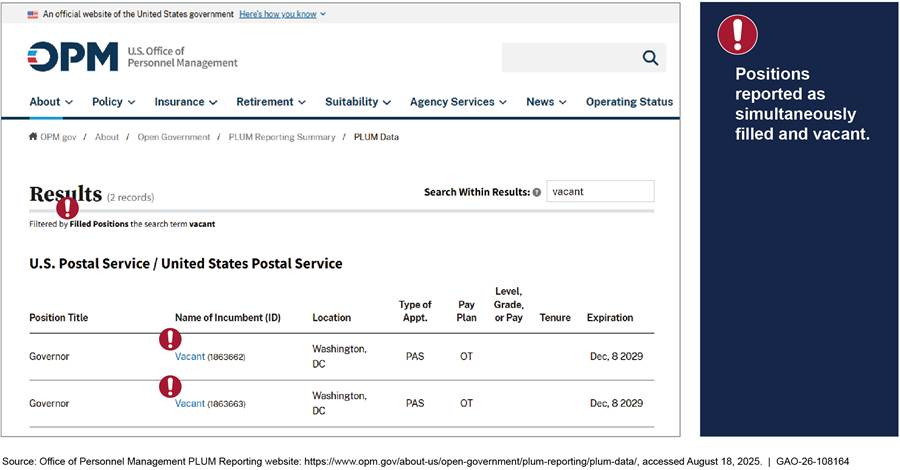
· Inconsistent reporting of vacancy status. The PLUM Act requires all reported positions to describe whether the position is vacant or filled.[21] We found that some positions are displayed in the data as filled, but the position is actually vacant. OPM officials attributed these issues to an ESCS system error. Figure 4 shows two such instances we found at the U.S. Postal Service.
Figure 4: Inconsistent Reporting of Vacancy Status in the 2025 Periodically Listing Updates to Management (PLUM) Data
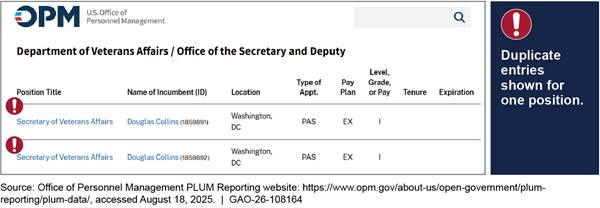
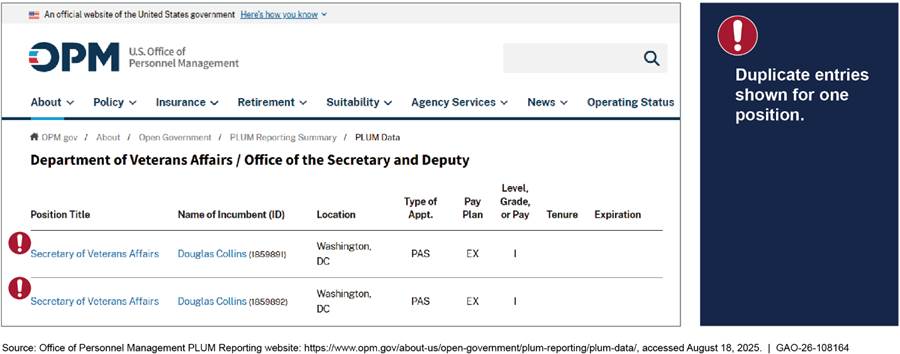
· Duplicative positions. We found positions in the 2025 PLUM data that are displayed as multiple separate entries with identical information for the same position. OPM attributed the presence of duplicative entries to an error in ESCS. Figure 5 shows a duplicate entry for the Secretary of Veterans Affairs.
Figure 5: Duplicative Position Reported in the 2025 Periodically Listing Updates to Management (PLUM) Data
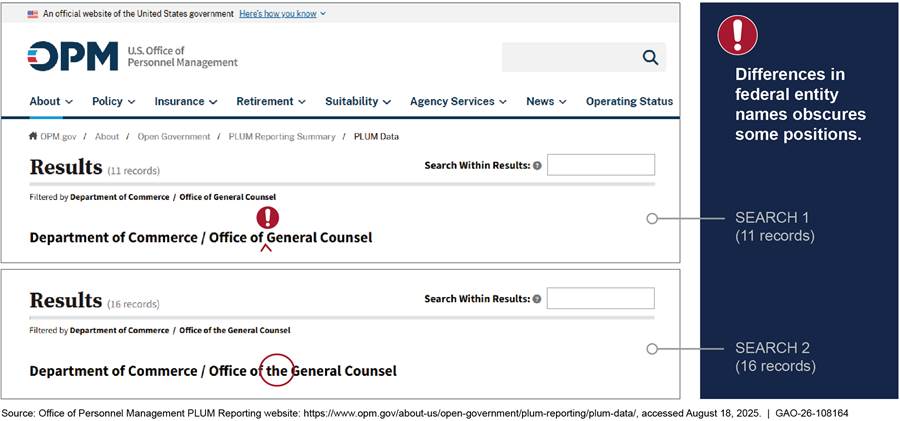
· Inconsistent display of entity names and position titles. The 2025 PLUM data include records where the name of the federal entity is not displayed consistently. For example, titles may have included or excluded words or punctuation marks which, in some cases, make one agency, component, or position appear to be multiple entries within one year of data. OPM officials attributed these differences to users submitting inconsistent data for entity names and position titles when creating or editing records in ESCS. For example, searching for the Department of Commerce’s Office of the General Counsel provides results listing 16 officials, while searching for the Office of General Counsel (without “the”) provides results listing 11 different officials. Figure 6 shows how this inconsistently labeled entity appears in the 2025 PLUM data.
Figure 6: Inconsistently Labeled Entity Names in the 2025 Periodically Listing Updates to Management (PLUM) Data
Federal law and agency guidance emphasize the importance of ensuring the quality of data disseminated to the public by federal agencies. Under the PLUM Act, OPM was required to confirm the accuracy and reliability of the data on the website and must continue to hold agencies accountable for providing complete, accurate, and reliable information.[22] Further, the Information Quality Act and implementing guidance issued by the Office of Management and Budget (OMB) directs agencies to establish standards of information quality.[23] OMB guidance also directs agencies to ensure quality appropriate to the nature and timeliness of the information to be disseminated.[24] Moreover, OPM’s Information Quality Guidelines, developed in response to this guidance, state that OPM will take steps to verify the accuracy and completeness of information it disseminates, including information submitted by other federal entities.[25]
However, OPM officials told us that ESCS does not currently include data entry validations that would help prevent the errors we identified. Officials also stated they were aware of the need for additional automated validations because OPM’s manual reviews may miss some errors, but that they were also working to identify the specific cause of ESCS errors affecting data quality.
Users of the Plum Reporting Website Are Not Able to Download Some Data
We found that some required data elements displayed on the PLUM Reporting website are not included in the downloadable data file. The PLUM data are accessible to the public in two formats. Users can search for and view data on (1) the PLUM Reporting website, and (2) in a downloadable file accessible using a link on the website.
We found several cases in which officials reported as “acting” on the website were not labeled as “acting” in the downloadable data file. Figure 7 shows an example of an official reported on the website as an acting official but not reported as such in the downloadable data file. While at least 70 appointees are labeled as “acting” on the PLUM Reporting website, only seven positions were listed as “acting” in the downloadable data. Of these seven, four were vacant positions.
Figure 7: Inconsistent Display of Information on the Periodically Listing Updates to Management (PLUM) Reporting Website
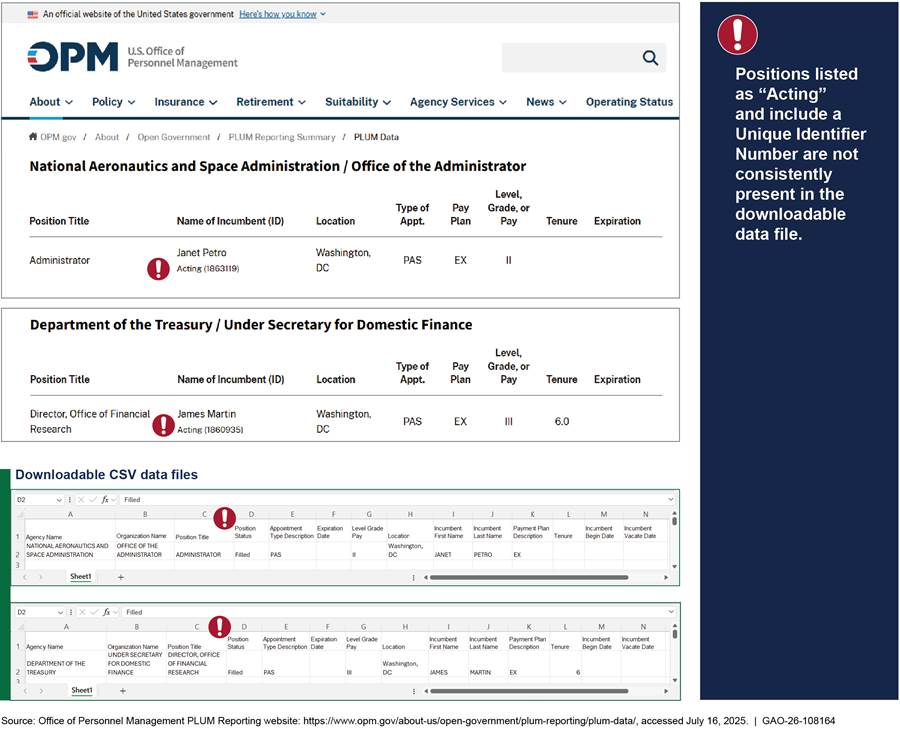
Similarly, the downloadable data file did not include the statutorily required unique identifier number for officials, although this number appeared on the website. The unique identifier allows users to track senior leaders as they move to new positions and can be used to see positions individuals previously held.
The PLUM Act requires OPM to publish searchable, sortable, downloadable, and machine-readable data on all data elements.[26] Data in the downloadable file should include the same elements required to appear on the website. Because the acting designations and unique identifier numbers are not included in the downloadable data file, these data elements may not be fully searchable or sortable to users of the PLUM data. As a result, users may reach different conclusions about the status of appointees depending on the data source they use.
OPM officials acknowledged that there were differences in how PLUM data are shown on the website and in the downloadable data set. Officials also confirmed that this information was stored in ESCS and should be available on both the website and in the downloadable file. OPM officials reported that they were working on a fix that will make the data elements displayed on the website available in the downloadable file as well. However, officials could not provide a specific time frame for completing this update. Standards for Internal Control in the Federal Government states that organizations, when defining objectives, such as implementing technical fixes to an agency website, should clearly define time frames for achievement of the objective, as well as what is to be achieved, how it will be achieved, and who will achieve it.[27]
Data quality challenges, including missing positions that are required to be reported, records with misspellings and other errors, and inconsistent labeling of key information, reduce the completeness, accuracy, and reliability of the PLUM data. These challenges limit users’ ability to search for, identify, and track the movement of individuals who hold senior positions and who are responsible for policy decisions that affect the public. Further, these data quality challenges increase the risk that users may misunderstand or draw inaccurate conclusions from the data.
The PLUM Reporting Website Generally Did Not Address Three of Five Key Practices for Transparency
Our assessment found that the PLUM Reporting website, and OPM’s efforts to implement the website, generally addressed two of the five key practices for transparently reporting government data we previously identified. Specifically, the website provided free and unrestricted data and data in useful formats. OPM partially addressed the other three key practices and did not fully meet all of the relevant statutory requirements. In particular, OPM did not proactively engage members of the public to understand how they used and valued the website and had not yet made PLUM data available through its data inventory. In addition, OPM did not fully disclose important data quality limitations.
OPM Addressed Some Key Practices for Transparently Reporting Data but Had Little Engagement with Public Users
OPM generally addressed two key practices for transparently reporting government data. First, the website provided users with free and unrestricted data. Second, OPM provided the data in an interoperable, non-proprietary, and machine-readable format, although we found some data quality limitations with the machine-readable data. Non-governmental stakeholders we spoke to were generally positive about the PLUM Reporting website interface, stating that it was easy to use and that they appreciated being able to download the data.
However, we found that OPM only partially addressed three of the key practices. Figure 7 shows the results of our assessment.
Figure 8: Findings of GAO’s Assessment of Periodically Listing Updates to Management (PLUM) Reporting Website
OPM took some steps to engage with agency users and establish channels for communicating with the public. For example, as of December 2023, OPM had tested the website with agency users and incorporated their feedback, though it did not engage with members of the public at that time. Additionally, the website provides an email address for public users to ask questions and share feedback. Finally, OPM officials used web analytics to analyze website traffic.[28] OPM officials told us that in the past the most frequent type of communications from the public were questions about how to apply to join the administration. However, they have not received any recent questions, requests, or feedback from the public on the website or the new content updated in July 2025.
Although OPM officials provided a mechanism for website users to submit feedback, OPM did not take steps to proactively reach out to engage with the public. The Open, Public, Electronic, and Necessary Government Data Act (OPEN Government Data Act), enacted in 2019, requires that agencies regularly solicit input on and engage with the public on the use of their data assets.[29] That engagement should include collaborating with the public to understand how data users value and use government data.[30] Subsequent OMB guidance establishes time frames for agencies to report on how they are engaging with the public.
We spoke to eight knowledgeable non-governmental stakeholders about their experiences using the PLUM Reporting website and data, their views on the quality of the data, and potential opportunities to improve its usefulness.[31] In general, they were positive about the website’s interface. They said it was easy to use and they appreciated being able to download the data. Concerning outreach from OPM:
· Three stakeholders reported having some discussions with OPM early on in the PLUM Act’s implementation about the development of the website, and one stakeholder described some ongoing discussions with career OPM officials.
· Two other stakeholders said they reached out to OPM with questions about the timing of the 2025 data. They said OPM officials responded but did not provide accurate information about when the new data would be available. These stakeholders noted it would be helpful to have additional clarity from OPM about when data would be updated on the website.
· The three remaining stakeholders we spoke to reported that they had no contact with OPM.
As of June 2025, OPM officials said they did not plan to conduct additional outreach to the public.
Non-governmental stakeholders who used the PLUM Reporting website identified issues with the website and data, which were consistent with what we found in our assessment of the data. Some stakeholders also shared ways to improve the website and suggested different ways the data could be made more valuable to the public. Stakeholder concerns included the timeliness of the data and missing positions or errors in reported positions. They also said the site lacked some potentially useful information, such as additional appointment types and start and end dates for appointees.
Additionally, stakeholders said the website could be improved by changes to search functions and adding more descriptive information about positions. For example, one stakeholder suggested tools for assisting the public in identifying potential job opportunities that might match their skills.
The PLUM Act states that the PLUM data on senior positions qualify as an open government data asset under the OPEN Government Data Act.[32] The act also requires OPM to establish a process for members of the public to provide feedback regarding the accuracy of information on the PLUM Reporting website.[33]
Key practices for improving the transparency of government data that we previously identified state that agencies should engage with users.[34] Specifically:
· agencies are encouraged to be proactive in identifying data users and their needs;
· agencies should solicit and respond to feedback both when a website is being developed and on an ongoing basis; and
· agencies should actively reach out to potential data users to encourage data use, using tools such as trainings or how-to guides, as data create value only to the extent that they are known and used.
OPM officials told us that OPM asked some agency users to test the system early in the website’s development and testing process. The users were to test it from the perspective of members of the public. OPM officials believed these agency users were able to provide sufficient feedback. However, no members of the public were involved in testing and OPM has no plans for further public engagement.
By more proactively engaging with public users, OPM can leverage users’ input to identify opportunities for updating the functionality of the website. Such updates could make it easier for members of the public to search for, access, and understand the PLUM data.
OPM Is Working to Implement Requirements to Make PLUM Data Available Through Its Data Inventory
OPM officials stated they were aware of OMB guidance implementing OPEN Government Data Act requirements for the agency to make data, including PLUM data, available through its agency data inventory or the Federal Data Catalogue. The act requires agencies to develop a comprehensive data inventory that accounts for all agency data assets. OMB guidance for implementing the act requires agencies to make their data assets available through the catalog by September 2026. Our criteria for transparently reporting government information also state agencies should use data catalogues to help users easily find data.[35] As OPM works to implement the OPEN Government Data Act’s requirement, making the PLUM data available through the data catalogues could further increase public engagement and help more users discover and use the data.
OPM Did Not Fully Disclose Data Quality Limitations
The PLUM Reporting website provides some information about the sources of the data and their timeliness. For example, the website’s “Agency Certification” page shows which agencies certified their data as accurate and the dates on which they did so. The page tells users that ESCS is the source of the data. The page also states that agencies are required to review the quality of their data regularly to confirm that data are complete, accurate, and reliable.
However, the website does not include disclosures about other data quality limitations we identified, such as missing entities with reportable positions or unreported acting officials. OPM officials explained why the limitations are not disclosed. They told us that data represent only a snapshot in time as of the date an agency certified its data, and that the data’s accuracy is dependent on the quality of the agencies’ reporting and review. OPM officials also stated that they may not have been aware of some federal entities with reportable positions and that certain technical issues led to inconsistencies between data published on the PLUM Reporting website and in the downloadable data file. Additionally, we found that as of December 2025 some agencies had not certified their data, indicating that some agency data on the website may not be complete, accurate, or reliable.
According to OMB guidance, federal agencies are responsible for the content they disseminate and should take affirmative steps to maximize its quality and identify, where appropriate, error sources affecting the data quality.[36] The guidance also states that agencies should optimize and organize online content to help the public find what they are looking for as efficiently as possible, with the fewest number of steps or clicks. Additionally, key practices for transparently reporting government data that we previously identified state that agencies should disclose data quality issues and limitations to help users make informed decisions about whether and how to use data.
Conclusions
The Plum Reporting website is a comprehensive source of information on senior positions in the federal government. While OPM has taken some steps to ensure the quality of the PLUM Reporting data, these data do not include all the information that is required to be reported. Incomplete information limits the public’s ability to identify individuals holding important federal leadership and management positions. In addition, the numerous inconsistencies and errors in the data that we found could potentially affect users’ ability to search for the information and understand it. These errors were found in both the website and the data available for download.
Additionally, OPM has had limited engagement with website users. More proactive engagement may present opportunities for OPM to make further improvements that increase the data’s value to the public, as anticipated by the PLUM Act and OPEN Government Data Act. Finally, OPM did not fully describe limitations on the quality of the PLUM Reporting data on the website, such as incomplete and inaccurate information. Disclosing additional information on known data limitations can help ensure that the public can use the data with confidence. Taken together, these improvements can help OPM improve the usefulness of the PLUM Reporting website and the data’s value as a tool for helping the public and Congress understand who is accountable for key decisions, improving oversight, and strengthening transparency and trust in government.
Recommendations for Executive Action
We are making a total of seven recommendations to OPM:
The Director of OPM should develop and implement a process that provides reasonable assurance that reportable positions are included in the PLUM data. This may include such actions as consulting with the White House Office of Presidential Personnel and reviewing other sources of information, such as prior Plum Books, Congress.gov, our Vacancies Database, or Congressional Research Service publications listing Presidential appointees requiring Senate confirmation. (Recommendation 1)
The Director of OPM should implement appropriate technical changes to ESCS and the PLUM Reporting website to ensure each individual in the PLUM data is assigned one unique identifier number that is specific to that individual. (Recommendation 2)
The Director of OPM should incorporate automated data validations or other controls into ESCS, such as spell-check functions which alert agencies to potential errors in their data submissions. (Recommendation 3)
The Director of OPM should document a timeline and implement updates to the PLUM Reporting website and downloadable data file to ensure information on acting officials and officials performing the duties of a vacant position displayed on the PLUM Reporting website is also included in the downloadable data file. (Recommendation 4)
The Director of OPM should document a timeline and implement updates to the PLUM Reporting website and downloadable data file to ensure that the unique identifier numbers displayed on the PLUM Reporting website are included with the downloadable data file. (Recommendation 5)
The Director of OPM should develop a process for engaging with the public on ways to improve the usefulness of the PLUM Reporting website. The process could include providing the public with opportunities to request specific data and resources to help the public use the data and following through on its plans to add a link to the PLUM Reporting website on OPM’s data inventory and the Federal Data Catalogue, as required under the OPEN Government Data Act. (Recommendation 6)
The Director of OPM should disclose information about known data limitations in a prominent and easily accessible location on the PLUM Reporting website. (Recommendation 7)
Agency Comments
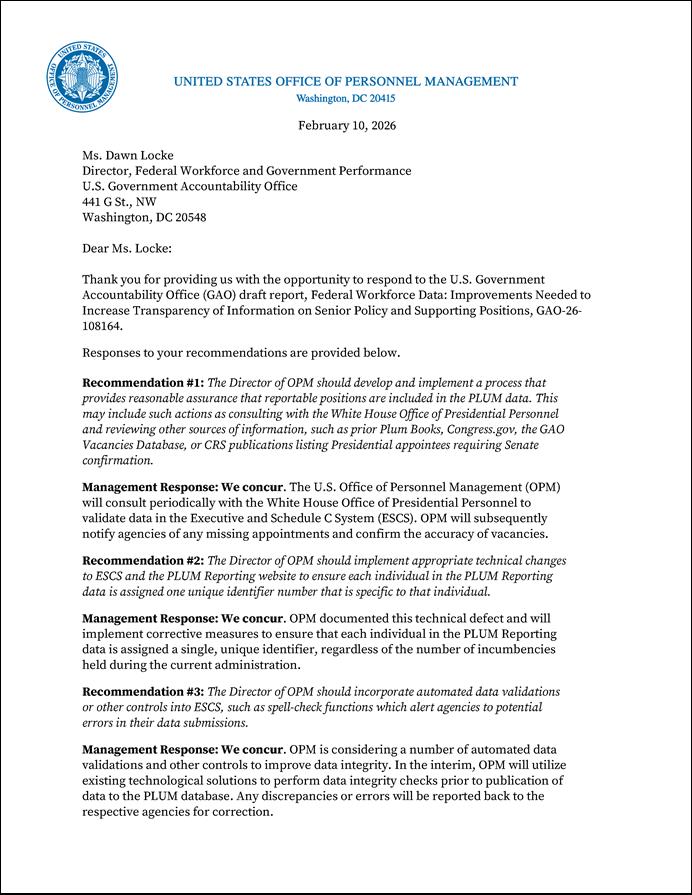
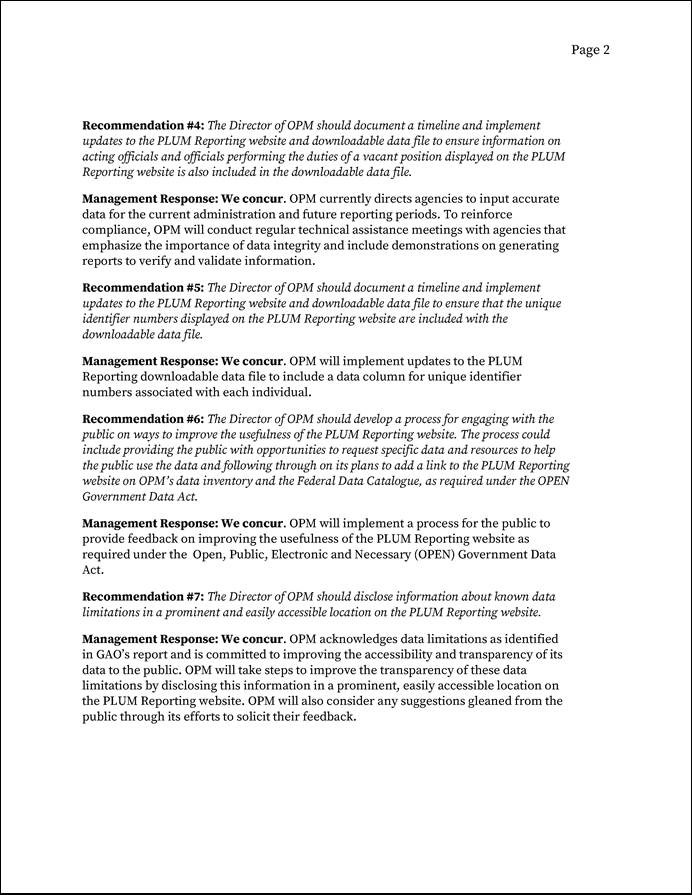
We provided a draft of this report to OPM for review and comment. OPM provided written comments, which are reproduced in appendix II. OPM concurred with our recommendations and described ongoing and planned actions to address them, including updates to the PLUM Reporting website to correct technical issues and implementation of a process for gathering public feedback.
We are sending copies of this report to the appropriate congressional committees, the Director of the Office of Personnel Management, and other interested parties. This report will also be available at no charge on the GAO website at http://www.gao.gov.
If you or your staffs have any questions about this report, please contact me at LockeD@gao.gov. Contact points for our Offices of Congressional Relations and Media Relations may be found on the last page of our report. GAO staff who made key contributions to this report are listed in appendix III.

Dawn G. Locke
Director, Strategic Issues
The National Defense Authorization Act for Fiscal Year 2023 included a provision for us to review the implementation of the Periodically Listing Updates to Management (PLUM) Act of 2022, including the quality of the data required to be collected, implementation challenges, and suggestions or modifications to enhance compliance.[37] This report reviews
· actions the Office of Personnel Management (OPM) took to ensure federal entities reported data on senior positions and whether the data met relevant quality requirements; and
· the extent to which the PLUM Reporting website addressed key practices for transparently reporting government data and relevant statutes.
To address our first objective, we reviewed relevant federal laws, guidance, and best practices for collecting and ensuring the quality of federal data, including the PLUM Act, the Information Quality Act, OPM’s Information Quality Guidelines and Standards for Internal Control in the Federal Government.[38] We also interviewed OPM officials to understand the steps they took to review federal entities’ PLUM Reporting data and ensure that they were timely, complete, and accurate.
We assessed the quality of the 2024 and 2025 PLUM Reporting data by reviewing their timeliness, completeness, and accuracy. We assessed the data for timeliness by comparing their date of publication to OPM guidance and determining whether OPM had communicated the date to agencies. To assess the data’s completeness, we compared the data to other sources of information on federal political appointees, including the 2024 Plum Book and data previously reported by the Congressional Research Service.[39] We also compared data elements reported in the downloadable data files with the website to verify whether required information was present in both sources. We assessed the data’s accuracy by both comparing them to other information sources and conducting automated and manual reviews to identify errors or inconsistently reported data. Our review did not assess whether information on specific incumbents was correctly reported by agencies.
To address our second objective, we interviewed OPM officials and reviewed relevant documentation to understand how OPM engaged with users of the PLUM Reporting website. We also reviewed relevant laws and guidance for communicating federal data, including the Open, Public, Electronic, and Necessary Government Data Act (OPEN Government Data Act), and key practices for transparently reporting government information that we previously identified.[40] We assessed the PLUM Reporting website display and OPM’s efforts to report data and communicate with the public against these relevant federal laws, guidance, and key practices.
We also interviewed eight non-governmental stakeholders with demonstrated interest in or knowledge of the PLUM Reporting website or PLUM Book. We discussed their experience using the PLUM Reporting website and data, their views on the quality of the data, and potential opportunities to improve the usefulness of the website and data. Although the views of our selected participants were not representative of all stakeholders, they provided illustrative perspectives of academia and civil society organizations.
We conducted this performance audit from February 2025 to February 2026 in accordance with generally accepted government auditing standards. Those standards require that we plan and perform the audit to obtain sufficient, appropriate evidence to provide a reasonable basis for our findings and conclusions based on our audit objectives. We believe that the evidence obtained provides a reasonable basis for our findings and conclusions based on our audit objectives.
GAO Contact
Dawn G. Locke, LockeD@gao.gov
Staff Acknowledgments
In addition to the contact named above, key contributors to this report were Kathleen Drennan (Assistant Director), Andrew Lobel (Analyst-in-Charge), and Benjamin Legow. In addition, Virginia Chanley, Jacqueline Chapin, Robert Gebhart, Erik Shive, Kevin Walsh, Daniel Webb, Alicia White, Mercedes Wilson-Barthes, and Clarette Yen made significant contributions to this report.
The Government Accountability Office, the audit, evaluation, and investigative arm of Congress, exists to support Congress in meeting its constitutional responsibilities and to help improve the performance and accountability of the federal government for the American people. GAO examines the use of public funds; evaluates federal programs and policies; and provides analyses, recommendations, and other assistance to help Congress make informed oversight, policy, and funding decisions. GAO’s commitment to good government is reflected in its core values of accountability, integrity, and reliability.
Obtaining Copies of GAO Reports and Testimony
The fastest and easiest way to obtain copies of GAO documents at no cost is through our website. Each weekday afternoon, GAO posts on its website newly released reports, testimony, and correspondence. You can also subscribe to GAO’s email updates to receive notification of newly posted products.
Order by Phone
The price of each GAO publication reflects GAO’s actual cost of production and distribution and depends on the number of pages in the publication and whether the publication is printed in color or black and white. Pricing and ordering information is posted on GAO’s website, https://www.gao.gov/ordering.htm.
Place orders by calling (202) 512-6000, toll free (866) 801-7077,
or
TDD (202) 512-2537.
Orders may be paid for using American Express, Discover Card, MasterCard, Visa, check, or money order. Call for additional information.
Connect with GAO
Connect with GAO on X,
LinkedIn, Instagram, and YouTube.
Subscribe to our Email Updates. Listen to our Podcasts.
Visit GAO on the web at https://www.gao.gov.
To Report Fraud, Waste, and Abuse in Federal Programs
Contact FraudNet:
Website: https://www.gao.gov/about/what-gao-does/fraudnet
Automated answering system: (800) 424-5454
Media Relations
Sarah Kaczmarek, Managing Director, Media@gao.gov
Congressional Relations
David A. Powner, Acting Managing Director, CongRel@gao.gov
General Inquiries
[1]The Periodically Listing Updates to Management Act of 2022 requires the Office of Personnel Management and agencies to report information on each policy and supporting position. These may include Presidential appointments with Senate confirmation, other positions appointed by the President, Schedule C positions, certain positions in the Senior Executive Service, positions in the Senior Foreign Service, and politically appointed positions at or above GS-14 of the General Schedule that are excepted from the competitive service by law due to their confidential or policy-determining nature. For the purposes of this report, we refer to these senior policy and supporting positions as “senior positions.”
[2]The Plum Book was first published in 1952, and since 1960 has been published every 4 years—after each Presidential election. For the purposes of this report, we distinguish between the Plum Book, or the list of senior positions published every 4 years, and the public PLUM Reporting website, which must be updated annually.
[3]GAO, Federal Ethics Programs: Government-wide Political Appointee Data and Some Ethics Oversight Procedures at Interior and SBA Could Be Improved, GAO‑19‑249 (Washington, D.C.: Mar. 14, 2019).
[4]Pub. L. No. 117-263, div. E, tit. LIII, subtit. B, 136 Stat. 2395, 3255-3260 (2022), codified primarily at 5 U.S.C. § 3330f.
[5]5 U.S.C. § 3330f note.
[6]The OPEN Government Data Act was enacted as part of the Foundations for Evidence-Based Policymaking Act of 2018. Pub. L. No. 115-435, tit. II, 132 Stat. 5529, 5534-5544 (2019). For key practices for transparently reporting government data that we previously identified, see GAO, Open Data: Treasury Could Better Align USAspending.gov with Key Practices and Search Requirements, GAO‑19‑72 (Washington, D.C.: Dec, 13, 2018). These practices are intended to assist managers of open data programs to present data more transparently. Practices include providing free and unrestricted data, engaging with users, providing data in useful formats, fully describing the data, and facilitating data discovery for all users.
[8]GAO, Personnel Practices: OPM Can Improve Oversight and Transparency of Agencies’ Hiring of Political Appointees into Career Federal Positions, GAO‑23‑105066 (Washington, D.C.: Apr. 27, 2023).
[9]As of March 2025, OPM had partially implemented the recommendation. Specifically, OPM published data on the PLUM Reporting website on current political appointees but had not yet published data on the start and end dates of past appointments. We found that OPM could facilitate agencies’ use of these data to help identify proposed hires subject to OPM preappointment reviews.
[10]5 U.S.C. § 3330f(e).
[11]The requirements of the PLUM Act to report data on covered positions apply to all components within the Executive Office of the President, executive agencies, independent regulatory agencies, government corporations, boards, commissions, inspectors general, and the Council of Inspectors General on Integrity and Efficiency. The law also applies to certain legislative branch agencies, including ourselves, the Architect of the Capital, Government Publishing Office, and the Library of Congress. For the purposes of this report, we refer to the agencies, government corporations, boards, commissions, and other organizations with covered positions as “federal entities.”
[12]The 11 appointment types reported on the website are as follows: Career Senior Executive Service, Career Conditional, Career GS-15, Delegated Authority, Limited Emergency Appointment, Noncareer Appointment, Presidential Appointment with Senate Confirmation, Presidential Appointment without Senate Confirmation, Schedule C Excepted Appointment, Limited Term Appointment, and Appointment Excepted by Statute.
[13]Two recent executive orders created new job classifications for career and noncareer employees in policy-related roles. In January 2025, the President issued Executive Order 14171 which created a new Schedule Policy/Career in the excepted service for career positions of a confidential, policy-determining, policy-making, or policy-advocating character not normally subject to change as a result of a Presidential transition. 90 Fed. Reg. 8625 (Jan. 31, 2025). OPM officials stated that OPM will incorporate changes to existing positions or add new positions into the PLUM Reporting website at the end of the Schedule Policy/Career implementation process once determinations about the status of positions have been confirmed. Additionally, in July 2025, the President issued Executive Order 14317, which created a new Schedule G in the excepted service for noncareer positions of a policymaking or policy-advocating character normally subject to change as a result of a Presidential transition. 90 Fed. Reg. 34753 (July 23, 2025). OPM guidance issued in July 2025 describes how agencies are to use this authority but does not address whether Schedule G appointments are to be reported for the purposes of the PLUM Reporting website. Office of Personnel Management, Guidance on Executive Order Creating Schedule G in the Excepted Service (Washington, D.C.: July 2025).
[14]Some positions reported in the 2024 PLUM data may no longer exist or did not carry over as of June 24, 2025, the date federal entities certified their 2025 data. For example, approximately 6,000 positions of the more than 10,500 appearing in the 2025 data also appeared in the 2024 PLUM data. Additionally, more than 1,600 positions in 2024 and more than 1,700 positions in 2025 were designated as Schedule C positions, which are automatically revoked when the appointee leaves the position. We did not assess whether agencies accurately reported all individual positions. We also did not assess the accuracy or completeness of archived historical data from the prior administration. These data describe positions dating from January 21, 2021, to January 20, 2025, and are required to be published per the PLUM Act of 2022. See appendix I for more detail on our methodology.
[15]To identify the missing data on policy and supporting positions required under the PLUM Act, we reviewed the CRS report, Presidential Appointee Positions Requiring Senate Confirmation and Committees Handling Nominations. The CRS report identifies, by Senate committee, presidentially appointed positions requiring Senate confirmation as of July 30, 2021. The report compiled positions through reviews of the Senate nominations database, agency data, discussions with agency officials, and the United States Code. Because titles and other aspects of positions may change, the report presents information on positions accurate as of the date it was published. As part of our analysis, we compared the positions identified in the CRS report with the requirements of the PLUM Act. However, a different methodology using different sources could produce different results. For more information, see Congressional Research Service, Presidential Appointee Positions Requiring Senate Confirmation and Committees Handling Nominations, RL30959, accessed June 5, 2025. https://www.congress.gov/crs-product/RL30959.
[16]The Federal Vacancies Reform Act of 1998 establishes requirements for temporarily filling vacant PAS positions in executive agencies. The act requires executive agencies to report information about vacancies upon the occurrence of events specified in the act to us. 5 U.S.C. § 3349(a). We record the information that agencies report to us and this information can be found online at https://www.gao.gov/legal/federal-vacancies-reform-act/federal-vacancies-current-administration. We also perform outreach to agencies to promote compliance with the act.
[17]5 U.S.C. § 3330f(b), (f), and (h).
[18]For example, as of November 2025, Jamieson Greer was reported as both the United States Trade Representative and the official performing the duties of the Director of the Office of Government Ethics on the PLUM Reporting website. However, the website displayed different unique identifier numbers for each position.
[19]5 U.S.C. § 3330f(c)(9).
[20]We reviewed the PLUM data for reporting anomalies and missing data fields. We did not compare the PLUM data to agency records to determine their accuracy. See appendix I for more detail on our methodology.
[21]5 U.S.C. § 3330f(c)(10).
[22]5 U.S.C. § 3330f(f)(3) and (h).
[23]Pub. L. No. 106-554, § 515, 114 Stat. 2763, 2763A-153 (2000); Office of Management and Budget, Guidelines for Ensuring and Maximizing the Quality, Objectivity, Utility, and Integrity of Information Disseminated by Federal Agencies, 67 Fed. Reg. 8452, 8458-59 (Feb. 22, 2002).
[24]Office of Management and Budget, Guidelines for Ensuring and Maximizing the Quality, Objectivity, Utility, and Integrity of Information Disseminated by Federal Agencies, 67 Fed. Reg. 8452, 8458-59 (Feb. 22, 2002).
[25]Office of Personnel Management, U.S. Office of Personnel Management Information Quality Guidelines, accessed July 14, 2025. https://www.opm.gov/information-management/information-quality-guidelines/information-quality-guidelines.pdf.
[26]5 U.S.C. § 3330f(e).
[27]GAO, Standards for Internal Control in the Federal Government, GAO‑25‑107721 (Washington, D.C.: May 15, 2025). These actions relate to defining objectives to clearly identify risks and define risk tolerance. One type of objective is to ensure compliance with applicable laws and regulations.
[28]Monitoring how the public uses federal data assets can help agency officials determine which of their content and features are most useful. Web analytics can show how the data are being used, such as by identifying commonly used search terms and data sets and showing trends over time. Additionally, publishing usage information on agencies’ websites annually can help the public discover potentially relevant and high-value data sets. For more information, see GAO‑19‑72.
[29]Pub. L. No. 115-435, tit. II, § 202(c)(1)(B), 132 Stat. 5529, 5537 (2019), codified at 44 U.S.C. § 3506(d)(6). The OPEN Government Data Act defines a data asset as a collection of data elements or data assets that may be grouped together. The act also states that agencies shall, to the maximum extent practicable, develop and maintain a comprehensive data inventory that accounts for all data assets created by, collected by, under the control or direction of, or maintained by the agency.
[30]Office of Management Budget, Phase 2 Implementation of the Foundations for Evidence-Based Policymaking Act of 2018: OPEN Government Data Access and Management Guidance, OMB Memorandum M-25-05 (Jan. 15, 2025).
[31]We spoke to stakeholders in academic institutions and non-governmental organizations who had previously researched, written, or spoken publicly about the PLUM Act or Plum Book, or were otherwise knowledgeable on these topics. Specifically, these non-governmental stakeholders represented Stanford and Vanderbilt Universities, the Partnership for Public Service, ProPublica, the Aspen Institute, the American Governance Institute, the Project On Government Oversight, and the Senior Executives Association. See appendix I for more information about how we identified and selected non-governmental stakeholders.
[32]5 U.S.C. § 3330f(e).
[33]5 U.S.C. § 3330f(h)(3).
[36]Office of Management and Budget, Delivering a Digital-First Public Experience, M-23-22 (Washington, D.C.: Sept. 22, 2023).
[37]National Defense Authorization Act for Fiscal Year 2023, Pub. L. No. 117-263, div. E, tit. LIII, subtit. B, § 5322(b)(2), 136 Stat. 2395, 3259-60 (2022) reprinted in 5 U.S.C. § 3330f note.
[38]Pub. L. No. 117-263, div. E, tit. LIII, subtit. B, 136 Stat. 2395, 3255-3260 (2022), codified primarily at 5 U.S.C. § 3330f; Pub. L. No. 106-554, § 515, 114 Stat. 2763, 2763A-153 (2000); Office of Personnel Management, U.S. Office of Personnel Management Information Quality Guidelines, accessed July 14, 2025, https://www.opm.gov/information-management/information-quality-guidelines/information-quality-guidelines.pdf; and GAO, Standards for Internal Control in the Federal Government, GAO‑25‑107721 (Washington, D.C.: May 15, 2025).
[39]Congressional Research Service, Presidential Appointee Positions Requiring Senate Confirmation and Committee Handling Nominations, RL30959 (Washington, D.C.: Dec. 28, 2021).
[40]Pub. L. No. 115-435, tit. II, 132 Stat. 5529, 5534-5544 (2019); and GAO, Open Data: Treasury Could Better Align USAspending.gov with Key Practices and Search Requirements, GAO‑19‑72 (Washington, D.C.: Dec. 13, 2018). These practices are intended to assist managers of open data programs to present data more transparently. Practices include providing free and unrestricted data, engaging with users, providing data in useful formats, fully describing the data, and facilitating data discovery for all users.