
Report to Congressional Committees
United States Government Accountability Office
A report to congressional committees
Contact: Nathan J. Anderson at AndersonN@gao.gov
What GAO Found
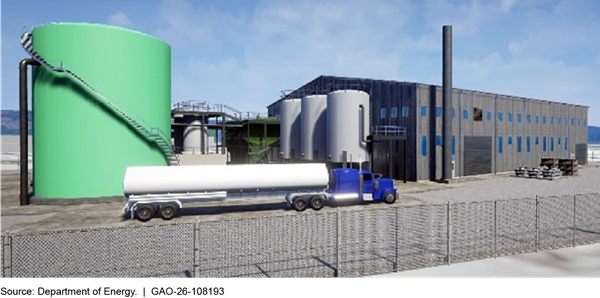
GAO has previously found that the Department of Energy’s (DOE) Office of Environmental Management (EM) has not followed its standards for defining mission need for some large projects. A mission need statement documents DOE’s identification of a mission-related need and, according to DOE standards, should not identify a particular solution. This ensures that DOE does not limit potential solutions at the project initiation stage. However, the majority of mission need statements that GAO reviewed for EM’s large projects identify a particular solution. For example, the mission need statement for the Outfall 200 Mercury Treatment Facility project at the Oak Ridge Reservation proposed “a new mercury treatment facility.” EM officials said they did not see an issue with identifying a solution at the mission need stage because other solutions are explored in later planning stages. However, GAO found instances where EM did not consider or pursue potential cost-saving options as project planning continued because a preferred solution was identified in the mission need stage.
Rendering of the Outfall 200 Mercury Treatment Facility, a Large Capital Asset Project at the Oak Ridge Reservation
Legal and regulatory constraints are one factor that has limited what solutions EM has considered for some large projects. For example, experts in GAO’s discussion groups said that EM did not pursue a cheaper yet technically sound treatment for one type of radioactive waste at the Idaho National Laboratory due to an existing agreement with regulators. Instead, EM spent taxpayer money over many years pursuing a solution it ultimately deemed suboptimal and suspended.
EM follows internal review steps before approving mission need for large projects, but the reviews do not include independent experts. Including independent members with relevant expertise in the agency’s oversight structure can provide an impartial evaluation of its ability to achieve objectives. By incorporating independent experts outside of DOE who are not involved in EM’s legal and regulatory agreements into its mission need review for future large projects (before agreeing to a solution with regulators), EM could better ensure it is considering all viable solutions, including less costly ones.
Why GAO Did This Study
EM manages cleanup of hazardous and radioactive waste, in part through facility construction, building demolition, and other capital asset projects. The total costs for EM’s most expensive capital asset projects have grown by more than $2 billion since 2022 and at least five EM sites anticipate needing future projects that will likely cost over $100 million each. DOE acquisition management has been on GAO’s High Risk List for decades because of its vulnerability to fraud, waste, and abuse.
Senate Report 118-188 includes a provision for GAO to evaluate EM planning for large capital asset projects and factors considered in its planning. GAO examined (1) the extent to which EM has defined the mission need for its large projects in accordance with DOE’s project management standards and (2) the factors that influenced the range of solutions EM considered for selected large capital asset projects.
GAO analyzed 21 EM mission need statements for large projects—estimated to cost at least $100 million—to determine if they identified a particular solution. GAO analyzed qualitative content from three expert discussion groups covering EM’s planning for selected large projects. Twelve experts from academia, the national laboratories, and the private sector participated in one or more discussion groups. GAO interviewed EM headquarters officials and field staff at EM sites with large projects.
What GAO Recommends
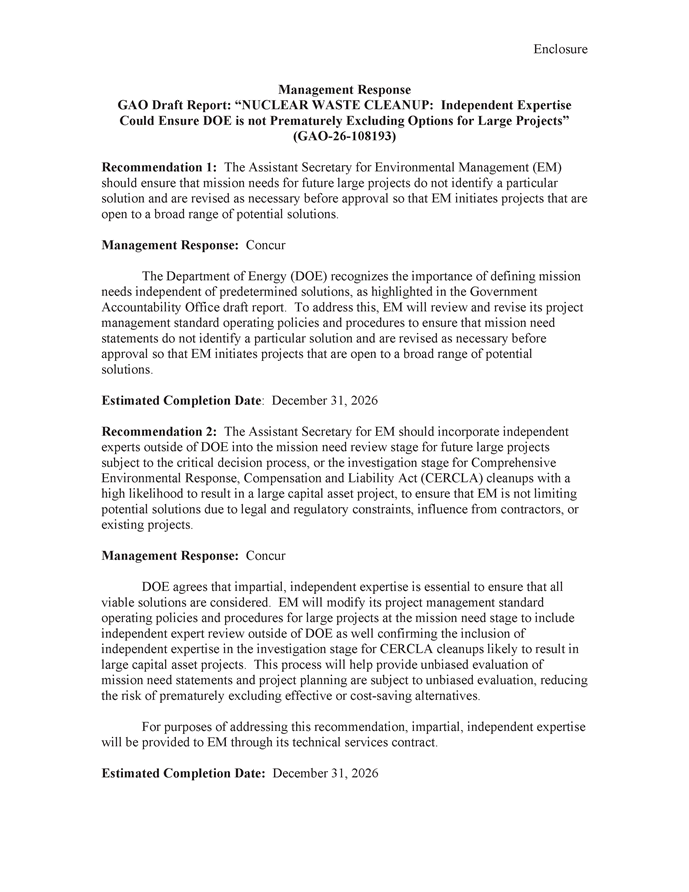
GAO recommends that for future large projects DOE (1) ensures that the mission need is revised if it includes a predetermined solution and (2) includes independent experts in the mission need review before agreeing to a solution with regulators. DOE concurred with both recommendations.
|
Abbreviations |
|
|
|
|
|
AOA |
analysis of alternatives |
|
CD |
critical decision |
|
CERCLA |
Comprehensive Environmental Response, Compensation, and Liability Act of 1980, as amended |
|
DOE |
Department of Energy |
|
EM |
Office of Environmental Management |
|
EPA |
Environmental Protection Agency |
|
RCRA |
Resource Conservation and Recovery Act of 1976, as amended |
|
ROD |
record of decision |
|
WTP |
Waste Treatment Plant |
This is a work of the U.S. government and is not subject to copyright protection in the United States. The published product may be reproduced and distributed in its entirety without further permission from GAO. However, because this work may contain copyrighted images or other material, permission from the copyright holder may be necessary if you wish to reproduce this material separately.
July 2, 2026
Congressional Committees,
The Department of Energy (DOE) estimates that it will cost more than half a trillion dollars as of fiscal year 2025 to finish cleaning up sites across the country that have been contaminated from decades of nuclear weapons production and energy research. DOE’s Office of Environmental Management (EM) is responsible for carrying out this cleanup mission, in part through various capital asset projects like constructing waste treatment systems or demolishing contaminated buildings. EM had 33 active capital asset projects across six sites with a collective estimated cost of about $44 billion as of March 2026, and at least five EM sites anticipate needing future large capital asset projects, or projects that will likely cost $100 million or more each.
DOE acquisition management—including large capital asset projects—has been on GAO’s High-Risk List for over three decades, due to its vulnerability to fraud, waste, and abuse.[1] The initiation of a capital asset project begins with the approval of mission need, documented through a mission need statement. The mission need statement identifies a capability gap—the disparity between DOE’s current capabilities and those required to achieve its goals. According to DOE project management standards and guidance, the mission need statement and capability gap description should not propose a particular solution. This standard allows DOE to explore a variety of potential solutions and not limit solutions at the project initiation stage. We have found in the past that EM did not follow these standards for some capital asset projects experiencing cost and schedule growth.[2] In March 2026, we found that the combined costs for EM’s eight most expensive capital asset projects grew by more than $2 billion since 2022.[3]
Senate Report 118-188 includes a provision for GAO to evaluate EM’s planning for large capital asset projects, and the parameters and factors considered in these planning efforts.[4] This report examines (1) the extent to which EM defined the mission need for its large capital asset projects in accordance with DOE’s project management standards and (2) factors that influenced the range of potential solutions EM considered for selected large capital asset projects.
To address our objectives, we reviewed DOE project management standards, including DOE Order 413.3B, Program and Project Management for the Acquisition of Capital Assets, hereafter referred to as the order, and 23 guidance documents that provide recommendations for meeting project management requirements.[5] We also sent a questionnaire to all 15 EM sites to collect information on (1) site-specific project management standards, (2) early planning activities that were completed for active projects prior to mission need approval, (3) entities involved in planning activities and their roles, and (4) any future large projects anticipated at the sites. We received questionnaire responses from all 15 sites and reviewed, compiled, and summarized them based on commonalities. We also interviewed officials at EM headquarters and field staff at the seven EM sites with active large projects at the time of our analysis to better understand planning activities leading up to mission need approval.
To assess the extent to which EM defined the mission need for its large capital asset projects in accordance with DOE’s project management standards, we reviewed 21 mission need statements covering 24 large projects that met our criteria for inclusion in our analysis.[6] In addition to the order stating that the mission need should be independent of a particular solution, DOE’s Mission Need Statement Guide further states that the mission need statement is not a proposed solution to a capability gap.[7] A capability gap is the disparity between DOE’s current capabilities and those required to achieve its goals, and should not be described in terms of “construction of a physical system, decontamination and decommissioning, environmental restoration, procurement of a piece of equipment, construction of a facility, or other specific material end item.” Two analysts reviewed each mission need statement to identify whether a particular solution was proposed in the capability gap description or elsewhere in the statement.[8] We interviewed EM officials to determine why some mission need statements did not fully meet the standards.
To determine what factors influenced the range of potential solutions EM considered for selected large capital asset projects, we selected six projects to include a broad representation of EM’s large projects. Specifically, we selected projects representing different (1) EM sites, (2) estimated project cost, (3) project status (i.e., active, completed, on hold), (4) types of cleanup (i.e., at least one decontamination and decommissioning project), and (5) whether the project adhered to DOE project management standards according to our mission need statement analysis. For each selected project, we reviewed available project planning documents, relevant legal and regulatory documents, and questionnaire responses where applicable. Findings from the six selected sites are nongeneralizable.
We also held three expert discussion groups focused on the selected projects that covered early planning decisions and factors that may have influenced the range of potential solutions EM considered. We analyzed the content from these discussions to identify common themes. Experts raised examples of other large EM projects during the course of these discussions. We included these additional examples in our report and corroborated experts’ statements about the projects with documentation where possible. A more detailed description of our scope and methodology is included in appendix I.
We conducted this performance audit from March 2025 to July 2026 in accordance with generally accepted government auditing standards. Those standards require that we plan and perform the audit to obtain sufficient, appropriate evidence to provide a reasonable basis for our findings and conclusions based on our audit objectives. We believe that the evidence obtained provides a reasonable basis for our findings and conclusions based on our audit objectives.
Background
EM Cleanup Sites
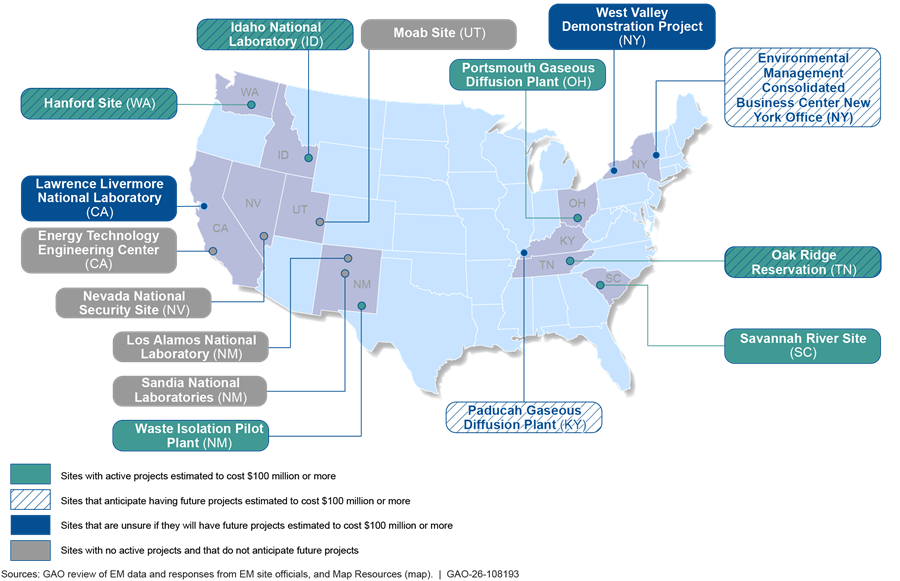
Established in 1989, EM is responsible for the cleanup of legacy waste—hazardous and radioactive materials generated by the development and production of nuclear weapons and government-sponsored nuclear energy research dating back to World War II and the Cold War.[9] EM has completed cleanup at 92 of the 107 sites for which it was responsible; 15 sites remain. As of March 2026, six EM sites have active large capital asset projects—estimated to cost at least $100 million—and five sites anticipating needing large projects in the future (see fig. 1).
Figure 1: Department of Energy (DOE) Office of Environmental Management (EM) Cleanup Sites with Active and Future Large Projects as of March 2026
Cleanup work at EM sites is managed based on project activities and operations activities. Project activities include construction and demolition projects. Construction projects within EM are funded by congressional budget line items and managed as capital asset projects, typically to construct waste processing, treatment, storage, or disposal facilities, but may include other activities.[10] Demolition projects are structure removal activities that are managed as discrete, defined capital asset projects. Operations activities include mission and mission support activities.
DOE Project Management Standards
EM is required to manage capital asset projects with an estimated total cost greater than $50 million in accordance with DOE Order 413.3B.[11] The goal of this order is to deliver projects within their original cost and schedule baselines and that meet mission performance and other requirements. Specifically, it establishes five critical decision (CD) processes over the life of a project, each of which is marked by a major approval milestone—or critical decision point—at the end of the process (see fig. 2).
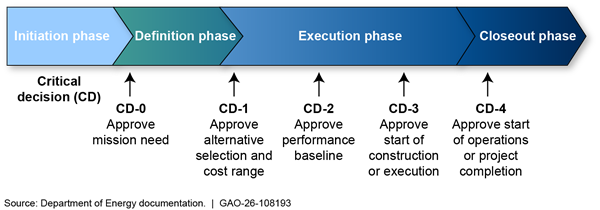
Note: The Department of Energy’s (DOE’s) project management phases apply to all capital asset projects with a total project cost greater than $50 million.
The initiation phase of a project begins with the identification of a mission-related need, which is approved at CD-0. The order directs that the mission need statement should be independent of a particular solution and should not be defined by “equipment, facility, technological solution, or physical end item.” This is to allow EM the flexibility to explore a variety of solutions and not limit potential solutions. In addition to developing the mission need statement prior to CD-0, the order requires that preconceptual planning activities be performed that focus on the program’s strategic goals and objectives, development of capability gaps, and high-level project parameters. A rough-order magnitude cost range is also included in the mission need statement to determine who will have authority as the project management executive over the project, but it does not represent the official project cost estimate, which is established at CD-2.
DOE Order 413.3B allows for the tailoring of project management requirements for certain types of projects and may involve the consolidation of CDs. For example, EM demolition projects differ from traditional capital asset projects in that they do not result in a tangible asset. The order allows the mission need and alternative selection process for demolition projects to be directed by the regulatory framework driving the cleanup. As such, CD-0 and CD-1 requirements for demolition projects are satisfied by conducting the regulatory processes associated with the project. The order also allows for larger projects to be divided into smaller subprojects—a practice called phasing—and for those subprojects to use a combined mission need statement to satisfy CD-0 and CD-1 approvals.
Approval authority for CD-0 differs based on the estimated project cost. A rough-order magnitude cost estimate is to be included in the mission need statement. For projects estimated to cost $100 million or more, the Program Secretarial Officer approves the mission need statement after DOE’s Office of Project Management reviews it and makes a recommendation regarding its approval. For Major System Projects—estimated to cost $750 million or more—DOE’s Deputy Secretary serves as the chief executive for project management and is the approval authority for all critical decisions, including CD-0.
DOE provides further guidance for developing mission need statements in its Mission Need Statement Guide, which was issued in 2008.[12] While following the guidance is not required to achieve CD-0 approval, it is recommended for writing a clear mission need statement to support a potential capital asset project. Similar to DOE Order 413.3B, the guidance states that the description of a capability gap—the disparity between DOE’s current capabilities and those required to achieve its goals—should not be described in terms of “construction of a physical system, decontamination and decommissioning, environmental restoration, procurement of a piece of equipment, construction of a facility, or other specific material end item.” Rather, it should be addressed in terms of an operational or functional performance capability, technological opportunity, or service.
DOE has issued several other guides to accompany Order 413.3B. Table 1 summarizes activities that may occur prior to CD-0 approval according to the order and its related guides.
Table 1: Summary of Activities in DOE’s Project Management Directives That May Occur Prior to Critical Decision (CD) 0, Approval of Mission Need
|
Department of Energy (DOE) project management directive |
Steps taken prior to CD-0, Approval of Mission Need |
|
Order |
|
|
DOE Order 413.3 B, Program and Project Management for the Acquisition of Capital Assets |
Projects greater than or equal to $100 million: · Perform preconceptual planning activities focused on the Program Offices’ strategic goals and objectives, safety planning, design, development of capability gaps, high-level project parameters, a rough-order magnitude cost range, and schedule estimates. · Approve a mission need statement document. Additional steps for Major System Projects (greater than or equal to $750 million): · Perform a Mission Validation Independent Review. · Conduct an Independent Cost Review of the rough-order magnitude cost estimate. · Project Management Risk Committee reviews and analyzes the CD-0 package and makes recommendations to the Energy Systems Acquisition Advisory Board and others as applicable before approval of CD-0. |
|
Guides |
|
|
DOE G 413.3-17, Mission Need Statement Guide |
· The guidance anticipates that pre-conceptual level engineering and technical analyses would be developed to explore the scope of the capability gap the mission need statement is intending to address, identify potential hazards and their risk implications, and identify rough-order of magnitude cost estimates. |
|
DOE G 413.3-2, Quality Assurance Guide for Project Management |
· Perform pre-conceptual planning activities to determine whether adequate resources have been identified to describe management processes, including planning, scheduling, and providing funding for the work. |
|
DOE G 413.3-4A, Technology Readiness Assessment Guide |
· A Technology Requirements Review may be performed to assess the adequacy of requirements definition and characterization information and determine any additional work necessary, including assessing technology unknowns that need to be further evaluated. |
|
DOE G 413.3-7A, Risk Management Guide |
· Project risks should be identified in the initial project planning phase prior to CD-0. |
|
DOE G 413.3-3A, Safeguards and Security for Program and Project Management |
· Evaluate probable security concerns and vulnerabilities. · Develop functional design requirements to meet safeguard and security, and cybersecurity requirements. · Identify major safeguards and security assets associated with the project. · Assess application of Graded Security Protection Policy. · Designate safeguards and security point of contact and inform this individual of project parameters such as classification of a new facility or retrofit, estimate of population for the facility, potential locations for the facility, etc. · Establish relationships with other team members or disciplines involved to ensure programmatic integration. · Develop preliminary schedule for major security-related milestones and associated resources. |
Source: GAO analysis of DOE documents. | GAO‑26‑108193
Regulatory Framework Governing EM Cleanup
Federal and state laws, agreements, and court orders require DOE to clean up contaminated sites under its jurisdiction. Key federal laws that govern EM’s site cleanup include the Comprehensive Environmental Response, Compensation, and Liability Act of 1980, as amended (CERCLA), and the Resource Conservation and Recovery Act of 1976, as amended (RCRA).[13]
CERCLA authorizes federal agencies to respond to releases or threatened releases of hazardous substances, pollutants, and contaminants that may endanger public health or the environment. At CERCLA sites on the National Priorities List, DOE must enter into an interagency agreement with the Environmental Protection Agency (EPA) and state regulators, known as a federal facility agreement, that governs the investigation and cleanup of any such releases at these facilities.[14] RCRA regulations establish detailed and often waste-specific requirements for the treatment, storage, or disposal of hazardous wastes. Under RCRA, EPA may authorize states to administer their own hazardous waste regulatory program in lieu of the federal program, so long as the state program meets certain requirements and is equivalent to or at least as stringent as the federal program.[15]
The CERCLA and RCRA processes occur over three stages—investigation, decision-making, and cleanup. EM officials said they may begin to explore the scope of the capability gap during the investigation stage, where activities such as the preliminary site/facility assessment, remedial/facility investigation, and feasibility/corrective measures study are carried out to determine the extent of the contamination, and to develop evaluations of potential alternatives to address the capability gap.
A Majority of Mission Need Statements for Large Projects Do Not Fully Align with DOE Project Management Standards
A majority of EM’s mission need statements for large capital asset projects did not meet the DOE requirement that statements avoid proposing a particular solution to address the capability gap. DOE site officials provided various explanations as to why some mission need statements propose a solution, including the preferred solution being identified in regulatory documents from which site officials did not think they could deviate. Nevertheless, when mission needs are defined in solution-specific terms, potential bias enters the planning process, which could exclude consideration of viable alternatives that allow for greater project effectiveness and, in some cases, potential cost savings.
The Majority of EM’s Mission Need Statements for Large Projects Identify a Particular Solution Too Early
The majority of EM’s approved mission need statements for large capital asset projects that we reviewed identify a particular solution, contrary to DOE Order 413.3B requirements. According to our analysis, 11 out of 21 EM approved mission need statements for large capital asset projects in our review identified a particular solution to address the capability gap, which is the disparity between DOE’s current capabilities and those required to achieve its goals.[16] The order directs that the mission need statement should be independent of a particular solution and should not be defined by “equipment, facility, technological solution, or physical end-item.”
DOE’s Mission Need Statement Guide further states that the mission need statement is not a proposed solution to a capability gap, and that capability gaps should not be described in terms of “construction of a physical system, decontamination and decommissioning, environmental restoration, procurement of a piece of equipment, construction of a facility, or other specific material end item.”[17] Not identifying a specific end item or solution in the mission need statement allows the Program Office the flexibility to explore a variety of approaches and avoids limiting potential alternatives, according to the order.
Some examples of EM-approved mission need statements that identify a particular solution at CD-0 include projects such as:
· Low-Activity Waste Pretreatment System project at the Hanford site. The mission need statement for this project states that to address the capability gap, “a Low-Activity Waste Pretreatment System must be built to enable vitrification of the low-activity waste stream.” The document proposes the construction of a physical system, contrary to DOE standards for mission need statements.
· Idaho Spent Fuel Facility project at the Idaho National Laboratory site. The mission need statement describes addressing the capability gap by establishing “the Idaho Spent Fuel Facility project to prepare fuel for transfer out of aging facilities in Idaho and disposal in the geologic repository.” The order expressly states that the mission need should not be defined in terms of a “facility, technological solution, or physical end-item.”[18]
· On-Site Waste Disposal Facility Cell 7–10 Liners and Cell 1–6 Covers Construction project at the Portsmouth site. For this project, the mission need statement states that “the On-site Waste Disposal Facility is necessary to provide a cost-effective, reliable waste disposal method and location for the disposal impacted material.”[19] Construction of the disposal facility is promoted to address the capability gap, contrary to DOE mission need statement standards and guidance.
· Outfall 200 Mercury Treatment Facility project at the Oak Ridge site. The mission need statement proposes “a new mercury treatment facility … to accommodate the increased volume and treatment requirements to effectively remove mercury from the Y-12 West End Mercury Area.” As previously noted, mission need statements should not propose a solution such as a “facility,” according to the order.
EM Officials Gave Various Reasons for Submitting and Approving Mission Need Statements That Did Not Fully Meet DOE Standards
EM site officials provided various explanations for submitting mission need statements that identified a particular solution. We interviewed EM officials from seven sites with active large projects to gain an understanding of why the mission need statements for the majority of EM approved large capital asset projects did not follow DOE project management standards and guidance.
Site officials from Hanford described writing mission need statements as an art, rather than a science, and stated that they should have used better language when describing the capability gap for the Low-Activity Waste Pretreatment System project. Carlsbad field office officials stated that later steps in the CD process, including the analysis of alternatives (AOA) step, provide opportunities to further develop and mature the potential solutions for projects. As such, they did not see an issue identifying a solution early in the project planning process. However, as discussed below, we found that in some instances, the range of alternatives explored for a large capital asset project can be influenced by a mission need statement that describes a particular solution.
EM headquarters officials we spoke with provided various explanations for approving mission need statements for large capital asset projects that identified a particular solution.
Solution determined in a record of decision. Officials stated that in some cases, the cleanup solution selected for a project was influenced by the regulatory framework and record of decision (ROD) in place prior to the project being initiated. For example, EM officials told us that cleanup at the Portsmouth site is carried out under CERCLA and that on-site disposal was selected as part of the preferred cleanup solution in a site-wide waste disposition ROD. Since on-site disposal was included as part of the site cleanup remedy in the ROD, officials said they were obligated to implement the chosen remedy, which was reflected in the mission need for subsequent site cleanup projects such as the On-Site Waste Disposal Facility and its related projects.[20]
Solution determined in a preliminary AOA. EM headquarters officials also told us that a preliminary AOA was carried out for the Low-Activity Waste Pretreatment System project at Hanford prior to initiating the formal Order 413.3B processes. According to EM officials, the results of the preliminary AOA influenced the project team to select the proposed solution to describe the capability gap in the project’s mission need statement. The mission need statement for the project states that the capability to treat the waste prior to feeding it to the low-activity waste facility will be accomplished by a newly constructed facility known as the Low-Activity Waste Pretreatment System. Additionally, the formal AOA that was conducted after the mission need statement was approved proposes construction of the Low-Activity Waste Pretreatment facility as the solution for treating the waste. The AOA did not consider alternatives to building a new facility; rather, it analyzed technical alternatives to treating the waste, and construction of the facility proposed in the mission need statement was accepted. The Low-Activity Waste Pretreatment System project was subsequently found to be flawed and more expensive than estimated.
Solution determined due to time constraints. The mission need statement for the Safety Significant Confinement Ventilation System project at the Carlsbad Waste Isolation Pilot Plant is another example of a mission need statement that describes a particular solution that subsequently influenced the range of alternatives explored for the project. The mission need statement promotes the construction of a new ventilation system, stating “the existing Underground Ventilation System is inadequate to support operations of both ‘clean’ and contaminated underground areas, and a new Underground Ventilation System is required to support full disposal operations.” In the subsequent AOA for the project, the analysis team noted that the mission need statement called for only one potential solution, and if they had followed the document verbatim, they would have not been following GAO’s best practices for the AOA process.[21]
Even though the AOA team expanded the range of alternatives to examine other solutions, the solution proposed in the mission need statement was selected as the final solution for the project, despite another alternative that would have utilized the site’s existing infrastructure receiving a higher rating in the AOA. Officials stated that at the time the new ventilation project was being planned, the site was under pressure to restart waste disposal activities after a radiological accident in 2014 shut down the plant. According to Carlsbad site officials, this situation led decision-makers to speed through the usual project review process in order to obtain funding and make progress on restoring the site’s functionality. Carlsbad officials noted that projects typically benefit from having more time to consider alternatives.
Solution determined due to existing design. EM headquarters officials said the mission need statements for some of the Saltstone Disposal Unit projects at the Savannah River Site identified a particular solution because they were essentially replicas of an earlier design that had been vetted and approved. Specifically, before approving the mission need for new units, EM evaluated previous AOA documentation and lessons learned to determine that the earlier design was still the most viable and cost-effective option. Revisiting potential solutions each time new units were needed would have been an inefficient use of resources, according to officials. EM officials shared that in hindsight they should have developed an all-encompassing mission need statement for the original project, and then—using the flexibilities allowed under Order 413.3B—created the subsequent Saltstone Disposal Units as subprojects.
EM headquarters officials told us that they are aware of the mission need statement requirements in the order and are paying greater attention to ensuring mission need statements do not identify a particular solution. Nonetheless, the projects in our analysis highlight how defining the mission need as a particular solution prior to project approval can limit the range of alternatives explored and ultimately influence the final selection of a solution. GAO’s best practices for the AOA process state “allowing mission need to be defined in solution-specific terms creates a potential bias which could prevent the inclusion of viable alternatives and invalidate the analysis.”[22] By approving mission need statements for large projects that have a prematurely identified solution, EM may have limited its ability to explore a variety of alternatives and excluded solutions that allow for greater cost savings.
Several Factors Limited the Range of Solutions EM Has Considered for Some Large Projects and This Planning Stage Lacks Independent Review
EM considered a limited range of solutions for some large projects due to several factors including legal and regulatory constraints EM considered non-negotiable during project planning. However, in some cases, EM has negotiated flexibilities that are likely to result in significant savings. Additionally, the range of solutions EM has considered for some large projects has been influenced by contractors and existing projects. The project initiation stage is not subject to independent review, potentially increasing the risk of EM prematurely eliminating more effective or cost-saving solutions.
Legal and Regulatory Constraints, Contractor Involvement, and Existing Projects Limited the Range of Solutions EM Considered for Some Large Projects
Legal and Regulatory Constraints
Experts that participated in GAO’s discussion groups and officials at EM sites with large projects said that legal and regulatory constraints have limited the range of potential solutions that EM has considered when planning for some large projects.[23]
Calcine Disposition Project. Experts said that the optimal solution for the Calcine Disposition Project is direct disposal, but EM did not consider it to be a feasible solution in the early planning stages due to a legally binding agreement with the state of Idaho to have the waste ready for shipment by 2035. The calcine waste at the Idaho site is the result of liquid waste that has undergone a thermal process that converted the liquid into a solid, granular substance. The preferred solution that EM ultimately selected in 2009 to treat the waste—Hot Isostatic Pressing—was later deemed to be technologically immature, requiring EM to go back and analyze other potential solutions. In a 2016 AOA, which was later updated in 2021, direct disposal was identified as the most cost-effective and technologically mature solution available. However, the AOAs found that direct disposal had a high degree of regulatory uncertainty, and it was not clear whether it would be accepted by stakeholders, such as regulators and the public.
|
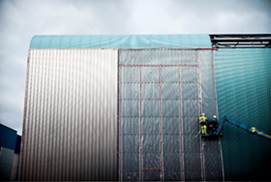
Safe Interim Storage as a Waste Management Strategy in the United Kingdom The United Kingdom’s nuclear waste cleanup organization published an overarching strategy document in March 2026 that highlights interim storage as a focus of its radioactive waste management strategy. The UK plans to safely store waste if suitable treatment and disposal routes are not yet available to allow time for radioactive decay and to develop alternative solutions. The UK’s storage strategy includes investigating the benefits and boundaries of storing waste for a specific purpose, rather than prompt treatment and packaging. Including an appropriate time for radioactive decay may change their management or treatment approach, according to the strategy document. The UK completed the Interim Storage Facility, which stores intermediate-level wastes, at Sellafield in 2018 (see photo). The building itself does not have safety mechanisms built in because the safety functions are performed by self-shielded storage boxes that hold the waste.
Source: Nuclear Decommissioning Authority (photo). | |
Experts discussed more generally how EM’s legal and regulatory constraints, coupled with the lack of a permanent disposal pathway for some waste types, may limit the potential solutions EM considers for certain projects. EM currently manages the calcine waste at Idaho as if it is high-level radioactive waste.[24] High-level radioactive waste has no existing disposal option until a deep geologic repository is established. Experts said that trying to meet legal agreements to remove high-level radioactive waste from states without knowing its ultimate disposal site has led EM to pursue treatment for waste that could be stored until a final disposal site is determined. In particular, experts said that the calcine waste is currently stable and could be safely stored on-site until there is a final disposal site identified. However, certain land disposal restrictions establish vitrification as the best demonstrated available technology for high-level radioactive waste. According to cost estimates in EM’s 2021 AOA, treating calcine waste using vitrification would cost at least $3 billion, compared to about $500 million for direct disposal.
Waste Treatment Plant. Experts discussed how EM’s decision to vitrify tank waste through the Waste Treatment Plant (WTP) at Hanford was also driven by regulatory constraints. Specifically, experts noted that the Savannah River Site is grouting tank waste similar to the waste that Hanford plans to vitrify—a discrepancy that we reported on in 2017.[25] At that time, we found that DOE chose different approaches to treat the low-activity portion of tank waste at the two sites, primarily in response to agreements between DOE and the states where the sites are located. At the Savannah River Site, DOE and South Carolina agreed to use an existing facility to grout the site’s low-activity waste, a method that DOE determined could treat the waste faster and therefore address risks posed by prolonged storage of liquid waste in tanks sooner. In contrast, EM manages all of Hanford’s tank waste as if it is high-level radioactive waste. As such, DOE is required by an agreement with
|
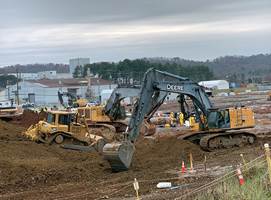
Legal and Regulatory Constraints Influencing Other Types of Cleanup DOE faces legal and regulatory constraints in carrying out other cleanup activities, such as soil remediation (see photo). In 2025, GAO reported that DOE previously consented to clean up soil at one site in California so that no contaminants remain in the soil above local background levels. Since this agreement, DOE has not been able to find replacement soil clean enough to meet the state-determined cleanup standards and has found that the cleanup levels for many contaminants set by the state are too low for laboratories to measure accurately, leading to false positives and potentially unnecessary cleanup of the soil. DOE estimated that cleaning up to the agreed-upon levels would cost 17 times more than a risk-based cleanup option.
Source: GAO‑25‑107565 and U.S. Department of Energy (photo). | GAO‑26‑108193 |
Washington State and EPA to treat portions of the site’s low-activity tank waste with vitrification. The best available information at the time of our 2017 report indicated that DOE’s estimated costs to grout waste at the Savannah River Site were substantially lower than its estimated costs to vitrify waste at Hanford. Likewise, DOE’s schedule for completing waste treatment at the Savannah River Site is decades shorter than its schedule at Hanford. We recommended at that time that DOE develop information on the effectiveness of alternative methods for treating the waste considering the risks of the waste, before selecting a solution.
In 2024, GAO convened a different panel of experts with the National Academies of Sciences, Engineering, and Medicine to discuss alternatives to treating Hanford’s tank waste with the highest radioactivity, or high-level waste.[26] According to experts in that meeting, portions of Hanford’s high-level waste could be classified as low-level radioactive waste based on the physical characteristics and level of risk posed by the waste. If the waste was able to be classified as something other than high-level waste, experts said it would not require vitrification and would have existing disposal options.
Safety Significant Confinement Ventilation System. Site officials and experts in our discussion groups said that EM faced time pressures related to regulatory requirements when planning for the new ventilation system at the Waste Isolation Pilot Plant. As discussed above, a radiological release incident in 2014 caused the plant to cease operations until it could improve ventilation. Sites had to temporarily store their waste on-site or elsewhere at significant cost and at risk of violating regulations and federal facility agreements, according to experts. Consequently, site officials said that the urgency of the situation led the decision-makers to proceed with a known solution rather than consider alternative technologies that would have taken more time to investigate.
Contractor Involvement
Contractor involvement has influenced and may continue to influence what alternatives EM considers for large projects, according to examples raised by GAO’s prior work, EM documents, and experts that participated in our discussion groups. Responses to our questionnaire about early project planning indicated that contractors are involved in early project planning activities at most EM sites. Ten of the 15 EM sites that completed our questionnaire said that contractors, including management and operating contractors, prime contractors, and technical support contractors are involved in the planning activities for large projects prior to mission need approval. Officials from those sites described a range of activities that contractors are typically involved in, such as being a part of integrated project teams, participating in planning and scoping activities, identifying capability gaps, developing and reviewing the documents and cost estimates to support the mission need approval process, and providing general project management, contracting, and administrative support.
Low-Activity Waste Pretreatment System and Tank Waste Characterization and Staging Project. Two Hanford projects—the Low-Activity Waste Pretreatment System and the Tank Waste Characterization and Staging project—were initiated by EM to address certain technical and management challenges that led to the suspension of work at Hanford’s Pretreatment Facility. The Low-Activity Waste Pretreatment System was intended to bypass the need for the Pretreatment Facility and feed low-activity waste directly to the WTP. The Tank Waste Characterization and Staging project was intended to serve as an intermediary between the tanks containing the waste and the WTP by preparing the waste so that it could be accepted by the WTP.
We reported in 2015 that DOE had previously considered projects with similar capabilities in 1995, 2009, and 2012.[27] The Hanford tank management contractor and DOE’s Office of River Protection had prepared plans for the design of such facilities—leading the department to formally identify the projects in its 2013 Hanford Tank Waste Retrieval, Treatment, and Disposition Framework prior to approval of mission need for the projects.[28] As a result, EM did not consider other potentially viable solutions. Potential solutions identified by experts in our discussion groups included using the existing double shell tank system to achieve some of the capabilities or not feeding some of the tank waste through the WTP at all. In 2017, a peer review of the Low-Activity Waste Pretreatment System project concluded that it would exceed its cost and schedule estimates by at least 50 percent, leading DOE to order the project contractor to develop and recommend an alternative approach to the project. The Tank Waste Characterization and Staging project was put on hold after CD-0 approval.
Integrated Waste Treatment Unit. Idaho’s Integrated Waste Treatment Unit uses steam reforming technology to treat sodium-bearing waste—another type of waste that EM has historically managed as if it is high-level radioactive waste. After EM published its draft Environmental Impact Statement for high-level waste disposition that did not include steam reforming as an option in January 2000, the company that developed the technology proposed it to EM. A technical review team was asked to evaluate the technology and recommended in March 2001 that DOE not pursue further steam reforming initiatives, noting that steam reforming had significant technical uncertainties and there was no strong technical incentive to implement the technology.
After issuing the final Environmental Impact Statement in 2002 that added steam reforming as a potential option, EM held workshops and briefings where they told the public and stakeholders that they would select the technology for treating sodium-bearing waste. EM subsequently decided to change its strategy and require a contractor to propose a treatment technology in its bid for the Idaho cleanup contract. In 2004, EM announced the selection of a contractor that identified steam reforming as the technology it would use to treat the sodium-bearing waste. Experts in our discussion groups said that the maturity of the technology was misrepresented by the contractor during this time. The Integrated Waste Treatment Unit faced over a 12-year delay and almost $1 billion cost overrun by the time it started operating in 2023, in part due to technical issues related to the technology.[29]
Salt Waste Processing Facility. The Savannah River Site’s Salt Waste Processing Facility, which began operating in 2020, processes and separates radioactive tank waste for further treatment at the site. Prior to building the facility, EM pursued a technology called in-tank precipitation to separate the tank waste but ultimately found it could not meet safety requirements and suspended it in 1998. Experts who were involved in the technology analysis to replace in-tank precipitation discussed how the role of the contractor changed after suspending the technology. One expert said that EM prolonged its pursuit of in-tank precipitation because the site’s contractor was convinced that the technology could be successful with the right engineering or chemistry solution. After in-tank precipitation was suspended, experts discussed how EM purposefully did not want the contractor to have a lead role in the down-selection process for replacement technologies given the failure of in-tank precipitation. In 2000, a National Research Council committee issued an independent review of the technologies that would be used in the Salt Waste Processing Facility project, which experts said added further validity to EM’s final technology decision.
Calcine Disposition Project. EM began implementing an end-state contracting model for some cleanup work in December 2019. Under this model, EM awards a master contract and then issues task orders for those contractors to perform specific tasks. EM’s end-state contract at the Idaho Site includes a task order for activities to support the retrieval, processing, and disposition of calcine waste. Specifically, milestones to be achieved by the contractor include 1) completion of CD-1, indicating that they will be involved in the alternatives identification and analysis process; and 2) constructing a calcine treatment and packaging facility, indicating that the contractor will be involved in designing a facility that EM is pursuing to address the calcine waste before it has formally identified a solution. The National Academies found that task orders can limit incentives for innovation because the scope of work is established after the initial contract award.[30] One expert that participated in our discussion groups also noted that if project planning is part of a task order, contractors have an incentive to explore solutions that have profit potential.
Existing Projects
Experts and EM officials also identified examples of large projects where the mission need was defined as the need to address technical problems with an existing project, which may have limited EM’s ability to approach the projects without predetermined assumptions or solutions in mind.
Waste Treatment Plant. Experts said that EM has a history of pursuing one-size-fits-all approaches with projects like Hanford’s WTP, which is intended to treat both high-activity and low-activity tank waste.[31] However, when the WTP began to face technical and cost challenges, EM initiated other projects to address those challenges. Hanford has pursued several large projects, including the Tank Waste Characterization and Staging project and the Low-Activity Waste Pretreatment System—now consisting of two subprojects—in an effort to bypass the original WTP Pretreatment Facility, which EM had already invested about $3 billion in before stopping work in 2012.[32]
Few planning activities were completed prior to approving some of the projects EM initiated to address problems with the WTP. We sent a questionnaire to EM sites to gather information about early planning activities for large projects. Respondents from the Hanford site said that no new planning activities were conducted for the Advanced Modular Pretreatment System project because it was a related subproject of the Low-Activity Waste Pretreatment System, which went through CD-0 planning activities. EM officials said that EM can use this subproject structure to manage projects that fulfill a portion of the same capability gap and, when combined, fulfill the entire capability gap. However, we previously found that the latter project may not have considered all viable alternatives when it was being planned.[33]
Integrated Waste Treatment Unit. The Integrated Waste Treatment Unit at the Idaho Site was previously envisioned to treat both the sodium-bearing waste and the calcine waste. We reported in 2019 that EM initially planned to retrofit the facility after it was finished treating the sodium-bearing waste to treat the calcine waste because officials said there was reluctance within DOE to build another “first-of-a-kind” treatment facility to treat calcine.[34] EM abandoned this approach after it became clear that it faced logistical and physical design challenges. As previously stated, EM is still investigating strategies for calcine disposition.
Environmental Management Disposal Facility. One expert who was at Oak Ridge at the time when the disposal facility was being planned discussed how the need for the project was a result of an increasing scope of demolition and assumptions about the capacity of the existing on-site disposal facility. The existing on-site disposal facility at Oak Ridge was originally thought to have sufficient capacity to hold waste from the remaining demolition activities at the site. However, as the scope of demolition activities grew, it became clear the existing disposal facility would not be sufficient, so EM began planning for a new on-site disposal facility, according to the expert. Oak Ridge officials and documents indicated that they considered off-site disposal as an option when planning, but that it would be more expensive and pose greater risks associated with transportation.
Some Perceived Legal and Regulatory Constraints on Selected Projects May Be Flexible
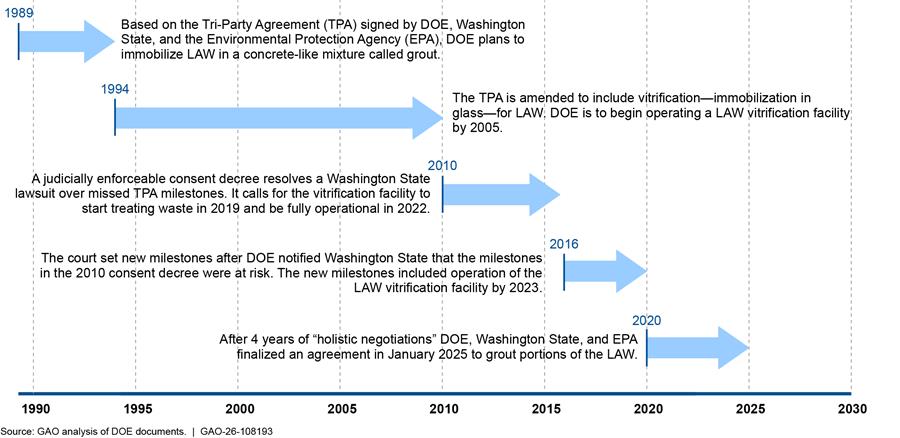
EM has achieved or is seeking flexibilities for certain legal and regulatory constraints on some projects that could allow them to take more cost-effective approaches to cleanup. EM has spent years and billions of dollars to meet its agreement to vitrify low-activity waste through the WTP, and ultimately that agreement has proven to be negotiable. For decades, EM has planned to vitrify low-activity tank waste at Hanford in part due to its agreement with Washington State and EPA (see fig. 3). However, DOE, the State of Washington, and EPA finalized a renegotiated agreement in 2025 for Hanford tank waste cleanup that allows DOE to grout portions of the low-activity tank waste.[35]
Figure 3: Selected Legal and Regulatory Changes Related to the Department of Energy’s (DOE) Treatment of Low-Activity Waste (LAW) at the Hanford Site, 1989 to 2025
In the case of calcine disposition, experts in our discussion groups said that even though direct disposal was being discussed among officials decades ago, EM pursued a treatment technology that was later determined to be suboptimal and was suspended. EM has been pursuing vitrification technologies in recent years to continue making progress toward their 2035 deadline. However, a 2024 document on the path forward for calcine disposition indicates that EM is also exploring different regulatory options that exist to allow for a direct disposal solution. Idaho site officials also said that the site renegotiated its planning milestones for calcine disposition with the state of Idaho, which were reflected in the site’s 2025 Site Treatment Plan. According to Idaho officials, EM is remaining flexible in its approach to evaluate potential options for calcine disposition.
According to GAO’s framework for risk-informed decision-making, agencies should identify fixed and flexible constraints when evaluating options and consider opportunities to negotiate or pursue waivers or changes to flexible constraints so that the decision-making process stays as open as possible to creative solutions.[36] Regulatory constraints may be flexible because an agency can seek waivers or statutory changes, according to the framework. While EM’s Program Management Protocol states that EM will take a risk-informed prioritization approach to cleanup, it does so within the constraints of its legal and regulatory commitments. Specifically, EM’s prioritization approach seeks to address first and foremost any issues posing an immediate risk to human health or the environment. Then EM will address issues based on achieving the highest risk reduction within the framework of its regulatory compliance and commitments. As previously stated, EM officials told us that for large projects subject to CERCLA, the mission need has sometimes already been defined as a particular solution in a ROD prior to reaching CD-0. However, by treating its legal and regulatory constraints as fixed in the early planning stages for large projects, EM may be missing opportunities to explore a wider range of solutions, including those that optimize cost and protection of human health and the environment.
EM Does Not Incorporate Independent Review in the Planning Stage for Large Projects
EM has made progress in recent years to improve controls over its planning for large projects prior to beginning construction, including incorporating independent reviews of AOAs, and developing a technology readiness assessment guide to help ensure that projects are using technology that has been demonstrated to work before committing to construction. However, the planning stage leading up to approving mission need remains vulnerable to factors—including legal and regulatory constraints, contractor involvement, and existing projects—that have limited EM’s ability to impartially consider all viable solutions.
EM projects estimated to cost $750 million or more must undergo review prior to CD-0 approval by two entities—the Project Management Risk Committee and the Energy Systems Acquisition Advisory Board. However, these entities are not required to review projects less than $750 million prior to CD-0 approval and do not include independent members outside of DOE with relevant expertise. Standards for Internal Control in the Federal Government states that an agency may consider using independent members with relevant expertise as a part of its oversight structure to provide their impartial evaluation of the agency and its operations in achieving objectives.[37] Given DOE’s existing legal agreements and relationship to its regulators, such members in the context of EM’s large projects should come from outside of DOE. Further, they should have relevant technical expertise but not have a stake in the outcome of the projects, and not stand to financially benefit from project planning decisions. By incorporating independent experts into the mission need review for large projects, or into the investigation stage of CERCLA cleanups highly likely to result in a large project, EM could better ensure that it is impartially identifying all viable solutions that have the ability to accelerate cleanup, lower costs, and reduce risk.
Conclusions
EM’s large capital asset projects have sometimes faced technical challenges, schedule delays, and increased costs. As the cost estimate for completing EM’s cleanup mission grows beyond half a trillion dollars, it is imperative that EM consider a broad range of potential solutions when planning for large projects to arrive at solutions that optimize cost and safety. EM has improved its oversight of certain project management phases, such as requiring independent reviews of AOAs. However, additional oversight is needed at CD-0 to prevent EM from prematurely identifying a solution, which we found has been the case for several previous large projects. Without better oversight of this practice going forward, EM may be expending taxpayer money toward suboptimal projects without fully considering options that may be more effective or less expensive.
EM has historically pursued project solutions based on its legal and regulatory constraints, contractor involvement, or technical issues with existing projects. While EM has achieved some flexibilities for regulatory constraints that will likely result in significant savings, in other cases it has allowed the range of solutions considered to be limited by legal and regulatory constraints. These factors highlight the need for an impartial, independent perspective on whether EM is initiating projects with a limited set of potential solutions in mind. By incorporating independent experts outside of DOE into the mission need review for large projects, EM can better ensure that it is identifying potential solutions in an unconstrained manner and that all avenues to optimize safety and cost have been thoroughly explored.
Recommendations for Executive Action
We are making the following two recommendations to DOE:
The Assistant Secretary for EM should ensure that the mission need for future large projects does not identify a particular solution and is revised as necessary before approval so that EM initiates projects that are open to a broad range of potential solutions. (Recommendation 1)
The Assistant Secretary for EM should incorporate independent experts outside of DOE into the mission need review stage for future large projects subject to the critical decision process, or the investigation stage for CERCLA cleanups with a high likelihood of resulting in a large capital asset project, to ensure that EM is not limiting potential solutions due to legal and regulatory constraints, influence from contractors, or existing projects. (Recommendation 2)
Agency Comments
We provided a draft of this report to DOE for review and comment. In its comments, reproduced in appendix II, DOE concurred with our recommendations, describing actions the Office of Environmental Management will take—including modifying its project management standard operating policies and procedures—to address these recommendations and estimated completion dates. DOE also provided technical comments, which we incorporated as appropriate.
We are sending copies of this report to the appropriate congressional committees, the Secretary of Energy, and other interested parties. In addition, the report is available at no charge on the GAO website at http://www.gao.gov.
If you or your staff have any questions about this report, please contact me at AndersonN@gao.gov. Contact points for our Offices of Congressional Relations and Media Relations may be found on the last page of this report. GAO staff who made significant contributions to this report are listed in appendix III.
Nathan J. Anderson
Director, Natural Resources and Environment
List of Committees
The Honorable Roger Wicker
Chairman
The Honorable Jack Reed
Ranking Member
Committee on Armed Services
United States Senate
The Honorable John Kennedy
Chair
The Honorable Patty Murray
Ranking Member
Subcommittee on Energy and Water Development
Committee on Appropriations
United States Senate
The Honorable Mike Rogers
Chairman
The Honorable Adam Smith
Ranking Member
Committee on Armed Services
House of Representatives
The Honorable Chuck Fleischmann
Chairman
The Honorable Marcy Kaptur
Ranking Member
Subcommittee on Energy and Water Development, and Related Agencies
Committee on Appropriations
House of Representatives
The objectives of our review were to examine (1) the extent to which the Office of Environmental Management (EM) defined the mission need for its large capital asset projects in accordance with the Department of Energy’s (DOE) project management standards and (2) factors that influenced the range of potential solutions EM considered for selected large capital asset projects. Senate Report 118-188 defines large capital asset projects as those with a total project cost of at least $100 million.[38]
To support both of our objectives, we reviewed DOE project management standards, including DOE Order 413.3B, Program and Project Management for the Acquisition of Capital Assets, and 23 guidance documents that provide recommendations for meeting project management requirements.[39] The order and guidance documents, according to DOE, allow federal project directors and project teams to comply with applicable laws and regulations. We interviewed officials at EM headquarters about guidance and typical planning activities for large projects.
We also sent a questionnaire to all 15 EM sites to collect information on (1) any site-specific standards related to project management prior to critical decision (CD) 0 approval, (2) who is generally involved in project planning prior to CD-0 approval and how, and (3) any future large capital asset projects anticipated at the site. For seven sites that had active large projects, according to EM headquarters officials, we also asked about (1) planning activities that were completed for each project prior to CD-0 approval and (2) who was involved in those planning activities and how. We pretested our questionnaire with current staff at the Savannah River National Laboratory and the Oak Ridge site and incorporated their suggestions as appropriate. We received questionnaire responses from all 15 sites and reviewed, compiled, and summarized them based on commonalities. After reviewing the questionnaire responses, we interviewed field staff at the seven EM sites with active large projects to clarify responses. We reviewed project-specific documents where available to better understand activities that took place prior to CD-0.
Mission Need Statement Analysis
To assess the extent to which EM defined the mission need for its large capital asset projects in accordance with DOE’s project management standards, we reviewed all mission need statements for EM’s active, completed, on-hold, and canceled large projects. We identified large projects in our scope using several methods. First, we requested mission need statements for all EM large projects from DOE. DOE provided a list of projects and the accompanying mission need statement or another document that approved mission need. Second, we reviewed EM’s capital asset project lists published in February, May, and August 2025, and DOE’s monthly project status report for May 2025, which lists EM’s on-hold projects. We compared the list of projects provided by DOE with the other lists to identify any discrepancies and obtain additional mission need documentation. Lastly, our questionnaire to EM sites asked sites to identify any additional active projects that we did not initially include in our scope. Using these methods, we identified a total of 35 large projects—17 active, nine completed, six on-hold, and three canceled—as of July 2025 with an estimated cost of $100 million or greater.
Out of the 35 total large projects we identified, we received mission need statements for 25 projects. Of those 25 projects, one had a statement that was approved prior to 2006, when DOE’s project management order incorporated language about the mission need statement being independent of a predetermined solution. This project’s mission need statement was therefore excluded from our analysis. The team did not receive mission need statements for 10 large projects that were identified. For these projects, the team received five project execution plans, three memos from the DOE Assistant Secretary approving mission need for the project, and two records of decision. EM officials said that these documents served as the approval of mission need for the 10 projects. DOE Order 413.3B allows for some projects to use a practice known as “tailoring” which can involve the consolidation of critical decisions, concurrence of processes, and the substitution of equivalent documents, among other things. However, since the 10 documents received are not mission need statements, these 10 projects were excluded from our analysis. The final analysis included 24 large capital asset projects covered by 21 mission need statements, with two projects at the Carlsbad site sharing the same mission need statement, and three projects at the Hanford site sharing the same mission need statement (see fig. 4).
Figure 4: Scope of Documents Received from Department of Energy’s Office of Environmental Management Related to Mission Need Approval
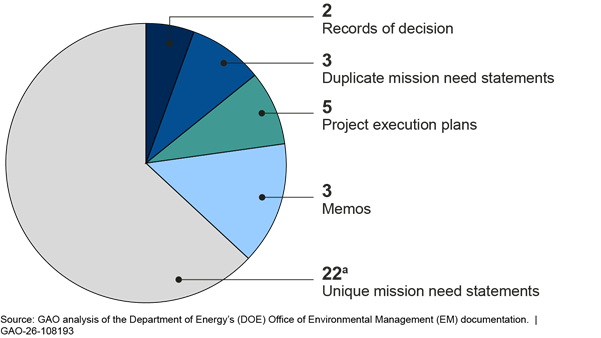
aGAO received 22 unique mission statements in total. However, one mission need statement was excluded from the final mission need statement analysis because it was approved prior to the 2006 change to DOE Order 413.3 that added the requirement that mission need statements should not propose a particular solution.
DOE Order 413.3B, Program and Project Management for the Acquisition of Capital Assets, directs that a mission need statement should not propose a particular solution, to allow DOE to explore a variety of potential solutions and not limit solutions.[40] DOE’s Mission Need Statement Guide further states that the mission need statement is not a proposed solution to a capability gap—the disparity between DOE’s current capabilities and those required to achieve its goals. As such, it should not be described in terms of “construction of a physical system, decontamination and decommissioning, environmental restoration, procurement of a piece of equipment, construction of a facility, or other specific material end item.[41]“ Two analysts separately reviewed each mission need statement to determine the defined capability gap, any alternatives proposed to address the capability gap, and whether a specific end item was proposed in the capability gap description or elsewhere in the statement. The two analysts compared their assessments of each mission need statement and any discrepancies were reconciled by a third analyst. We interviewed EM field staff at seven sites that had active large projects at the time of our analysis. For any mission need statements that we assessed as not fully meeting DOE’s standards, we asked staff at the site why it did not fully meet the standards.
Selected Large Projects
To determine what factors influenced the range of potential solutions EM considered for selected large capital asset projects, we selected six projects to serve as illustrative examples of factors that influenced the range of solutions EM considered. As a result, our findings are not generalizable to all EM large projects. We selected projects to include a broad representation in terms of cost of the project, project status (active, completed, or on hold), EM site, type of cleanup (at least one decontamination and decommissioning project), and whether the project’s mission need statement adhered to DOE’s project management standards. We determined that the following six projects would provide a broad representation of these criteria:
· the Calcine Disposition Project at the Idaho National Laboratory;
· the Environmental Management Disposal Facility at the Oak Ridge Reservation;
· the Safety Significant Confinement Ventilation System at the Carlsbad Field Office;
· the Salt Waste Processing Facility at the Savannah River Site;
· the Tank Waste Characterization and Staging project at the Hanford Site; and
· the X-333 Process Building Demolition at the Portsmouth Site.
For each selected project, we reviewed available project planning documents, such as mission need statements, analyses of alternatives, site cleanup plans, and early project cost estimates and designs. We reviewed relevant legal agreements or regulatory documents related to the projects where applicable, such as remedial investigations or records of decision, as required under the Comprehensive Environmental Response, Compensation, and Liability Act of 1980, as amended (CERCLA). For the three active projects we selected, we reviewed responses from EM field staff to our questionnaire about what pre-conceptual planning activities were completed on the projects and who was involved prior to mission need approval.
Expert Discussion Groups
We also held three expert discussion groups covering the six selected projects that focused on early planning decisions, the range of potential solutions EM identified, the extent to which other viable solutions existed, and factors that may have influenced the range of potential solutions EM considered. While we structured the agenda and questions of these discussion groups around our six selected projects, experts brought up examples of other large EM projects during the course of the discussions. We included these additional examples in our report and corroborated experts’ statements about the projects with documentation where possible.
Expert Identification and Selection
To identify potential experts to participate in our discussion groups, we used three primary methods: 1) we identified individuals during our review of projects documents, such as prior federal project directors or individuals who participated in independent reviews related to the projects; 2) we reviewed lists of experts who participated in past GAO panels on nuclear waste cleanup issues to identify those who may have expertise on the selected projects; and 3) we solicited recommendations from internal and external subject matter experts familiar with nuclear waste cleanup issues. Using these methods, we identified 42 potential experts.
We conducted basic online research to better understand the potential experts’ knowledge areas and affiliations. For any potential experts with whom we had no prior connection, we invited them to participate in an individual interview to learn more about their level of expertise and any potential biases. After conducting these individual interviews, we determined whether the experts met at least one of the following criteria: 1) they possessed technical expertise on the planning, design, alternative identification and selection, or execution of at least one of the six selected projects; or 2) they possessed general expertise on EM project planning, including how EM carries out DOE Order 413.3B requirements or how regulatory frameworks influence project planning. We also sought to include experts representing a diversity of sectors, including academia, the federal government, and the private sector. While we identified several experts who are former DOE officials, we excluded any current DOE officials from our expert discussion groups because of potential biases they may have given their relationship to our selected projects.
Of the 42 potential experts we identified, we contacted 31 after doing initial research to gauge their interest in participating and set up an individual interview, if applicable. We ultimately invited 15 experts to participate in our discussion groups based on our criteria. Three of these experts were not available, leaving a total of 12 experts that participated in at least one of our discussion groups (see table 2). Some experts participated in more than one discussion group. Seven experts participated in our discussion group that covered the Calcine Disposition Project, Salt Waste Processing Facility, and Tank Waste Characterization and Staging project; five experts participated in our discussion group that focused on the Environmental Management Disposal Facility; and three experts participated in a discussion group that focused on the X-333 Process Building Demolition and Safety Significant Confinement Ventilation System.
|
Expert |
Affiliation |
|
Craig Benson |
University of Wisconsin-Madison, University of Virginia |
|
Paul Black |
Neptune and Company |
|
Tom Brouns |
Pacific Northwest National Laboratory |
|
Kevin Brown |
Vanderbilt University |
|
Joanna Burger |
Rutgers University |
|
Christine Gellesa |
Longenecker and Associates |
|
David Kosson |
Vanderbilt University |
|
Steven Krahn |
Vanderbilt University |
|
Sue Magidsona |
Vanderbilt University |
|
Kenneth Pichaa |
Consultant |
|
Jay Roacha |
Consultant |
|
John Vienna |
Pacific Northwest National Laboratory |
Source: GAO. | GAO‑26‑108193
aExpert held previous management position with the Department of Energy.
We asked the experts to disclose any potential conflicts of interest, such as any current financial or other interest that might conflict with their service. We determined the 12 experts were free of conflicts of interest and judged the group as a whole to have no inappropriate biases. The views of these experts cannot be generalized to everyone with expertise on our selected projects or EM project planning practices; they represent only the views of the experts who participated in our discussion groups.
Content Analysis
During each of the discussion groups, three analysts took transcript-style notes, which were reconciled into one record per discussion group. To analyze the discussion group content, we developed a preliminary list of themes based on factors discussed by the experts that may influence EM’s consideration of potential solutions in the project planning process. An analyst reviewed the expert statements from each discussion group and categorized statements by the applicable theme. Additional themes that emerged during this first round of analysis were added to the list and a second round of analysis was conducted for all three discussion groups to ensure the additional themes were captured. A separate analyst then reviewed the content from each discussion group and the categorization completed by the first analyst. They flagged any statements with categorizations they disagreed with or that they thought should be included in the analysis but were not initially included. The analysts discussed any flagged statements and came to agreement on their categorization or inclusion in the analysis.
After the expert statements were categorized into themes, we reviewed all expert statements under each particular theme to summarize any common ideas that were discussed by experts related to that theme. For example, within the theme of contracting, multiple experts made statements supporting the idea that contractors may be incentivized to advocate for solutions that would result in profit for the contractor. Rather than quantify the prevalence of support among experts for any particular idea, our qualitative approach sought to capture a full range of views on the themes discussed from a non-generalizable sample of experts. In determining whether a common idea rose to the level of evidence to support our findings, we considered (1) whether the idea was supported by multiple experts’ statements; (2) the commenting experts’ familiarity with the topic or project supporting the idea (e.g., giving more weight to an individual comment on technology readiness that was made by an expert who helped develop DOE’s technology readiness standards); (3) whether the idea provides illuminating detail or examples related to our selected projects; and (4) whether the statements supporting the common idea were well articulated.
We considered statements that met some or all of these characteristics to be strong evidence and used language such as “experts discussed,” “experts said,” or “according to experts” to characterize such ideas. If a statement was raised by only one expert, but the expert was well versed in the topic or project being discussed, we considered the statement to be strong evidence. However, we characterized those statements using language such as “one expert said.”
We conducted this performance audit from March 2025 to July 2026 in accordance with generally accepted government auditing standards. Those standards require that we plan and perform the audit to obtain sufficient, appropriate evidence to provide a reasonable basis for our findings and conclusions based on our audit objectives. We believe that the evidence obtained provides a reasonable basis for our findings and conclusions based on our audit objectives.
Nathan J. Anderson at AndersonN@gao.gov
In addition to the contact named above, Jeffrey T. Larson (Assistant Director), Taylor Bailey (Analyst in Charge), Luqman Abdullah, and Eliana Hensley made significant contributions to this report. Also contributing to this report were Rebecca Conway, Christopher Durbin, Frank Garro, Jennifer Leotta, Amber Sinclair, and Sara Sullivan.
The Government Accountability Office, the audit, evaluation, and investigative arm of Congress, exists to support Congress in meeting its constitutional responsibilities and to help improve the performance and accountability of the federal government for the American people. GAO examines the use of public funds; evaluates federal programs and policies; and provides analyses, recommendations, and other assistance to help Congress make informed oversight, policy, and funding decisions. GAO’s commitment to good government is reflected in its core values of accountability, integrity, and reliability.
Obtaining Copies of GAO Reports and Testimony
The fastest and easiest way to obtain copies of GAO documents at no cost is through our website. Each weekday afternoon, GAO posts on its website newly released reports, testimony, and correspondence. You can also subscribe to GAO’s email updates to receive notification of newly posted products.
Order by Phone
The price of each GAO publication reflects GAO’s actual cost of production and distribution and depends on the number of pages in the publication and whether the publication is printed in color or black and white. Pricing and ordering information is posted on GAO’s website, https://www.gao.gov/ordering.htm.
Place orders by calling (202) 512-6000, toll free (866) 801-7077,
or
TDD (202) 512-2537.
Orders may be paid for using American Express, Discover Card, MasterCard, Visa, check, or money order. Call for additional information.
Connect with GAO
Connect with GAO on X,
LinkedIn, Instagram, and YouTube.
Subscribe to our Email Updates. Listen to our Podcasts.
Visit GAO on the web at https://www.gao.gov.
To Report Fraud, Waste, and Abuse in Federal Programs
Contact FraudNet:
Website: https://www.gao.gov/about/what-gao-does/fraudnet
Automated answering system: (800) 424-5454
Media Relations
Sarah Kaczmarek, Managing Director, Media@gao.gov
Congressional Relations
David A. Powner, Acting Managing Director, CongRel@gao.gov
General Inquiries
[1]GAO, High Risk Series: Heightened Attention Could Save Billions More and Improve Government Efficiency and Effectiveness, GAO‑25‑107743 (Washington, D.C.: Feb. 25, 2025).
[2]GAO, Hanford Cleanup: Alternatives for Treating and Disposing of High-Level Waste Could Save Billions of Dollars and Reduce Certain Risks, GAO‑24‑106989 (Washington, D.C.: Sept. 26, 2024); GAO, Hanford Waste Treatment Plant: DOE Is Pursuing Pretreatment Alternatives, but Its Strategy is Unclear While Costs Continue to Rise, GAO‑20‑363 (Washington, D.C.: May 12, 2020); among others.
3GAO, Nuclear Waste Cleanup: DOE Needs to Improve the Accuracy of Cost and Schedule Information for Major Projects and Activities, GAO‑26‑107820 (Washington, D.C.: Mar. 2, 2026).
[4]S. Rep. No. 118-188, at 408 (2024).
[5]Department of Energy, Program and Project Management for the Acquisition of Capital Assets, DOE Order 413.3B (Change 7) (Washington, D.C.: June 21, 2023).
[6]Some projects share mission need statements; therefore, the total number of mission need statements in our analysis does not equal the total number of projects.
[7]Department of Energy, Mission Need Statement Guide, G 413.3-17 (Washington, D.C.: Oct. 22, 2015).
[8]DOE Order 413.3B allows for some projects to use a practice known as “tailoring” which can involve the consolidation of critical decisions, concurrency of processes, and the substitution of equivalent documents, among other things. For our analysis we only included projects with mission need statements.
[9]In the fall of 1989, DOE established the Office of Environmental Restoration and Waste Management, which was later renamed the Office of Environmental Management.
[10]According to EM’s Program Management Protocol, other activities that may constitute construction projects are defined in 48 C.F.R. § 2.101. Department of Energy, Environmental Management Program Management Protocol (Washington, D.C.: Oct. 30, 2020).
[11]The order was first issued in October 2000. Language around the capability gap description being independent of a predetermined solution was first issued in 2006.
[12]DOE G 413.3-17.
[13]Comprehensive Environmental Response, Compensation, and Liability Act of 1980, Pub. L. No. 96-510, 94 Stat. 2767 (codified as amended at 42 U.S.C. §§ 9601-9675); Resource Conservation and Recovery Act of 1976, Pub. L. No. 94-580, 90 Stat. 2795 (codified as amended at 42 U.S.C. §§ 6901-6987).
[14]See 42 U.S.C. § 9620(e)(2).
[15]42 U.S.C. § 6926(b). See also 40 C.F.R. pt. 271. RCRA defines a “state” as any of the 50 states, the District Columbia, the Commonwealth of Puerto Rico, the Virgin Islands, Guam, American Samoa, and the Commonwealth of the Northern Mariana Islands. 42 U.S.C. § 6903(31).
[16]To conduct our analysis, we requested mission need statements for EM’s large capital asset projects (greater than $100M) that were either completed, active, on hold, or canceled. Thirty-five large capital asset projects met these criteria, but not all of the projects had mission need statements, and some projects shared mission need statements. See appendix I for further details on our methodology.
[17]DOE G 413.3-17.
[18]The requirement to compose a mission need statement that does not identify a particular solution was incorporated into DOE Order 413.3A and approved in 2006. The Idaho Spent Fuel Facility project received CD-0 approval in 2007.
[19]The record of decision specifying the construction of an on-site disposal cell was finalized in 2015, and CD-0 was approved in 2016.
[20]Similarly, officials at Oak Ridge said the mission need statement for the Outfall 200 Mercury Treatment Facility identified a particular solution because it was developed after several years of planning activities related to a larger facilities disposition project at the site. These planning efforts identified a need for a water treatment capability to address mercury contamination during remediation activities. Officials said multiple solutions were evaluated during this time prior to developing the mission need statement.
[21]GAO, Cost Estimating and Assessment Guide: Best Practices for Developing and Managing Program Cost, GAO‑20‑195G (Washington, D.C.: March 2020).
[23]We held three expert discussion groups in January 2026 that focused on planning for selected large projects. Seven experts participated in our discussion group that focused on the Calcine Disposition Project, Salt Waste Processing Facility, and Tank Waste Characterization and Staging project; five experts participated in our discussion group that focused on the Environmental Management Disposal Facility; and three experts participated in a discussion group that focused on the X-333 Process Building Demolition and Safety Significant Confinement Ventilation System. Some experts participated in more than one discussion group. Themes raised by experts about a specific project in this section were generally raised by the experts in the discussion group focused on that project.
[24]According to DOE officials, DOE generally does not formally classify its waste until it is retrieved and pretreated, to inform treatment and disposition decisions.
[25]GAO, Nuclear Waste: Opportunities Exist to Reduce Risks and Costs by Evaluating Different Waste Treatment Approaches at Hanford, GAO‑17‑306 (Washington, D.C.: May 3, 2017).
[27]GAO, Hanford Waste Treatment: DOE Needs to Evaluate Alternatives to Recently Proposed Projects and Address Technical and Management Challenges, GAO‑15‑354 (Washington, D.C.: May 7, 2015).
[28]DOE, Hanford Tank Waste Retrieval, Treatment, and Disposition Framework (Washington, D.C.: Sept. 24, 2013).
[29]GAO, Nuclear Waste Cleanup: More Effective Oversight Is Needed to Help Ensure Better Project Outcomes, GAO‑24‑106716 (Washington, D.C.: July 31, 2024).
[30]National Academies of Sciences, Engineering, and Medicine, Effectiveness and Efficiency of Defense Environmental Cleanup Activities of the Department of Energy’s Office of Environmental Management: Report 2 (Washington, D.C.: 2022).
[31]According to DOE officials, as a matter of agency policy, DOE manages all Hanford tank waste as if it is high-level radioactive waste unless the waste has been formally classified as another waste type, such as low-level radioactive waste.
[32]These projects are part of DOE’s Direct Feed Low-Activity Waste approach. The current Low-Activity Waste Pretreatment System will consist of two phases: phase one is the Tank Side Cesium Removal demonstration project and phase two is the Advanced Modular Pretreatment System. The Tank Waste Characterization and Staging Facility is still on hold as of March 2026, and Hanford officials said that as they assess the capabilities needed to treat high-level waste they will determine if the facility is still needed.
[34]GAO, Nuclear Waste Cleanup: DOE Faces Project Management and Disposal Challenges with High-Level Waste at Idaho National Laboratory, GAO‑19‑494 (Washington, D.C.: Sept. 9, 2019).
[35]From 2020 to 2024, DOE officials participated in confidential mediated negotiations with officials from the state of Washington and EPA—which regulate aspects of the cleanup at Hanford—over cleanup methods and milestones for the treatment and disposal of Hanford tank waste.
[36]GAO, Environmental Hazards: A Framework for Risk-Informed Decision-Making, GAO‑24‑107595 (Washington, D.C.: Sept. 23, 2024).
[37]GAO, Standards for Internal Control in the Federal Government, GAO‑25‑107721 (Washington, D.C.: May 2025).
[38]S. Rep. No. 118-188, at 407 (2024).
[39]While DOE Order 413.3B establishes mandatory requirements, the guidance documents describe suggested approaches for meeting requirements but are not mandatory.
[40]Department of Energy, Program and Project Management for the Acquisition of Capital Assets, DOE Order 413.3B (Change 7) (Washington, D.C.: June 21, 2023).
[41]Department of Energy, Mission Need Statement Guide, G 413.3-17 (Washington, D.C.: Oct. 22, 2015).