
Report to Congressional Committees
United States Government Accountability Office
A report to congressional committees
Contact: Diana Maurer at maurerd@gao.gov and Travis Masters at masterst@gao.gov
What GAO Found
Ten of the 13 B-52 modernizations are experiencing cost, schedule, or performance challenges. The Air Force’s most expensive B-52 modernization effort, the Commercial Engine Replacement Program (CERP) will likely continue to face significant challenges as the Air Force plans to begin production with little to no developmental flight testing. While the Air Force analyzed and accepted increased risks from this approach in 2023, since then CERP costs increased by about $3 billion and initial operational capability was delayed more than 15 months. Department of Defense (DOD) policy states cost estimates should consider risk and include an analysis that identifies and evaluates alternative courses of action that may reduce cost and risk. Reassessing these risks would better inform decision-makers as they consider when to begin production.

In addition, as the Air Force develops its 13 modernizations, it is not consistently using digital engineering tools that provide decision-makers real-time data to assess overall performance allowing them to make timely and well-informed decisions. DOD issued guidance in 2023 stating programs in development should incorporate digital tools, such as digital twins, when it’s practical, beneficial, and affordable. The Air Force has not assessed the potential use of digital engineering on all B-52 modernizations. As a result, the Air Force may be missing opportunities to take advantage of efficiencies that digital engineering can provide, including avoiding future sustainment and supportability challenges.
The Air Force conducts planned maintenance on B-52s at a repair depot about every 4 years and has developed analyses to ensure it has sufficient capacity to perform planned modernization. However, the current maintenance plans assume that the Air Force will complete CERP and install new engines on time and do not account for risks from further schedule delays. B-52 maintenance is already struggling with finding sufficient parts for the current engines. Without planning for the possibility of engine delays from CERP, the Air Force risks falling behind on planned B-52 maintenance, which could impact readiness.
Why GAO Did This Study
The B-52 bomber is an aircraft capable of performing conventional and nuclear missions. The B-52 was originally introduced in 1955 with a projected lifespan of 20 years. The Air Force has since extended the aircraft’s lifespan through 2050. To maintain the B-52’s strategic edge, the Air Force is projected to spend an estimated $21 billion for modernizations including new engines, radar, and communications.
A Senate report included a provision for GAO to assess B-52 modernization. This report addresses, among other things, the extent to which (1) B-52 modernizations are meeting their cost, schedule, and performance goals, and (2) the Air Force has developed plans to ensure sufficient depot capacity for the modernizations. This is a public version of a sensitive report issued in July 2026. DOD deemed some schedule and mission capable information sensitive, and GAO omitted it from this report.
To conduct this review, GAO evaluated Air Force acquisition and sustainment documentation. GAO conducted site visits to the B-52 program office, depot, and logistics center. GAO also analyzed data and interviewed officials on depot performance, spare part and support equipment needs, and B-52 availability.
What GAO Recommends
GAO is making six recommendations to the Air Force to improve planning and management for the B-52. These include recommending the Air Force delay the CERP production decision until the program office conducts an analysis to understand the associated risks; assess the benefits of using digital engineering; and update sustainment plans to account for potential delays. The Air Force partially concurred with GAO’s recommendation about the CERP production decision and fully concurred with the rest.
|
Abbreviations |
|
|
|
|
|
|
|
CERP |
Commercial Engine Replacement Program |
|
|
DOD |
Department of Defense |
|
|
PIP |
Platform Integration Plan |
|
|
RMP |
Radar Modernization Program |
|
This is a work of the U.S. government and is not subject to copyright protection in the United States. The published product may be reproduced and distributed in its entirety without further permission from GAO. However, because this work may contain copyrighted images or other material, permission from the copyright holder may be necessary if you wish to reproduce this material separately.
July 31, 2026
Congressional Committees
The Air Force is upgrading its 76 active B-52 Stratofortress aircraft (B-52) for a total estimated cost of $21 billion—the most extensive modernization in program history. The B-52 is a long-range, heavy bomber that can perform a variety of missions, including strategic attack, close-air support, air interdiction, offensive counter-air, and maritime operations. The first aircraft entered service in 1955 and, at that time, they had a projected lifespan of 20 years. Of the 744 B-52s produced, only 76 remain in the Air Force inventory—the last of which was delivered in 1962. The system has significantly outlived its original lifespan, and the Air Force is now focusing on replacing the engines and upgrading the radar and communication systems, in part to allow the aircraft to operate through the 2050s.
To achieve this longevity, the Air Force will also have to ensure an adequate supply of spare parts and support equipment through the B-52’s remaining lifetime to keep the aircraft in service. The scope of the cumulative B-52 modernization effort, combined with the inherent complexity associated with simultaneously executing multiple independent and concurrent programs, results in technical, programmatic, and operational challenges for the entire community tasked to develop, integrate, test, and field these upgrades.
We have previously reported that the B-52 has rarely met its mission capable rates—managing to only meet its goal in 4 out of 11 years from fiscal year 2011 through fiscal year 2021—in part due to problems with parts obsolescence.[1] In a fiscal year 2023 report, we noted that B-52 supply-chain managers sometimes had difficulty finding sources of supply because original manufacturers may no longer exist and obtaining replacements could sometimes take years.[2]
A Senate report accompanying a bill for the National Defense Authorization Act for Fiscal Year 2025 includes a provision for GAO to assess the Air Force’s management of B-52 modernization as well as ongoing and planned sustainment efforts.[3] In this report we assess the extent to which (1) B-52 modernization programs are achieving cost, schedule, and performance goals, (2) the Air Force has developed plans and taken action to ensure sufficient capacity for planned B-52 depot-level modernization programs, (3) the Air Force has taken steps to ensure sufficient spare parts for the remaining life cycle of the B-52, and (4) the Air Force has sufficient support equipment for the remaining life cycle of the B-52.
This report is a public version of a sensitive report that we issued in July 2026. DOD deemed some of the information in our July report to be sensitive, which must be protected from public disclosure. Therefore, this report omits sensitive information about B-52 schedules, availability, and mission capable rates. Although the information provided in this report is more limited, the report addresses the same objectives as the sensitive report and uses the same methodology.
To conduct our work, we analyzed Air Force documentation and compared it to the program’s reported acquisition baseline information. We reviewed current acquisition planning documents and interviewed Air Force and contractor officials to understand acquisition and management plans. We compared that information to leading practices derived from the Project Management Institute’s The Standard for Program Management, GAO’s Agile Assessment Guide, GAO’s Schedule Assessment Guide, and GAO’s acquisition leading practices body of work.[4]
We also analyzed Air Force documentation such as maintenance briefings and depot throughput data and compared the data to organizational goals. Additionally, we analyzed Air Force documentation and data on common and specific support equipment and compared those data to future fleet needs. Finally, we analyzed Air Force and Defense Logistics Agency documentation, such as guidance and data on mission capable rates for the aircraft, comparing it to future mission needs. We held interviews with officials from the Air Force; Boeing, the B-52’s prime contractor; the Defense Logistics Agency; and B-52 maintenance, operations, and depot officials.[5] We assessed the reliability of data we received and determined that the data were sufficiently reliable for our purposes. Additional details about our scope and methodology can be found in appendix I.
We conducted this performance audit from October 2024 to July 2026 in accordance with generally accepted government auditing standards. Those standards require that we plan and perform the audit to obtain sufficient, appropriate evidence to provide a reasonable basis for our findings and conclusions based on our audit objectives. We believe that the evidence obtained provides a reasonable basis for our findings and conclusions based on our audit objectives. We subsequently prepared this public version of the original, controlled unclassified information report for public release. We also prepared this public version in accordance with these standards.
Background
Role of the B-52
The B-52 is a long-range bomber that can fly 8,800 miles without refueling. It can conduct conventional and nuclear bombing missions and can carry 70,000 pounds of ordnance, including nuclear weapons. According to officials, the Air Force views the B-52 as a critical component of the nuclear triad and a complementary long-range strike system to the B-2 and the successor B-21 into the 2050s.[6] To enable the B-52 to perform these roles, the Air Force is working to effectively balance time and money between system modernization investments and ongoing operations and sustainment activities.
B-52 Maintenance Organizations
The B-52 is managed by the B-52 program office which is responsible for maintenance and deployment readiness of the current B-52 model, as well as managing the B-52 modernization programs. The program office coordinates with the Air Force Materiel Command and its subsidiaries, the Air Force Life Cycle Management Center and Air Force Sustainment Center, to maintain, repair, and modernize the B-52s. These organizations perform scheduled maintenance and necessary repairs, measured in number of “flow days” and labor hours.[7] They also manage and oversee B-52 modernization programs largely conducted by Boeing, the defense contractor that originally designed and delivered the B-52 and has generally been involved in modernizing and upgrading the aircraft over time.
Other stakeholders have a role in ensuring B-52 maintenance and modernization programs are completed on time:
· Oklahoma City- Air Logistics Complex. Located at Tinker Air Force Base, where the Air Force performs depot maintenance on the B-52.
· 76th Maintenance Group. The Aircraft Maintenance Group is responsible for conducting the depot maintenance of the B-52, as well as ensuring spare parts are ready when needed.
· Air Force Global Strike Command. This command is responsible for the nation’s ballistic missile wings, the Air Force’s bombers—including the B-52—and operational and maintenance support to organizations within the nuclear enterprise. Air Force Global Strike Command includes the two active and one reserve B-52 wings. Once the depot completes B-52 maintenance, it sends the repaired aircraft to the command.
· Boeing. This is the prime contractor conducting overall development and delivery of nearly all of the B-52 modernization programs.
The Depot Maintenance Process
The Department of Defense (DOD) conducts sustainment and maintenance on weapon systems to ensure that those systems are available to support military operations and maintain the capability to meet future requirements. Sustainment of weapon systems comprises logistics and personnel services required to maintain and prolong operations of the weapon system. DOD conducts maintenance at two levels: field level and depot level.
· Field-level maintenance is performed at the unit level on the unit’s own equipment, requires a relatively fewer number of skill sets, and occurs more frequently.
· Depot-level maintenance includes the overhaul, upgrade, or rebuilding of equipment; occurs less frequently; and requires a greater number of skill sets. Depot maintenance includes inspection; repair; overhaul; or the modification or rebuild of end items, assemblies, subassemblies, and parts. These parts, among other things, require extensive industrial facilities, specialized tools and equipment, or uniquely experienced and trained personnel that are not available in other maintenance activities.
Repair duration for each system varies according to the complexity of the repair and the type of use the system has experienced since the last overhaul. Because repair times vary, demands on depot facilities and equipment also vary. Our previous work has identified multiple factors that can affect depot performance, including the size and skill of the depot workforce, the condition of weapon systems upon arrival at the depot, the availability of spare parts, and the condition of the depot’s facilities and equipment, among others.[8]
Modernization Programs
To keep the B-52 operational into the 2050s, the Air Force has taken on a number of significant modernization programs. As of March 2026, the Air Force is investing in 13 B-52 modernization programs.[9] The investments include communications systems upgrades, software upgrades, engine/radar replacements, and weapon systems upgrades. Table 1 identifies and describes those 13 B-52 modernization programs.
|
Modernization program |
Description |
|
Commercial Engine Replacement Program |
Replaces the aircraft’s engines with military-configured commercial engines, along with associated subsystems such as engine struts, electrical power generation system, and cockpit displays. |
|
Radar Modernization Program |
Replaces current APQ-166 radar with modern off-the-shelf Active Electronically Scanned Array radar, providing improved functionality and reliability, mission-essential navigation, and weather avoidance functions. |
|
Advanced Extremely High Frequency |
Upgrades all 76 B-52 aircraft’s air to ground communications terminals to provide a secure communications system. |
|
Very Low Frequency/Low Frequency |
Upgrades existing B-52 receiver to integrate a receive-only, low frequency receiver and antenna subsystem to provide a secure, survivable strategic nuclear communication capability. |
|
Quad Crew |
Relocates electronic warfare control and display functions to enable reducing the aircrew from five to four crew members. |
|
Military Code |
Replaces current receiver with new Military Code capable receiver, expected to provide a robust signal for the B-52 fleet enhancing anti-jam/anti-spoof capabilities. |
|
Tactical Data Link |
Upgrades B-52’s digital communications capability. Will provide low latency, jam resistant situational awareness as well as command and control needed to support in-theater operation. |
|
Crypto/Mobile User Objective System |
Updates current ARC-210 radios with Mobile User Objective System ARC-210 radios to prevent loss of communications capability. This upgrade will ensure compliance with Department of Defense and National Security Agency mandates. |
|
Long Range Standoff Integration |
B-52 aircraft integration program for a long-range, survivable, nuclear-capable missile in development to replace Air Launched Cruise Missiles. |
|
Mission Data Recorder |
Aircraft’s “black box” that will record flight activity to provide permanent crash survivable flight data recorder information. |
|
Mission Employment Trainer |
Developing two new training devices, Medium Fidelity Mission Employment Trainer and High Fidelity Mission Employment Trainer to replace current outdated trainers; the former is an open system composed of all software and three screens, while the latter is closer to the current trainer type. |
|
Advance Target Pod Smart Display Sustainment |
Procuring a display replacement technical data package to buy new displays because legacy displays are non-procurable and impairing mission capability. |
|
VINSON/Advanced Narrowband Digital Voice Terminal Cryptographic Modernization |
Updates existing KY100 communication devices; provides National Security Agency cryptographic requirements for legacy radios. |
Source: GAO presentation of U.S. Air Force information. | GAO‑26‑109272
Note: Additional B-52 modernization programs began after the initiation of our performance audit.
The Air Force is developing many of these 13 modernization programs at the same time. Further, work on one program may involve moving hardware on the aircraft that relates to work to be completed by other modernization programs. For example, the Crypto Modernization/Mobile User Objective System modification will remove a radio to free up space for Radar Modernization Program (RMP) components. Figure 1 provides general examples of some program relationships and illustrates the complexity of managing multiple B-52 modernization programs.
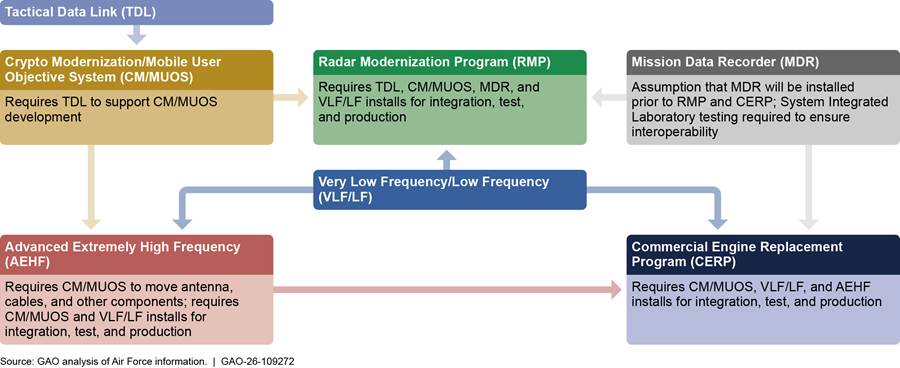
Note: This figure includes general examples based on Air Force documentation dated April 2025 in order to show the complexity of executing multiple modernization programs concurrently. This figure does not differentiate between dependencies and baseline configurations or include recent updates. For example, according to program officials the pre-modification baseline configuration for CERP now includes RMP, AEHF, and VLF/LF.
The modernization programs vary in size and scope, but the Air Force is going through a series of modifications that are intended to modernize the B-52s to serve the Air Force into the 2050s. Of the 13 programs, the Commercial Engine Replacement Program (CERP) and RMP are expected to provide significant capability enhancements and be the two most costly, together comprising $18.3 billion, or over 88 percent of the Air Force’s total projected B-52 modernization investment of nearly $21 billion in total estimated acquisition costs.[10] See figure 2 for program proportions based on estimated cost.
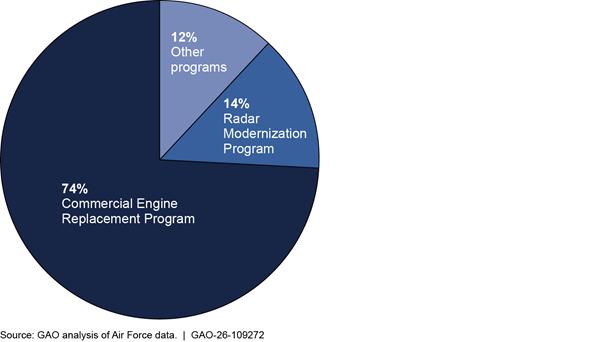
Note: Acquisition costs include Research Development Test and Evaluation and Procurement costs. Other programs consist of the following: Advanced Extremely High Frequency, Very Low Frequency/Low Frequency, Quad Crew, Military Code, Tactical Data Link, Crypto/Mobile User Objective System, Long Range Standoff Integration, Mission Data Recorder, Advance Target Pod Smart Display Sustainment, and VINSON/Advanced Narrowband Digital Voice Terminal Cryptographic Modernization.
In addition to representing the vast majority of the overall B-52 modernization cost, CERP and RMP are also critical to the future performance and longevity of the B-52. CERP is intended to address parts obsolescence and failures that are making current engines difficult to sustain. For example, in November 2022, we found that the B-52 program was experiencing issues with engine stress and fatigue along with other supportability issues.[11] Meanwhile, RMP is expected to provide improved functionality and reliability to support both nuclear and conventional missions while allowing for mission-essential navigation and weather avoidance. The current cost, schedule, and performance status of the remaining 11 modernization programs can be found in appendix II.
B-52 Modernization Programs at Risk of Additional Cost Growth, Schedule Delays, and Performance Challenges
The Air Force B-52 modernization programs are collectively experiencing cost growth, schedule delays, and performance challenges. Specifically, both CERP and RMP have experienced cost increases of more than 30 percent and schedule delays of more than 3 years since the programs began early development. Both programs are at risk for additional cost, schedule, and performance challenges as they plan to begin production of modernization efforts about the same time developmental testing begins. As a result, both programs will have limited information to make a production decision. In addition, B-52 programs are not using modern design tools consistent with acquisition leading practices. Finally, the B-52 platform integration plan—used to manage B-52 platform interdependencies, timelines, and integration challenges, among other things—does not clearly align modernization program work to the Air Force’s strategic goals or prioritize those programs.
Most B-52 Modernization Programs Have Experienced Cost Growth, Schedule Delays, or Performance Challenges
Ten of the 13 B-52 modernization programs have experienced cost growth, schedule delays, or performance challenges to varying degrees. We found that three of the 13 programs are experiencing cost growth, seven are behind schedule, and eight are experiencing program performance challenges. Three programs have experienced challenges in all three areas. See figure 3 for challenges by program.
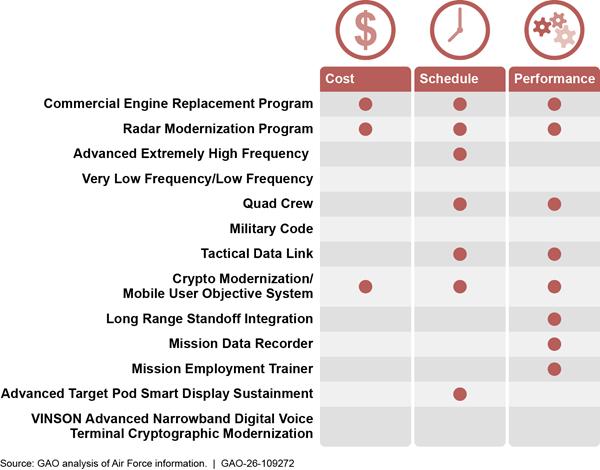
The two largest programs, CERP and RMP, which are in various stages of development, are among those experiencing challenges in all three categories, that is, cost, schedule and performance. Given their size and critical functions, we focus on the details of these two programs below. For details on the status and challenges related to the 11 other programs, see appendix II.
Commercial Engine Replacement Program (CERP) Cost Uncertainty and Schedule Delays Are Likely to Continue
CERP, which represents almost three-quarters of the Air Force’s expected B-52 modernization investment, faces risks of compounding schedule delays and increased costs largely due to concurrency, or the overlap between developmental testing and production start. Developmental testing is used to verify that a system’s design meets performance specifications while production start initiates the production of the operational system. Our prior work has found that high levels of concurrency between production and developmental testing consistently leads to cost and schedule growth, as testing may identify issues that require design changes and fixes to aircraft already modified and engines already built.[12] Air Force officials recognize that their approach presents risks but are willing to assume those risks, in order to avoid additional delays in the CERP schedule.
Since 2018, CERP acquisition cost estimates have increased over 38 percent to more than $15.4 billion in 2025.[13] A cost increase of this magnitude might have resulted in a Nunn-McCurdy cost breach requiring the program to notify Congress if the program had an established cost and schedule baseline.[14] However, the program’s expected development start—when a program establishes a cost and schedule baseline and formally commits to begin designing, building, and testing a system and commonly known as Milestone B—has been delayed 32 months.[15]
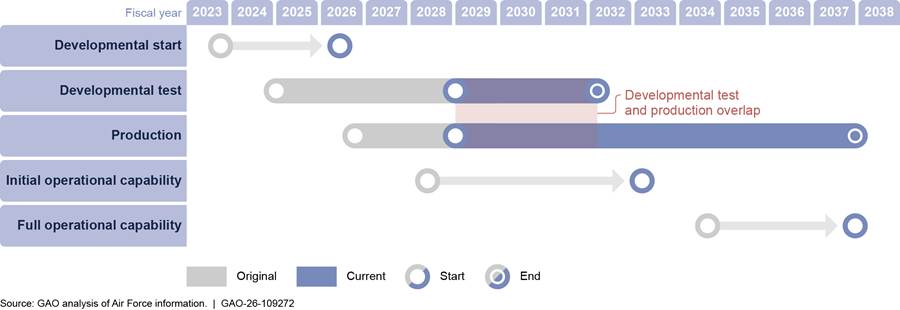
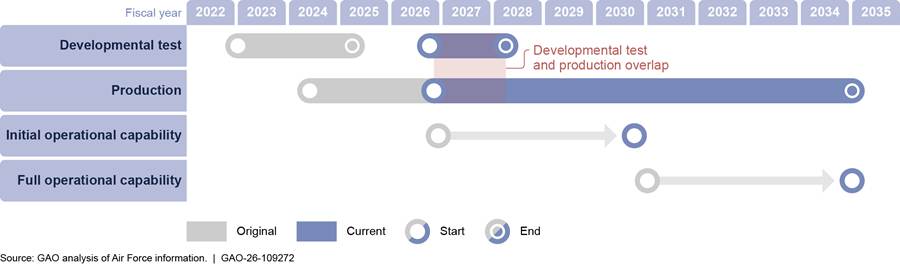
Specifically, Air Force program officials initially planned to begin CERP development in the fourth quarter of fiscal year 2023 but now anticipate development will not begin until the third quarter of fiscal year 2026. The Air Force also delayed the start of system-level developmental flight testing and CERP initial operational capability. Developmental flight testing is now expected to begin in the first quarter of fiscal year 2029 with initial operational capability projected to be achieved in 2033, representing a 4-year and almost 5-year delay respectively.[16] These delays result in performance risk to the current fleet as the Air Force struggles with maintaining current engines.
CERP’s delays are a result of ongoing program challenges. For example, as we reported in our 2025 Weapon Systems Annual Assessment, CERP experienced a nearly 1-year delay in development start partly due to engine inlet performance problems that were revealed through testing as well as delays in receiving contractor proposals.[17] Specifically, wind tunnel tests in June 2023 revealed an inlet distortion issue—a nonuniform flow of air that can affect the engine’s performance and operability—which could lead to engine fan stall in-flight. According to program officials, a new engine inlet design was verified through testing in June 2025. In addition, as the Air Force prepared cost estimates to support the start of development, early estimates in 2025 indicated that program costs could rise above $15.4 billion. As a result, the Air Force began an affordability study, which is ongoing as of March 2026. Air Force officials stated that the affordability study will assess alternatives and allow the B-52 program office to confirm its cost estimates prior to the start of development.[18]
As a result of schedule delays and increased difficulty maintaining current engines, the Air Force is taking a schedule-driven approach to the CERP production decision, which may lead to additional cost growth and schedule delays. For example, despite the 4-year delay in developmental flight testing, the Air Force has only delayed the start of production by 27 months. Air Force officials plan to begin production of engines and associated subsystems in the first quarter of fiscal year 2029, which is now the same time developmental flight testing is expected to begin. As a result, the program will begin building engines before it has conducted critical flight testing of the fully-integrated system—a B-52 with all engines, subsystems, and software installed—to ensure it meets warfighter needs. This overlap between developmental testing and production—known as concurrency—significantly increases cost, schedule, and performance risks. Program officials said they recognize the risk in concurrency but believe that the risks in delaying production are greater given significant challenges maintaining the current B-52 engines. Figure 4 illustrates the overlap and timeline for testing and production.
Our prior work found that leading companies build fully-integrated systems—either physical, digital, or a combination—to test their designs.[19] This approach incorporates all hardware and software components to test the product’s integrated functionality. Flight testing of the fully-integrated system—such as a B-52 with upgraded engines and associated subsystems installed for flight—can uncover problems that were not apparent when subsystems were individually tested.
Air Force officials believe they have considered and mitigated some concurrency risk. Air Force officials told us they plan to manage risk by implementing multiple decision points for production lots versus a single production decision. Air Force officials stated this approach will allow decision-makers additional opportunities to evaluate hardware maturity and production readiness. While having multiple decision points might provide insights into the program’s progress, the initial production decision will turn the supply chain on and, once that begins, it is difficult and inefficient to stop production to address any issues identified at subsequent reviews.
In 2023 as CERP transitioned to a major capability acquisition, the Air Force conducted an analysis to understand risks related to the timing of the CERP production decision. This analysis considered cost risk and performance confidence based upon starting production at three possible points in time: (1) at the same time as developmental flight testing; (2) during developmental flight testing; or (3) after completion of significant developmental flight testing events. Ultimately, the Air Force found that earlier production decisions resulted in increased cost and performance risk. Regardless, as we have noted previously, the Air Force chose to hold the initial production decision at the same time it begins developmental flight testing. According to Air Force officials, subsystem and lab testing will allow them to mitigate technical risks prior to the first production decision.
DOD policy requires an updated cost estimate in support of the program’s production decision. This cost estimate should consider risk and include an analysis that identifies and evaluates alternative courses of action that may reduce risk.[20] In addition, Standards for Internal Controls in the Federal Government states that changing conditions often prompt new risks or changes to existing risks that need to be assessed.[21] In addition, as part of analyzing and responding to significant change, programs should perform a risk assessment to identify, analyze, and respond to any new risks prompted by the changes.
As we previously noted, CERP experienced significant cost increases since its initial estimates. As of June 2025, costs increased over 24 percent, and developmental testing was delayed 12 months, since March 2023—when the program conducted the assessment to determine risks associated with timing of the CERP production decision. However, the Air Force has not conducted an analysis that takes into account recent program cost growth or schedule delays. Conducting an analysis that accounts for recent cost growth and schedule delays to understand the risks and benefits associated with the timing of the production decision would enable decision-makers to better understand and respond to these program risks.
Radar Modernization Program (RMP) Also Faces Ongoing Cost, Schedule, and Performance Risks Largely Due to Concurrency
The Air Force began RMP development in 2021. Since then, RMP estimated acquisition costs have increased over 30 percent to more than $2.9 billion in 2025; planned production start has been delayed more than two years; and the B-52 program office has removed some of the program’s original performance requirements. Like CERP, the RMP program faces risks of additional cost and schedule growth largely due to the Air Force’s concurrent approach to developmental testing and production.
In October 2024, following notification of increased costs and schedule delays, the Assistant Secretary of the Air Force for Acquisition, Technology, and Logistics directed program officials to evaluate several initiatives to reduce costs and explore opportunities for further efficiencies.[22] As a result, in late 2024, program officials—in coordination with users at Air Force Global Strike Command—identified 20 RMP performance requirements, five fewer than originally planned, that they believe represent a minimum viable product.[23] Air Force officials stated that removing five performance requirements avoided some future cost increases because, in part, the modernization would no longer require the design of a new radome—a protective housing for radars and antennas. DOD deemed additional details regarding the removed capabilities as sensitive and we have omitted them from this report.
Despite reducing performance requirements, in May 2025, the Air Force notified Congress of a significant Nunn-McCurdy cost breach—a 15 percent increase in unit cost from the current baseline cost estimate available at that time. According to program officials, RMP costs increased due to significant design changes, contractor performance issues, and increased installation complexity.
In addition, production start is delayed more than two years to the third quarter of fiscal year 2026, and initial operational capability is delayed about 3.5 years to the third quarter of fiscal year 2030. Program officials attributed the delays to longer wait times on radars, late deliveries of essential lab components, and underestimating installation time. In May 2025, the Air Force issued an updated baseline to reflect cost and schedule changes, and to incorporate cost-saving measures. Specifically, the Air Force plans to pursue measures such as buying radars directly from the supplier for delivery to the Air Force programmed depot maintenance and improving kit deliveries to minimize movement, sorting, and storing of parts.
While cost saving and schedule control measures are prudent and may be warranted, in this case, after contract award, the Air Force will receive less capability while paying more for the program. This does not align with acquisition leading practices that suggest making trade-off decisions and defining a minimum viable product before awarding a contract, thereby allowing the contract cost and schedule to be fully informed.[24] The Air Force began RMP under a traditional development approach in which desired capabilities were predetermined, and requirements were fully defined prior to the start of system development. However, the cost and complexity of the requirements were not well understood at the time, and after the Air Force had committed extensive time and money to developing capabilities, they are now pursuing what they believe to be a minimum viable product that represents descoped contract performance requirements.
Our work in acquisition leading practices has found that leading companies use an iterative development approach to develop, test, and collaborate with users to establish a minimum viable product before making significant commitments, with the knowledge that they can make adjustments in later iterations.[25] RMP’s minimum viable product is not the result of iterative design or off-ramping performance requirements in the way that leading practices intend. Program officials stated that Air Force Global Strike Command will consider adding performance requirements—under a program separate from RMP—in the future contingent upon available funding and threat assessment.
However, the Air Force may not be able to afford these upgrades as the current acquisition approach includes high levels of concurrency. For example, although the start of developmental testing was delayed almost 4 years, production start has been delayed about 2.5 years. As a result, the overlap between developmental testing and production has increased. As we noted previously, concurrency between developmental test and production significantly increases cost, schedule, and performance risks as critical testing information may not be available to inform a production decision. As currently planned, the RMP program will begin production with little developmental flight test completed—only 2 of 18 planned months. Figure 5 highlights RMP schedule delays and the planned concurrency.
GAO’s body of work on acquisition leading practices has found that beginning production with limited testing may result in costly and time-intensive rework if the program discovers issues later.[26] Leading companies build system-level integrated prototypes—either physical, digital, or a combination—to test the design established during design modeling and simulation prior to entering production. This prototyping incorporates all hardware and software components to test the product’s integrated functionality. As a result, testing of the fully-integrated system can uncover problems that were not apparent when individual components were tested, both physically and digitally, earlier.
Program officials stated that the radar is a mature design used on some fighter platforms and that only about one-third of the total radar kit is specific to the B-52. According to program officials, flight demonstrations early in development flight testing will show hardware maturity. These demonstrations will include ground testing and some flight testing using initial software releases. Limited amounts of flight testing could present risk as the program proceeds to production. To further mitigate this risk, the program will conduct quarterly program reviews with the Service Acquisition Executives, so that they understand technical progress and production readiness.[27]
B-52 Modernization Programs Are Not Consistently Using Digital Engineering Tools
While the Air Force has implemented some digital engineering tools for the CERP program, the remaining 12 modernization programs are not fully implementing digital tools in accordance with GAO acquisition leading practices.[28] Digital engineering is a leading practice for iterative design within the iterative development process that contributes to achieving a minimum viable product. Digital engineering can include the use of digital threads and digital twins.
· Digital threads. Digital threads are a common source of information that connect stakeholders with real-time data across the product life cycle. Data in a digital thread may include the test results from digital twin modeling, user feedback, and records of design changes. By informing decision-makers throughout a system’s life cycle, digital threads enable decision-makers to transform data into actionable information. The data captured in the thread during development and testing allow stakeholders to predict future performance and make necessary adjustments. As such, digital threads serve as the starting point for subsequent iterations. Further, the thread allows multiple stakeholders to extract data and adjust their models for activities such as system, subsystem, and component integration. The use of these modern design tools allows leading companies to identify a minimum viable product that can be followed by successive updates.[29]
· Digital twins. Digital twins are virtual representations of physical products that incorporate dynamic data of a physical object or system, allowing the model to change and update in real-time as new information becomes available. Programs build digital twins with the best available models and data from a physical system to monitor and predict system performance over time. For example, we previously reported that leading companies have used digital twins to simulate the inside of a nuclear reactor, which is physically inaccessible, or to simulate the overload of an industrial motor drive to avoid conducting a physical test, which would have destroyed the physical prototype.[30]
A digital thread is usually connected to the digital twin, but not always. The thread can stand alone, or stakeholders can use the data it contains to continuously inform the development of a digital twin. According to DOD policy, this type of digital modeling is key to understanding system interdependencies and helps assess overall system performance.[31]
Building off a rapid virtual prototyping effort, CERP is using some digital models to support design decisions for aviation and system performance, among other things. According to Air Force officials, the program’s digital models have assisted with integration and helped accelerate collaboration between the Air Force and the contractors. For example, Air Force officials stated that these models and digital tools enabled the program to mitigate design issues with the engine inlet. Officials added that using digital models and tools gave the program confidence in the redesigned engine inlet. In addition, officials told us that the virtual prototyping to integrate the engine and all affected subsystems has allowed for early familiarity of CERP’s operations and maintenance, which they believe will facilitate increased readiness. CERP is also using these digital tools at the subsystem level, enabling the program to achieve the benefits of these leading practices.
While CERP has implemented some digital engineering tools, the program is not using them consistent with leading practices. For example, CERP officials stated they will not develop a digital twin but plan to use a digital thread in testing to serve as the single authoritative source of information for B-52 data. Officials said the digital thread will be used to inform decisions throughout the program life cycle and will be used in various models such as aerodynamics or propulsion models. As stated earlier, stakeholders can use digital threads to store real-time data from processes like testing results, user feedback, and records of design changes. As such, digital threads are useful during the design and validation process since their role as a common source of information for data can help programs iterate on capabilities faster over time. However, program officials stated that their digital thread would not provide decision-makers with real-time data provided by automatic updates from a digital twin. In addition, contrary to leading practices for iterative development, the 12 remaining B-52 modernization programs are not fully using digital tools.
DOD issued guidance in December 2023 that requires programs initiated after the policy’s issuance to incorporate digital engineering for the capability in development, unless the program’s decision authority provides an exception.[32] Programs initiated prior to the issuance can incorporate digital engineering when it is practical, beneficial, and affordable, although not required. Most of the B-52 modernization programs started prior to the issuance of this guidance and therefore are not required to incorporate certain practices. However, DOD guidance emphasizes that digital engineering should enable faster, higher-quality decision making in testing, design, and sustainment, which ultimately enable faster weapons delivery.[33] According to DOD guidance, digital engineering is a critical practice necessary to support acquisition and sustainment. Additionally, our prior work has found leading companies use modern design tools, such as digital engineering, to achieve a minimum viable product and develop more efficient design iterations at a faster pace.[34] Our prior work has also found that digital engineering may help programs realize efficiencies during sustainment and enable faster iterative development.[35]
However, the Air Force has not assessed the potential use of digital engineering on all B-52 modernization programs to determine whether its use is practical, beneficial, and affordable. RMP officials said that a digital twin or thread would be too difficult and costly to develop, largely due to the 20-year-old radar hardware design, and that there was no requirement to develop a digital twin or digital thread, so they did not do so. While that may be the case for the radar hardware, the use of a digital twin of RMP’s radome design could have revealed potential design deficiencies at an earlier stage, potentially lessening the severity of the cost increases and schedule delays that RMP is experiencing. Without assessing the practicality, benefits, and affordability of using digital tools, the Air Force may be missing opportunities to take advantage of efficiencies that digital engineering can provide, especially since it expects to continue modernizing and operating the aircraft for at least another 30 years.
Air Force Integration Plan Does Not Align Modernization Programs with Strategic Goals or Identify Priorities
According to Air Force officials, Boeing, in coordination with the Air Force, develops a Platform Integration Plan (PIP) at least semiannually to capture current B-52 modernization activities. Specifically, the PIP provides data on key integration challenges, timelines, risks, and strategic goals.[36] The B-52 program’s strategic goals specified in the PIP include (1) maximizing operational aircraft availability; (2) delivering capability as early as possible; and (3) minimizing life cycle costs.
Based on our analysis, the PIP is intended to function as a program management road map. As such, we assessed it against the Project Management Institute standards that emphasize that the program road map is a major component of a program management plan and contributes to efficiency.[37] GAO’s leading practices for agile programs also note that a road map is intended to share what work is planned and a timeline associated with that work across different levels of an organization.[38] Further, a road map provides programs with an effective way to assess progress and organize components within major stages or blocks, which is especially helpful for programs with numerous and interconnected programs, like B-52 modernization. The Project Management Institute states that the key components of a road map include (1) a chronological representation of a program’s intended direction; (2) a graphic depiction of the dependencies between major milestones and decision points; (3) a reflection of the linkage between the business strategy and the program work; and (4) component details, their durations, and contributions to benefits.[39] The road map can be part of the program management plan or a standalone document.
We found that while the B-52 PIP fully addresses two key components of a comprehensive road map, it only partially addresses two others. The PIP provides a chronological representation of the platform modernization plans and depicts hardware and software interdependencies. However, the program work outlined in the PIP does not align with the Air Force’s strategic goals. Specifically, the PIP tracks the number of aircraft configurations that could be active at any given time considering the overlap in modernization program execution but does not discuss the associated risks. According to the PIP, between 2024 and 2036, the Air Force may need to maintain as many as 31 different B-52 aircraft configurations. We have previously reported that Air Force officials said managing and maintaining multiple aircraft configurations increases maintenance times. Increased maintenance times could lead to higher sustainment costs and decreased aircraft availability.[40]
Further, two of the Air Force’s strategic goals for B-52 modernization are to maximize aircraft availability and minimize life cycle costs. However, as previously stated, the PIP does not contain any discussion of the risks or a risk mitigation plan for maintaining multiple configurations. As a result, the program work does not align with the strategic goals of increasing availability and minimizing costs. In addition, the PIP does not include prioritization of the various modernization programs, which is part of key component four, contributions to benefits. According to leading practices, a comprehensive road map should reflect a clear alignment between strategic goals and program work and identify program priorities.
Program officials stated they are aware that a high number of aircraft configurations will present challenges in areas such as training and technical data. They expect to focus on including how program work aligns with Air Force strategic goals later this year but did not provide details or documentation of this effort. Air Force officials also stated that it is not the platform integration team’s responsibility alone to prioritize the modernization programs. Instead, prioritization is done as a result of coordination across the platform integration team, platform leadership, and individual program managers. While setting priorities may occur in coordination with other groups, GAO and Project Management Institute leading practices stress the importance of documenting priorities, noting that a comprehensive road map should include component details and durations, including program priorities to ensure stakeholders are aligned in their efforts.[41] An updated B-52 PIP that identifies program priorities and aligns program work with strategic goals could help ensure that individual program managers understand how their programs relate to and support the Air Force’s overall goals and could drive cost and schedule efficiencies.
The Air Force Has Taken Steps to Ensure Sufficient Depot Capacity for B-52 Modernizations, but Lacks a Plan for Managing Modernization Delays
The Air Force has taken several steps to ensure that it has enough capacity at the depot to perform the B-52 modernization programs. According to officials, the Air Force conducts regular meetings among different stakeholders, including the B-52 program office, depot maintenance organizations, and contractors to discuss the modernizations. In addition, the Air Force previously conducted analyses of its depot capacity to ensure that it could continue to provide its current rate of B-52 maintenance while also supporting the significant amount of work required for the modernization programs. Finally, the Air Force took the results of its analysis—which showed that it did not have sufficient capacity for the modernization programs—and used it to support adding additional depot resources. However, the Air Force maintenance plan currently assumes that CERP will be complete and installed on time and does not account for the schedule risk we identified above. Without planning for the possibility of engine delays from CERP, the Air Force risks falling further behind on its B-52 maintenance, which could impact readiness.
The B-52 Program Office Conducts Regular Meetings with Relevant Organizations
The Air Force conducts regular meetings among different stakeholders in an effort to ensure constant communication about B-52 modernization programs. Officials told us that the meetings have resulted in a more collaborative environment among the B-52 stakeholders and have helped ensure all organizations are better informed about the status of B-52 modernization programs. As noted above, various stakeholders have a role in ensuring successful modernization of the B-52.
Officials told us that the meetings among these stakeholders are held at different intervals, but include
· weekly meetings between the B-52 program office and the B-52 depot, 76th Aircraft Maintenance Group, and sub teams for major modernization programs (such as CERP and RMP);
· twice monthly meetings between the program office and Boeing; and
· monthly meetings to monitor the B-52 software progress, as well as leadership briefings on the status of the modernization programs.
We spoke with representatives from each of these organizations about their perspectives on these regular meetings, and the consensus was that these meetings improved overall coordination and information sharing. For instance, Air Force Sustainment Center/A4 conducts cross-team discussions to identify future depot-level reparables for the B-52.[42] The goal is to identify these replaceable subsystems early, so that the supply system can begin identifying any necessary spare parts in time to have the parts available when the maintainers need them.
The Air Force Conducted Analyses to Guide B-52 Modernization
|
Depot Maintenance for the B-52
The B-52 generally receives depot maintenance every 4 years, though this can change due to operational and scheduling needs. The standard depot maintenance for each aircraft requires about 40,000 labor hours to complete. Source: Air Force officials and documentation; |

The Air Force conducted various analyses to ensure that it had sufficient depot capacity to support the work required for the B-52 modernization programs. For each of the 13 modernization programs, the Air Force estimated the amount of labor hours each modernization installation would require per aircraft. These ranged from over 23,000 labor hours in the case of CERP to fewer than 10 labor hours for the least involved. Once it had those estimates, the Air Force assessed whether the current depot capacity could maintain the B-52’s current throughput of 17 aircraft a year while also supporting the modernization programs (see sidebar). The Air Force concluded that it could not support all the modernization programs with its current capacity. As a result, the Air Force is developing additional capacity by building more hangar space at the depot to ensure it can handle the increased labor hours.
The B-52 Program Office Conducted Analyses to Estimate the Amount of Labor Hours Needed to Install Modernization Upgrades
Each of the 13 B-52 modernization programs will require time to prepare and install. Program office officials told us that they conducted analyses for most of the 13 modernization programs. These analyses estimated the amount of work that each modernization will require (see table 2).
Table 2: Air Force Labor Hour Estimates to Install B-52 Modernization Programs, as of September 2025
|
Name |
Estimated labor hours per aircraft installation |
|
Commercial Engine Replacement Program |
23,345 |
|
Radar Modernization Program |
10,000–15,000 |
|
Advanced Extremely High Frequency |
5,000 |
|
Crypto/Mobile User Objective System |
5,000 |
|
Tactical Data Link |
935 |
|
Quad Crew |
Around 900a |
|
Military Code |
Around 900a |
|
Very Low Frequency/Low Frequency |
420 |
|
Mission Data Recorder |
220 |
|
VINSON/Advanced Narrowband Digital Voice Terminal Cryptographic Modernization |
10 |
Source: Air Force data. | GAO‑26‑109272
Note: Three modernization programs—Long Range Standoff Integration, the Mission Employment Trainer, and the Advance Target Pod Smart Display Sustainment—are estimated to require 0 installation hours, either because the modernization does not involve direct changes to the aircraft, or because the changes are expected to take the place of existing depot maintenance actions.
aTwo modernization programs—Quad Crew and Military Code—are estimated to take around the same amount of time as the Tactical Data Link modernization but do not have more specific estimates.
Program office officials stated that most of the modernization upgrades will be installed at the depot, although the first phase of the Mobile User Objective System, Mission Data Recorder, and the VINSON/Advanced Narrowband Digital Voice Terminal Cryptographic Modernization are currently planned to be field-level installs. Effective planning by the depot requires accurate installation estimates from the program office for each modernization program. For those installations occurring at the depot, the installation hours are in addition to the approximately 40,000 labor hours required for the regular depot maintenance process for the B-52.[43] Based on September 2025 estimates, the additional labor hours needed for completing all of the modernization programs will be similar in length—if aggregated together—to the length of the B-52’s normal depot maintenance period.[44] As a result of the program office’s analysis, the Air Force is aware that the CERP and RMP modernization programs will equate to nearly 75 percent of the estimated modernization labor hours (see fig. 6).
Figure 6: Estimated Labor Hours for the Commercial Engine Replacement Program and the Radar Modernization Program Compared to Other B-52 Modernization Programs
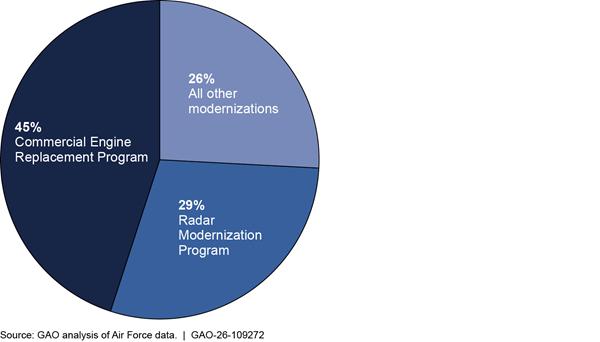
Note: The Air Force has estimated a range for the Radar Modernization program between 10,000 and 15,000 labor hours. This graphic uses the larger estimate of 15,000 labor hours.
As the modernization programs go through planning and design, the program office plans to continually update their estimates for the labor hours needed for each modernization. These updates will be based on additional information learned regarding requirements, parts, and capabilities. However, as noted previously, some of the modernization programs face schedule and performance challenges, which may negatively affect installation and labor estimates.
The Depot Assessed Its Ability to Accommodate the B-52 Modernization Programs, but Has Not Considered the Effect of Potential Delays
The Air Force has a team at Tinker Air Force Base that plans for near-term depot capacity. This team conducts analysis using the modernization estimates from the program office and depot data on throughput, labor hours, and flow days. According to that team, this analysis includes expected depot throughput and expected modernization installation. The team uses these data to assess whether the depot will have the personnel and facilities to perform the planned number of B-52 depot repairs each year and perform additional work to install the modernization upgrades.
This team determined that the depot could not support planned B-52 repairs and the modernization installations simultaneously without added capacity. Specifically, they began with CERP—as the most costly modernization program—and concluded that if the depot were to repair 17 B-52s each year as planned, the depot could not support the CERP modernization. It could
· accept fewer completed B-52s each year,
· reduce the scope of work needed for the CERP modernization, or
· increase depot capacity (such as by hiring more people, buying more spare parts, or building new repair facilities) to allow the depot to conduct more repairs in a given year.
The Air Force decided to increase the capacity at the depot to enable the depot to continue its normal pace of B-52 maintenance while still supporting the larger modernization. The Air Force started by increasing the number of B-52 hangar bays it has at the depot to ensure that it retains sufficient B-52 capacity. The depot originally had six hangars for B-52 maintenance, all of them contained in a single building. This setup created occasional challenges, since two of the bays were “locked in,” meaning they did not have a door that opened from the outside directly into that bay. B-52s that needed to be moved from the two center bays would sometimes have to wait days or weeks for another B-52 at either end of the hangar to be moved first.
As a result, the Air Force began building a temporary hangar with two additional bays. This allows the Air Force to use the “locked in” bays for equipment storage, and aircraft no longer wait for other aircraft to finish work. However, while the temporary hangar allows the Air Force to make better use of the existing bays, it does not by itself address the capacity constraints that affect repairs and installation of modernization programs.
To address the additional time that CERP will require, the Air Force has made plans to create additional capacity by building another hangar earlier than originally intended, so that it can be used by the B-52. Additional space will allow the depot to work on more aircraft simultaneously, which will also enable it to work on more engines simultaneously. Officials told us the Agile Common Hangar was originally intended to support the B-21, and the Air Force originally planned to begin work on its construction in 2035. However, once the B-52 capacity constraints became apparent, officials told us that the B-52 and B-21 program offices worked together to build the hangar earlier than originally scheduled. The Air Force now wants to begin construction in fiscal year 2026, with the plan that it will be ready in time for CERP in fiscal year 2031. The Agile Common Hangar will add four additional bays to the depot’s capacity. That capacity will first be used by the B-52 to help manage the increase in workload caused by CERP. Once that modernization is complete, officials say the hangar will then be used for B-21 maintenance.
In 2024, Air Force officials estimated that the depot will be able to support regular B-52 maintenance as well as the CERP modernization as long as it gets the average planned depot maintenance time down to 301 days per aircraft. According to Air Force officials, reaching this target will provide the Air Force the capacity it needs in order to complete the upcoming modernization programs, while also still performing planned depot maintenance. This target of 301 flow days is historically achievable, though it will require improvement on current throughput, which is about 340 days as of fiscal year 2025 data (see fig. 7).
Figure 7: Average Days at the Depot per B-52 Aircraft, Fiscal Year 2003 Through Fiscal Year 2038, with Future Target Days
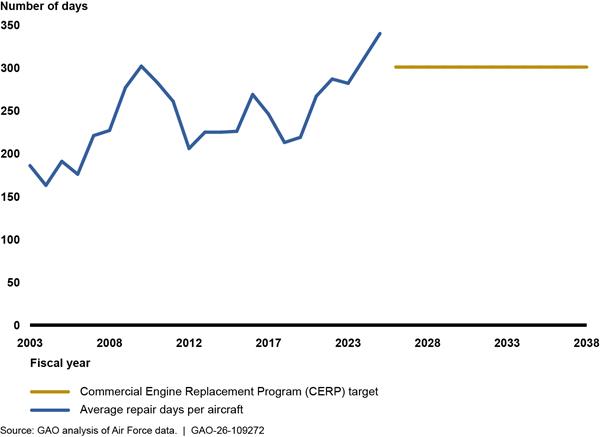
The B-52 aircraft maintenance team at Tinker Air Force Base projects that the Air Force will be able to repair the same number of B-52s in the future, even when including additional modernization work. That is because many of the current delays are due to challenges with repairing the aging B-52 engines, according to the Air Force. The Air Force’s plan is for the newer CERP engines to replace the older engines, allowing those to be recycled back into the fleet, thereby increasing the pool of spare engine parts. However, if the CERP engines are not available on time, depot officials have estimated a significant impact to B-52 throughput time—potentially increasing it by over 50 percent over their target as challenges with repairing the old engines continue to mount.
The other modernization programs—though not as time-intensive as CERP—could also have an effect on the Air Force’s ability to complete planned B-52 depot maintenance on time. For example, the team that assessed the Air Force’s ability to complete CERP also assessed other large modernizations, such as RMP and Advanced Extremely High Frequency. Each modernization program includes a different mixture of parts, hours, and types of personnel (e.g., depot personnel vs. contractor personnel), which is part of the assessment. Officials on the team worked closely with the program office to assess the impact of the program on the depot’s ability to maintain throughput. The team saw the potential for delays to depot maintenance. They noted that the larger size and scope of the CERP and RMP modernization programs are more likely to cause major delays in the B-52 depot maintenance schedule than the other, smaller modernization programs.
The Air Force’s B-52 repair plans anticipate that the modernizations begin as scheduled. For example, Air Force officials noted that the B-52 depot maintenance was being planned with the assumption that the CERP installations will begin on schedule in fiscal year 2031. However, the Air Force’s various plans do not include possible effects that modernization delays could have on the Air Force’s ability to sustain the B-52. Standards for Internal Control in the Federal Government states that agencies should identify, analyze, and respond to risks that could prevent them from meeting their objectives.[45] As noted above, the lack of sufficient flight test information prior to making a decision to start production for CERP could increase that program’s schedule risk.
Subsequently, any risks to the replacement schedule for the current B-52 engines could leave the Air Force maintaining engines—which they are already struggling to sustain—even longer and with fewer spare parts. These engine delays could then, in turn, cause delays with other modernization programs, as installations would be reduced by having fewer B-52s receiving their normal maintenance. Without ensuring the plans address the risk that the modernization programs could be delayed, the Air Force will be poorly positioned to respond if, for example, the CERP program experiences setbacks. This would potentially leave them unable to effectively sustain the current B-52 engines and could result in too few B-52s to support operational requirements.
The Air Force Is Taking Actions to Address Spare Parts Shortages for the B-52
The Air Force continues to encounter spare parts shortages for the B-52, which have been a long-standing challenge. For over a decade, we have identified B-52 spare parts shortages challenges leading to reduced mission capable rates for the aircraft. Spare parts and supply chain issues exist for multiple reasons, including the aircraft’s age and unplanned maintenance. The Air Force is aware of these challenges and is taking action to mitigate them.
B-52 Spare Parts Shortages Are a Long-Standing Challenge
The B-52 bomber has been operating continuously since 1955, and spare parts shortages have been a concern for years. We have previously identified lack of spare parts as a contributing factor to the B-52’s decline in mission capable rates from fiscal year 2015 through fiscal year 2021,[46] and the rates have not improved since then. The B-52 has not met its aircraft availability goal in most of the past decade. Aircraft availability and mission capable rates are both metrics affected by spare parts shortages. DOD deemed additional details regarding the mission capable rates sensitive and we omitted them from this report.
The Air Force tracks the causes of mission capable rates by identifying whether an aircraft is considered not mission capable because of a missing part, unperformed maintenance, or both. Aircraft undergoing planned depot maintenance also experience the effects of spare parts shortages but are not included in these metrics. The number of B-52s considered not mission capable because of missing parts has increased from fiscal year 2015 through fiscal year 2025. DOD deemed additional details regarding the causes and magnitude of not mission capable rates sensitive and we omitted them from this report.
As previously described, depot maintenance times for the B-52 have increased from fiscal year 2019 through fiscal year 2025. This increase is partially due to challenges with acquiring necessary spare parts. A Defense Logistics Agency official noted that the B-52 has about 76,000 distinct spare parts, and depot maintenance requires a number of those parts for both routine and unexpected repairs. According to officials, the Defense Logistics Agency provides most spare parts. The agency has local representatives at the B-52 depot who coordinate with program office officials and supply chain officials to determine spare parts needs.
As noted earlier, the Air Force has regularly scheduled maintenance for the B-52. This necessitates that the Air Force plan for the necessary parts, workers, and facilities needed to conduct that maintenance. However, officials noted that when a B-52 arrives at the depot for this scheduled work, maintainers may find unexpected issues, such as greater than expected corrosion or structural cracks. Air Force depot officials estimated that B-52s can spend roughly 80–100 days at the depot waiting for spare parts to complete unplanned maintenance tasks.
Air Force officials stated that the B-52’s current engine presents an example of the aircraft’s spare parts challenges. B-52 engines contain over 6,000 unique parts. There is very little industrial base for these parts, with the Air Force almost completely relying on cannibalized parts from other B-52 engines. In 2017, the Air Force performed an analysis that estimated that maintaining the current B-52 engines would be unsustainable after fiscal year 2030 without an engine replacement program as a result of obsolete parts coupled with a lack of manufacturers available to manufacture replacements. According to Air Force officials, the 55 percent increase in depot flow days from 2020 through 2025—from 219 days per aircraft to 340 days—is in part due to engine repair delays and the struggles to maintain adequate spares. Air Force officials stated that they expect these problems with current B-52 engines to become worse as the engines continue to age.
The B-52’s Age Results in Diminishing Manufacturing Sources
The B-52’s age has led to diminishing manufacturing sources, which refers to the loss or impending loss of the last known manufacturers for critical parts or related components. Multiple Air Force officials describe the industrial base for the B-52 as “cold,” meaning there are not typically long-term or reoccurring contracts already in place for B-52 parts. In many cases, original producers for B-52 parts are no longer in business, or they have changed their production such that they no longer produce parts suitable for the B-52. New manufacturers would need time to develop a production line, in some cases without the benefit of having original schematics or technical data to aid initial development.
Additionally, the Air Force has a fleet of 76 B-52s, making contracts relatively small in comparison to other systems, such as the more than 800 F-35s DOD currently operates, with plans to buy about 1,700 more. This smaller fleet provides less incentive for manufacturers to adapt production lines to produce a relatively small number of parts. Officials estimated it takes a minimum of 2 years for a new part to be ordered and delivered. However, this process can take longer if there are not an adequate number of prospective contractors.
The Extended Life Cycle of the B-52 Has Resulted in Unplanned Maintenance
Unplanned maintenance has also been an issue for the supply chain as the B-52 continues to operate well past its initial life cycle. Unplanned maintenance—repairs that do not occur on a regularly scheduled basis—requires parts without a known manufacturer or outside of the stock of spare parts. For instance, in recent years, B-52s arriving at the depot were found to have unexpected wing corrosion. Once maintainers identified the extent of the corrosion, the depot had to engineer a fix, order the necessary parts, and then conduct the repairs once the parts were available. Beginning in fiscal year 2022, this corrosion contributed to delays in maintenance and an increase of approximately 58 depot flow days on average, since the repairs fell outside the standard depot maintenance for the aircraft. In fiscal year 2025, maintainers created extra testing and examinations for all B-52s coming into the depot to search for corrosion and created standard collections of spare parts to better address corrosion. As a result of these additional steps, the depot has been able to reduce the additional flow days caused by this unplanned maintenance. However, officials noted that they expect to encounter this type of challenge again as the B-52 is flown for the remaining decades of its planned service.
The Air Force Has Taken Multiple Actions to Address Parts Availability Issues
The Air Force has taken multiple actions to try to mitigate the challenge of securing sufficient spare parts for the B-52. Among the efforts that officials described were the following:
· Forecasting. The program office collaborates frequently with supply chain offices, the Defense Logistics Agency, and Air Force Global Strike Command to forecast for future spare parts needs. Maintenance parts for depot work are ordered years in advance to allow time for the contract process and potential engineering efforts.
· Communication. Air Force Sustainment Center officials from the depot meet monthly with the B-52 program office to prioritize the most pressing spare parts needs.
· Contracting changes. In some cases, to counter low manufacturing interest in producing parts for the B-52, the Defense Logistics Agency is offering incentives for new and existing vendors to produce parts. These incentives include higher compensation, engineering assistance, or gaining status as an approved vendor.
· Ability to manufacture parts. Air Force maintenance officials stated that the Air Force has a limited capability to create its own parts through its Commodities Maintenance Group, which can repair or manufacture some spare parts when technical data and contracts allow. For example, officials stated this group was able to produce left-hand engine cowls, the outer round metal casing covering the aircraft’s engine. While this ability cannot be used in all circumstances, it does sometimes allow the depot to continue maintenance when a part is unavailable.
· Reduce the need for parts. The B-52 engine team has created a new process for engine overhauls and repairs that reduces the need for spare parts. Previously, B-52 engines were completely rebuilt when they returned to the depot, or specific parts were replaced without a total overhaul. The engine team has since developed a less intensive engine repair option that only partially rebuilds the engine. According to B-52 engine officials, this less intensive option costs about $4 million less than a full engine overhaul and requires fewer spare parts. This allows the engines to be repaired faster, but it also shortens the service life of the partially rebuilt engine.
· Modernization programs. The modernization programs for the B-52 are intended, in part, to ease spare parts challenges. Air Force officials expect newly modernized components to be more supportable and to use parts that are more interchangeable with other weapon systems. For example, the commercially sourced engines that are part of the CERP modernization are expected to be easier to sustain than the current B-52 engines. When replacement systems are installed on an aircraft, some parts from the old system that were removed can provide a limited number of additional spare parts for aircraft systems that have not yet been modernized. B-52 modernization programs will require the Air Force and the Defense Logistics Agency to plan for the procurement and sustainment of these new systems. Air Force officials predict they will not have an exact forecast of spare parts for the modernization programs until they are in use, although they have already identified potential parts challenges in the modernization programs.
Support Equipment Does Not Fully Meet the Needs of the B-52
Air Force data shows that, as of July 2025, the B-52 did not have roughly one-third of its authorized support equipment. Support equipment is defined as all equipment (mobile or fixed) required to sustain or operate a system.[47] The B-52, like all weapon systems, requires support equipment for maintenance, testing, and logistics. The organizations responsible for procuring common support equipment—equipment that is used to support multiple weapon systems—are different than those for procuring support equipment specifically for the B-52. Additionally, the roles and responsibilities for the life cycle management of B-52 specific support equipment are unclear. This ambiguity complicates the Air Force’s ability to procure and maintain enough support equipment for the B-52.
The Air Force Does Not Have All the Support Equipment It Needs for the B-52
Support equipment consists of all equipment (mobile or fixed) that is not inherently part of the primary weapon system but is required to support the operation and maintenance of the aircraft. Maintainers need a variety of support equipment that provide a myriad of different functions including, but not limited to, lifts used to hoist engines, specialized testing kits for calibrating engines, and jacks to provide structural support. There are two categories of support equipment:
· common support equipment that maintainers use on more than one weapon system; and
· specific support equipment that is designed and used for only a single system, like the B-52.[48]
Air Force guidance states the program manager is responsible for minimizing the procurement of specific support equipment, which should only be acquired as a last alternative.[49]
According to the Air Force, it has fewer pieces of B-52 specific and common support equipment on hand than it is authorized to have.[50] Authorized levels include support equipment needed for aircraft maintenance and aircraft deployment.
|
Support Equipment: Jet Analyzer
The B-52 depot uses jet analyzers to test newly repaired engines for speed, thrust output, and other metrics. Maintenance officials at the depot stated that their analyzer broke and needed to be sent off-base for repairs. Without a spare, maintainers then needed to borrow a jet analyzer from a different depot line to avoid a work stoppage as they could not test engine output without this piece of common support equipment. Source: Air Force depot officials; GAO |
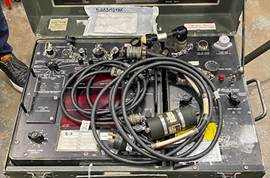
Two Air Force supply chain squadrons possess this equipment, and they are tasked with tracking and initiating repair actions for B-52 common and specific support equipment. Data provided by Air Force supply chain organizations on B-52 support equipment show they lack roughly one-third of their identified specific support equipment needs. Specifically, as of July 2025, data showed that the Air Force had 72 percent of its authorized common support equipment for B-52s and 63 percent of its authorized support equipment specific to the B-52.[51]
Air Force officials told us that they have purchased some of the B-52 specific support equipment with emergency waivers; however, they noted that this is not a long-term solution. Specifically, these officials stated that the relevant funds may not be available for future purchases, and the use of such emergency authorities does not ensure that a program’s long-term support equipment needs are met.
As the Air Force installs modernization programs, it will need new support equipment to sustain those upgrades. According to Air Force officials, this new support equipment will be provided by contractors as part of the modernization contract. New support equipment may replace functions of some old support equipment, as modernizations replace current B-52 capabilities; however, support equipment will still play a critical role during and after modernization programs. According to Air Force Global Strike Command officials, they review proposed support equipment for the B-52 modernization programs and provide approvals or denials to contractors based on determined needs.
Roles and Responsibilities for Management and Procurement of Support Equipment Are Not Clear
The Air Force assigns responsibility for the management of common and specific support equipment to different organizations based on the equipment type as shown in table 3. However, responsibility for the life cycle management of the B-52’s specific support equipment is unclear.
Table 3: Roles of Air Force Organizations Involved with the Management of Support Equipment, by Equipment Type
|
|
Common support equipment |
Specific support equipment |
|
Initial planning and procuring |
B-52 program office |
B-52 program office |
|
Procuring replacements |
Life Cycle Management Center |
Air Force Sustainment Center |
|
Technical support |
404th Supply Chain Management Squadron |
424th Supply Chain Management Squadron |
|
Life cycle management |
Life Cycle Management Center |
Undetermined |
|
Held and used by |
Air Force operational and reserve units, depot, and the Air Force Flight Test Center |
Air Force operational and reserve units, depot, and the Air Force Flight Test Center |
Source: Discussions with Air Force officials. | GAO‑26‑109272
Note: According to B-52 program office officials, they are provided with procurement funding in their budget. They can use those funds to purchase support equipment for the first time, or when new capabilities are needed. However, when a piece of support equipment breaks during normal operations, its replacement is considered an operations expense, and according to program office officials, procurement funds cannot be used to make the purchase.
Department of the Air Force Instruction 63-101 states that the program manager is responsible for minimizing the proliferation of system-unique equipment while ensuring the maintenance and deployment requirements of systems are met.[52] Air Force officials added that support equipment needs for the B-52 are determined by the program office, which can make the initial purchases. However, after these initial purchases, according to Air Force officials, there is no office with life cycle management responsibility for B-52 specific support equipment. In contrast, officials told us that the Air Force Life Cycle Management Center purchases and manages common support equipment that maintainers use on the B-52 and other weapon systems.[53] According to officials, that organization is also responsible for ensuring repair or replacement of common support equipment. However, Air Force officials noted that there is no guidance that clearly identifies the organization that should be responsible for the life cycle management of specific support equipment.
Standards for Internal Control in the Federal Government states that organizational roles and responsibilities should be clear, and management should assign responsibilities in order to achieve their objectives.[54] Without guidance that clarifies the roles and responsibilities for life cycle management of specific support equipment for the B-52, it is unclear what organization will be responsible for managing this equipment for the remaining 25 years of the program. In the absence of an organization planning for the availability of specific support equipment for the B-52, the Air Force will likely face additional maintenance challenges, which may, in turn, negatively affect the availability of B-52 for operational deployment.
Conclusions
The Air Force is taking on vast and expensive modernization programs to maintain the B-52’s strategic capabilities for decades to come. The system has significantly outlived its original lifespan, and the modernization programs include replacing the engines, upgrading the radar, and improving communication systems. These improvements are intended to allow the aircraft to operate through the 2050s.
These modernization programs will cost more than $21 billion based on current estimates, though the programs themselves carry significant cost, schedule, and performance risk. The Air Force’s plan—to begin producing major modernization upgrades before completing critical portions of developmental flight testing—exposes the Air Force to further cost and schedule risks. Although B-52 modernization is taking longer and costing more than originally planned, the Air Force has not reassessed the impact of those risks on the timing of its CERP production decision, leaving decision-makers without a complete understanding of those risks or benefits of approving production before completing critical flight testing. The Air Force could further mitigate modernization challenges by increased use of digital engineering tools to speed up development and reduce cost and schedule risks. Additionally, as the Air Force continues to delicately balance 13 ongoing modernization programs, its road map to coordinate these activities could better align and prioritize modernization programs with the program’s strategic goals to ensure the most important work is completed in accordance with warfighter needs.
Finally, the depot needs sufficient support if it is to continue sustaining the B-52 for several additional decades. Planning for potential disruptions to their engine supply is a reasonable precaution given the schedule risks involved with CERP. Avoiding additional delays is also particularly important as maintaining the B-52 fleet with the current engine has already proven challenging. Should essential modernization programs like CERP be further delayed, the availability of the B-52 fleet to meet operational requirements could be at risk. Ensuring effective management of support equipment is also crucial to continued operation of the B-52. Until there is additional clarity around the roles and responsibilities for managing the B-52 specific support equipment, the Air Force’s ability to manage and sustain current and modernized B-52s will be more challenging.
Recommendations for Executive Action
We are making the following six recommendations to the Secretary of the Air Force:
The Secretary of the Air Force should delay the CERP production decision until the program office conducts an analysis that accounts for recent cost growth and schedule delays to understand the risks and benefits associated with the timing of the CERP production decision. (Recommendation 1)
The Secretary of the Air Force should ensure that the program office assesses the practicality, benefits, and affordability of implementing digital engineering in current modernization programs. (Recommendation 2)
The Secretary of the Air Force should ensure that the B-52 Modernization Platform Integration Plan is updated to reflect the prioritization of all B-52 modernization programs. (Recommendation 3)
The Secretary of the Air Force should ensure that the B-52 Modernization program updates the Platform Integration Plan to more clearly align program work to the Air Force’s B-52 Modernization strategic goals, by identifying risk mitigations associated with maintaining multiple configurations. (Recommendation 4)
The Secretary of the Air Force should ensure the B-52 program office updates the B-52 repair plans to account for potential delays in the modernizations. (Recommendation 5)
The Secretary of the Air Force should issue guidance clarifying the roles and responsibilities for the life cycle management of B-52 specific support equipment. (Recommendation 6)
Agency Comments and Our Evaluation
In April 2026, we provided a draft of this report to the Air Force for review and comment. In June 2026, the Air Force provided written comments which are reproduced in appendix III of this report and summarized below. The Air Force also provided technical comments, which we incorporated as appropriate.
In its written comments, the Air Force concurred with five of our recommendations and partially concurred with our recommendation to delay the CERP production decision until the program office conducts an analysis that accounts for recent cost growth and schedule delays to understand the risks and benefits associated with the timing of that production decision.
In its response, the Air Force stated that the Air Force Acquisition Executive has assessed and will continue to balance CERP costs, schedule, and concurrency risks in light of projected decreases in B-52H fleet-wide aircraft availability due to difficulties with supporting the aircraft’s current TF33 engines. The Air Force acknowledges the value in conducting an analysis like the one we recommend, but notes that doing so does not necessarily mean the program should intentionally delay the CERP production decision. However, as we note in our report, the CERP production decision is not currently scheduled until the first quarter of fiscal year 2029. This gives the Air Force around two years to complete the analysis we are recommending and then decide about the timing of the production decision. If over that time no analysis is done, we continue to believe that the Air Force should delay the production decision until one is completed.
We are sending copies of this report to the appropriate congressional committees, the Secretary of Defense, the Air Force, and other interested parties. In addition, the report is available at no charge on the GAO website at https://www.gao.gov.
If you or your staff have any questions about this report, please contact us at maurerd@gao.gov or masterst@gao.gov. GAO staff who made key contributions to this report are listed in appendix IV.
Diana Maurer
Director, Defense Capabilities and Management
Travis Masters
Director, Contracting and National Security Acquisitions
List of Committees
The Honorable Roger Wicker
Chairman
The Honorable Jack Reed
Ranking Member
Committee on Armed Services
United States Senate
The Honorable Mitch McConnell
Chair
The Honorable Christopher Coons
Ranking Member
Subcommittee on Defense
Committee on Appropriations
United States Senate
The Honorable Mike Rogers
Chairman
The Honorable Adam Smith
Ranking Member
Committee on Armed Service
House of Representatives
The Honorable Ken Calvert
Chairman
The Honorable Betty McCollum
Ranking Member
Subcommittee on Defense
Committee on Appropriations
House of Representatives
To assess the extent to which B-52 modernization programs are achieving cost, schedule, and performance goals and using acquisition and program management leading practices, we obtained and reviewed Air Force documentation, such as acquisition program baselines and acquisition decision memorandums. We conducted interviews with Air Force and prime contractor officials. We reviewed budget data and acquisition strategies for the B-52 modernization programs that were available at the time of our analysis, comparing them to the acquisition and program management leading practices outlined in GAO’s Agile Assessment Guide, GAO’s Schedule Assessment Guide, and provided by the Project Management Institute.[55] To assess use of program management leading practices, we reviewed the Air Force B-52 Platform Integration Plan and compared it to The Standard for Program Management and the Agile and Schedule Guides to analyze the components of a program road map.[56] We assessed the reliability of the estimated cost data by interviewing officials about the control processes used in determining estimated cost, as well as by reviewing acquisition program baselines, where applicable. We determined that the estimated cost data were sufficiently reliable for our purposes.
To assess the extent to which the Air Force has developed plans and taken action to ensure sufficient capacity for planned B-52 depot-level modernization programs, we obtained and analyzed Air Force documentation, such as maintenance briefings and depot throughput data. We reviewed Air Force plans to manage engine sustainment for the B-52 and compared these plans with Standards for Internal Control in the Federal Government, which states that agencies should identify, analyze, and respond to risks that could prevent them from meeting their objectives.[57] We assessed the reliability of these data by interviewing officials about the control processes used in the data system. We determined that the depot throughput data were sufficiently reliable for our purposes. We also conducted interviews with Air Force program office, depot, and maintenance officials.
To assess the extent to which the Air Force has developed plans and taken actions to ensure sufficient spare parts for the remaining life cycle of the B-52, we obtained and analyzed Air Force and Defense Logistics Agency documentation, such as guidance and data on mission capable rates for the aircraft. We evaluated Air Force and Defense Logistics Agency strategies to mitigate spare parts shortages and the ability of the agency to improve mission capable rates and supply rates going forward. We assessed the reliability of these data by interviewing officials about the control processes used in the data system, as well as by reviewing system documentation. We determined that the mission capable data were sufficiently reliable for our purposes. We also conducted interviews with Air Force program office, depot, and Defense Logistics Agency officials.
To assess the extent to which the Air Force has sufficient support equipment for the remaining life cycle of the B-52, we obtained and analyzed Air Force documentation, such as data on common and specific support equipment. We compared the Air Force’s support equipment management practices and responsibilities to official Air Force guidance and Standards for Internal Control in the Federal Government, which states that organizational roles and responsibilities should be clear.[58] We assessed the reliability of these data by interviewing officials about the control processes used in the data system. We determined that the support equipment data were sufficiently reliable for our purposes. We also conducted interviews with Air Force program office, depot, and operations officials.
This report is a public version of a sensitive report that we issued in July 2026. DOD deemed some of the information in our July report to be sensitive, which must be protected from public disclosure. Therefore, this report omits sensitive information about B-52 schedules and availability and mission capable rates. Although the information provided in this report is more limited, the report addresses the same objectives as the sensitive report and uses the same methodology.
Table 4
provides information on the additional 11 B-52 modernization programs not
discussed above. Similar information about the Commercial Engine Replacement
Program and the Radar Modernization Program can be found in the body of this
report.
Table 4: Additional Information on B-52 Modernization Programs as of March 2026
|
Program |
Estimated cost |
Initial operational capability |
Full operational capability |
Description |
Status |
|
Advanced Extremely High Frequency |
$439.28 million |
First quarter fiscal year 2034 |
Third quarter fiscal year 2037 |
This effort is expected to upgrade all 76 B-52 aircraft’s air to ground communications terminals. It is also expected to provide a survivable and secure system to ensure command, control, and communications. |
The Air Force placed this program on hold in 2023 due to a shift to a competitive acquisition strategy and an ongoing review of program requirements. This shift in strategy was the result of unacceptable design and impacts to aircraft availability, according to Air Force officials. The Air Force plans to use Other Transaction Authority for technical maturity and risk reduction activities starting in June 2026 and expects to begin production in the third quarter of fiscal year 2031.a |
|
Very Low Frequency (VLF)/Low Frequency (LF) |
$284.4 million |
Third quarter fiscal year 2027 |
Third quarter fiscal year 2030 |
This effort seeks to upgrade a B-52 existing receiver to integrate a receive-only, low frequency receiver and antenna subsystem to provide secure strategic nuclear communication capability. |
This program installs a waveform—being developed by the U.S. Navy—to work with the procured receiver to deliver the required capability. The receiver is a mature component, having been used on other aircraft. The program began production in the third quarter of fiscal year 2024 and began installations in October 2025. |
|
Quad Crew |
$85.3 million |
Second quarter fiscal year 2029 |
Third quarter fiscal year 2031 |
The goal of the Quad Crew effort is to relocate electronic warfare control and display functions to reduce the B-52 crew size from five to four. |
The program’s Critical Design Review occurred in January 2026. The program expects to reach production in the first quarter of fiscal year 2027. Officials informed us that they faced delays with the program’s System Requirements Review and noted that aircraft availability for installations was a top risk. |
|
Military Code |
$173.0 million |
First quarter fiscal year 2032 |
First quarter fiscal year 2035 |
With this effort, the Air Force seeks to replace the B-52’s current receiver with new Military Code capable receiver, which is expected to provide a robust signal for the B-52 fleet enhancing anti-jam/anti-spoof capabilities. Military Code is a more secure, jam-resistant- military-specific signal that DOD is modernizing its Global Positioning System with. |
According to officials, the Air Force awarded the integration study contract in July of 2024. While still very early in its acquisition process, the program has experienced budget cuts in fiscal years 2024, 2025, and 2026. Officials informed us that the Air Force completed an acquisition plan early in fiscal year 2026. The legacy receivers will still function after their end-of-life date in fiscal year 2031 but will not be repairable at that point. The program expects to fly the aircraft until then and begin updating with Military Code receivers after. |
|
Tactical Data Link |
$198.8 million |
Completed |
Second quarter fiscal year 2031 |
Tactical Data Link is expected to upgrade the B-52’s digital communications capability. It will provide the aircraft with low latency, jam resistant situational awareness as well as command and control needed to support in-theater operation. |
The program completed its first production lot (10 modernization kits), first installation in January 2025, and achieved Required Asset Availability in April 2025. Delays in receiving contractor proposals have had a significant impact on awards for the remaining production lots. Specifically, according to officials, the Air Force awarded the remaining lots in September 2025, but the delay will cause a 2-year gap in production. |
|
Crypto/Mobile User Objective System |
$290.62 million |
Third quarter fiscal year 2030 |
Fourth quarter fiscal year 2033 |
This effort seeks to update the current ARC-210 radios with Mobile User Objective System ARC-210 radios to prevent loss of communications capability. According to officials, this will ensure the aircraft radio capability remains compliant with Department of Defense and National Security Agency mandates. |
According to officials, router obsolescence and contractor underestimation of upgrade complexity have led to multiple cost overruns and schedule delays. To mitigate capability delay, the Air Force decided to execute the program in two phases. Phase one—organic installation of the radio—is a stop gap fix to comply with the National Security Agency mandate with ongoing operational testing, and the second radio installation began in June 2025. The full program solution includes a competitive router solution and procurement of remaining parts to fully meet the capability requirement. Officials also informed us that the quality of contractor performance has been an issue, partially due to the contractor delivering components that were incorrectly wired or the wrong size. Contract award for router solution is expected in the second quarter of fiscal year 2026. Contract award for remaining modernization parts is planned for the first quarter of fiscal year 2027. The Air Force stated that the initial operational capability date will not be met as it requires 12 B-52s to have the full Crypto/Mobile User Objective System modernization. |
|
Long Rage Standoff Integration |
$1.13 billionb |
First quarter fiscal year 2031 |
See notec |
Long Range Standoff weapon is an effort to equip the B-52 with long-range, survivable, nuclear-capable cruise missile capability to penetrate advanced threat air defense systems. Long Range Standoff weapon is slated to replace the Air Launched Cruise Missile. |
Long Range Standoff weapon has been flight tested using a B-52 aircraft 29 times as of January 2026, two of which resulted from retests after failed initial tests. There was a third test failure that officials plan on attempting again in 2026. Additionally, as of December 2025, 21 planned flight test events have been grounded due to B-52 test-aircraft maintenance-related issues with one of the two such aircraft that are dedicated to the Long Range Standoff weapon’s flight test program. The maintenance issues usually resulted in delays of 1 week or less, especially in cases where the alternate B-52 was ready to fly in support of the same flight test event. |
|
Mission Data Recorder |
$44.8 million |
August 2025 |
Second quarter fiscal year 2028 |
The Mission Data Recorder is the aircraft’s “black box” that records flight and navigation panel activity to provide permanent crash survivable flight data recorded information. |
The Air Force has installed the Mission Data Recorder on 17 of 76 aircraft as of August 2025. The Air Force achieved initial operational capability in August 2025 and expects to achieve full operational capability in the second quarter of fiscal year 2028. Officials previously informed us that there was a longer than normal lead time for procurement. Additionally, they said there were issues with the recorders’ readiness and that 80 percent were failing initial testing, which could have impacts on schedule. |
|
Mission Employment Trainer |
Competition-sensitived |
Initial Need: Weapon Systems Trainer (no later than fourth quarter fiscal year 2029) Cockpit Procedures Trainer (no later than fourth quarter fiscal year 2028) |
Full Weapon Systems Trainer and Cockpit Procedures Trainer deliveries: Fourth quarter fiscal year 2033 |
The B-52 Mission Employment Training Family of Systems is a program that develops Aircrew Training Devices to provide B-52 operators with the necessary training to crew and maintain the B-52. Key components of the program include: Weapon Systems Trainers, Cockpit Procedures Trainers, a Systems Integration Lab, and a Flight Dynamics Model. These elements share a common source baseline intended to reduce overall sustainment costs and accelerate the integration of modifications. |
According to officials, the Air Force received Acquisition Strategy approval in December 2025, and in January 2026, the Air Force began execution of funding for the Flight Dynamics Model, which is required to reach certification for aircrew initial qualification training. According to officials, in fiscal year 2026, the government has advanced the program by releasing a draft Fair Opportunity Proposal Request, issuing Requests for Information, and holding an Industry Day. The program remains on-track to release a final Fair Opportunity Proposal Request in the third quarter of fiscal year 2026, with a contract award anticipated for the fourth quarter of that same year. Officials also informed us that a major program challenge was dealing with the concurrent design of the simulator with the aircraft. |
|
Advance Target Pod Smart Display Sustainment |
$14.5 million |
First quarter fiscal year 2028 |
Fourth quarter fiscal year 2029 |
As the legacy display is non-procurable and driving Mission Impaired Capability Awaiting Parts, the program is procuring a replacement technical data package that will be used to buy new displays. |
This program does not upgrade the B-52, rather provides the necessary technical data to Air Force sustainment group to be able to procure replacement displays as needed. The technical data package consists of hardware and software.e The hardware vendor provided the technical data package in July of 2024 for the hardware components; however, the software vendor has not submitted its technical data package. The Air Force is moving forward with organically building its software. The hardware technical data package was sent to Air Force sustainment group in November 2025. Officials previously informed us that delays in contracting actions were due to the program struggling to maintain an Other Transaction Authority agreement officer. |
|
VINSON/Advanced Narrowband Digital Voice Terminal Cryptographic Modernization |
$0.8 |
Completed |
Third quarter fiscal year 2026 |
This is an effort that seeks to update the existing KY100 communication devices and will provide aircraft with the National Security Agency’s cryptographic requirements for legacy radios. |
The Air Force installs this updated capability while aircraft are at an Air Force base. As of August 2025, 67 of 76 aircraft had been modified, and the final upgrade is forecasted for November 2025. |
Source: GAO analysis of Department of Defense documents and interviews with Air Force officials. | GAO‑26‑109272
aOther transaction agreements are flexible contracting mechanisms not subject to the Federal Acquisition Regulation. DOD has authority to use other transaction agreements under 10 U.S.C. § 4021 and § 4022.
bThis program’s estimated cost is in billions.
cDue to the sensitive nature of this program, we are unable to provide the program’s full operational capability.
dThe program is conducting a competitive source selection in 2026.
eA technical data package defines the physical and functional characteristics of a component and its subordinate assemblies, subassemblies, and parts.
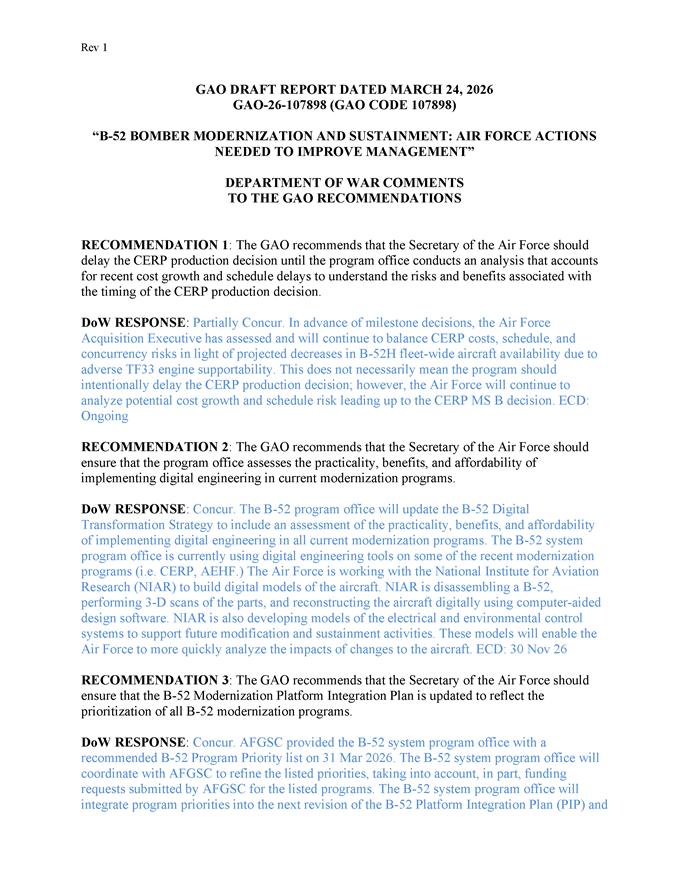
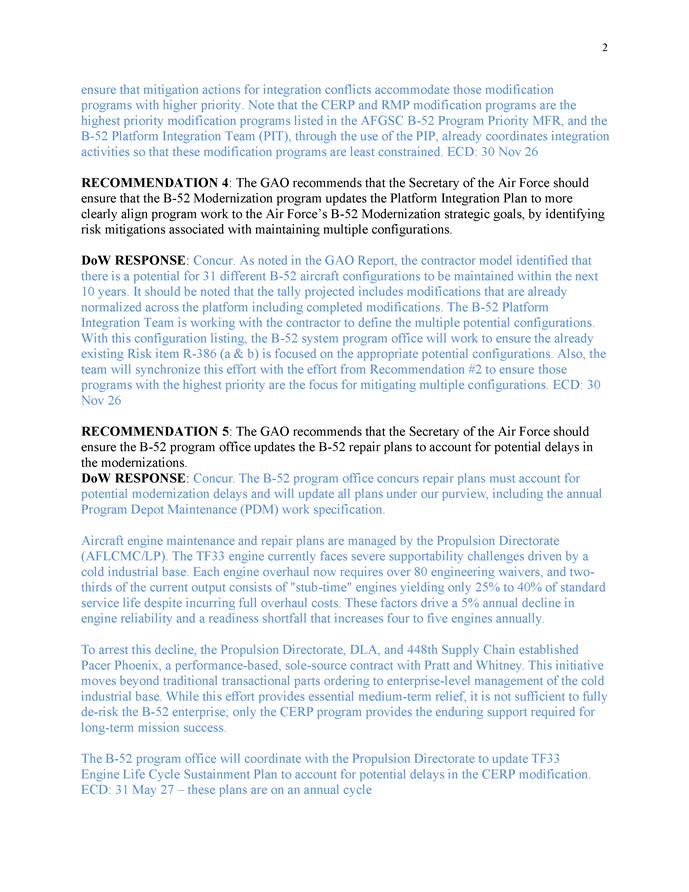
GAO Contacts
Diana Maurer, maurerd@gao.gov
Travis Masters, masterst@gao.gov
Staff Acknowledgments
In addition to the contacts named above, John Bumgarner (Assistant Director), Alex Francesconi, Christopher Gezon, Sarah Goubeaux, Brent Helt (Assistant Director), James Lackey (Analyst in Charge), Shannon Murphy, Lillian Ofili, Megan Setser (Assistant Director), Michael Shaughnessy, Joseph Shir, and Benjamin Wilder made key contributions to this report.
Air Force Readiness: Actions Needed to Address Depot Maintenance Delays and Staffing Challenges, GAO‑26‑107890. Washington, D.C.: May 14, 2026.
Army Modernization: Air and Missile Defense Efforts Would Benefit from Applying Leading Practices, GAO‑25‑107491. Washington, D.C.: June 18, 2025.
Weapon Systems Annual Assessment: DOD Leaders Should Ensure That Newer Programs Are Structured for Speed and Innovation, GAO‑25‑107569. Washington, D.C.: June 11, 2025.
Standards for Internal Control in the Federal Government, GAO‑25‑107721. Washington, D.C.: May 2025.
Agile Assessment Guide: Best Practices for Adoption and Implementation, GAO‑24‑105506. Washington, D.C.: November 2023.
Leading Practices: Iterative Cycles Enable Rapid Delivery of Complex, Innovative Products, GAO‑23‑106222. Washington, D.C.: July 27, 2023.
Weapon System Sustainment: Aircraft Mission Capable Goals Were Generally Not Met and Sustainment Costs Varied by Aircraft, GAO‑23‑106217. Washington, D.C.: November 10, 2022.
Weapon System Sustainment: Aircraft Mission Capable Goals Were Generally Not Met and Sustainment Costs Varied by Aircraft, GAO‑22‑105050SU. Washington, D.C.: September 19, 2022.
DOD Depot Workforce: Services Need to Assess the Effectiveness of Their Initiatives to Maintain Critical Skills, GAO‑19‑51. Washington, D.C.: December 14, 2018.
Military Readiness: Analysis of Maintenance Delays Needed to Improve Availability of Patriot Equipment for Training, GAO‑18‑447. Washington, D.C.: June 20, 2018.
F-35 Aircraft Sustainment: DOD Needs to Address Challenges Affecting Readiness and Cost Transparency, GAO‑18‑75. Washington, D.C.: October 26, 2017.
Naval Shipyards: Actions Needed to Improve Poor Conditions that Affect Operations, GAO‑17‑548. Washington, D.C.: September 12, 2017.
Military Readiness: Progress and Challenges in Implementing the Navy’s Optimized Fleet Response Plan, GAO‑16‑466R. Washington, D.C.: May 2, 2016.
Schedule Assessment Guide: Best Practices for Project Schedules, GAO‑16‑89G. Washington, D.C.: December 2015.
Defense Inventory: Actions Needed to Improve the Defense Logistics Agency’s Inventory Management, GAO‑14‑495. Washington, D.C.: June 19, 2014.
The Government Accountability Office, the audit, evaluation, and investigative arm of Congress, exists to support Congress in meeting its constitutional responsibilities and to help improve the performance and accountability of the federal government for the American people. GAO examines the use of public funds; evaluates federal programs and policies; and provides analyses, recommendations, and other assistance to help Congress make informed oversight, policy, and funding decisions. GAO’s commitment to good government is reflected in its core values of accountability, integrity, and reliability.
Obtaining Copies of GAO Reports and Testimony
The fastest and easiest way to obtain copies of GAO documents at no cost is through our website. Each weekday afternoon, GAO posts on its website newly released reports, testimony, and correspondence. You can also subscribe to GAO’s email updates to receive notification of newly posted products.
Order by Phone
The price of each GAO publication reflects GAO’s actual cost of production and distribution and depends on the number of pages in the publication and whether the publication is printed in color or black and white. Pricing and ordering information is posted on GAO’s website, https://www.gao.gov/ordering.htm.
Place orders by calling (202) 512-6000, toll free (866) 801-7077,
or
TDD (202) 512-2537.
Orders may be paid for using American Express, Discover Card, MasterCard, Visa, check, or money order. Call for additional information.
Connect with GAO
Connect with GAO on X,
LinkedIn, Instagram, and YouTube.
Subscribe to our Email Updates. Listen to our Podcasts.
Visit GAO on the web at https://www.gao.gov.
To Report Fraud, Waste, and Abuse in Federal Programs
Contact FraudNet:
Website: https://www.gao.gov/about/what-gao-does/fraudnet
Automated answering system: (800) 424-5454
Media Relations
Sarah Kaczmarek, Managing Director, Media@gao.gov
Congressional Relations
David A. Powner, Acting Managing Director, CongRel@gao.gov
General Inquiries
[1]Mission capable rates are the percentage of time the aircraft is capable of performing at least one tasked mission.
[2]GAO, Weapon System Sustainment: Aircraft Mission Capable Goals Were Generally Not Met and Sustainment Costs Varied by Aircraft, GAO‑23‑106217 (Washington, D.C.: Nov. 10, 2022). For a list of our previous work in this area, see the Related GAO Products page at the end of this report.
[3]S. Rep. No. 118-188, at 23-24 (2024).
[4]Project Management Institute, Inc., The Standard for Program Management, 5th ed. (2024). The Project Management Institute is a not-for-profit association that, among other things, provides standards for managing various aspects of projects, programs, and portfolios. GAO, Agile Assessment Guide: Best Practices for Adoption and Implementation, GAO‑24‑105506 (Washington, D.C.: Nov. 28, 2023); GAO, Schedule Assessment Guide: Best Practices for Project Schedules, GAO‑16‑89G (Washington, D.C.: Dec. 22, 2015); and GAO, Leading Practices: Iterative Cycles Enable Rapid Delivery of Complex, Innovative Products, GAO‑23‑106222 (Washington, D.C.: July 27, 2023).
[5]A prime contract is awarded directly to a contractor by the federal government. Prime contractors award subcontracts to other businesses.
[6]The United States’ nuclear triad consists of aircraft-delivered missiles and bombs, intercontinental ballistic missiles, and submarine-launched ballistic missiles. Collectively, these form the United States’ airborne, land-based, and sea-based deterrents.
[7]“Flow days” is the Air Force term for the number of days between when an aircraft enters depot maintenance to its final departure from the depot. Flow days may include days when the aircraft has begun depot maintenance but may not have maintenance work actively going on—e.g., if the Air Force is waiting for a part before maintenance can resume.
[8]See GAO, DOD Depot Workforce: Services Need to Assess the Effectiveness of Their Initiatives to Maintain Critical Skills, GAO‑19‑51 (Washington, D.C.: Dec. 14, 2018); Weapon System Sustainment: Selected Air Force and Navy Aircraft Generally Have Not Met Availability Goals, and DOD and Navy Guidance Need To be Clarified, GAO‑18‑678 (Washington, D.C.: Sept. 10, 2018); Military Readiness: Analysis of Maintenance Delays Needed to Improve Availability of Patriot Equipment for Training, GAO‑18‑447 (Washington, D.C.: June 20, 2018); F-35 Aircraft Sustainment: DOD Needs to Address Challenges Affecting Readiness and Cost Transparency, GAO‑18‑75 (Washington, D.C.: Oct. 26, 2017); Naval Shipyards: Actions Needed to Improve Poor Conditions that Affect Operations, GAO‑17‑548 (Washington, D.C.: Sept. 12, 2017); Military Readiness: Progress and Challenges in Implementing the Navy’s Optimized Fleet Response Plan, GAO‑16‑466R (Washington, D.C.: May 2, 2016); and Defense Inventory: Actions Needed to Improve the Defense Logistics Agency’s Inventory Management, GAO‑14‑495 (Washington, D.C.: June 19, 2014).
[9]While there are additional B-52 modernization efforts beyond those listed in Table 1, they initiated after we began this performance audit in October 2024.
[10]Acquisition costs provided by the Air Force include Research, Development, Test, and Evaluation and Procurement costs.
[13]Acquisition costs include Research, Development, Test, and Evaluation and Procurement costs.
[14]The secretary concerned is required to notify Congress whenever a major defense acquisition program’s unit cost experiences growth that exceeds certain thresholds. This is commonly referred to as a Nunn-McCurdy breach. Significant breaches occur when the program acquisition unit cost or procurement unit cost increases by at least 15 percent over the current baseline estimate or at least 30 percent over the original baseline estimate. A baseline is an agreed-upon description of the attributes of a product at a point, which serves as a basis for change. Department of the Air Force Pamphlet 63-128, Integrated Life Cycle Management (Feb. 3, 2021).
[15]Approval for entry into the engineering and manufacturing development phase occurs during a milestone B review, which includes, among other things, a demonstration that sources of risk have been adequately mitigated, capability requirements have been validated, and full funding has been established within the Future Years Defense Program—DOD’s annual projection of its needs over a 5-year period. Department of Defense Instruction 5000.85, Major Capability Acquisition (Aug. 6, 2020) (incorporating change 1, effective Nov. 4, 2021); see also Department of Defense Directive 7045.14, The Planning, Programming, Budgeting, and Execution (PPBE) Process (Jan. 25, 2013) (incorporating change 1, effective Aug. 29, 2017).
[16]Initial operational capability for the B-52 refers to the date that the modernization capability is delivered to the user in a usable quantity, as determined by the user. In this case the user is Air Force Global Strike Command and its squadrons that fly B-52s: 2nd Bomb Wing and 307th Bomb Wing at Barksdale Air Force Base, Louisiana and 5th Bomb Wing at Minot Air Force Base, North Dakota.
[17]GAO, Weapon Systems Annual Assessment: DOD Leaders Should Ensure That Newer Programs Are Structured for Speed and Innovation, GAO‑25‑107569 (Washington, D.C.: June 11, 2025).
[18]CERP program officials are reassessing the program’s estimated acquisition costs. As of January 2026, the Air Force had not set a baseline cost estimate, therefore estimated cost figures may fluctuate.
[20]Department of Defense Instruction 5000.73, Cost Analysis Guidance and Procedures (Oct. 24, 2024).
[21]GAO, Standards for Internal Control in the Federal Government, GAO‑25‑107721 (Washington, D.C.: May 2025).
[22]The Assistant Secretary of the Air Force of Acquisition, Technology, and Logistics oversees Air Force research, development, acquisition, and program sustainment activities.
[23]Minimum viable product is a product with the initial set of capabilities needed for customers to recognize value.
[27]Service Acquisition Executives are responsible for implementing DOD acquisition policy within their respective departments and serve as the milestone decision authority for certain Major Defense Acquisition Programs. Service Acquisition Executives are also decision authorities for programs using the Middle Tier of Acquisition pathway, with some exceptions.
[28]According to leading practices, leading companies use modern design tools, such as digital engineering and additive manufacturing, throughout development for both hardware and software.
[31]Department of Defense Instruction 5000.97, Digital Engineering (Dec. 21, 2023).
[32]DOD Instruction 5000.97.
[33]For purposes of this report, we use the phrase “digital tools” when referring to what DOD calls “digital engineering.”
[35]GAO, Army Modernization: Air and Missile Defense Efforts Would Benefit from Applying Leading Practices, GAO‑25‑107491 (Washington, D.C.: June 18, 2025).
[36]The B-52 program’s strategic priorities are defined by the Executive Platform Integration Team, which serves as the governing body for all the B-52 programs. The team is tri-chaired by leadership from the B-52 program office, Air Force Global Strike Command, and Boeing Bombers Programs, and they set strategic priorities to guide program execution and integration.
[37]Project Management Institute, Inc., The Standard for Program Management, 5th ed.
[39]Project Management Institute, Inc., The Standard for Program Management, 5th ed.
[41]Project Management Institute, Inc., The Standard for Program Management, 5th ed.; GAO‑24‑105506; and GAO‑16‑89G.
[42]Depot-level reparables are subsystems that are used during maintenance and intended to be removed and replaced as a unit. For example, both brake assemblies and landing gear are examples of depot-level reparables. Each B-52 modernization will introduce new depot-level reparables into the repair process.
[43]These hours are not all in addition to the regular depot package, because some hours reflect similar tasks. For example, the regular depot process includes replacing the removed engines back onto the aircraft. Part of the labor hour estimate for CERP includes placing the newer engines onto the aircraft, a task that would be done in place of replacing the original engines.
[44]These hours will be spread over a larger time horizon—more than 10 years—compared to the 4 or 5 years between each depot maintenance period.
[46]See GAO, Weapon System Sustainment: Aircraft Mission Capable Goals Were Generally Not Met and Sustainment Costs Varied by Aircraft, GAO‑22‑105050SU (Washington, D.C.: Sept. 19, 2022); and GAO‑23‑106217. Mission capable rates are a percentage of time the aircraft is capable of performing at least one tasked mission. Aircraft availability refers to the number of aircraft available for flight operations.
[47]Defense Acquisition University, Integrated Product Support Elements Guidebook (Jan. 2024).
[48]For the purposes of this report, we use the phrase “specific support equipment” to refer to the DOD category of “peculiar support equipment.”
[49]Department of the Air Force Instruction 63-101/20-101, Integrated Life Cycle Management (Feb. 16, 2024) (reissued Oct. 23, 2025).
[50]Officials noted that support equipment authorizations are made by the 440th Supply Chain Operations Squadron, and calculated by assessing the amount of support equipment needed at a location for a given task, and how often that task is performed.
[51]According to officials, these numbers represent costlier support equipment that is procured by the program office or a supply chain management organization. Individual repair units can purchase support equipment below $5,000 using their unit operations and maintenance funds. That support equipment is not counted in these figures.
[52]Department of the Air Force Instruction 63-101/20-101, Integrated Life Cycle Management (Feb.16, 2024, Reissued Oct. 23, 2025).
[53]Officials we spoke to described life cycle management as maintaining responsibility for the item including its location, use, quantity on hand, repairs needed, or potential replacement of the item.
[55]GAO, Agile Assessment Guide: Best Practices for Adoption and Implementation, GAO‑24‑105506 (Washington, D.C.: Nov. 28, 2023); GAO, Schedule Assessment Guide: Best Practices for Project Schedules, GAO‑16‑89G (Washington, D.C.: Dec. 22, 2015); and GAO, Leading Practices: Iterative Cycles Enable Rapid Delivery of Complex, Innovative Products, GAO‑23‑106222 (Washington, D.C.: July 27, 2023).
[56]Project Management Institute, Inc., The Standard for Program Management, 5th ed. (2024); GAO‑24‑105506; and GAO‑16‑89G.
[57]GAO, Standards for Internal Control in the Federal Government, GAO‑25‑107721 (Washington, D.C.: May 2025).