GAO-26-109055
Published: June 26, 2026
5-minute read
Innovation in Action: Bringing New Ideas to Life




If you're like most of us, you get sick from time to time. And getting the treatment you need is a matter of seeing your doctor, getting a prescription filled, and swallowing a pill.

But do you ever think about where the ideas for that pill first arose, and how that idea eventually became a pill to help you get better?

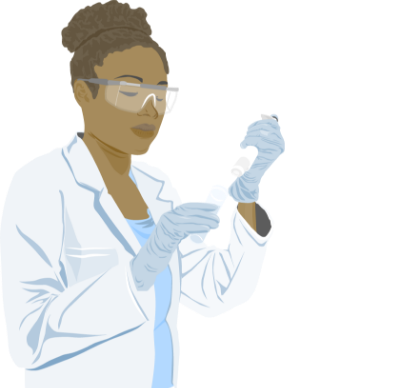
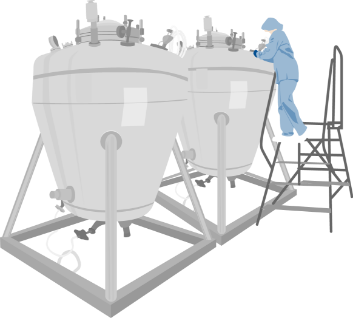
When this research leads to new discoveries, HHS can allow pharmaceutical companies to use these discoveries to develop new drugs.
This gives companies a running start on what is typically a long and expensive path.
So what does this look like in real life?

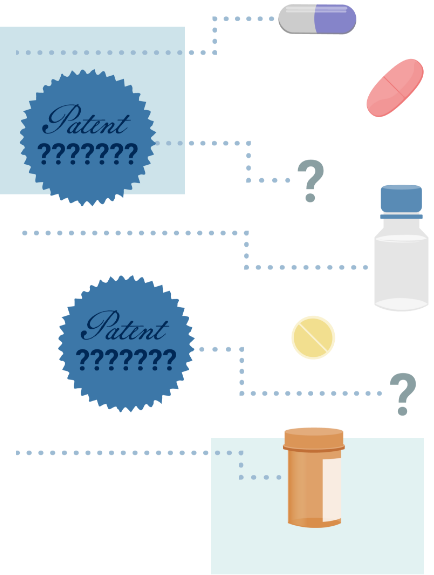
During an October 2020 audit, we learned that research conducted at HHS labs between 1980 and 2019 led to 4,446 U.S. patents about half of which were potentially relevant to pharmaceutical development. (Patents give exclusive rights to the inventor who can then, in turn, license those rights to others.) Of those, 93 patents owned by NIH and licensed to companies contributed to the development of 34 drugs that eventually made it to the marketplace. (This low overall success rate is common in the challenging world of pharmaceuticals). Those 34 drugs included treatments for cancer.
During an October 2020 audit, we learned that research conducted at HHS labs between 1980 and 2019...
...led to 4,446 U.S. patents about half of which were potentially relevant to pharmaceutical development. (Patents give exclusive rights to the inventor who can then, in turn, license those rights to others.)
Of those, 93 patents owned by NIH and licensed to companies...
...contributed to the development of 34 drugs that eventually made it to the marketplace. (This low overall success rate is common in the challenging world of pharmaceuticals).
Those 34 drugs included treatments for cancer.

We also found that NIH did not publicly list which patents it licensed or which companies held those licenses.
Without easy access to this information, policymakers and others—including patient advocates and researchers—can't tell which patents NIH has licensed to pharmaceutical companies. This makes it harder to tell whether NIH's efforts are helping.
We tracked down that data and shared it publicly on our website for anyone to see and analyze. We also that NIH publicly report the data in an accessible and searchable format. NIH agreed and began taking steps to do so as of July 2025. We also found similar concerns with how other agencies keep track of their contributions to drug development in another .
We also discovered that NIH's standard agreement did not allow the agency to terminate its licenses with companies that violate federal antitrust laws. We that NIH revise its agreement, and the agency did in November 2020.
For more details, see this . This is just one of many in our growing portfolio of work on intellectual property.

For more information contact Candice N. Wright, Director, Science, Technology Assessment, and Analytics, wrightc@gao.gov.
This is a work of the U.S. government and is not subject to copyright protection in the United States. The published product may be reproduced and distributed in its entirety without further permission from GAO. However, because this work may contain copyrighted images or other material, permission from the copyright holder may be necessary if you wish to reproduce this material separately. Our work was performed in accordance with generally accepted government auditing standards.